
A Visitor's Introduction to The Moulin Rouge, Paris
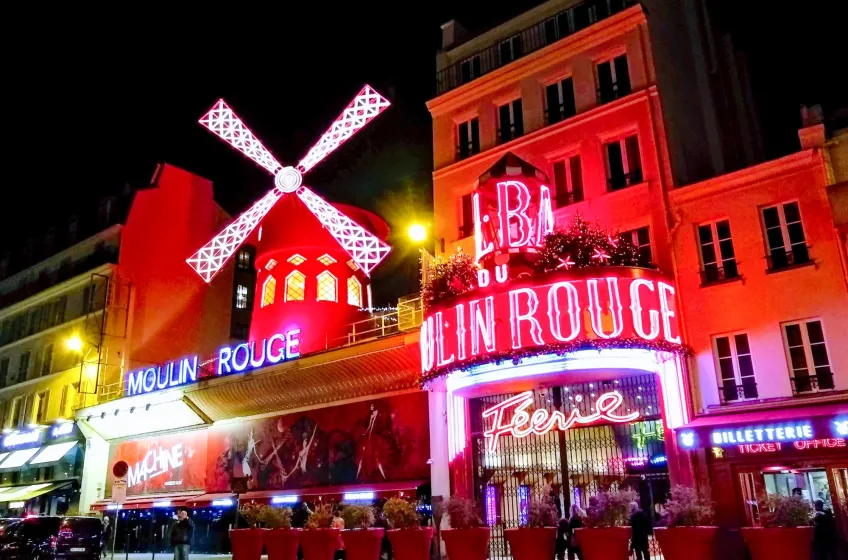
The Moulin Rouge is one of Paris’s most iconic cultural institutions, located at the foot of the Montmartre hill in the 18th arrondissement. Instantly recognisable by its distinctive red windmill, the cabaret has been a fixture of Parisian nightlife since its opening in 1889. Over the decades, it has gained international fame as the birthplace of the can-can dance and a symbol of Belle Époque Paris. Today, the Moulin Rouge continues to offer nightly performances that draw visitors from across the globe, combining music, dance, elaborate costumes and theatrical spectacle in an opulent setting.
The cabaret stands on Boulevard de Clichy in the Pigalle district, historically known for its bohemian character and as a hub for artists and performers. The Moulin Rouge is not just a live performance venue, but a cultural landmark that represents over a century of entertainment history, from the days of Toulouse-Lautrec and Mistinguett to the grand revues of the modern era.
Recommended accommodation near The Moulin Rouge: Hotels
Pre-book Moulin Rouge Show Tickets & Relevant Tours
Why is the Moulin Rouge worth a visit?
The Moulin Rouge offers a unique insight into the evolution of Parisian entertainment and continues to provide a vibrant, high-energy spectacle that blends tradition with modern showmanship. For visitors seeking a quintessentially Parisian evening, attending a show at the Moulin Rouge is an opportunity to experience a form of cabaret theatre that has been refined over more than a century.
Its current revue, Féerie, is a lavish production featuring more than 60 performers, 1,000 costumes adorned with feathers, rhinestones and sequins, and a continually updated choreography and musical arrangement. The level of technical sophistication and costume design is particularly notable, making the Moulin Rouge a distinctive visual and artistic experience. The show is crafted to entertain without the need for spoken language, which broadens its accessibility to international audiences.
In addition to its artistic appeal, the Moulin Rouge is closely tied to the cultural fabric of Paris. It has inspired countless artists, films, books and musicals, playing a key role in shaping the romantic and theatrical image of the city. A visit to the Moulin Rouge is as much about appreciating its historical legacy as it is about enjoying a dazzling night out.
Moulin Rouge Highlights
The Féerie Show
The current resident production at the Moulin Rouge is Féerie, which has been running since 1999. The show brings together a large cast of dancers, acrobats, and visual artists in a series of themed scenes that take the audience on a journey through different historical and fantastical settings. Highlights include the traditional French can-can, which remains one of the core features of the show, and a water-filled stage used for a mermaid-themed segment. The production changes slightly over time to remain fresh and visually arresting, while preserving the essence of the classic cabaret revue format.
The Doriss Girls
The troupe of dancers known as the Doriss Girls are a longstanding feature of the Moulin Rouge, known for their precision, athleticism and glamour. Originally established in 1957 by choreographer Doris Haug, the troupe is composed of highly trained professional dancers from around the world, selected for their dance ability, stage presence and physical uniformity. Their performances are central to the revue, and their carefully rehearsed routines exemplify the stylised elegance of French cabaret.
Costumes and Set Design
The costumes used in the Moulin Rouge productions are elaborate and meticulously crafted, often produced by renowned Parisian ateliers. Designs incorporate traditional cabaret elements—such as feathers, corsets and sequins—while also experimenting with contemporary materials and visual themes. The stage design is equally impressive, with complex sets, lighting effects and moving platforms that support a varied and dramatic visual narrative throughout the show.
Dining Experience
The Moulin Rouge also offers a full dining experience, with the option to have a three-course meal before the performance. The menu is curated by a team of chefs and showcases traditional French cuisine, with several menu options available to cater to different tastes and dietary requirements. Dining takes place in the main auditorium, allowing guests to enjoy their meal while surrounded by the ornate Belle Époque décor and live pre-show music.
Historic Venue and Architecture
The interior of the Moulin Rouge is richly decorated in the style of the late 19th century, with red velvet, gilded mouldings and art deco details. Although it has undergone numerous renovations, care has been taken to preserve the charm and character of the original space. The building’s iconic red windmill on the façade is a reconstructed version of the original, which was destroyed by fire, but remains a visual symbol of the venue and its legacy.
Musical Accompaniment
Unlike many other live shows, the Moulin Rouge performance includes live music provided by an in-house orchestra. The music spans classical, jazz, and pop influences, depending on the segment, and is carefully synchronised with the choreography and stage effects. The musicians are hidden from view during much of the performance, but their contribution adds significantly to the energy and atmosphere of the show.
Can-Can Dance
One of the most enduring elements of the Moulin Rouge is the traditional French can-can, which has been performed there since the venue’s inception. The dance, originally a form of social protest and later a popular music hall attraction, is now an exuberant and technically demanding part of the revue. Performed with high kicks, splits and cartwheels, the can-can is a celebration of French performance history and a must-see for first-time visitors.
The Artistic Legacy
The Moulin Rouge has a strong connection to the arts, particularly through its association with the painter Henri de Toulouse-Lautrec, who was a frequent visitor and created many posters and paintings of the cabaret and its performers. This artistic connection continues to be part of the cabaret’s identity and is reflected in various aspects of the show’s visual presentation.
Special Events and Seasonal Shows
Occasionally, the Moulin Rouge hosts special events or themed performances, particularly around major holidays such as New Year’s Eve or Bastille Day. These events may feature variations in the programme or additional musical guests. They are often booked well in advance and attract both locals and tourists.
Boutique and Memorabilia
A gift shop on-site offers a range of Moulin Rouge-themed merchandise, including DVDs, books, postcards, and costume accessories. This provides visitors with the opportunity to take home a tangible reminder of their experience and learn more about the venue’s storied past.
Facilities
The Moulin Rouge has a range of visitor facilities designed to enhance the experience and ensure comfort. The main auditorium seats approximately 850 guests and is arranged with tables for those dining prior to the show. There is a cloakroom service, though space is limited, and guests are advised not to bring large bags. The venue is equipped with modern lighting and sound systems, while preserving its traditional interior décor.
Accessibility is somewhat limited due to the historic nature of the building, but efforts have been made to accommodate guests with mobility needs. There are restrooms on-site and bar service is available during the dining period. Photography and video recording are not permitted during the performance, in order to preserve the theatrical atmosphere and protect the performers’ privacy.
Nearby Attractions
The Moulin Rouge is located in the vibrant Pigalle district, which has evolved in recent years to become a trendy area known for its nightlife, live music venues and boutique shops. A short walk uphill brings visitors to Montmartre, a historic neighbourhood known for its artistic heritage, narrow streets and the Sacré-Cœur Basilica. The views from the steps of the basilica offer one of the best panoramic vistas of Paris.
Nearby, Place du Tertre retains its charm as a gathering place for street artists and portrait painters, reminiscent of its early 20th-century heyday. The Musée de Montmartre, housed in a former artist’s residence, provides further context on the area’s bohemian past, including exhibits on Toulouse-Lautrec and the Moulin Rouge itself.
Pigalle also offers access to the Musée de la Vie Romantique, located in the former home of writer George Sand. The museum offers a peaceful garden café and an insight into 19th-century literary and artistic life. Additionally, the area around Boulevard de Clichy features several other historical cabarets and theatres, including the Théâtre de l’Atelier and Le Trianon, which host concerts and performances throughout the year.
Practical Advice
Tickets to the Moulin Rouge are in high demand and should be booked well in advance, particularly during the peak tourist seasons from spring through early autumn. Tickets can be purchased for the show only, or as part of a dinner-and-show package. Prices vary depending on seating location and menu choice.
The dress code is smart casual, with sportswear, trainers and shorts not permitted. Visitors are encouraged to dress elegantly to match the formality of the venue. Doors open around 7:00 p.m. for dinner service, with the performance starting at approximately 9:00 p.m. for dinner guests and 11:00 p.m. for the second show without dinner.
The closest Metro station is Blanche (Line 2), located directly in front of the venue. Due to the late ending time of the show, visitors should plan their return transport in advance, especially if staying far from central Paris. Taxis and ride-share services are available, and there are several late-night cafés and bars in the surrounding area.
Photography inside the theatre is not allowed during the performance, but visitors are welcome to take photos before the show begins. It is recommended to arrive at least 30 minutes early to allow for entry and seating. Children under the age of six are not permitted, and the content of the show is designed for an adult audience, although it is not overtly explicit.
For those with dietary restrictions, it is advisable to notify the venue when booking, as vegetarian, vegan and allergy-conscious menus are available on request. While English is spoken by most staff, some French phrases may be helpful for communicating during dinner or at the entrance.
A visit to the Moulin Rouge is best suited for those interested in theatrical performance, dance, costume and Parisian history. It offers an evening of immersive entertainment rooted in over a century of tradition, making it one of the most memorable nightlife experiences in the city.
Shortlist
- Your Shortlist is empty