
Discover Rügen | A Visitor's Introduction to Rügen
Recommended places to visit, places to stay and things to do in and around Rügen
Rügen is Germany’s largest island, nestled in the Baltic Sea off the coast of Mecklenburg-Vorpommern in the northeast. Known for its dramatic chalk cliffs, pristine beaches, and tranquil seaside resorts, this enchanting island is a dream destination for nature lovers, cyclists, families, and anyone seeking a peaceful coastal retreat with a touch of historic grandeur. With a landscape shaped by the sea and dotted with beech forests, spa towns, fishing villages, and elegant villas from the 19th century, Rügen offers an irresistibly scenic escape from the everyday.
Recommended Rügen accommodation: Hotels Holiday Homes
Pre-book Rügen Attractions, Tours & Experiences
Why is Rügen Worth a Visit?
Rügen is worth visiting for its breathtaking natural beauty and the variety of landscapes packed into one relatively compact island. The white chalk cliffs of Jasmund National Park, immortalised in paintings by Caspar David Friedrich, are among Germany’s most iconic natural landmarks. Alongside these geological wonders, you’ll find golden beaches, dense woodlands, and idyllic harbours, giving Rügen an atmosphere that feels both restorative and invigorating.
The island also carries the charm of seaside elegance, with resorts like Binz, Sellin, and Göhren that harken back to the days of 19th-century spa culture. Its architectural style, often referred to as Bäderarchitektur (resort architecture), lends a nostalgic, almost fairytale-like quality to the promenades and waterfront hotels. Rügen is a place where you can hike in the morning, take a dip in the Baltic in the afternoon, and dine on freshly smoked fish while watching the sun go down.
Whether you’re after outdoor adventure, long days at the beach, cultural experiences, or simply some rest and relaxation by the sea, Rügen delivers in spades.
Rügen Highlights: Things to See and Do in Rügen
Jasmund National Park and the Königsstuhl Chalk Cliffs
One of the island’s crown jewels, Jasmund National Park is home to the spectacular white chalk cliffs that plunge dramatically into the Baltic Sea. The most famous is the Königsstuhl (King’s Chair), rising 118 metres above sea level. The park is also a UNESCO World Heritage Site thanks to its ancient beech forests, which create a magical setting for hiking. There are well-maintained walking trails and a visitor centre with exhibitions on the area’s geology and ecology. Early morning or late afternoon visits offer the best light (and fewer crowds).
Binz – Rügen’s Elegant Seaside Resort
Binz is the largest and most refined of Rügen’s Baltic seaside resorts. Its long sandy beach, art nouveau villas, and charming pier create a picture-perfect setting. The promenade is lined with cafés and boutique hotels, and the town has an old-fashioned yet stylish feel. It’s ideal for a leisurely holiday, with opportunities for sunbathing, dining by the water, and taking nostalgic rides on the island’s historic steam railway, the Rasender Roland.
Sellin and the Iconic Pier
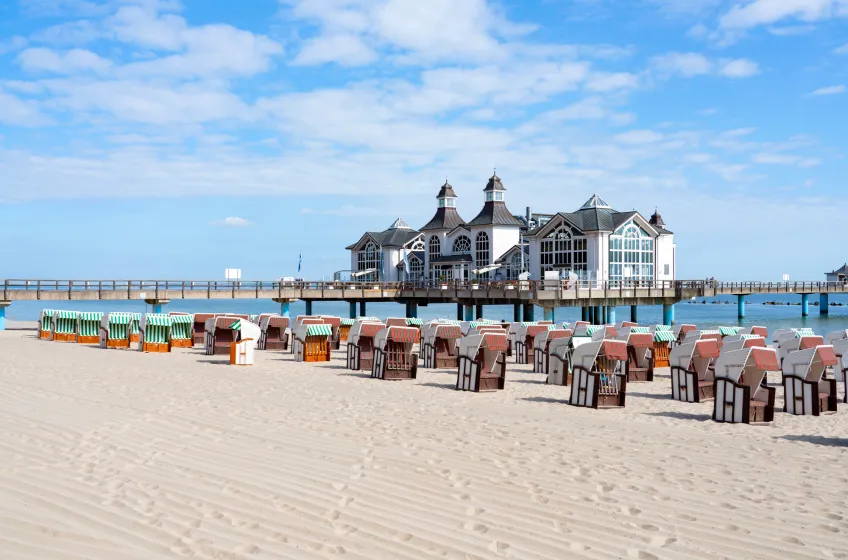
Sellin boasts one of Rügen’s most recognisable sights: its historic pier (Seebrücke Sellin), complete with a striking 1920s-style pavilion that sits elegantly above the water. It’s the perfect spot for photos, romantic strolls, or enjoying a meal with sea views at the restaurant at the end of the pier. Sellin also features a pretty town centre, a steep cliffside funicular, and access to the island’s stunning southeast coast.
Rasender Roland Steam Railway
A beloved local treasure, the Rasender Roland (Raging Roland) is a narrow-gauge steam train that puffs its way across the island, connecting the resorts of Putbus, Binz, Sellin, and Göhren. It’s a delightful way to travel and a throwback to Rügen’s spa-town heyday. The journey itself is slow-paced and scenic, making it part of the holiday experience rather than just a mode of transport.
Cape Arkona and the Slavic Heritage of Rügen
Located on the island’s northern tip, Kap Arkona is a dramatic headland with cliffs, lighthouses, and the remnants of a Slavic fortress called Jaromarsburg. Visitors can explore the two historic lighthouses, a marine navigation tower, and scenic walking paths along the cliff edges. The nearby village of Vitt, with its thatched-roof cottages and tiny fishing harbour, adds to the charm.
Prora – The Colossal Nazi-Era Resort
Prora is one of the more unusual and sobering attractions on Rügen. This massive concrete complex was built by the Nazis as a seaside resort for 20,000 people but was never completed as intended. After the war, it served military purposes under the GDR. Today, parts of it have been converted into a museum, youth hostel, and luxury flats. It’s a fascinating glimpse into 20th-century history, and the sheer scale of the building is striking.
Göhren – Beach, Boardwalks, and Views
Another of Rügen’s traditional seaside resorts, Göhren offers lovely beaches, a quieter atmosphere than Binz or Sellin, and excellent views from the Buskam – a glacial erratic and Germany’s largest coastal boulder. Göhren’s long promenade and pier make it a great base for families and walkers, and it also connects to the Rasender Roland railway.
Granitz Hunting Lodge
This fairytale-like castle, known as Jagdschloss Granitz, sits atop a wooded hill just outside Binz and offers spectacular panoramic views from its central tower. Built in the 19th century, it was once a hunting retreat for local nobility. You can reach it via a scenic hike through the forest or by a small tourist train from Binz.
Hiddensee Island
Accessible by ferry from Schaprode, Rügen’s quiet neighbour Hiddensee is a car-free island famed for its unspoiled nature, sand dunes, and peaceful vibe. It’s a great spot for day trips, cycling, and enjoying a slower pace of life. The lighthouse and the view from the Dornbusch hills are definite highlights.
Sassnitz and the Old Fishing Harbour
Sassnitz is Rügen’s main port town and a good jumping-off point for visiting Jasmund National Park. Its charming old town, fishing harbour, and sea bridges give it a working coastal character that contrasts with the resort towns. The town also features the U-Boot Museum – a real Soviet submarine that you can tour.
Mönchgut Peninsula
The southeast corner of Rügen, known as Mönchgut, is a haven of quiet countryside, fishing villages, and nature reserves. It’s less touristy than the main resort towns and ideal for walkers and cyclists. Villages like Middelhagen and Gager offer authentic local culture and superb views of the Baltic.
Putbus and the Circus
The elegant town of Putbus was founded as a planned spa resort and is known for its neoclassical architecture. Its central circular square, known as The Circus, is lined with uniform white buildings and makes for a unique photo op. The nearby park and theatre are also worth a look.
National Park Centre Königsstuhl
This eco-friendly visitor centre offers a deep dive into the region’s chalk cliffs and natural heritage. Through interactive exhibits and panoramic windows overlooking the sea, it’s an educational and scenic stop, particularly good for families.
Rügen’s Beaches
Rügen boasts over 60 kilometres of beaches, from family-friendly sandy shores to quieter, more rugged stretches. Binz and Sellin offer classic seaside experiences with amenities, while Schaabe, a 12-km-long beach near Glowe and Juliusruh, is ideal for windsurfing and long beach walks.
Practical Advice for Visitors
Getting There
Rügen is well-connected despite its island status. The Rügenbrücke, a long bridge from the mainland town of Stralsund, links it to Germany’s road and rail network. You can reach Rügen by car via the A20 motorway and the B96 trunk road. By train, direct services run to Binz and Sassnitz from cities like Berlin and Hamburg. For international travellers, the nearest major airport is Rostock-Laage (about 2 hours away by car), though Berlin airports offer more flight options.
Parking
In high season, parking in resort towns like Binz and Sellin can be a challenge, especially near the beach. Most towns have designated car parks (Parkplatz) on the outskirts with shuttle services. Street parking is usually paid and time-limited. If you're staying overnight, ask your accommodation in advance about parking availability.
Dining
Seafood is a staple on Rügen, and no visit is complete without trying smoked fish from one of the many harbourside Fischräuchereien (fish smokehouses). Try Bismarck herring, Matjes, or fresh flounder. For something more refined, head to freustil in Binz – a Michelin-starred restaurant offering innovative regional cuisine. Cafés and beach kiosks serve excellent cakes, with Sanddorn (sea buckthorn) a local speciality used in jams and desserts.
Shopping
Rügen is great for picking up artisan goods, local honey, sea buckthorn products, and maritime-themed souvenirs. The resort towns have boutique shops selling handmade jewellery, ceramics, and beachwear. Weekly markets and seasonal Christmas markets (if visiting in winter) offer local produce and crafts.
When to Visit
Summer (June to August) is peak season, with warm weather, swimming opportunities, and lively events. Spring and early autumn are ideal for walking, cycling, and quieter holidays, with mild weather and fewer tourists. Winter, though chilly, has a stark coastal beauty and draws visitors looking for solitude or wellness retreats.
Local Events
Rügen’s event calendar includes:
-
Störtebeker Festival (June–September): An open-air theatrical spectacle in Ralswiek, based on the legend of pirate Klaus Störtebeker. Highly recommended and family-friendly.
-
Rügen Classics: Vintage car parades through the island in summer.
-
Binzer Promenadenfest: A summer beach festival with music, food stalls, and fireworks.
-
Sanddorn Festival: Celebrating the local sea buckthorn harvest in autumn, often held in places like Putgarten.
Exploring Beyond Rügen
If you have extra time, the historic city of Stralsund – just across the bridge – is well worth a visit for its UNESCO-listed old town and fascinating Oceanographic Museum. The Vorpommersche Boddenlandschaft National Park on the mainland offers wetlands, birdwatching, and untouched landscapes. From Sassnitz, ferries also run to Trelleborg in Sweden, making it possible to link Rügen with a Scandinavian adventure.
Rügen remains one of Germany’s most alluring yet underrated travel destinations. Its combination of natural beauty, historic charm, and seaside elegance is hard to match. Whether you come for the cliffs, the coast, or the calm, Rügen rewards visitors with a uniquely rich and peaceful island experience.
Shortlist
- Your Shortlist is empty