
Discover Lorraine | A Visitor's Introduction to Lorraine
Recommended places to visit, places to stay and things to do in Lorraine
Lorraine is a culturally rich and naturally beautiful region in north-eastern France, known for its complex history, elegant cities, traditional cuisine, and rolling countryside. Once a powerful duchy and often contested territory, Lorraine sits at the crossroads of France, Germany, and Luxembourg, and this borderland status has left an indelible mark on its architecture, language, gastronomy, and identity.
Though no longer an official administrative region since it merged into Grand Est in 2016, Lorraine remains a meaningful and distinct destination, encompassing the departments of Meurthe-et-Moselle, Moselle, Meuse, and Vosges. Whether you're exploring medieval towns, hiking in the Vosges Mountains, tasting Quiche Lorraine, or tracing the scars of World War I, Lorraine offers a profound, scenic, and deeply authentic experience.
Includes the départements: Meurthe-et-Moselle Meuse Moselle Vosges
Recommended Lorraine accommodation: All Hotels 4&5 Star Luxury Hotels Chateau Hotels Budget Hotels Family-Friendly Hotels Spa & Wellness Hotels Bed & Breakfasts
Why is Lorraine Worth a Visit?
Lorraine is worth visiting for its diverse landscapes, rich cultural heritage, and fascinating history. It’s a region that has changed hands between nations, shaped by centuries of conflict, but also by art, faith, and regional pride. This has given Lorraine a multi-layered character—equal parts French elegance and German rigour—with baroque townhouses, Romanesque churches, Renaissance fountains, and fortified citadels dotting the land.
The region also holds great natural appeal, from the lakes and pine forests of the Vosges to the serene river valleys of the Meuse. Food is a major draw too, with iconic dishes like Quiche Lorraine, madeleines, and Mirabelle plum tarts that originate here. Whether you enjoy hiking, museum hopping, battlefield history, or simply relaxing with a view and a glass of local wine, Lorraine delivers a soulful and satisfying journey.
Lorraine Highlights: Things to See and Do in Lorraine
Nancy – Art Nouveau and Elegant Squares
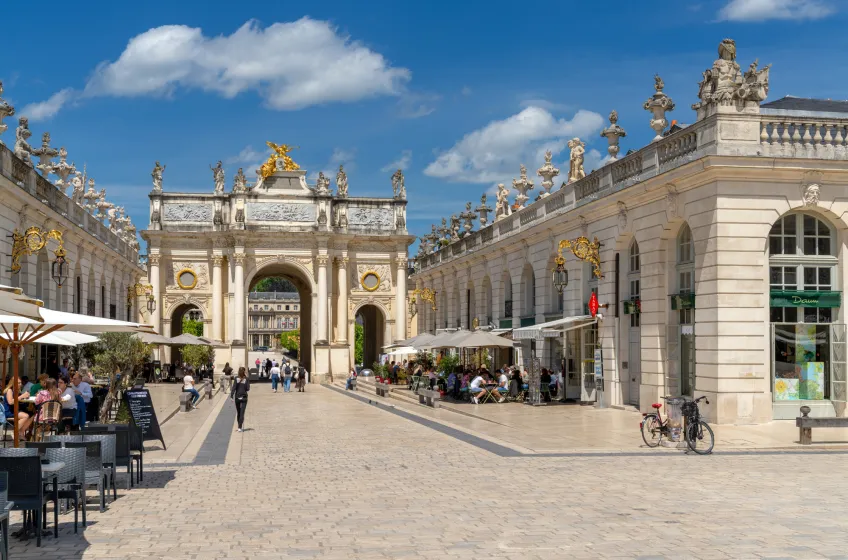
Nancy, the former capital of the Duchy of Lorraine, is a dazzling city known for its UNESCO-listed Place Stanislas, one of the most beautiful squares in Europe. Built in the 18th century, the square is a masterpiece of classical architecture, gilded gates, and elegant symmetry.
Nancy is also a hub of Art Nouveau, thanks to the École de Nancy, a movement that flourished here at the turn of the 20th century. You can explore this legacy at the Villa Majorelle, Musée de l’École de Nancy, and throughout the city’s leafy streets.
Other highlights include:
-
Palace of the Dukes of Lorraine (under renovation, museum reopening soon)
-
Old Town and Saint-Epvre Basilica
-
Botanical Gardens and Parc de la Pépinière
-
Vibrant café and student culture
Nancy is ideal for a weekend of art, culture, shopping, and fine dining.
Metz – Gothic Grandeur and Contemporary Culture
Metz, the capital of the Moselle department, balances its long history with a bold cultural presence. Its Cathédrale Saint-Étienne boasts some of the most extensive stained glass in Europe, including windows by Chagall. The Imperial Quarter reflects German architecture from the annexation period, while the Centre Pompidou-Metz is a leading venue for modern art in a futuristic setting.
Don’t miss:
-
Old Town and Covered Market
-
Temple Neuf and Esplanade Gardens
-
Musée de la Cour d’Or for Roman and medieval artefacts
-
Mirabelle Festival in August celebrating the local golden plum
Metz is a city of light, culture, and creativity—perfect for a refined city break.
Verdun – Memory and Remembrance
Verdun, in the Meuse department, is a name known across the world for the Battle of Verdun in World War I—one of the longest and bloodiest battles in history. Today, Verdun is a peaceful riverside town with a deeply emotional memorial landscape.
Essential sites include:
-
Mémorial de Verdun – immersive museum about the 1916 battle
-
Douaumont Ossuary and National Cemetery – resting place for over 130,000 soldiers
-
Fort Douaumont and Fort Vaux – underground WWI fortifications
-
Citadelle Souterraine – tunnels telling the story of the Unknown Soldier
-
Destroyed villages like Fleury-devant-Douaumont, never rebuilt
Verdun is a must-visit for history enthusiasts and thoughtful travellers.
Vosges Mountains – Lakes, Forests and Outdoor Adventure
The Vosges Mountains, stretching through the southern part of Lorraine, offer a haven for hikers, skiers, and nature lovers. With rounded peaks, glacial lakes, and pine forests, they’re less rugged than the Alps but just as inviting.
Top places include:
-
Gérardmer – lively lake resort with skiing and hiking
-
La Bresse – family-friendly ski area and summer adventure hub
-
Route des Crêtes – scenic mountain drive with sweeping views
-
Lac de Longemer and Lac de Lispach – peaceful natural lakes
Stay in a ferme-auberge, explore the trails, and savour mountain cuisine like tartiflette and blueberry tart.
Bar-le-Duc – Renaissance Beauty
In the Meuse department, Bar-le-Duc is a hidden gem with a beautifully preserved upper town of Renaissance mansions, cobbled streets, and the remarkable Church of Saint-Étienne with sculptures by Ligier Richier.
Bar-le-Duc is also famous for its redcurrant jam, made using goose quills to remove seeds by hand. It’s a quiet town ideal for slow travel, heritage walks, and tasting something uniquely local.
Vittel and Contrexéville – Spa and Wellness
These two classic French spa towns, located in the Vosges department, are known for their mineral springs and Belle Époque charm. Visitors can enjoy:
-
Thermal treatments and wellness retreats
-
Landscaped parks and historic thermal architecture
-
Golf, horse riding, and cycling
-
Sampling famous bottled waters at the source
Perfect for a relaxing stop or health-focused holiday.
Toul – Vineyards and Fortifications
West of Nancy, Toul is a walled town with a magnificent Gothic cathedral and access to the Côtes de Toul wine region, which produces crisp whites and delicate rosés. Visit local wine cellars and explore the Vauban-era fortifications around the old town.
The town also hosts the Fête de la Saint-Jean and a popular wine fair in late summer.
Saint-Mihiel – Sculptural Heritage
A small town with a big artistic legacy, Saint-Mihiel was home to Renaissance sculptor Ligier Richier, whose expressive religious works can be seen in local churches. The town lies in a scenic loop of the Meuse River, and nearby you'll find woods, cliffs, and WWI memorials.
It’s an off-the-beaten-track spot for lovers of art and quiet countryside.
Battlefields and Military Trails
Lorraine’s borderland history makes it one of France’s most significant regions for military tourism. Beyond Verdun, explore:
-
The Maginot Line – massive WW2-era fortresses like Fort Hackenberg
-
American Cemetery at Saint-Mihiel
-
German war cemeteries and memorial chapels
-
Montfaucon Monument – commemorating American troops of WWI
The region is exceptionally well-signed and respectful, with visitor centres and trails suited to all levels of interest.
Practical Advice for Visitors
Getting There
By Train: Lorraine is easily accessible by TGV. Major hubs include:
-
Nancy and Metz – direct trains from Paris Gare de l'Est (90 mins)
-
Épinal, Remiremont, Bar-le-Duc – accessible via regional trains
-
Meuse TGV station – shuttle to Verdun and Bar-le-Duc
By Car: A car is ideal for exploring rural Lorraine and battlefield routes. The A4, A31, and N57 roads offer good connections.
By Air: Nearby airports include:
-
Metz-Nancy-Lorraine Airport
-
Luxembourg (for Moselle)
-
Strasbourg or Basel-Mulhouse (for southern Vosges)
Getting Around
Public transport is decent between major towns, but many rural or mountainous areas are best reached by car. Cycling is increasingly popular, with greenways and vineyard routes throughout the region.
Parking
Generally easy and inexpensive, especially in towns outside major cities. City centres offer underground or pay-and-display parking.
Dining
Lorraine is a food lover’s region, with both hearty rural cooking and refined city cuisine. Must-try specialities include:
-
Quiche Lorraine – the original, with cream and bacon
-
Tarte aux Mirabelles – golden plum tart
-
Pâté lorrain – meat in puff pastry
-
Munster and Tomme de Lorraine – local cheeses
-
Rösti, sauerkraut, and sausages – especially in Moselle and near Alsace
-
Madeleines – especially from Commercy
-
Côtes de Toul and Moselle wines, plus Mirabelle liqueur
Many towns feature ferme-auberges (farm inns) and traditional brasseries. Look for local markets for the freshest regional products.
Shopping
Lorraine is famous for:
-
Crystal and glassware – Baccarat and Saint-Louis in Moselle
-
Textiles – Gérardmer linens
-
Mirabelle plum products – jams, liqueurs, sweets
-
Wooden toys and artisan crafts from Vosges
-
Art Nouveau ceramics and art prints, especially in Nancy and Épinal
Markets and artisan fairs are common in all seasons.
When to Visit
-
Spring (April–June): Wildflowers, daffodil festival, ideal for hiking
-
Summer (July–August): Festivals, lake swimming, vineyard visits
-
Autumn (September–October): Grape harvest, golden forests, wine tastings
-
Winter (December–March): Skiing in Vosges, Christmas markets, WWI memorial tourism in quieter conditions
Each season offers unique charm depending on your interests.
Local Events
-
Fête des Mirabelles (Metz, August) – fruit harvest celebration
-
Fête des Jonquilles (Gérardmer, April, biennial) – flower float parade
-
Place Stanislas Light Show (Nancy, summer evenings)
-
Fantasy Film Festival (Gérardmer, January) – genre film lovers’ favourite
-
Christmas Markets – Metz, Nancy, Épinal all shine in December
-
Historical reenactments and commemorations – particularly in Verdun and Saint-Mihiel
Exploring Beyond Lorraine
Lorraine is a great base to explore nearby regions:
-
Alsace – Colmar, Strasbourg, and the wine route (1–2 hours)
-
Luxembourg City – compact and cosmopolitan (1.5 hours)
-
Saarland (Germany) – culture, spas and shopping
-
Reims and Champagne region – world-class wine and heritage (2 hours)
Lorraine is a region where history runs deep, nature feels close, and culture welcomes you with open arms. From the splendour of Nancy and Metz to the reflective landscapes of Verdun, the wellness of Vittel, and the woodsy calm of the Vosges, Lorraine offers variety, authenticity, and beauty. It may not shout as loudly as other French destinations—but those who discover it are always glad they did.
Shortlist
- Your Shortlist is empty