
Discover Verdun | A Visitor's Introduction to Verdun
Recommended places to visit, places to stay and things to do in and around Verdun
Verdun, located in the Meuse department of the Grand Est region in north-eastern France, is a city etched deeply into the history of Europe. Synonymous with one of the most devastating battles of the First World War, Verdun stands as a powerful symbol of remembrance and resilience. But beyond its war memorials and cemeteries, Verdun is also a charming riverside town with a proud culinary tradition, beautiful architecture, and a tranquil atmosphere that contrasts its turbulent past.
Whether you're a history buff, a thoughtful traveller, or someone seeking a peaceful base from which to explore the verdant Meuse Valley, Verdun is a destination that offers emotion, education, and quiet beauty in equal measure.
Recommended Verdun accommodation: Hotels
Why is Verdun Worth a Visit?
Verdun is worth visiting for its profound historical significance, its role in shaping modern Europe, and its picturesque setting on the banks of the River Meuse. As the site of the Battle of Verdun in 1916, the city was the stage for one of the most intense and symbolic conflicts of the First World War. Today, Verdun honours this legacy through exceptionally well-preserved forts, cemeteries, and museums that form one of the most important memorial landscapes in the world.
Yet Verdun is also a lively town that has rebuilt itself with elegance and care. Its riverside promenade, public gardens, and welcoming cafés provide a serene backdrop for contemplation and discovery. The cuisine is rich and regional, the pace of life is relaxed, and the sense of history is ever-present but not overwhelming.
Verdun is both a memorial and a modern town—a place to reflect, to explore, and to enjoy.
Verdun Highlights: Things to See and Do in Verdun
Mémorial de Verdun
This striking and moving museum is the heart of Verdun’s commemorative landscape. Completely redesigned in 2016 to mark the battle’s centenary, the Mémorial de Verdun provides an immersive experience that places visitors in the shoes of soldiers—French and German—who fought here.
Through photographs, films, personal objects, and reconstructed trench scenes, the museum presents the horror, bravery, and futility of war in deeply human terms. It’s a must-see for any visitor, and a deeply moving place of reflection.
Ossuaire de Douaumont and National Cemetery
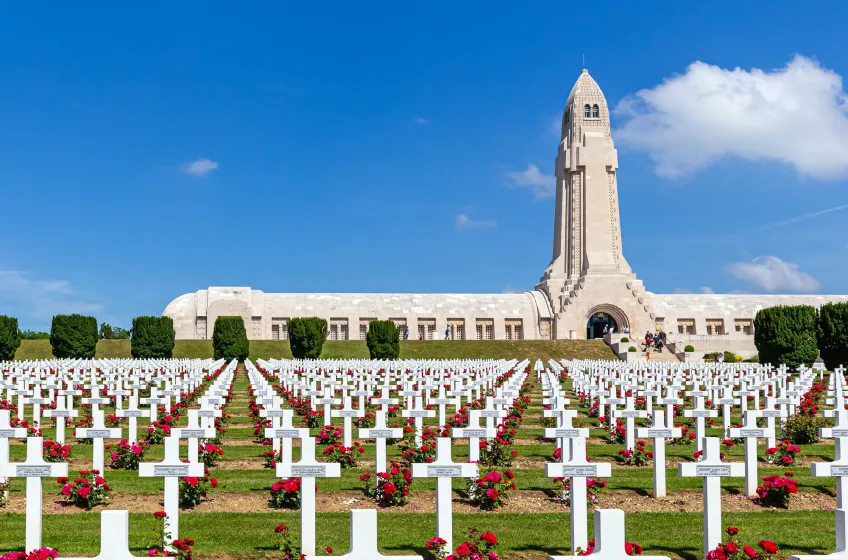
One of France’s most important war memorials, the Douaumont Ossuary houses the remains of over 130,000 unidentified French and German soldiers. The sombre white stone building stretches across the landscape like a tombstone, with a striking bell tower that chimes every 15 minutes.
In front of the ossuary lies the Douaumont National Cemetery, its rows of white crosses extending to the horizon—a powerful visual of the war’s human cost. Both sites are essential stops on the memory trail and remain respectfully preserved.
Fort Douaumont and Fort Vaux
These two forts played pivotal roles during the Battle of Verdun and are among the best-preserved military structures from the war. Fort Douaumont, the largest and most strategic of the forts, was occupied by German forces early in the battle and became a key target throughout the 10-month conflict.
Visitors can explore the dark, echoing passageways, command rooms, and bunkers. Nearby, Fort Vaux is smaller but equally atmospheric, known for the heroic resistance of its French garrison. Both sites offer guided tours, and audio guides are available in multiple languages.
Tranchée des Baïonnettes (Bayonet Trench)
This small but haunting site memorialises a story of soldiers allegedly buried alive by shellfire, their bayonets still protruding above the soil. Though the truth behind the tale is debated, the Tranchée des Baïonnettes remains a solemn and symbolic place, with a memorial walkway flanked by stone columns marking the spot.
It’s easily reached by road and worth visiting for its symbolism and tranquillity.
Fleury-devant-Douaumont
One of the nine villages destroyed during the Battle of Verdun, Fleury-devant-Douaumont was never rebuilt. Today, it exists as a "village that died for France," with its streets and houses marked by plaques showing where the baker, school, or town hall once stood.
A chapel and visitor centre explain the village’s fate, and the surrounding area offers peaceful wooded trails perfect for a reflective walk.
Verdun Underground Citadel (Citadelle Souterraine)
Beneath the city lies the Citadelle Souterraine, an extensive network of underground tunnels and galleries that sheltered French troops during the war. A new immersive experience takes visitors on a self-driving cart ride through the tunnels, using audio-visual projections to bring the lives of soldiers to life.
The tour culminates with the story of the Unknown Soldier who was chosen here to rest beneath the Arc de Triomphe in Paris—a poignant moment in France’s national memory.
Verdun Cathedral and Episcopal Palace
Verdun’s Cathédrale Notre-Dame is one of the oldest in Lorraine, with parts dating back to the 11th century. Its Romanesque and Gothic architecture is impressive, and the cloister garden is a peaceful place to pause.
Next door, the Palais Episcopal now houses the World Centre for Peace, Liberty and Human Rights, which hosts exhibitions and events exploring modern peace-building efforts and the legacy of war. The view from the palace terrace over the Meuse River is worth the stop alone.
River Meuse Promenade
The quayside promenade along the River Meuse is one of Verdun’s most pleasant places to relax. Tree-lined paths, bridges, and open lawns invite leisurely strolls, while riverside cafés and brasseries offer lovely spots to enjoy local food and wine.
Boat rides and paddle boats are sometimes available in summer, and the views at sunset are especially beautiful.
Verdun’s Museums and Memorials
In addition to the major memorials, Verdun offers several smaller but fascinating sites:
-
Faubourg Pavé Cemetery – a peaceful and beautifully kept war cemetery
-
Centre Mondial de la Paix – exhibitions on conflict and peace in the Episcopal Palace
-
German Military Cemetery at Consenvoye – a sobering, quieter site with over 11,000 graves
-
American Monument at Montfaucon – a short drive away, this hilltop column honours US forces who fought in the Meuse-Argonne Offensive
Practical Advice for Visitors
Getting There
By Train: Verdun does not have high-speed TGV service, but regional TER trains connect it to Metz, Nancy, and Paris (via Meuse TGV, with a shuttle). Total travel time from Paris is around 2.5 hours.
By Car: Driving is the most convenient way to explore Verdun and its many outlying battlefields. The city is well-connected by the A4 motorway, and car rental is available in Metz, Nancy, or at Meuse TGV station.
By Air: The nearest airport is Metz-Nancy-Lorraine Airport, about 1 hour from Verdun. Luxembourg and Strasbourg airports are also within reach.
Parking
Parking in Verdun is easy and affordable. There are several central car parks, and many memorial sites offer free parking. Look for signage around Place Chevert or along the Meuse.
Getting Around
The city centre is compact and walkable. For the battlefield sites, a car is essential, although there are occasional organised tours available from Verdun during peak season. Cycling is also a good option if you're staying a few days, with bike rentals available locally.
Dining
Verdun’s culinary offerings reflect its Lorraine heritage, with plenty of local specialities to sample:
-
Quiche Lorraine – the region’s iconic dish
-
Pâté lorrain – a delicious pork pastry
-
Mirabelle plum tarts and brandy
-
Madeleines and macarons from local bakeries
-
Lorraine beer and cider
Recommended restaurants include:
-
Le Clapier – modern French cuisine with fresh, seasonal ingredients
-
Chez Mamie – cosy atmosphere and traditional dishes
-
La Gargote – popular with locals for its friendly service and regional menu
For lighter fare or a drink, try a riverside café along the Quai de Londres.
Shopping
Verdun is a good place to pick up thoughtful souvenirs. Look for:
-
Books and maps about Verdun and WWI
-
Local wines and mirabelle liqueurs
-
Artisan terrines, pâtés, and cheeses
-
Commemorative memorabilia from museum gift shops
The weekly market takes place on Fridays, offering local produce, pastries, and handmade goods.
When to Visit
The best time to visit Verdun is between April and October, when the weather is mild, and all museums and memorials are fully open. May to June is ideal for cooler weather and fewer crowds. Summer is busiest but offers outdoor events and longer opening hours.
Autumn (September–October) is particularly beautiful, with golden colours across the wooded battlefield zones. Winter is quiet and atmospheric, though some sites operate limited hours.
Local Events
-
Battle of Verdun Commemorations (February & June): Ceremonies at Douaumont and the Ossuary
-
Sound & Light Show at the Citadel (summer): Multimedia projection telling the story of Verdun’s past
-
Verdun Jazz Festival (July): Live music in scenic settings
-
Christmas Market (December): Lights, crafts, and festive foods along the river
Exploring Beyond Verdun
If you have extra time, consider these nearby destinations:
-
Saint-Mihiel (30 mins): Home to Renaissance sculptures by Ligier Richier
-
Bar-le-Duc (45 mins): Renaissance upper town and red currant jam
-
Montmédy (1 hour): Citadel town near the Belgian border
-
Meuse-Argonne American Cemetery (45 mins): The largest US WWI cemetery in Europe
-
Lac de Madine (40 mins): Outdoor recreation and nature walks
Verdun is a place like no other—a town where history lives in the landscape, where memory is honoured with dignity, and where peace and beauty have returned to lands once torn apart by war. Whether you're walking through ancient forts, dining beside the river, or standing in silence among thousands of white crosses, Verdun offers a travel experience that is as powerful as it is peaceful. For reflection, learning, and inspiration, Verdun is truly a destination worth the journey.
Shortlist
- Your Shortlist is empty