
Meurthe-et-Moselle | A Visitor's Introduction to Meurthe-et-Moselle
Recommended places to visit, places to stay and things to do in Meurthe-et-Moselle
Meurthe-et-Moselle is a department in north-eastern France, part of the Grand Est region, that blends industrial heritage, cultural richness, and natural beauty in a surprising and engaging way. Centred around the vibrant city of Nancy, this area is steeped in history—from Roman roads and medieval strongholds to elegant 18th-century squares and the graceful curves of Art Nouveau. Stretching from the vineyards of Toul to the forests near the Belgian and Luxembourg borders, Meurthe-et-Moselle offers a diverse and rewarding experience for culture lovers, history enthusiasts, foodies, and outdoor adventurers alike.
Recommended Meurthe-et-Moselle accommodation: Hotels
Why is Meurthe-et-Moselle Worth a Visit?
Meurthe-et-Moselle is worth visiting for its architectural grandeur, historic depth, and geographic variety. At its heart is Nancy, one of France’s most elegant cities, known for its spectacular squares, its Art Nouveau treasures, and its academic and cultural dynamism. The department’s past is rich and complex—having changed hands between French and German rule multiple times—which lends its towns and fortresses a fascinating multicultural flavour.
Outside the city, the vineyards and fortified towns of the Toul area, the battle-scarred hills near Verdun, and the forests and rivers of the Lorraine plateau offer a completely different experience, with nature reserves, sleepy villages, and tranquil paths.
Whether you're marvelling at gilded gates in Nancy, sipping gris de Toul in a vineyard, or cycling along the Moselle River, Meurthe-et-Moselle delivers a multi-faceted French escape with an under-the-radar charm.
Meurthe-et-Moselle Highlights: Things to See and Do in Meurthe-et-Moselle
Place Stanislas, Nancy
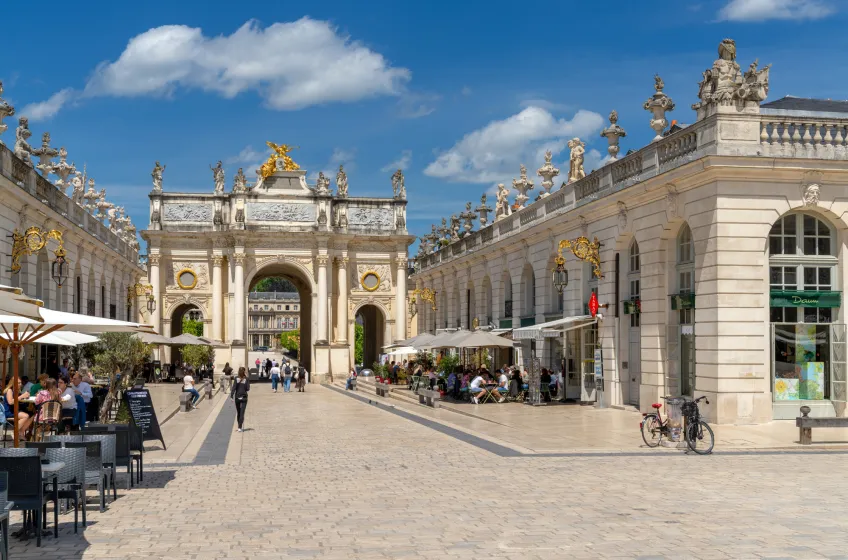
Place Stanislas is the crown jewel of Meurthe-et-Moselle and one of France’s most beautiful city squares. Completed in 1755, it features harmonious classical architecture, ornate wrought-iron gates gilded in gold, and a statue of Stanislas Leszczyński, the Polish king turned Duke of Lorraine.
A UNESCO World Heritage Site, the square is the social and architectural heart of Nancy. It’s surrounded by the City Hall, Opera House, and Fine Arts Museum, with fountains, cafés, and a grand sense of space. Visit by day for photos and people-watching, and return at night to see it dramatically illuminated.
Nancy’s Art Nouveau and the École de Nancy Museum
Nancy was one of the major centres of the Art Nouveau movement in the early 20th century, and its legacy is still very much alive. You’ll find flowing floral motifs, curved glasswork, and elegant iron balconies throughout the city.
The Musée de l’École de Nancy is housed in a period villa with exquisite interiors, furniture, glass, and design pieces by artists such as Emile Gallé, Louis Majorelle, and Victor Prouvé. Guided walks or self-guided Art Nouveau trails are available to explore the architecture of the Saurupt and Nancy Thermal districts.
Toul and its Vineyards
Just west of Nancy lies the fortified town of Toul, with its impressive Gothic cathedral, ramparts, and old town filled with quiet squares and medieval lanes. Toul is also the centre of the Côtes de Toul wine region, known for its delicate gris de Toul (a pale rosé) and crisp whites.
You can tour local wineries, many of which offer tastings and vineyard walks, especially around Bruley, Lucey, and Pagney-derrière-Barine. Combine wine tasting with visits to the Vauban-era fortifications, and enjoy a relaxed afternoon away from the city.
Fort de Villey-le-Sec
Located near Toul, the Fort de Villey-le-Sec is part of the Séré de Rivières defence system built after the Franco-Prussian War. It’s one of the few forts of its kind in France that is still intact and open to visitors. You can explore underground galleries, barracks, and artillery positions—often on guided tours that include a ride on the original narrow-gauge military railway.
This is a great destination for military history enthusiasts and families alike, with special events held throughout the year.
Château de Lunéville
Known as the “Versailles of Lorraine,” the Château de Lunéville was once the residence of the Dukes of Lorraine. The current building dates from the 18th century and was heavily influenced by the grandeur of the French court. Though damaged by fire in 2003, extensive restoration has brought much of it back to life.
The château is now a cultural centre, with exhibitions, concerts, and theatrical events throughout the year. The surrounding formal gardens and English-style park are open to the public and make for a lovely day out.
Briey and Le Corbusier’s Cité Radieuse
In contrast to the historic sites elsewhere in the department, the town of Briey offers a fascinating piece of modernist architecture—the Unité d’Habitation, designed by Le Corbusier in the 1950s. One of only five such structures in the world, it reflects a radical vision for post-war communal living.
Though no longer entirely residential, parts of the building are open to visitors, with guided tours that explain its architecture, social philosophy, and current use as a cultural venue.
Lorraine Regional Natural Park
In the north-west of the department, the Parc Naturel Régional de Lorraine extends into Meurthe-et-Moselle, Meuse, and Moselle. It’s a mosaic of lakes, forests, wetlands, and villages, offering fantastic opportunities for hiking, birdwatching, and nature photography.
Popular areas include Lac de Madine, where you can sail or cycle around the shore, and Butte de Montsec, a WWI memorial with panoramic views. The park also hosts environmental education centres, walking trails, and local produce markets.
Longwy’s Enamel and UNESCO Fortifications
Longwy, at the northern tip of the department near the Luxembourg border, is known for two things: its enamelled faience ceramics and its UNESCO-listed fortifications, designed by Vauban.
The Citadel and its star-shaped defensive layout are impressive, and you can visit the Enamel Museum to learn about the city’s distinctive brightly coloured ceramics. This town offers an interesting combination of military, industrial, and artistic heritage.
Bayon and the Moselle Valley
The small town of Bayon, situated along the Moselle River, is a peaceful spot ideal for a riverside walk or cycle ride. The area offers a glimpse of rural Lorraine life with stone houses, quiet roads, and wide open skies. It’s also a starting point for exploring the Moselle Valley by bike or on the water.
There are dedicated greenways (voies vertes) for cyclists along the river, connecting charming villages and nature reserves.
Practical Advice for Visitors
Getting There
By Train: The easiest way to reach Meurthe-et-Moselle is by train. Nancy is a major hub on the high-speed TGV line, with regular connections to Paris (1h30), Strasbourg, and Metz. Regional trains connect to smaller towns such as Toul, Lunéville, and Longwy.
By Car: Driving is useful for exploring the more rural or off-the-beaten-track areas, particularly around Toul, the Lorraine Regional Park, and the wine routes. The A31 motorway runs through the department and connects to Luxembourg, Metz, and Dijon.
By Air: The nearest major airport is Metz-Nancy-Lorraine Airport, about 40 minutes from Nancy, with domestic and limited international flights. For more options, Luxembourg or Strasbourg airports are within a 1.5–2-hour drive.
Parking
Nancy has several multi-storey and underground car parks. Street parking is also available, though usually metered in central areas. Smaller towns like Toul and Lunéville offer free or inexpensive parking, especially near the historic centres.
Dining
Meurthe-et-Moselle offers hearty Lorraine cuisine, blending rustic French cooking with eastern European influences. Dishes to try include:
-
Quiche Lorraine – the classic tart with bacon and cream
-
Pâté lorrain – a savoury meat pie with puff pastry
-
Potée lorraine – a slow-cooked dish of pork, sausage, and root vegetables
-
Mirabelle plum desserts – including tarts, jams and brandy
Restaurants in Nancy range from traditional brasseries to contemporary bistros. Recommended spots include:
-
L’Arsenal – modern French cuisine in Nancy’s old town
-
Brasserie Excelsior – a Nancy institution with a Belle Époque setting
-
La Maison Carrée near Toul – for refined dishes in a rural setting
Markets are held throughout the department, with Nancy’s Marché Central offering regional produce, cheese, cured meats and more.
Shopping
For unique souvenirs, look for:
-
Limoges-style enamel from Longwy
-
Art Nouveau glass and ceramics from Nancy
-
Local wines from Côtes de Toul
-
Mirabelle plum brandy or jam
-
Handcrafted pâtés, terrines, and cheeses
In Nancy, the area around Rue des Dominicains and Rue Saint-Dizier is ideal for boutique shopping, while Place Charles III hosts a large covered market.
When to Visit
The best time to visit Meurthe-et-Moselle is May to September, when the weather is warm, and cultural events and festivals are in full swing. Spring offers blooming parks and fewer crowds, while autumn is lovely for vineyard visits and regional cuisine.
Winter is quieter, but Nancy’s Christmas market is one of the best in eastern France, lighting up Place Charles III and surrounding streets with festive cheer and local products.
Local Events
-
Rendez-vous Place Stanislas (summer): A spectacular nightly light and sound show projected onto the buildings of Place Stanislas
-
Nancy Jazz Pulsations (October): One of France’s top music festivals, featuring jazz, funk, soul, and world music
-
Fêtes de Saint-Nicolas (December): Traditional celebrations honouring Lorraine’s patron saint, especially vibrant in Nancy
-
Toul Wine Festival (May): Tastings, concerts, and cellar tours in the heart of the Côtes de Toul vineyards
Exploring Beyond Meurthe-et-Moselle
From Meurthe-et-Moselle, it’s easy to explore neighbouring highlights such as:
-
Metz (45 minutes by train): A city of art, history, and stunning Gothic architecture
-
Verdun (1 hour): The site of major WWI battles, with moving memorials and museums
-
Vosges Mountains (1.5 hours): For hiking, skiing, and nature retreats
-
Alsace Wine Route (2 hours): Picturesque villages and world-class wines
Meurthe-et-Moselle is a region of contrast and character—where opulent squares meet quiet vineyards, and where artistic innovation coexists with military history. Whether you're sipping wine in the sun, exploring a fortress, admiring Art Nouveau façades, or strolling through one of France’s finest city squares, this lesser-known corner of the Grand Est delivers culture, authenticity, and charm in equal measure.
Shortlist
- Your Shortlist is empty