
Discover The Westgate Towers Museum & Viewpoint
Westgate Towers, situated at the western entrance to the historic city of Canterbury in Kent, is the largest and best-preserved surviving city gate in England. Constructed in the late 14th century during the reign of Richard II, it stands as an imposing remnant of Canterbury’s medieval defensive walls and serves as a vivid reminder of the city's strategic importance in centuries past. Built of Kentish ragstone and over 60 feet high, the towers were originally intended to fortify the city against attack, protect key routes into Canterbury, and serve as a checkpoint for travellers and traders entering the city. Today, the structure not only offers insight into medieval architecture and defence but also houses the Westgate Towers Museum and Viewpoint, providing panoramic views over Canterbury and the surrounding landscape.
Located at the end of the city's bustling High Street and adjacent to the River Stour, Westgate Towers provides a striking contrast between the past and present. It continues to welcome thousands of visitors annually who come to explore the museum, enjoy scenic walks along the ancient city walls, or simply appreciate its architectural significance. The attraction serves both as a gateway to Canterbury’s rich heritage and as a starting point for exploring the broader historical and cultural offerings of the city.
Recommended Canterbury accommodation: Hotels Bed & Breakfasts Pub Accommodation
Pre-book Canterbury Attractions, Tours & Experiences
Why Are Westgate Towers Worth a Visit?
Westgate Towers is well worth a visit due to its unique position as one of the few remaining medieval city gates in the UK that is still largely intact and accessible. Its historical and architectural significance makes it a rare example of 14th-century urban fortification. As a Grade I listed building, it provides a tangible link to the past and offers a detailed look at how cities like Canterbury were protected and controlled during the medieval period.
Visitors are drawn not only to the impressive architecture but also to the educational content housed within the museum, which explores the structure’s use over the centuries—not only as a defensive gate but also as a prison, a police station, and even as a private residence. The tower’s interior features original cells, guard rooms and artefacts, which illustrate the multifaceted role the building has played in Canterbury’s civic life.
The rooftop viewpoint is another reason to visit. It offers an elevated perspective over the city, including views of the cathedral spires, historic rooftops, and surrounding countryside. This combination of historical interest, architectural integrity, and scenic observation makes Westgate Towers a compelling destination for visitors of all ages.
Highlights of the Westgate Towers
Westgate Towers Museum
The museum within the tower is dedicated to exploring the history and evolving function of the building. Exhibits include weaponry, period costumes, and multimedia presentations that bring the tower’s history to life. Visitors can learn about the gate’s role in defending the city and regulating trade, as well as its use as a prison from the 15th century until the early 20th century. Interpretive panels and guided tours help contextualise these various roles.
Medieval Architecture
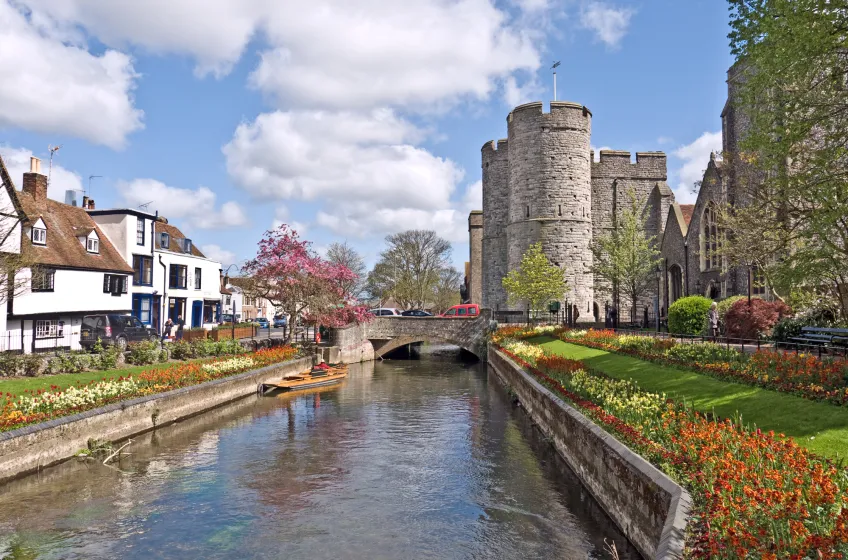
Westgate Towers is an outstanding example of medieval military architecture. The twin-towered gatehouse, built of grey Kentish ragstone, features battlements, machicolations (floor openings through which defenders could drop objects or fire upon attackers), and arrow slits. The stonework and surviving interior structures give insight into 14th-century construction methods and design.
Original Prison Cells
One of the most evocative parts of a visit to Westgate Towers is the opportunity to explore the prison cells used when the gatehouse was converted into a jail. Visitors can see how the cells would have looked during their use in the 18th and 19th centuries, complete with iron bars and heavy wooden doors. Interpretive signage details the types of crimes and punishments common during the periods of operation.
Rooftop Viewpoint
Climbing to the top of the tower rewards visitors with expansive views over Canterbury and its surrounding area. The viewpoint offers one of the best opportunities in the city to view Canterbury Cathedral from a distance, as well as the River Stour and the old city walls. It's a popular photo spot and provides a clear understanding of Canterbury’s medieval layout.
Historic Westgate Gardens
Immediately adjacent to the tower, the Westgate Gardens stretch along the River Stour and provide a tranquil green space in the heart of the city. The gardens feature mature trees, flowerbeds, and riverside pathways. The proximity of these gardens enhances a visit to the tower, offering a peaceful setting for rest or a riverside picnic.
City Wall Walk
From Westgate Towers, visitors can access portions of the remaining medieval city wall, which once fully encircled Canterbury. The preserved sections offer a walking route along the historic perimeter of the old city, accompanied by information boards that detail the structure's defensive and symbolic purposes.
Historic Exhibitions and Artefacts
Throughout the tower, visitors will find changing exhibitions and displays focusing on local history, military defence, and everyday life in medieval Canterbury. The museum collection includes arms and armour, prison records, and artefacts discovered during restoration work. These exhibitions provide additional layers of historical context.
Heritage Events and Talks
Throughout the year, Westgate Towers hosts a variety of events such as history talks, family activities, and seasonal exhibitions. These events are designed to make the history of the towers more accessible and engaging for a wide audience, with some specifically tailored to school groups or history enthusiasts.
Audio and Interactive Guides
The attraction provides audio guides and interactive screens that enrich the experience with historical narratives, reconstructed images, and personal stories. These additions help visitors better understand the various transformations of the site through different periods.
The Old Police Station
Another point of interest within the complex is the old police station that was once housed within the tower. Visitors can see some of the former office space and learn about how the building was adapted for civic use during the 19th and 20th centuries.
Gift Shop and Exhibits
A small gift shop within the museum area offers history books, postcards, local crafts, and souvenirs related to the tower and Canterbury’s wider history. Occasionally, the shop features exhibits of local art and artisan goods linked to the historical themes of the site.
Nearby Attractions
Westgate Towers is conveniently located at the gateway to Canterbury’s city centre, making it a suitable starting point for a wider exploration of the city's attractions. Just a short walk from the towers lies Canterbury Cathedral, one of the most significant religious buildings in England and the seat of the Archbishop of Canterbury. This UNESCO World Heritage Site is a centrepiece of the city and offers in-depth tours and exhibitions.
A few minutes from the towers is The Canterbury Roman Museum, which takes visitors below street level to explore preserved Roman mosaic floors and learn about the Roman origins of the city. The Beaney House of Art and Knowledge, located on the High Street, combines an art gallery, museum and library under one roof and offers a variety of exhibitions and collections.
Nearby, St Augustine’s Abbey and St Martin’s Church, also part of the Canterbury World Heritage Site, offer further insight into the early Christian history of Britain. For those interested in scenic experiences, a punting tour on the River Stour offers a different view of the city’s medieval architecture and green spaces. Additionally, Canterbury Castle, though in ruins, remains an important Norman structure to explore.
Practical Advice for Visitors
Westgate Towers is open to the public throughout the year, although opening times may vary seasonally. It is advisable to check the official website for the most up-to-date information regarding hours, admission prices, and any scheduled closures. Entry to the tower and museum is ticketed, with concessions available for students, seniors, and families.
The tower is located near major bus routes and is a short walk from Canterbury West railway station, making it easily accessible by public transport. Limited parking is available nearby, with larger car parks situated within a 10-minute walk of the site. As a historic building, access to some areas may be limited for visitors with mobility impairments due to narrow staircases and uneven flooring.
The site includes a small visitor centre with restroom facilities and a gift shop, though there is no café on site. However, the surrounding area offers a range of restaurants, cafés and shops, given its central location near the High Street. The adjacent Westgate Gardens provide an excellent setting for a break, especially in fine weather.
It’s recommended that visitors allow around one to two hours to fully explore the tower, museum and viewpoint, although those with a strong interest in medieval history may wish to spend more time engaging with the exhibits. Guided tours may be available on request or during special events, and educational visits can be arranged for schools and groups.
Conclusion
Westgate Towers stands as a historically rich and visually striking gateway into Canterbury’s medieval past. Its architectural grandeur, combined with the immersive museum experience and elevated views of the city, make it a worthwhile destination for those interested in England’s urban history and defence heritage. Whether visited as a standalone attraction or as part of a broader itinerary exploring Canterbury’s many historic sites, Westgate Towers provides both educational value and an atmospheric sense of connection to the centuries of history that have shaped the city.
Shortlist
- Your Shortlist is empty