
A Visitor's Introduction to St. Martin's Church, Canterbury
St Martin’s Church in Canterbury, Kent, holds the distinguished title of being the oldest church in continuous use in the English-speaking world. Located just east of Canterbury city centre, this small yet historically vital church has been in use since at least the late 6th century, and possibly earlier. It was the private chapel of Queen Bertha of Kent, a Christian Frankish princess who married the pagan King Æthelberht of Kent and was instrumental in paving the way for the Christianisation of Anglo-Saxon England.
St Martin’s forms part of the Canterbury UNESCO World Heritage Site, alongside Canterbury Cathedral and St Augustine’s Abbey. Together, these three sites tell the story of the reintroduction of Christianity to southern England by St Augustine, the missionary sent from Rome by Pope Gregory the Great in AD 597. The church’s Roman and Saxon architectural elements, combined with its active role in parish life, make it a unique blend of living religious practice and preserved historical structure.
Recommended Canterbury accommodation: Hotels Bed & Breakfasts Pub Accommodation
Pre-book Canterbury Attractions, Tours & Experiences
Why is St. Martin's Church Worth a Visit?
St Martin’s Church is a place of immense historical and spiritual importance. Its direct connection to the arrival of Christianity in England makes it a site of national heritage significance. As Queen Bertha’s private chapel, it predates Augustine’s mission and served as his first place of worship upon arriving in Kent. It was here that Augustine celebrated mass before the establishment of what would become Canterbury Cathedral, effectively making St Martin’s the cradle of English Christianity.
For visitors interested in early medieval history, ecclesiastical architecture, or religious heritage, St Martin’s offers an exceptional example of continuity. Despite its age, it is still a functioning parish church with regular services and community events, giving it a lived-in feel that many heritage sites lack. The church contains elements from Roman, Saxon, Norman, and later periods, each visible in the fabric of the building and contributing to its layered story.
Its location, slightly off the main tourist trail, means it offers a more peaceful and contemplative experience than the busier cathedral precincts. The combination of ancient architecture, active worship, and its role in the Christianisation of Britain make St Martin’s a compelling site for anyone seeking a deeper understanding of the country’s religious and cultural foundations.
Highlights of St. Martin's Church
Roman Brickwork
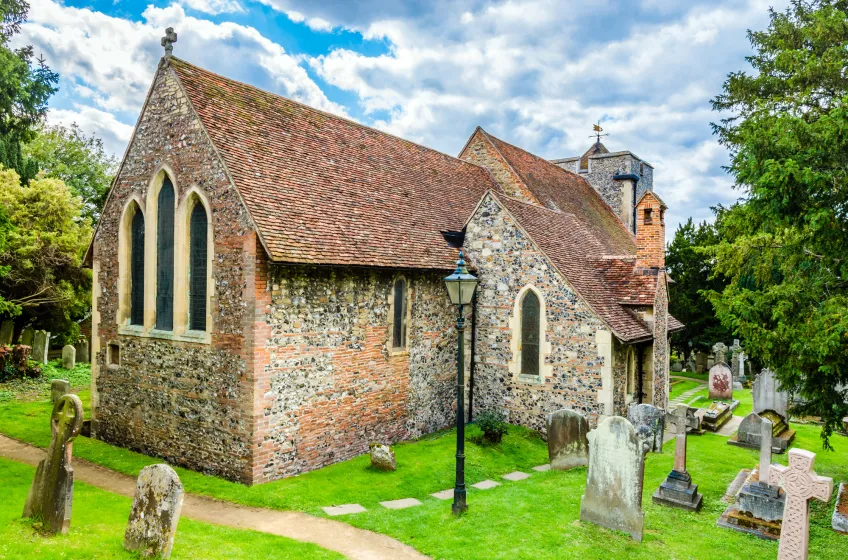
One of the most striking features of St Martin’s Church is the presence of reused Roman bricks within its structure. These are clearly visible in the chancel walls and form part of the original late Roman or early post-Roman fabric. The use of these materials not only reflects the Roman influence in Kent but also symbolises the continuity of sacred space from Roman Britain into the Christian Anglo-Saxon period.
Queen Bertha and the Frankish Chapel
According to historical sources such as the Ecclesiastical History of the English People by the Venerable Bede, Queen Bertha was already a practising Christian when she came to Kent from what is now France. She brought with her a bishop named Liudhard and was permitted to continue her faith by King Æthelberht. The chapel she used—what would become St Martin’s Church—was probably of Roman origin and was restored for her use, making it the oldest site of continuous Christian worship in England.
St Augustine’s Arrival
When Augustine arrived in AD 597, he used St Martin’s as his base of operations while converting King Æthelberht and establishing a Christian community. Augustine is believed to have celebrated mass in the church, and it remained a vital site during the early years of the mission. This makes the church one of the first focal points of the Roman Catholic mission to England.
Saxon and Norman Additions
The building underwent several modifications during the Anglo-Saxon and Norman periods. Visitors can see early Saxon features such as small windows with stone dressing, as well as Norman arches and alterations that date to the 11th and 12th centuries. Later medieval additions and 19th-century restorations have also contributed to the church’s current appearance, but the core structure still contains materials and layouts dating back to the 6th century.
Memorials and Monuments
Inside the church, several monuments and memorials honour key figures in its long history. Of particular note is the memorial to Queen Bertha in the churchyard, commemorating her role in the Christianisation of England. The simple interior includes carved wooden furnishings, historical plaques, and stained glass windows that tell the story of the church’s early beginnings.
Churchyard and Setting
The church sits on a quiet hillside, surrounded by an attractive churchyard containing old gravestones and well-kept greenery. From this elevated location, visitors can enjoy views back towards the city centre and Canterbury Cathedral. The peaceful setting adds to the reflective nature of a visit and enhances the atmosphere of spiritual continuity that the site embodies.
Parish Life and Services
St Martin’s is not just a historic monument—it is a working church that continues to hold regular Anglican services, including Eucharist and Morning Prayer. Special services mark feast days and historical anniversaries. Visitors are welcome to attend services or explore the church during its public opening hours, which vary depending on the season and religious calendar.
Heritage and Educational Resources
The church provides printed and digital materials to help visitors understand its significance. Guided tours can sometimes be arranged by prior appointment, and information panels within the church explain its key features and historical moments. The site also plays an educational role in local heritage programmes and school visits.
Nearby Attractions
St Martin’s Church is located within walking distance of Canterbury’s other key heritage sites, making it easy to combine with a broader tour of the city. Just a few hundred metres to the west lies St Augustine’s Abbey, the ruined Benedictine monastery founded by Augustine shortly after his arrival. The abbey, now managed by English Heritage, contains the graves of early archbishops and kings and offers extensive archaeological remains and a visitor centre.
A further ten-minute walk from the abbey leads to Canterbury Cathedral, the ecclesiastical heart of England and one of the finest examples of Gothic architecture in Europe. The cathedral is famed for its architecture, its role in the history of the English church, and as the site of the martyrdom of Thomas Becket.
Other nearby points of interest include The Beaney House of Art and Knowledge, The Canterbury Roman Museum, Westgate Towers, and Canterbury Castle ruins. The riverside Westgate Gardens also offer a scenic place to relax after visiting the city’s historical attractions.
Practical Advice for Visitors
St Martin’s Church is open to visitors during set hours, though these may vary depending on the time of year and church services. It is advisable to check the church’s official website or contact them in advance to confirm opening times, especially if planning a group visit or hoping to arrange a guided tour.
Admission to the church is free, although donations are appreciated to help with the upkeep of the historic site. As a place of worship, visitors are asked to respect the quiet atmosphere, particularly when services are in progress. Photography is usually permitted, but flash and tripods may be discouraged.
The church is located about a 15-minute walk from Canterbury city centre. It can be reached easily on foot from Canterbury East railway station or by local bus. There is limited street parking in the surrounding residential area, so public transport or walking is recommended. The route from the city centre is uphill but manageable for most visitors.
Access for those with mobility issues may be limited due to uneven paths and the historic nature of the building and its surroundings. However, the churchyard is generally accessible, and volunteers are sometimes available to assist during opening hours.
Visitors interested in heritage trails can follow the Canterbury World Heritage Site route, which links St Martin’s Church with St Augustine’s Abbey and the Cathedral. This walking route is signposted and supported by printed maps and digital guides.
Conclusion
St Martin’s Church is a site of profound historical and religious importance, standing at the origin point of English Christianity. Its ancient structure, serene setting, and active worship life make it both a place of pilgrimage and a valuable historical destination. As part of Canterbury’s UNESCO World Heritage Site, it complements visits to the nearby cathedral and abbey, offering a fuller picture of how Christianity took root in Anglo-Saxon England. Whether approached from a spiritual, academic, or architectural perspective, St Martin’s Church is a compelling and memorable place to visit.
Shortlist
- Your Shortlist is empty