
Canterbury Cathedral | A Visitor's Introduction to Canterbury Cathedral
Canterbury Cathedral, located in the historic city of Canterbury in Kent, is one of the oldest and most significant Christian structures in England. It serves as the mother church of the worldwide Anglican Communion and the seat of the Archbishop of Canterbury. Founded in 597 AD by St Augustine, who was sent by Pope Gregory the Great to convert the Anglo-Saxons, the cathedral has been a centre of Christian worship for over 1,400 years.
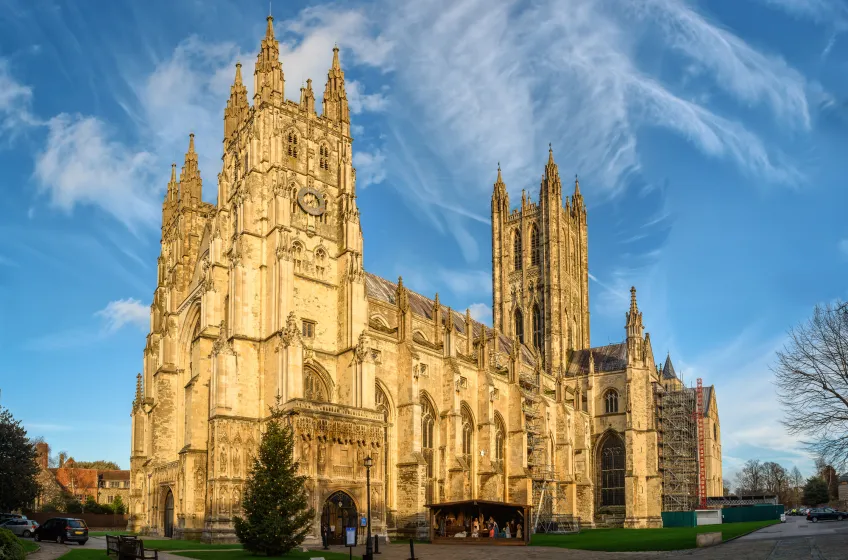
The current Gothic structure, largely built between the 11th and 15th centuries, is renowned for its architectural complexity, stunning stained glass windows, and pivotal role in English religious and political history. As a UNESCO World Heritage Site, the cathedral attracts hundreds of thousands of visitors each year, both for its spiritual significance and its cultural and artistic value.
Pre-book Canterbury Cathedral skip-the-line and guided tour options
Recommended Canterbury accommodation: Hotels Bed & Breakfasts Pub Accommodation
Why is Canterbury Cathedral Worth a Visit?
Canterbury Cathedral is not only a place of active worship but also a remarkable repository of English heritage. Its long and layered history reflects the story of Christianity in England and its role in national affairs, especially during the medieval period. The site of the infamous murder of Archbishop Thomas Becket in 1170, the cathedral became one of the most important pilgrimage destinations in Europe during the Middle Ages—a legacy immortalised in Geoffrey Chaucer’s The Canterbury Tales.
Visiting Canterbury Cathedral offers a comprehensive experience that combines sacred space, historical narrative, and artistic achievement. The building itself is a masterpiece of medieval architecture, with its soaring nave, intricately carved stonework, and stained glass windows dating back to the 12th century. These elements provide insights into the craftsmanship and religious devotion of successive generations.
Moreover, the cathedral remains a living institution. Regular services, special concerts, and cultural events continue to animate its spaces. Whether for quiet reflection, historical curiosity, or architectural appreciation, the cathedral presents a compelling reason for a visit to Canterbury.
Canterbury Cathedral Highlights
The Nave
The nave of Canterbury Cathedral is an impressive example of Perpendicular Gothic architecture, completed in the late 14th century. With its high vaulted ceilings, slender columns, and sense of verticality, the nave creates a powerful visual impact. It serves as the main congregational area and is often the site of major services and musical performances.
The Quire and Trinity Chapel
The quire, originally built in the Romanesque style and rebuilt after a fire in 1174 by William of Sens and William the Englishman, leads directly to the Trinity Chapel. This area was designed to accommodate pilgrims visiting the shrine of St Thomas Becket. The ornate stone screen, carved choir stalls, and beautifully tiled floor contribute to the spiritual atmosphere of this part of the cathedral.
The Shrine of St Thomas Becket
Although the original shrine was destroyed during the Reformation in 1538, the site of St Thomas Becket’s martyrdom and the location of his former shrine remain key focal points for visitors. A modern candle now marks the spot where the shrine once stood in the Trinity Chapel. The site of Becket’s actual murder, known as the Martyrdom, is also preserved and interpreted for visitors.
The Martyrdom
Located in the north-west transept, the Martyrdom is the site where Archbishop Thomas Becket was killed by four knights of King Henry II. The stone floor is worn by centuries of pilgrims, and a modern sculpture by Giles Blomfield commemorates the dramatic event that transformed the cathedral into a major pilgrimage centre.
The Crypt
The crypt is the oldest part of the cathedral still in use, dating from the 11th century. Its Romanesque architecture includes thick stone pillars, rounded arches, and carved capitals. Used for private prayer, small services, and exhibitions, the crypt has a subdued and reflective character and houses remnants of medieval frescoes and graffiti.
The Chapter House
Adjacent to the cloisters, the Chapter House was built in the 15th century and used historically for meetings of the cathedral chapter. It features fine stone vaulting and stained glass windows and is often used today for choir rehearsals and occasional performances.
The Cloisters
The cloisters provide a peaceful passageway linking the main parts of the cathedral complex. They are lined with memorial plaques and decorative carvings, offering views into the cathedral garden and a quiet space for reflection. The cloisters also connect to the monastic ruins, which are accessible as part of the cathedral precincts.
The Stained Glass Windows
Canterbury Cathedral houses one of the largest collections of early medieval stained glass in Britain, some dating back to the 12th century. These windows depict biblical scenes, saints, and royal figures and are notable for their vivid colour and intricate detail. The “Ancestors of Christ” series is particularly significant for its artistic and historical value.
The Bell Harry Tower
The central tower, known as Bell Harry Tower, was completed in the late 15th century and is the tallest part of the cathedral. Although not open for climbing, its interior fan vaulting is visible from the nave, and the tower remains a dominant feature of the city skyline.
The Precincts and Gardens
The cathedral is set within a spacious precinct that includes gardens, medieval walls, and several historic buildings. These include the King’s School, the Archbishop’s Palace, and various residences. The peaceful atmosphere of the precincts contrasts with the busy streets of the city centre just beyond.
Facilities
Canterbury Cathedral is designed to accommodate both worshippers and tourists. The entrance is through the main gate on the Buttermarket, and admission includes access to the cathedral, cloisters, crypt, and precincts. Tickets are available online and at the gate, with discounts for families, students, and seniors. Children under five can enter free of charge.
Audio guides are available in multiple languages, providing detailed commentary on the cathedral’s history, architecture, and notable features. Guided tours are offered daily and can enhance the visitor experience with expert insights. Special interest tours, including themed walks and behind-the-scenes access, are also sometimes available.
The cathedral precincts include a café offering drinks, light meals, and locally sourced snacks. There is also a well-stocked gift shop with books, souvenirs, and items inspired by the cathedral’s architecture and stained glass.
Toilets, including accessible facilities and baby changing areas, are available within the precincts. Step-free access is possible throughout much of the site, although some areas, such as the crypt, have limited accessibility due to their historic construction. Staff are on hand to provide assistance where required.
Canterbury Cathedral is also an active venue for music and the arts. Regular choral services, including evensong sung by the cathedral choir, are open to all. Concerts, lectures, and seasonal events are held throughout the year and often included in the visitor schedule.
Nearby Attractions
The cathedral is located in the heart of Canterbury, a compact and walkable city that offers many other historical and cultural attractions. Just a short walk from the cathedral is St Augustine’s Abbey, another UNESCO World Heritage Site and the burial place of early archbishops and Anglo-Saxon kings. The site, now in ruins, offers a vivid insight into early monastic life.
Nearby is St Martin’s Church, considered the oldest church in continuous use in the English-speaking world. Together with the cathedral and St Augustine’s Abbey, it forms the Canterbury World Heritage Site, offering a comprehensive picture of the early Christian Church in England.
Canterbury Roman Museum, located beneath the modern shopping area, showcases the remains of a Roman townhouse and provides context on the city’s long history dating back to Roman times. The museum includes mosaics, artefacts, and interactive exhibits.
The Beaney House of Art & Knowledge is a short walk away and functions as both a museum and library, with exhibitions ranging from fine art to local history. It is free to enter and offers a useful introduction to the wider cultural life of Canterbury.
Visitors may also enjoy a historic river tour, which explores the city from the River Stour and provides unique views of medieval buildings, bridges, and gardens. Canterbury’s city walls and Westgate Towers, part of its ancient defensive system, are also accessible and offer panoramic views from the top.
Practical Advice
Canterbury Cathedral is open year-round, though opening times may vary depending on church services, seasonal events, and maintenance. It is advisable to check the cathedral’s official website before visiting to confirm times and ticket availability. Online booking is recommended, particularly during school holidays and weekends.
Admission is ticketed, except for those attending worship services. Attending a service, such as choral evensong, is free and offers an atmospheric way to experience the cathedral. However, sightseeing is not permitted during services.
The cathedral is located within easy walking distance of both Canterbury East and Canterbury West railway stations. Regular trains connect the city to London St Pancras (via high-speed service), London Victoria, and other towns in Kent. Local buses serve the surrounding area, and park-and-ride facilities are available on the outskirts of the city.
The city centre is pedestrian-friendly, with many independent shops, cafes, and restaurants offering opportunities to relax before or after a visit. Comfortable footwear is recommended, as the precinct includes uneven paving and cobblestone paths. The cathedral’s interior can be cool even in summer, so layers are advisable, especially if attending a service.
Visitors with mobility needs are advised to contact the cathedral in advance for advice on access. Much of the site is wheelchair-friendly, and assistance is available. Guide dogs are welcome.
Photography is permitted in most areas for personal use, except during services or in the crypt. For those interested in history, art, religion, or architecture, Canterbury Cathedral provides a rich and rewarding experience in one of England’s most historic cities.
Shortlist
- Your Shortlist is empty