
A Visitor's Introduction to The Roman Museum, Canterbury
The Canterbury Roman Museum is a significant archaeological site and heritage attraction located in the heart of Canterbury, Kent. Built around the remains of an original Roman townhouse, the museum offers a rare opportunity to descend beneath the modern city and walk through layers of history dating back nearly 2,000 years. It provides a detailed and immersive insight into the Roman occupation of Canterbury—then known as Durovernum Cantiacorum—which flourished from the 1st to the 4th century AD.
Set underground and accessed via a modern entrance off Butchery Lane, just a short distance from Canterbury Cathedral, the museum houses in-situ Roman remains, including remarkably well-preserved mosaic flooring and sections of underfloor heating (hypocausts). With displays of Roman artefacts found locally, interactive exhibits, and reconstructions of Roman life, the museum presents a vivid picture of how the people of Roman Canterbury lived, worked and worshipped.
Recommended Canterbury accommodation: Hotels Bed & Breakfasts Pub Accommodation
Pre-book Canterbury Attractions, Tours & Experiences
Why is The Roman Museum Worth a Visit?
The Canterbury Roman Museum is one of the few places in Britain where visitors can explore an original Roman townhouse preserved in its original location. This alone makes it an exceptional heritage site, especially for those with an interest in Roman history, archaeology, or the ancient roots of English cities. It offers a rare window into life in a provincial Roman town, including domestic architecture, public infrastructure, and everyday objects.
The museum’s in-situ mosaics and hypocaust are standout features, showcasing the quality of Roman engineering and interior design. Unlike many Roman exhibits which display relocated artefacts, this museum centres around archaeological remains found exactly where they were originally laid, lending the experience authenticity and historical depth.
For families and school groups, the museum is also engaging and educational, with interactive displays, digital reconstructions, and activities designed to bring history to life. The museum’s accessible presentation, combined with scholarly research and curated artefacts, makes it suitable for both casual visitors and those with a deeper academic interest in Roman Britain.
Highlights of The Roman Museum
In-Situ Roman Mosaic Floors
The centrepiece of the museum is a remarkably well-preserved Roman mosaic floor, discovered in the aftermath of World War II bombing. This floor, which belonged to a wealthy townhouse dating from the late 3rd century AD, features intricate geometric designs and demonstrates the artistic skill and resources available in Roman Canterbury. The mosaic has been conserved and displayed in its original location, making it one of the best examples of in-situ Roman flooring in Britain.
Hypocaust System
Beneath the mosaic lies part of a Roman hypocaust—an underfloor heating system that was a hallmark of Roman domestic comfort. The visible remains include pilae (short brick columns) that supported the raised floor, through which hot air from a furnace would circulate. This engineering feat is explained through interpretative panels and models, showing how Roman houses were designed to stay warm during colder months.
The Roman House
The museum reconstructs what the original Roman townhouse may have looked like, using digital displays and archaeological findings. These reconstructions provide context for the surviving floorplan, offering a clearer sense of the layout, furnishings and decoration of a high-status Roman residence in Canterbury.
Artefacts from Roman Canterbury
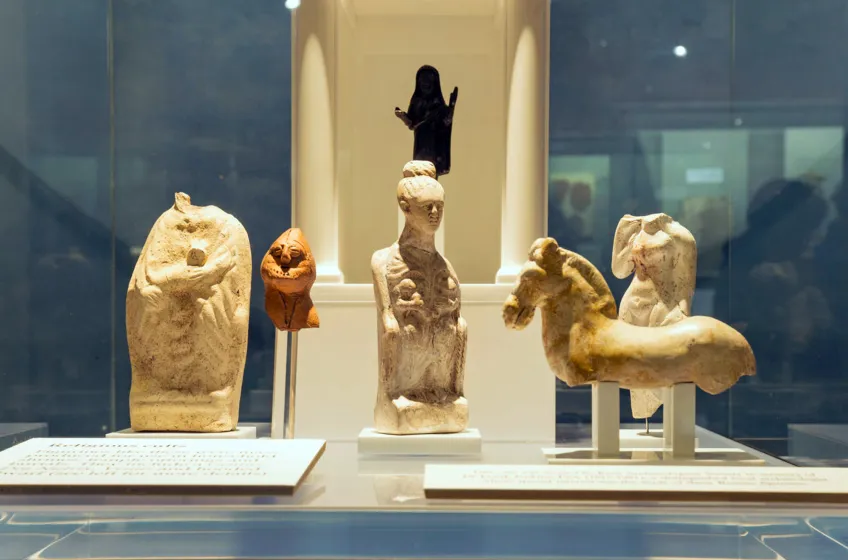
The museum holds a large collection of artefacts uncovered during excavations in and around Canterbury. These include pottery, glassware, jewellery, tools, coins, religious figurines, and building materials. Together, they paint a comprehensive picture of Roman daily life, trade, industry, and belief systems. Highlights include a set of iron keys, a collection of Roman coins, and examples of fine Samian ware pottery.
Roman Market Street Reconstruction
A reconstructed Roman street scene allows visitors to walk through a stylised Roman marketplace, complete with lifelike models, period sounds and visual storytelling. This section is particularly popular with younger visitors and adds a theatrical dimension to the archaeological context.
Educational and Interactive Exhibits
The museum offers a variety of hands-on experiences, including Roman dress-up areas, mosaic-making activities, and tactile exhibits where visitors can handle replica Roman objects. Interactive touchscreens and animations explain how Roman Canterbury evolved and was eventually absorbed into post-Roman England.
The Story of Durovernum Cantiacorum
The museum charts the rise of Canterbury as a Roman town, from its founding shortly after the Roman invasion of Britain in AD 43, to its development as a thriving administrative and commercial centre. Maps, illustrations and models show how the Roman street grid, city walls, baths and temples would have looked at their peak.
Excavation History
Interpretive panels explain how the museum site was rediscovered following bomb damage during the Second World War. The chance discovery of the mosaic led to formal excavations in the 1940s and 1950s, and eventually to the establishment of the museum itself. This story adds a modern archaeological layer to the site's long timeline.
Temporary Exhibitions and Events
The museum occasionally hosts temporary exhibitions focusing on aspects of Roman life or comparative ancient cultures. These exhibitions may include loaned artefacts from other institutions, community-led displays, or thematic showcases around Roman military life, cuisine, or trade.
Nearby Attractions
The Canterbury Roman Museum is centrally located, making it an ideal part of a wider itinerary exploring the city's heritage. A short walk away is Canterbury Cathedral, the iconic seat of the Archbishop of Canterbury and a central site in British Christian history. Alongside St Augustine’s Abbey and St Martin’s Church, it forms the Canterbury World Heritage Site.
Also nearby is The Beaney House of Art and Knowledge, a combined museum, library and art gallery located just a few minutes from the museum on the High Street. It includes collections relating to local history and culture, and frequently features temporary exhibitions.
Visitors interested in medieval Canterbury can explore Westgate Towers, the city’s former western gate and now a museum and viewpoint. The Canterbury Heritage Museum, though now closed, has had its collections redistributed—some of which may appear in temporary exhibitions at the Roman Museum or the Beaney.
Other attractions include Canterbury Castle ruins, Westgate Gardens, and punting tours along the River Stour, offering alternative perspectives on the city’s rich past.
Practical Advice for Visitors
The Canterbury Roman Museum is open year-round, though opening hours may vary seasonally or during holidays. It is advisable to check the official website or contact the museum before visiting to confirm times and ticket prices. Standard admission fees apply, with concessions available for children, seniors, students and family groups.
The museum is fully indoors and located underground, making it an excellent option during inclement weather. It is accessible to visitors with limited mobility via lifts and ramps, though some areas may have narrow passageways typical of underground sites.
The museum is within easy walking distance of both Canterbury East and Canterbury West railway stations, as well as major bus stops and city centre parking facilities. Visitors arriving by car should use one of the city’s long-stay car parks or the park-and-ride services provided by Canterbury City Council.
A small shop located at the museum entrance offers Roman-themed souvenirs, books, educational materials, and replica artefacts. While there is no café on-site, there are many dining options within a few minutes’ walk, including family-friendly restaurants and historic pubs.
Visits typically last between 45 minutes and 1.5 hours, depending on interest and whether temporary exhibitions are in place. Group visits and school bookings can be arranged in advance, and educational sessions led by museum staff may be available during term time.
Conclusion
The Canterbury Roman Museum offers a compelling and accessible look into the city’s ancient past, rooted in the actual location where Roman life once thrived. With in-situ archaeological remains, a strong collection of artefacts, and engaging interpretive displays, the museum provides an enriching experience for history enthusiasts, families, and casual visitors alike. Its central location, historical significance, and hands-on approach make it a vital part of any itinerary exploring Canterbury's deep historical layers—from Roman times to the present day.
Shortlist
- Your Shortlist is empty