
Discover Bernkastel-Kues | A Visitor's Introduction to Bernkastel-Kues
Recommended places to stay, places to visit and things to do in and near Bernkastel-Kues
Bernkastel-Kues is a picturesque wine town on the River Moselle in western Germany, surrounded by steep vineyards and wooded hills. Known for its beautifully preserved half-timbered old town, Riesling wines and romantic riverside setting, this historic town is a perfect destination for couples, walkers, cyclists, wine lovers and anyone who enjoys atmospheric European towns. With its cobbled lanes, castle ruins and easy access to the wider Moselle Valley, Bernkastel-Kues offers a delightful escape into Rhineland-Palatinate.
Recommended Bernkastel-Kues Hotels
Pre-book Bernkastel-Kues Activities, Tours and Experiences
Why is Bernkastel-Kues Worth a Visit?
Bernkastel-Kues is worth visiting for its combination of medieval architecture, vineyard scenery and relaxed riverside atmosphere. The town is divided by the Moselle, with Bernkastel on the eastern bank and Kues on the western side.
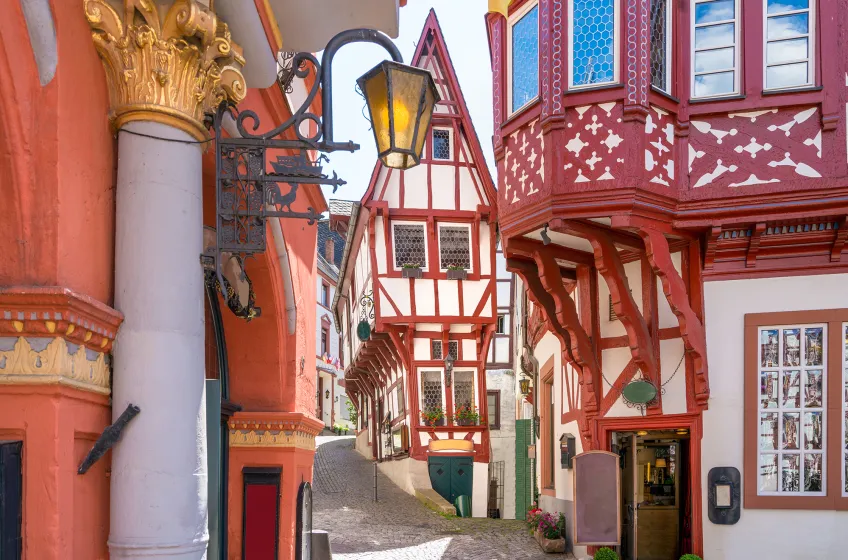
Bernkastel contains the compact historic centre, where crooked timber-framed houses lean over narrow streets and small wine taverns sit beside old fountains and stone archways. Kues is quieter and more residential, but it has several important museums, wineries and historic buildings of its own.
The surrounding landscape is just as important as the town itself. Vineyards rise steeply behind the rooftops, producing some of the best-known Riesling wines in Germany. Walking trails lead through the vines to viewpoints overlooking the river, while cycle paths and boat trips provide easy ways to explore the wider Moselle Valley.
Bernkastel-Kues has enough restaurants, attractions and shops to keep visitors occupied, but it is still small enough to explore on foot. It makes an attractive day trip, although staying for two or three nights allows time for a wine tasting, a river cruise and a vineyard walk.
Bernkastel-Kues Highlights: Things to See and Do in Bernkastel-Kues
Medieval Market Square
Bernkastel’s market square is the architectural centrepiece of the town. It is surrounded by richly decorated half-timbered buildings with carved beams, projecting upper floors and colourful façades.
The Renaissance town hall is one of the most prominent buildings, while St Michael’s Fountain stands in the middle of the square. Cafés place tables outside during warmer weather, making this an excellent spot for coffee, cake or a glass of local wine.
The square is especially atmospheric early in the morning, before the main flow of visitors arrives, and again in the evening when the old buildings are softly illuminated.
The Spitzhäuschen
The Spitzhäuschen, or Pointed House, is one of Bernkastel-Kues’s most recognisable landmarks. Dating from the early 15th century, it has a remarkably narrow ground floor supporting upper storeys that lean dramatically outwards.
Its unusual shape reflects the medieval habit of building upwards when street space was limited. The house now contains a small wine tavern, allowing visitors to experience its crooked interior as well as admire the exterior.
Landshut Castle
The ruins of Landshut Castle stand on a hill above Bernkastel and offer some of the best views over the town, river and surrounding vineyards.
The site has medieval origins, although archaeological evidence suggests that it was also used during the Roman period. Visitors can walk to the castle from the old town using a steep uphill path. The climb normally takes around 30 to 45 minutes, depending on fitness and the chosen route.
Wear shoes with good grip, particularly after rain. The restored section of the castle includes a restaurant, making it a pleasant place to stop for lunch or an early evening drink.
St Michael’s Church and Tower
St Michael’s Church stands close to the river and is easy to recognise by its substantial stone tower. The tower originally formed part of the town’s defences before being incorporated into the church.
The building contains historic religious furnishings and artworks, while the surrounding riverfront offers attractive views across to Kues. Its location makes it easy to include during a walk between the old town and the Moselle promenade.
Moselle River Cruise
A river cruise is one of the most relaxing ways to appreciate Bernkastel-Kues and the surrounding landscape. Boats travel past steep vineyards, small wine villages and wooded slopes, offering a different perspective from the road or cycle path.
Routes vary from short sightseeing trips to longer journeys towards places such as Lieser, Zeltingen-Rachtig and Traben-Trarbach. Services are most frequent between spring and early autumn.
On warm summer days, arrive at the landing stage early if you would like an outdoor seat. Sailing times can vary according to the season and river conditions.
Wine Tasting
Wine is central to life in Bernkastel-Kues. The surrounding Middle Moselle is particularly famous for Riesling, which is produced in styles ranging from crisp and dry to rich and sweet.
Numerous family-run wineries, traditional cellars and wine shops offer tastings. Some accept walk-in visitors, while smaller producers may require an appointment.
A guided tasting can be useful for learning about the region’s vineyard names, sweetness levels and slate soils. The Bernkasteler Doctor vineyard, rising directly above the old town, is one of the area’s most famous sites.
Moselle Wine Museum and Vinothek
The Moselle Wine Museum in Kues explains the history of wine production in the region. Displays cover vineyard work, historic tools, grape varieties and the challenges of cultivating vines on steep slopes.
The associated vinothek gives visitors the opportunity to sample wines from different producers and parts of the Moselle Valley in one place. This is a practical choice for anyone who wants a broad introduction to local wine without arranging several separate winery visits.
Opening times may be reduced outside the main tourist season.
Cusanusstift
The Cusanusstift, also known as St Nicholas Hospital, was founded in the 15th century by Nicholas of Cusa, a philosopher, theologian, cardinal and scholar who was born in Kues.
The complex includes a Gothic chapel, cloisters and a historic library containing valuable manuscripts and early printed works. It is one of the most important cultural sites in the town and provides an interesting contrast to the wine-focused attractions nearby.
Access to some areas may be limited to guided visits or certain opening periods.
Moselle Cycle Route
Bernkastel-Kues lies on the Moselle Cycle Route, one of Germany’s best-known long-distance cycle trails. The route follows the river through vineyards, historic towns and small wine-growing villages.
Cycling along the valley floor is generally easy, although routes climbing into the vineyards can be steep. Nearby destinations such as Lieser, Mülheim, Zeltingen-Rachtig and Traben-Trarbach are suitable for day rides.
Bicycle and e-bike hire is available locally. An e-bike is particularly useful for visitors planning to explore away from the flat riverside route.
Vineyard Walks
Marked walking trails lead from Bernkastel-Kues into the surrounding vineyards. These paths provide close views of the steep slate slopes that shape the character of local Riesling.
The walk to Landshut Castle can be extended into a longer vineyard circuit, while other routes lead towards Graach, Wehlen and Andel.
Carry water during warm weather, as the exposed slopes can become hot and shade is limited. During the grape harvest, remain on marked paths and avoid obstructing vineyard workers.
Riverside Promenade
The promenades on both banks of the Moselle are ideal for an easy stroll. From the Bernkastel side, there are views across to Kues and the hills beyond, while the Kues bank provides the classic panorama of the old town rising towards Landshut Castle.
The main bridge links the two sides, making it easy to create a circular walk. Benches, cafés and boat landing stages can be found along parts of the route.
The promenade is particularly enjoyable in the early evening, when the river is quieter and the old town begins to light up.
Zylinderhaus Museum
The Zylinderhaus Museum in Kues is dedicated to classic cars, motorbikes and everyday life in 20th-century Germany.
Rather than displaying vehicles in plain exhibition halls, the museum presents them in recreated workshops, garages, streets and shops. This makes it especially enjoyable for families, motoring enthusiasts and visitors interested in social history.
It is also a useful attraction for a rainy day. Opening days may be limited during quieter periods.
Explore the Old Town Lanes
Some of Bernkastel’s most attractive corners are found away from the main square. Streets such as Römerstrasse and Burgstrasse contain small courtyards, historic inns, old fountains and decorative shop signs.
The centre is compact, but the cobbled surfaces and occasional slopes make comfortable footwear advisable. It is worth exploring without a fixed route, particularly in the morning or evening when the streets are quieter.
Practical Advice for Visitors
Getting There
Bernkastel-Kues does not have an active railway station. The most useful nearby stations are Wittlich Hauptbahnhof and Traben-Trarbach, both of which have onward bus connections.
Travelling through Wittlich is often the simplest option for visitors arriving from larger German cities. The bus journey from Wittlich to Bernkastel-Kues usually takes around half an hour, although services may be less frequent in the evening and on Sundays.
By car, Bernkastel-Kues is around 50 kilometres from Trier. Frankfurt-Hahn Airport is the nearest airport, while Frankfurt Main Airport offers a much wider range of international flights but is considerably farther away.
Roads through the Moselle Valley are scenic but often winding. Allow extra time during summer weekends, wine festivals and the autumn grape harvest.
Parking
Several public car parks are located near the river and on the Kues side of town. Parking within Bernkastel’s historic centre is limited, so it is usually easier to leave the car near the Moselle and continue on foot.
The area around the former railway station in Kues is a practical option, with the old town reached by a short walk across the bridge.
During festivals, Christmas market weekends and busy summer days, arrive before late morning. Check local payment machines and signs carefully, as charges and restrictions can vary.
Dining
Bernkastel-Kues has a good selection of traditional restaurants, wine taverns, cafés and bakeries.
Regional dishes often include schnitzel, pork, freshwater fish, game, Flammkuchen and meals prepared with local wine. During autumn, look for Federweisser, a lightly fermented young wine commonly served with onion tart.
The old town has the widest choice of places to eat, but restaurants in Kues are often quieter. Booking ahead is sensible on Friday and Saturday evenings between late spring and early autumn.
Shopping
The narrow streets of Bernkastel contain wine shops, delicatessens, bakeries, gift shops and small independent boutiques.
Local Riesling is the most obvious souvenir. Other popular purchases include fruit preserves, spirits, slate products and regional food specialities.
Many wine shops can arrange delivery, although shipping rules and costs depend on the destination country. The Christmas market adds seasonal stalls selling decorations, sweets, crafts and hot drinks.
When to Visit
April to June is a good time for walking, cycling and sightseeing. The vineyards are fresh and green, temperatures are usually comfortable and visitor numbers are lower than in midsummer.
July and August bring the warmest weather, the fullest boat schedules and the busiest streets. September and October are especially attractive because of the grape harvest, autumn colours and wine events.
Late November and December are popular for the Christmas market and festive decorations. January and February are much quieter, but some museums, wineries, restaurants and boat services may close or operate reduced hours.
Local Events
The Middle Moselle Wine Festival is one of the most important annual events in Bernkastel-Kues. It usually takes place in late summer or early autumn and includes wine stands, live music, processions and fireworks.
The Moselle Meadows Festival is another popular summer event, combining regional wine, food, live entertainment and riverside celebrations.
Open-air concerts often take place during summer, while the Christmas market fills the old town with decorated stalls and seasonal lights from late November into December.
Event dates can change each year, so check the local programme before arranging travel.
Exploring Beyond Bernkastel-Kues
Lieser lies around five kilometres downstream and is known for its grand riverside castle and traditional wine-growing streets.
Zeltingen-Rachtig, approximately ten kilometres away, has another attractive historic centre and easy access to riverside cycle paths.
Traben-Trarbach is around 20 kilometres from Bernkastel-Kues and is notable for its Art Nouveau architecture, underground wine cellars and impressive bridge. It can be reached by road, bus, bicycle or seasonal boat.
Trier is roughly an hour away by car and is one of Germany’s most historically important cities. Its Roman attractions include the Porta Nigra, Imperial Baths and amphitheatre.
For a quieter excursion, follow the river through smaller wine villages such as Graach, Wehlen and Ürzig, stopping at vineyard viewpoints and family-run wineries along the way.
Shortlist
- Your Shortlist is empty