
Discover Wittenberg | A Visitor's Introduction to Wittenberg
Recommended places to visit, places to stay and things to do in and around Wittenberg
Wittenberg, officially known as Lutherstadt Wittenberg, is a historic town in the state of Saxony-Anhalt, East Germany. Nestled along the banks of the River Elbe, it’s best known as the birthplace of the Protestant Reformation. It was here, in 1517, that Martin Luther is said to have nailed his 95 Theses to the door of the Castle Church, setting in motion a religious and political transformation that reshaped Europe.
Today, Wittenberg is a charming and beautifully preserved town, full of Renaissance architecture, fascinating museums, and a peaceful atmosphere. It’s a must-visit for anyone interested in religious history, German culture, or simply a picturesque escape filled with cobbled streets, historic landmarks, and riverside serenity.
Search All Wittenberg Accommodation
Pre-book Wittenberg Attractions, Tours & Experiences
Why is Wittenberg Worth a Visit?
Wittenberg is worth visiting because it offers a unique and tangible link to one of the most important chapters in world history: the Reformation. Unlike many places where historical events are only marked by plaques or faded memories, Wittenberg still breathes the spirit of Martin Luther, Philipp Melanchthon, and their contemporaries. The town centre, largely pedestrianised, has been immaculately restored, allowing visitors to walk the same streets, enter the same churches, and see the same buildings that shaped the course of Western Christianity.
Beyond its religious significance, Wittenberg offers art, architecture, and quiet charm. The city centre is a UNESCO World Heritage Site, filled with late-Gothic and Renaissance buildings, and several museums bring history vividly to life. Despite its historic importance, Wittenberg remains compact and uncrowded, making it a relaxed and enriching place to explore – ideal for a day trip or a peaceful weekend.
Wittenberg Highlights: Things to See and Do in Wittenberg
Castle Church (Schlosskirche)
This is where it all began. The Castle Church, or Schlosskirche, is the legendary site where Martin Luther reportedly nailed his 95 Theses to the wooden doors on 31 October 1517. Although the original doors were destroyed in a fire, bronze doors engraved with the Latin text of the Theses now mark the spot.
The church itself is stunning, with its 88-metre tower offering panoramic views over the town and countryside. Inside, you'll find the tombs of Martin Luther and Philipp Melanchthon, as well as beautiful stained-glass windows and a serene atmosphere that invites reflection.
Lutherhaus (Luther House)
Once an Augustinian monastery, the Lutherhaus became Martin Luther’s family home and workplace after the Reformation began. Today, it’s a world-class museum – the largest in the world dedicated to Luther and the Reformation.
You’ll find personal artefacts like Luther’s pulpit, his monk’s robe, original manuscripts, and rare books. The museum also delves into the wider context of the Reformation, including its cultural, political, and technological dimensions (like the role of the printing press). It’s a must-see for understanding both the man and the movement.
Melanchthonhaus
Next door to the Lutherhaus is the former home of Philipp Melanchthon, Luther’s close collaborator and a key figure in the Reformation. His Renaissance-style house has been turned into an excellent museum detailing his work in theology, education, and diplomacy. The original study and living quarters offer an intimate glimpse into his life, and the exhibition is informative without being overwhelming.
St. Mary’s Town Church (Stadtkirche)
Known as the “Mother Church of the Reformation,” St. Mary’s is where Luther preached for over 30 years. The church is older than the Castle Church and has stunning altarpieces by Lucas Cranach the Elder, a friend of Luther’s and the town’s court painter. The high altar is particularly notable, with its symbolic portrayal of Protestant theology.
The church also contains the font where Luther baptised hundreds, including his own children, and the pulpit he regularly used. It’s a peaceful and moving place to visit.
Cranach Courtyards (Cranach-Höfe)
The Cranach family were more than just artists – they were also influential citizens and publishers in Wittenberg. The courtyards of Lucas Cranach the Elder and his son Lucas Cranach the Younger are wonderfully preserved and now house galleries, a café, a pharmacy museum, and artists’ studios.
Here you can learn about Cranach’s workshop, see reproductions of his famous paintings (including portraits of Luther), and enjoy the artistic spirit that still lingers in the atmospheric courtyards.
Market Square and Town Hall
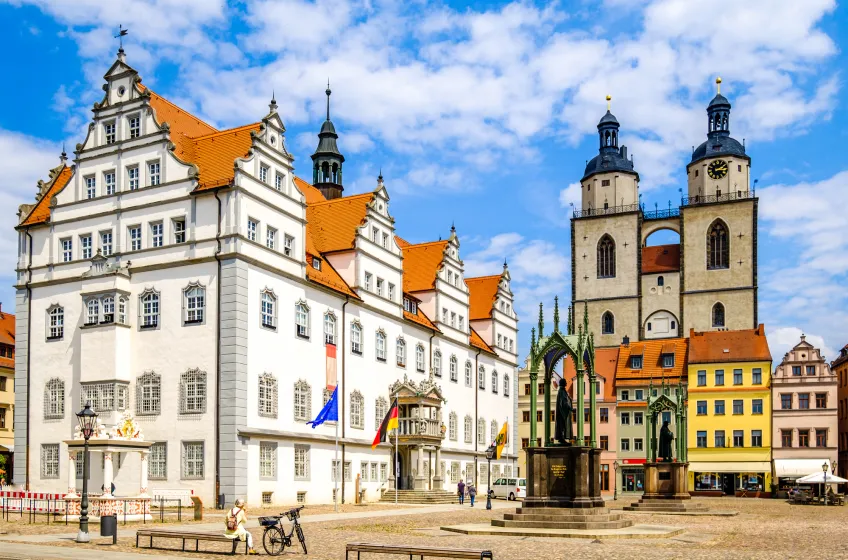
The heart of Wittenberg is its Market Square, dominated by the impressive Town Hall (Rathaus), built in the early 16th century. Statues of Martin Luther and Philipp Melanchthon stand prominently in the square, making for an iconic photo spot. The square is lined with cafés, small shops, and colourful buildings – a perfect place to sit with a coffee and watch the world go by.
Luther Garden
Created to mark the 500th anniversary of the Reformation in 2017, the Luther Garden is a living symbol of global Christian unity. Trees were planted by representatives of churches from all over the world, and each is marked with a plaque. It’s a tranquil green space ideal for a reflective walk.
Reformation Panorama (Asisi Panorama)
This massive circular artwork by Yadegar Asisi immerses you in the sights, sounds and mood of Wittenberg in 1517. The 360-degree panorama, housed in a specially built rotunda, uses light and sound to bring the town to life as it would have been in Luther’s day. It’s a modern and interactive way to connect with the town’s past.
Piesteritz Garden City
Just a short walk from the centre, this early 20th-century housing estate is Germany’s first "garden city". Built for workers in the 1920s, it’s a peaceful, leafy area that offers a unique look at urban planning during the Weimar Republic. It contrasts nicely with Wittenberg’s medieval heart.
Elbe Cycle Route and River Walks
Wittenberg sits on the scenic Elbe Cycle Route (Elberadweg), one of Europe’s most popular long-distance bike trails. Even if you’re not cycling the whole route, you can rent a bike or take a riverside walk. The paths are flat, well-maintained, and offer a relaxing break from sightseeing.
Practical Advice for Visitors
Getting There
Wittenberg is easily accessible by train. From Berlin, it takes around 40 minutes on a high-speed ICE train. From Leipzig or Halle, it's about an hour. The train station (Wittenberg Hauptbahnhof) is about a 10–15 minute walk from the town centre, or a short bus or taxi ride.
If you're driving, Wittenberg is located near the A9 motorway. There are clear signs and well-maintained roads, and it’s an easy drive from major cities like Leipzig, Dresden or Berlin.
Parking
Parking in Wittenberg is straightforward, with several car parks around the town centre. The Altstadt parking garage (Parkhaus Arsenalplatz) is convenient and well located for exploring the old town. Street parking is also available but may be limited, especially during holidays or festivals. Look out for blue parking zones with ticket machines.
Dining
Wittenberg has a good selection of restaurants, traditional inns, and cafés. Regional German cuisine is widely available, with an emphasis on hearty dishes.
Recommended places include:
-
Brauhaus Wittenberg – A rustic brewery and restaurant offering local beer and solid German fare like schnitzel, bratwurst and pork roast.
-
Restaurant Charles – Modern German cuisine in an elegant setting, located near the Lutherhaus.
-
Wittenberger Hofküche – A cosy and authentic spot serving Thuringian specialities and seasonal dishes.
-
Café am Markt – Perfect for coffee and cake, with outdoor seating and a view of the market square.
Vegetarian options are becoming more common, and most places offer at least a few meat-free dishes.
Shopping
Wittenberg isn’t a major shopping destination, but it offers some charming local shops and boutiques, particularly in the old town. You’ll find souvenirs themed around Martin Luther and the Reformation, such as books, prints, Luther rubber ducks (yes, really), and Thuringian-made products.
For something unique, check out:
-
Luther 1517 – A stylish shop offering modern, design-focused gifts and souvenirs linked to the town’s heritage.
-
Bookshops and art stores – Several independent shops carry theological texts, art prints, and local crafts.
When to Visit
Spring (April to June) and autumn (September to early October) are ideal for visiting Wittenberg, with mild weather and fewer crowds. Summer can be warm and lively, especially during festivals or school holidays.
Winter is much quieter but still atmospheric, especially if you come during the Wittenberg Christmas Market, which fills the old town with lights, stalls, and festive cheer.
For a special experience, visit around Reformation Day (31 October), when events, services, and processions commemorate Martin Luther’s pivotal act.
Local Events
-
Luther’s Wedding Festival (Luthers Hochzeit) – Held each June, this historical festival features parades, medieval markets, music, and costumed processions celebrating Martin Luther’s 1525 wedding to Katharina von Bora.
-
Reformation Day (31 October) – The biggest annual event, with church services, concerts, lectures, and special exhibitions.
-
Christmas Market – A traditional, family-friendly market held from late November to Christmas Eve.
-
Wittenberg Cultural Summer (Wittenberger Kultursommer) – A series of open-air concerts, theatre performances and events during the summer months.
Exploring Beyond Wittenberg
Wittenberg is ideally located for further exploration in Saxony-Anhalt and beyond. Suggestions include:
-
Dessau (30 minutes) – Home of the Bauhaus Dessau building and a key stop for fans of modernist architecture.
-
Lutherstadt Eisleben (1.5 hours) – The town where Luther was born and died, with two UNESCO-listed museums.
-
Torgau (1 hour) – Another important Reformation town, known for its Renaissance castle and historic churches.
-
Leipzig (1 hour) – A vibrant cultural hub full of music, art, and history.
-
The Elbe Biosphere Reserve – Great for hiking, cycling, and birdwatching just outside town.
Wittenberg may be a small town, but its impact on world history is immeasurable. From its medieval streets to its role in the Reformation and its carefully preserved heritage, it offers a thoughtful and enriching experience for visitors. Whether you’re following in Luther’s footsteps, admiring Cranach’s artwork, or enjoying a beer on the market square, Wittenberg is a place where history still lives – and where the past and present sit comfortably side by side.
Shortlist
- Your Shortlist is empty