
Discover Saxony-Anhalt | A Visitor's Introduction to Saxony-Anhalt
Recommended places to visit, places to stay and things to do in Saxony-Anhalt
Saxony-Anhalt is a captivating state in central Germany, known for its profound historical significance, medieval architecture, and associations with great reformers and thinkers. As the birthplace of the Protestant Reformation and home to some of Germany’s most iconic castles, cathedrals, and UNESCO World Heritage Sites, Saxony-Anhalt offers a treasure trove of cultural and historical attractions. With scenic rivers, charming half-timbered towns, and dramatic landscapes such as the Harz Mountains, it’s an ideal destination for history buffs, architecture lovers, and fans of fairy-tale Germany.
Recommended Saxony-Anhalt accommodation: Hotels Bed & Breakfasts Holiday Homes
Pre-book Saxony-Anhalt Attractions, Tours & Experiences
Why is Saxony-Anhalt Worth a Visit?
Saxony-Anhalt is worth visiting for its unique role in shaping European history, particularly during the Middle Ages and Reformation period. The region is steeped in heritage, with a dense concentration of UNESCO-listed sites—more than almost any other region in Germany. From the spiritual legacy of Martin Luther in Wittenberg to the storybook streets of Quedlinburg, Saxony-Anhalt allows you to walk in the footsteps of emperors, reformers, and visionaries.
Yet history is only part of the appeal. The region also boasts unspoilt landscapes, including the northern reaches of the Harz Mountains, perfect for walking and outdoor adventures. It’s far less touristy than other parts of Germany, offering a more laid-back and authentic experience, all while being easily accessible from Berlin or Leipzig.
Whether you’re tracing the footsteps of Martin Luther, marvelling at Romanesque churches, or wandering around cobbled old towns, Saxony-Anhalt offers a richly layered experience that goes far beyond the typical tourist trail.
Saxony-Anhalt Highlights: Things to See and Do in Saxony-Anhalt
Lutherstadt Wittenberg
Wittenberg is one of the most important sites of the Protestant Reformation. In 1517, Martin Luther famously nailed his 95 Theses to the door of All Saints’ Church, sparking a religious revolution. You can visit the Lutherhaus, where he lived and taught, as well as the Stadtkirche, his parish church. The Castle Church with the famous door is beautifully restored and remains a powerful symbol of faith and change. The town has been carefully preserved, and its charming streets and squares make it a joy to explore.
Quedlinburg
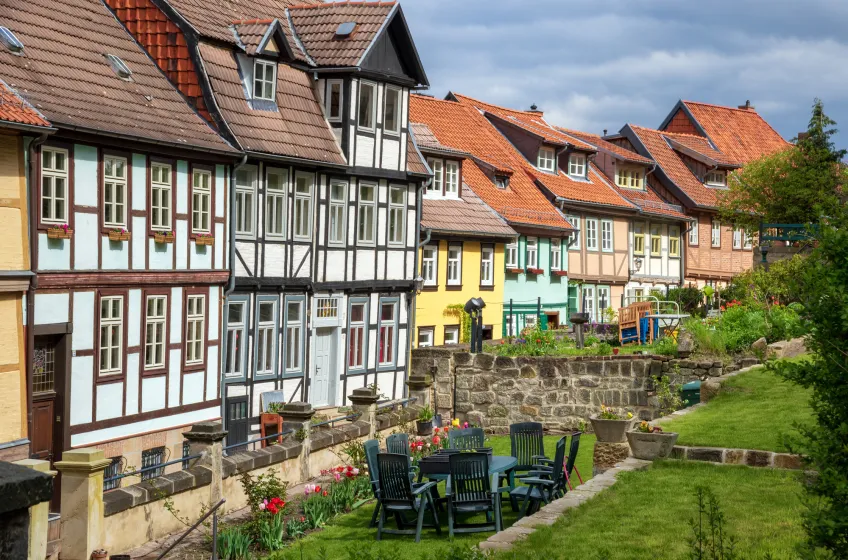
A stunning medieval town and UNESCO World Heritage Site, Quedlinburg is like stepping into a fairy tale. With over 1,300 half-timbered houses spanning six centuries, its Altstadt (old town) is one of the best-preserved in Europe. The Collegiate Church of St. Servatius, perched on a hill, houses an impressive treasury and offers commanding views over the town. Quedlinburg is especially atmospheric during Christmas, when its market winds through the medieval alleys.
Magdeburg
The capital of Saxony-Anhalt, Magdeburg combines ancient history with modern innovation. Visit the Magdeburg Cathedral, the oldest Gothic cathedral in Germany and resting place of Emperor Otto I. The city also features The Green Citadel, a striking pink and green fantasy building by Friedensreich Hundertwasser. The Elbauenpark and Millennium Tower provide family-friendly attractions and interactive science exhibits.
The Harz Mountains and Brocken
The Harz Mountains form the scenic backbone of Saxony-Anhalt’s south-western edge. The area is perfect for hiking, cycling, and outdoor exploration. The Brocken, the region’s highest peak, is famous in German folklore as a witches’ gathering place on Walpurgis Night. You can ride the Brocken Railway, a steam-powered train that climbs through thick pine forests and past alpine meadows to the summit, offering unforgettable views.
Naumburg Cathedral
Recognised by UNESCO in 2018, Naumburg Cathedral is a Romanesque-Gothic masterpiece, particularly known for its expressive statues of the cathedral’s founders, created by the anonymous Naumburg Master in the 13th century. The artistry of these stone figures is astonishing, and the building itself is an architectural treasure. Naumburg’s quaint old town is also worth a wander, especially in spring and early summer when the Saale-Unstrut wine region is in bloom.
Dessau and the Bauhaus
Dessau is a pilgrimage site for lovers of modernist design. The Bauhaus, founded here in 1925, revolutionised art, architecture, and design worldwide. You can visit the Bauhaus Building, Masters' Houses, and Bauhaus Museum, all of which showcase the movement’s clean lines, functional aesthetics, and utopian ideals. The city itself is also part of the Bauhaus World Heritage Site, and there's an active programme of exhibitions and guided tours.
Garden Kingdom of Dessau-Wörlitz
Just outside Dessau lies the Garden Kingdom of Dessau-Wörlitz, one of the most beautiful and historically significant landscape gardens in Europe. Created in the late 18th century by Prince Leopold III, it was designed to reflect Enlightenment ideals and includes palaces, artificial lakes, classical temples, and picturesque bridges. Visitors can explore on foot or by gondola, and it’s particularly delightful in spring and autumn.
Halle (Saale)
Halle is often overshadowed by neighbouring Leipzig, but this university city has a lot to offer. It’s the birthplace of George Frideric Handel, and the Handel House museum is a key attraction for music lovers. The Francke Foundations, an impressive Baroque complex, now house cultural and academic institutions, while Halle Cathedral and the Market Church dominate the city skyline. The Moritzburg Art Museum is another highlight, with an excellent collection of modern and contemporary art.
Giebichenstein Castle and the Saale Valley
Overlooking the Saale River, Giebichenstein Castle in Halle offers scenic views and a fascinating look at medieval architecture. The Saale Valley is dotted with vineyards, ruins, and charming towns. This is also a great place to try Saale-Unstrut wines, produced in one of Germany’s northernmost wine regions. Wine tastings and river cruises are popular ways to enjoy this quiet and beautiful area.
Himmelpforten Monastery and Romanesque Road
Saxony-Anhalt is at the heart of Germany’s Romanesque Road, a themed tourist route linking dozens of Romanesque churches, abbeys, and castles. One particularly peaceful stop is Himmelpforten Monastery, whose atmospheric ruins are surrounded by tranquil woodland. The route is ideal for road trips or cycling holidays with a historic twist.
Tangermünde
This picturesque town on the banks of the Elbe is a hidden gem. Tangermünde boasts a remarkably intact medieval centre, complete with red-brick Gothic buildings, fortified gates, and a riverside castle. It’s less visited than other towns in the region but delivers that perfect blend of storybook scenery and authenticity.
Stendal and the Altmark Region
Stendal is the largest town in the Altmark, a largely rural and tranquil area often called the "cradle of Prussia." It’s a good base for exploring the surrounding countryside, dotted with old churches and half-timbered villages. Stendal’s red-brick churches and market square are worth a visit in themselves.
Practical Advice for Visitors
Getting There
Saxony-Anhalt is centrally located and easy to reach from major German cities. Berlin and Leipzig airports are the closest international gateways, with excellent train and road links to destinations within the region. Regional trains run frequently between cities like Magdeburg, Halle, Dessau, and Wittenberg. For exploring smaller towns and natural areas, hiring a car is recommended.
From Berlin, Wittenberg is just 40 minutes by train, and Magdeburg can be reached in under two hours.
Parking
Most towns and cities offer ample public car parks and underground garages. Parking fees vary but are generally reasonable. In historic centres such as Quedlinburg or Naumburg, it’s often best to park outside the pedestrian zone and explore on foot. Many tourist towns also operate park-and-ride systems during busy periods.
Dining
Traditional Saxon-Anhalt cuisine is hearty and rustic. Dishes often feature pork, dumplings, root vegetables, and sauerkraut. Try local favourites like Hallesche Würstchen (Halle sausages), Sülze (aspic meat), or Bierfleisch (beef in beer sauce). For dessert, Baumkuchen, a layered cake from Salzwedel, is a regional speciality.
In Halle, Krug zum Grünen Kranze offers authentic local dishes in a cosy riverside setting. In Magdeburg, try Hyaku Mizu for upscale German cuisine with a modern twist. Quedlinburg and Wittenberg both have a wide range of taverns and cafés serving traditional meals.
Shopping
Look out for regional crafts such as handmade wooden toys, ceramics, and local wines from the Saale-Unstrut region. Mead and fruit brandies are also popular local products. Most towns host weekly markets where you can find local produce and handmade items.
Quedlinburg, Wittenberg, and Halle have a good mix of independent shops and regional speciality stores. During Advent, Christmas markets are the ideal place to pick up gifts and festive treats.
When to Visit
Spring (April–June) and early autumn (September–October) are ideal for exploring Saxony-Anhalt. The weather is pleasant, gardens are in bloom, and outdoor activities are in full swing. Summer is also popular, especially in towns like Quedlinburg and the Harz Mountains, though temperatures can get high in July and August.
December brings the charm of Christmas markets, particularly in towns like Quedlinburg, Wernigerode, and Magdeburg. Winter is quieter and good for museum visits or enjoying the snow-dusted Harz region.
Local Events
-
Luther’s Wedding Festival, Wittenberg (June): A lively medieval-themed celebration marking Martin Luther’s marriage, complete with processions and historical reenactments.
-
Handel Festival, Halle (June): A world-class music festival featuring performances of Handel’s work in his birthplace.
-
Quedlinburg Christmas Market (December): One of the most atmospheric markets in Germany, set among half-timbered streets and castle courtyards.
-
Bauhaus Festival, Dessau (August): A multi-day event celebrating the Bauhaus movement with performances, exhibitions, and design showcases.
-
Walpurgis Night, Harz Mountains (30 April): A mystical night of folklore, fire dances, and witches, especially festive in towns like Thale and Wernigerode.
Exploring Beyond Saxony-Anhalt
Saxony-Anhalt is well placed for exploring central and eastern Germany. Leipzig and Berlin are easy day trips, offering big-city contrast to the smaller towns. The Thuringian Forest and cities like Erfurt and Weimar lie just to the south and are steeped in cultural heritage.
For nature lovers, the Harz National Park offers extended hiking and cycling opportunities. You can also continue along the Romanesque Road into Lower Saxony, or follow the Elbe River northward through Brandenburg towards Hamburg.
Whether you're unearthing the roots of the Reformation, admiring medieval masterpieces, or relaxing with a glass of Saale wine by the river, Saxony-Anhalt delivers an inspiring and tranquil slice of Germany. Its rich heritage, combined with its under-the-radar charm, makes it a destination that rewards curious travellers in search of depth and authenticity.
Shortlist
- Your Shortlist is empty