
Discover Magdeburg | A Visitor's Introduction to Magdeburg
Recommended places to visit, places to stay and things to do in and around Magdeburg
Magdeburg is a historic city in eastern Germany, nestled along the banks of the River Elbe. As the capital of the federal state of Saxony-Anhalt, Magdeburg is a city of contrasts—where medieval heritage sits side by side with bold modern architecture. Known for its association with Emperor Otto the Great and its key role in the Protestant Reformation, this underrated gem is perfect for history enthusiasts, culture lovers, and fans of riverside cities. With its lush parks, striking buildings, and fascinating museums, Magdeburg offers an enriching escape into the heart of Germany.
Recommended Magdeburg accommodation: Hotels Apartments
Pre-book Magdeburg Attractions, Tours & Experiences
Why is Magdeburg Worth a Visit?
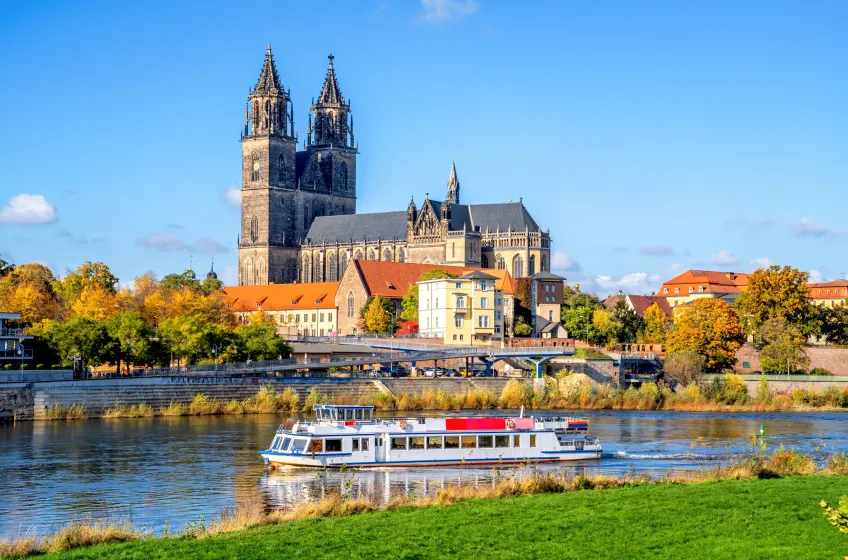
Magdeburg is worth visiting for its unique blend of imperial history, architectural innovation, and green spaces. Once one of the most important cities in the Holy Roman Empire, it has weathered centuries of transformation—from medieval might to post-war reconstruction. The city boasts iconic landmarks such as the Magdeburg Cathedral, the first Gothic cathedral on German soil, and the Hundertwasser-designed “Green Citadel”, an eye-catching burst of colour and curves in the city centre.
Despite being heavily bombed in WWII, Magdeburg has been reborn as a modern city with a strong cultural identity. Its riverfront promenades, open squares, and leafy parks make it both walkable and relaxing. Whether you’re intrigued by imperial relics, curious about avant-garde architecture, or looking for peaceful riverside strolls, Magdeburg delivers a captivating and under-the-radar experience.
Magdeburg Highlights: Things to See and Do in Magdeburg
Magdeburg Cathedral (Dom zu Magdeburg)
Standing proudly on the Domplatz, Magdeburg Cathedral is the city’s most iconic landmark. Dedicated to Saints Maurice and Catherine, it was the first Gothic-style cathedral built in Germany and took over 300 years to complete. It’s also the burial site of Emperor Otto I, who established the Archdiocese of Magdeburg in the 10th century. Inside, you’ll find striking stonework, Romanesque remnants, beautiful stained glass windows, and a powerful sense of history. Climb the tower for a panoramic view of the city and the River Elbe.
The Green Citadel of Magdeburg (Die Grüne Zitadelle)
Designed by Austrian artist and architect Friedensreich Hundertwasser, the Green Citadel is a riot of pink, gold, greenery and playful design. Completed in 2005, this architectural masterpiece houses shops, apartments, a hotel, and a theatre—all wrapped in a surreal, undulating facade. It’s a living artwork in the heart of Magdeburg and a favourite photo spot for visitors. Wander through its inner courtyards, admire the quirky windows and rooftop gardens, and don’t miss the boutique stores and cafés hidden inside.
Elbauenpark and Millennium Tower (Jahrtausendturm)
A vast green space just across the river, Elbauenpark is one of Magdeburg’s most popular family attractions. At its heart stands the Jahrtausendturm (Millennium Tower), a unique wooden structure showcasing 6,000 years of science and human history over five floors. It’s an interactive experience for all ages, covering topics from ancient Egypt to modern robotics. The park also includes themed gardens, a butterfly house, play areas, and even a cable car. It’s a fantastic day out, especially in spring and summer.
Kloster Unser Lieben Frauen (Monastery of Our Lady)
This 11th-century monastery is one of the oldest Romanesque buildings in Germany and now functions as an art museum and cultural venue. Its tranquil cloisters and stark stone architecture contrast beautifully with the modern art exhibitions held within. The adjacent sculpture park adds an open-air element to your visit. This peaceful corner of the city is perfect for reflection and a deeper dive into the region’s artistic scene.
Magdeburg Water Bridge (Wasserstraßenkreuz)
An engineering marvel, the Magdeburg Water Bridge is the world’s longest navigable aqueduct, allowing ships to cross over the River Elbe on a waterway. You can walk or cycle across the bridge, enjoying scenic views and marvelling at the sheer scale of the structure. It’s an excellent example of how the city blends functionality with visual appeal. The bridge is part of the Mittelland Canal and is particularly striking during sunrise or sunset.
Old Market Square and Town Hall (Alter Markt und Rathaus)
The Alter Markt has been the city's social and commercial heart for centuries. The Renaissance-style Town Hall and its iconic golden “Magdeburger Reiter” (Magdeburg Horseman) statue dominate the square. This is one of the oldest equestrian statues north of the Alps and possibly the first secular statue in Germany. The surrounding area is great for people-watching, coffee, or joining one of the regular guided walking tours.
Magdeburg Zoo
A surprisingly large and well-kept zoo, home to over 1,400 animals from around the world. It’s especially popular with families and offers a relaxed, leafy environment to explore. Highlights include the African savannah exhibit, big cats, and a petting zoo for younger visitors. The zoo also participates in conservation programmes and educational events.
Rotehorn Park and Albinmüller Tower
Situated on an island in the Elbe, Rotehorn Park is another of Magdeburg’s treasured green spaces. It’s ideal for picnics, jogging, or simply escaping the bustle of the city. The Albinmüller Tower within the park offers panoramic views of the skyline and river landscape. Nearby is the Stadthalle (City Hall), a striking example of Bauhaus-style architecture.
Otto-von-Guericke Museum and Lukasklause
Dedicated to one of Magdeburg’s most famous sons, the Otto-von-Guericke Museum tells the story of the 17th-century scientist and politician who pioneered vacuum technology. The museum is located in the historic Lukasklause (Luke’s Bastion), part of the old city wall, and is a fascinating stop for science lovers. The exhibits are hands-on and imaginative, ideal for kids and curious adults alike.
Kunstmuseum Magdeburg
Housed within the Monastery of Our Lady, this museum offers a rich blend of medieval surroundings and contemporary art. It focuses on post-World War II art in Germany and often features thought-provoking temporary exhibitions alongside its permanent collection. The museum is an unexpected cultural gem in an ancient setting.
Practical Advice for Visitors
Getting There
Magdeburg is well-connected by train, with regular Deutsche Bahn services linking it to major German cities such as Berlin (about 1.5 hours), Leipzig (just over an hour), and Hanover (under 2 hours). If you’re flying in, the nearest airports are Leipzig/Halle and Berlin Brandenburg, both of which have good onward rail connections.
By car, Magdeburg sits just off the A2 and A14 motorways, making it easy to reach from various directions. The scenic route along the Elbe is particularly lovely if you’re exploring by bike or campervan.
Parking
There’s ample parking throughout the city, especially near major attractions like the cathedral, Elbauenpark, and the Green Citadel. Car parks are generally well-signed, and many have ticket machines accepting card payments. On-street parking is available but can be time-limited or reserved for residents in some areas, so always check the signs.
Dining
Magdeburg’s culinary scene is diverse, offering everything from traditional Saxony-Anhalt fare to international cuisine. For local dishes, try Hauswirtschaft for rustic German classics, or Zur Försterklause near Rotehorn Park. The Green Citadel has a few lovely cafés for coffee and cake, such as Café Altstadt. For something more contemporary, Hyaku Miso offers quality sushi, while Qilin serves excellent Vietnamese fusion.
Don’t forget to sample Bötel mit Klößen (pork knuckle with dumplings), a local speciality, or enjoy a local beer at one of the city’s breweries.
Shopping
Magdeburg offers a mix of high street shopping and quirky independent boutiques. Allee-Center and City Carré are the main shopping malls, both located conveniently near the Hauptbahnhof. For something more unique, explore the shops around Breiter Weg or inside the Green Citadel, where you’ll find handcrafted gifts, artwork, and eco-friendly fashion.
If you enjoy flea markets or antiques, keep an eye out for seasonal markets in the Alter Markt area, particularly around holidays.
When to Visit
Spring and early summer (April to June) are the best times to visit Magdeburg, with mild weather, blooming parks, and a lively events calendar. Autumn is also pleasant, especially with the changing leaves in the city’s many parks. Winters can be cold and quiet, but the city comes alive with festive charm during the Christmas market season.
Local Events
Magdeburg hosts a number of lively events throughout the year. In May, the Ottofest celebrates the legacy of Otto the Great with medieval markets, concerts, and pageantry. The Magdeburger Domplatz Open Air brings open-air theatre and classical music to the cathedral square during summer. In December, the Magdeburger Weihnachtsmarkt is a charming Christmas market that transforms the city centre with lights, mulled wine, and seasonal treats.
Another highlight is the Elbauenfestival, which features electronic music, art installations, and cultural programming in Elbauenpark each August.
Exploring Beyond Magdeburg
If you have extra time, there are several excellent day trips from Magdeburg. The Bauhaus city of Dessau, about an hour away by train, is a must-visit for design fans. The picturesque Harz Mountains lie to the southwest and offer hiking, castles, and half-timbered villages like Wernigerode or Quedlinburg. Closer still is Schönebeck, known for its salt spa and beautiful Elbe scenery.
You can also follow the Romanesque Road (Straße der Romanik), a tourist route linking over 80 Romanesque landmarks in Saxony-Anhalt, many within a short drive from Magdeburg.
Magdeburg may not top the usual tourist lists, but that’s precisely what makes it so rewarding to visit. With its imperial past, modern artistic flair, and tranquil riverside charm, it’s a city that invites you to take your time, look a little closer, and enjoy the surprises that come with exploring somewhere a bit off the beaten path.
Shortlist
- Your Shortlist is empty