
Discover Vienna | A Visitor's Introduction to Vienna
Recommended places to visit, places to stay and things to do in and around Vienna
Vienna is Austria’s elegant capital, set on the River Danube and shaped by centuries of Habsburg rule. Known for its imperial palaces, world-class art collections, grand coffee houses and exceptional musical heritage, this city is a perfect destination for history enthusiasts, culture lovers, foodies and first-time visitors to Central Europe. With its monumental architecture, extensive parks and highly efficient public transport, Vienna offers the scale of a major European capital without being especially difficult to explore.
Recommended Vienna hotels and other accommodation
Pre-book Vienna Attractions, Tours & Experiences
Why is Vienna Worth a Visit?
Vienna is worth visiting for the remarkable depth of its cultural heritage. Former imperial residences such as Schönbrunn and the Hofburg preserve the ceremony and splendour of the Habsburg court, while museums display works by artists including Gustav Klimt, Pieter Bruegel the Elder, Egon Schiele and Albrecht Dürer.
Music is equally important to the city’s identity. Mozart, Beethoven, Haydn, Schubert and Johann Strauss all lived or worked in Vienna, and performances continue almost every night in opera houses, concert halls, churches and smaller historic venues.
The city also rewards visitors who are less interested in formal sightseeing. Traditional coffee houses encourage long, unhurried breaks, neighbourhood wine taverns serve local vintages, and extensive parks provide space away from the monumental centre. The Danube, Prater and Vienna Woods add a greener dimension that is sometimes overlooked on a first visit.
Vienna is large enough to fill a week, but its historic centre and principal palaces can be covered during a three- or four-night break. Public transport is excellent, so staying outside the very centre need not be inconvenient.
Vienna Highlights: Things to See and Do in Vienna
Schönbrunn Palace and Gardens
Schönbrunn Palace was the principal summer residence of the Habsburg rulers and is one of Vienna’s essential attractions. Its state rooms reflect the lives of figures such as Empress Maria Theresa, Emperor Franz Joseph and Empress Elisabeth, better known as Sisi.
Timed tours lead through ceremonial rooms, private apartments and richly decorated interiors. Ticket options vary in length, so check which rooms are included rather than choosing solely by price.
The vast palace grounds contain formal gardens, fountains, wooded paths, a maze, the Palm House and the Gloriette viewpoint. Entry to the main park is free, although individual garden attractions charge admission.
Schönbrunn is open throughout the year and becomes extremely busy from late morning. Reserve a palace entry time in advance and arrive early enough to explore the gardens before the largest tour groups appear.
St Stephen’s Cathedral
St Stephen’s Cathedral stands at the heart of Vienna’s historic centre. Its Gothic spire and patterned tiled roof form one of the city’s most recognisable sights.
The main nave contains altars, sculpture, chapels and the elaborate pulpit associated with the medieval craftsman Anton Pilgram. Different tickets provide access to areas including the catacombs, towers and treasury.
The South Tower offers a high viewpoint reached by a long spiral staircase. The North Tower is lower but has lift access and gives a closer look at the tiled roof and large Pummerin bell.
The cathedral remains a working church. Access can be restricted during services, and sightseeing areas may require separate tickets even when the main entrance is free.
The Hofburg
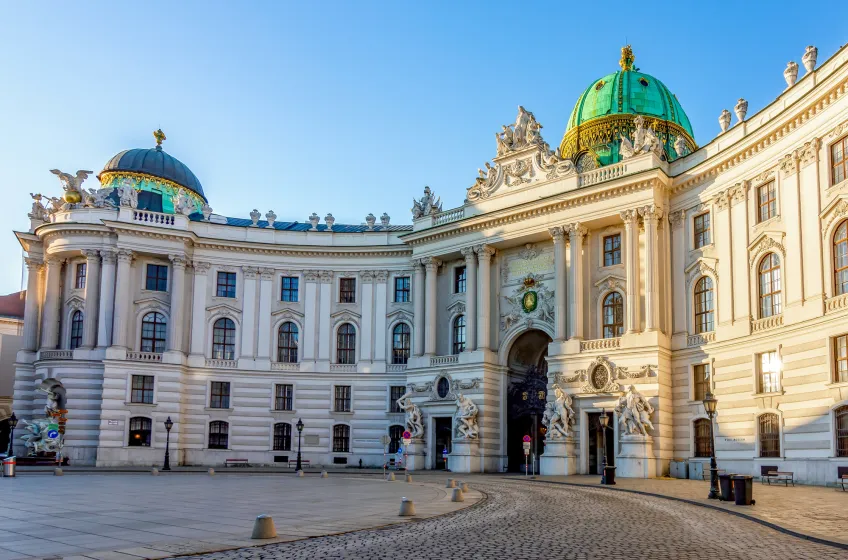
The Hofburg was the centre of Habsburg political power and now forms an enormous complex of palaces, courtyards, museums and government buildings.
Popular visitor areas include the Imperial Apartments, the Sisi Museum and the Imperial Silver Collection. Together, they explore court life and the carefully constructed public image of Empress Elisabeth.
Other parts of the complex contain the Imperial Treasury, Spanish Riding School, Austrian National Library and collections of armour and musical instruments. Seeing everything in one visit is unrealistic, so select the sections that best match your interests.
The exterior courtyards are free to explore and provide an excellent walking route between the old town, Heldenplatz and the museums around Maria-Theresien-Platz.
Belvedere Palace
The Belvedere consists of two Baroque palaces separated by formal gardens. It was built as the summer residence of Prince Eugene of Savoy and now houses one of Austria’s most important art collections.
The Upper Belvedere is best known for Gustav Klimt’s The Kiss. Its galleries also include Austrian art from the Middle Ages through the early 20th century, with works by Egon Schiele, Oskar Kokoschka and other major artists.
The Lower Belvedere hosts temporary exhibitions and preserves several historic interiors. The gardens between the palaces are free to enter and provide a classic view towards central Vienna.
Timed tickets are required for the museum buildings. The Upper Belvedere is especially crowded around lunchtime and at weekends, so choose an early or late slot where possible.
Kunsthistorisches Museum
The Kunsthistorisches Museum is one of Europe’s great art museums. Created to display the Habsburg imperial collections, it occupies an opulent building opposite the Natural History Museum.
Its Picture Gallery contains major works by Titian, Velázquez, Raphael, Caravaggio, Rubens and Vermeer. The museum is particularly celebrated for its exceptional collection of paintings by Pieter Bruegel the Elder.
Further galleries cover ancient Egypt, Greece and Rome, while the Kunstkammer presents elaborate objects made from gold, ivory, precious stones and other rare materials.
The building itself is a major attraction, particularly its grand staircase and domed central café. Allow at least three hours, or concentrate on one or two collections to avoid museum fatigue.
MuseumsQuartier
The MuseumsQuartier occupies former imperial stable buildings behind the grand museums of the Ringstrasse. Its courtyards combine historic architecture with contemporary galleries, cafés and informal public seating.
The Leopold Museum holds the world’s largest collection of works by Egon Schiele, alongside paintings by Gustav Klimt and other Austrian modernists.
The mumok focuses on modern and contemporary art, including Pop Art, Conceptual Art and post-war European movements. Kunsthalle Wien presents changing contemporary exhibitions.
Even visitors who do not enter a museum can enjoy the courtyards, particularly during warm evenings when the complex becomes a popular local meeting place.
Vienna State Opera
The Vienna State Opera is one of the world’s leading opera houses. Its annual programme includes opera, ballet and major repertory productions performed by internationally recognised artists.
Guided daytime tours explain the building’s architecture, backstage operation and post-war reconstruction. Tours are useful when performance tickets are unavailable or when you want to see the auditorium in daylight.
For performances, inexpensive standing places may be released close to the event, though procedures can vary. Regular seated tickets range widely in price and should be booked through official channels.
Dress requirements are generally less rigid than many visitors expect, although smart clothing is appropriate for premieres and formal occasions.
Spanish Riding School
The Spanish Riding School preserves the tradition of classical horsemanship using Lipizzaner stallions. Performances take place in the ornate Winter Riding School within the Hofburg.
Formal performances demonstrate carefully controlled movements developed through years of training. Morning exercises provide a less expensive and less theatrical opportunity to observe the horses and riders.
Not every horse performs the most advanced movements during an exercise session, so choose a full performance when the complete display is important to you.
Seats with restricted views can be disappointing in the narrow hall. Check the seating category carefully, and reserve well ahead during peak visitor periods.
Albertina
The Albertina occupies a former Habsburg palace beside the State Opera. Its collections include prints, drawings, photography and modern art.
The museum is famous for works on paper by artists such as Albrecht Dürer, although delicate originals are not permanently displayed because prolonged exposure to light can damage them.
The permanent modern collection features artists including Monet, Picasso, Matisse and Chagall. Restored Habsburg state rooms add a decorative contrast to the galleries.
The elevated terrace outside provides an attractive view over the State Opera and surrounding streets.
Ringstrasse
The Ringstrasse is the grand boulevard constructed around Vienna’s historic centre after the old fortifications were removed during the 19th century.
Major landmarks along the route include the State Opera, Hofburg, Kunsthistorisches Museum, Parliament, City Hall, Burgtheater and University of Vienna.
Walking the entire ring takes time and can become tiring. Tram routes provide a convenient way to cover individual sections, although regular public trams are not narrated sightseeing services.
The stretch between the State Opera and City Hall contains the greatest concentration of monumental buildings and is particularly attractive after dark.
Naschmarkt
The Naschmarkt is Vienna’s best-known food market, extending between Karlsplatz and Kettenbrückengasse.
Permanent stalls sell fruit, vegetables, spices, cheese, baked goods and international ingredients. Numerous restaurants serve Austrian, Mediterranean, Middle Eastern and Asian food.
The market is most atmospheric during the morning and around lunchtime. Some stalls are aimed heavily at visitors, so compare prices before buying packaged products.
A large flea market is traditionally held nearby on Saturdays, attracting sellers of antiques, household objects, records and second-hand goods.
Prater and Giant Ferris Wheel
The Prater is an extensive public park east of the centre. Its best-known section is the Wurstelprater amusement park, home to the historic Giant Ferris Wheel.
The Ferris wheel provides views over the city from enclosed cabins and is particularly atmospheric around sunset. The surrounding amusement area contains traditional rides, modern attractions, restaurants and games.
Beyond the fairground lies the long, tree-lined Hauptallee, used by walkers, cyclists and runners. This greener part of the Prater offers a complete change from the busy historic centre.
Entry to the amusement park is free, with individual rides charged separately.
Karlskirche
Karlskirche is one of Vienna’s most distinctive Baroque churches. Its façade combines a monumental dome with two decorated columns inspired by ancient Roman monuments.
The interior contains frescoes, sculpture and an elaborate high altar. Concerts are frequently staged here, often featuring music by Mozart or Vivaldi.
The reflecting pool outside creates one of Vienna’s most attractive architectural views. In winter, the surrounding Karlsplatz area hosts a popular craft-focused Christmas market.
Admission arrangements for tourists differ from access for worship, so check the current entrance procedure.
Traditional Coffee Houses
Vienna’s coffee houses are social institutions rather than places designed simply for a quick drink. Many provide newspapers, table service and an atmosphere in which lingering is perfectly normal.
Historic choices include Café Central, Café Sperl, Café Landtmann and Café Schwarzenberg. Famous establishments can develop long queues, particularly in the afternoon.
Try a Melange, similar to a milky coffee, with a slice of Apfelstrudel, Sachertorte or another traditional cake. Coffee terminology varies, so the menu descriptions are often more useful than trying to match British coffee names exactly.
Less famous neighbourhood cafés frequently offer a more relaxed experience and lower prices than those beside the main monuments.
Heuriger Wine Taverns
Vienna is unusual among major capitals because vineyards lie within the city boundary. Traditional wine taverns, known as Heurigen, serve young local wines with simple food.
Grinzing is the best-known wine district, although it is also the most tourist-oriented. Neustift am Walde, Sievering, Stammersdorf and the area around Nussdorf can feel more local.
Food is often selected from a buffet and may include cold meats, cheese, salads, spreads and roast dishes. Payment arrangements differ, with drinks and food sometimes charged separately.
Look for a hanging bundle of pine branches, which traditionally indicates that a tavern is open.
Practical Advice for Visitors
Getting There
Vienna International Airport lies south-east of the city and has frequent connections to the centre.
Regular ÖBB trains and S-Bahn services are generally the best-value options. Railjet trains connect the airport with Wien Hauptbahnhof, while local services travel towards Wien Mitte and other stations.
The City Airport Train offers a dedicated link to Wien Mitte. However, from 7 September 2026 until 31 October 2027, it is scheduled to be replaced by premium buses because of construction work. Ordinary ÖBB rail services are expected to remain the more useful alternative during that period.
Vienna Hauptbahnhof has direct trains to cities including Salzburg, Munich, Budapest, Prague, Bratislava and Ljubljana. Wien Meidling and Wien Westbahnhof also handle selected regional and international routes.
Getting Around
Vienna has an extensive network of underground trains, trams and buses. Most visitors will rely mainly on the U-Bahn and trams.
Tickets must be valid before travel. Paper tickets generally need to be stamped before the first journey unless they are already time-dated or digitally activated.
Short-term passes are usually better value than repeated single tickets when you plan to make several journeys each day. The Vienna City Card combines public transport with attraction discounts, while the Vienna Pass focuses mainly on attraction entry and does not automatically include ordinary public transport.
The historic centre is highly walkable, but distances between the centre, Schönbrunn, Belvedere and the Prater are too large to cover efficiently on foot.
Parking
Driving is rarely necessary for a central Vienna visit. Street parking is regulated across much of the city, with short-stay rules and charges applying during specified hours.
Hotels do not always include parking, and central garages can be expensive. Confirm the daily charge before arriving by car.
Park-and-ride facilities beside underground or suburban railway stations are generally more economical. Leave the car outside the centre and continue by public transport.
Never enter tram-only sections or pedestrian areas simply because a navigation app suggests the shortest route. Historic districts contain access restrictions that may not be obvious until you arrive.
Dining
Vienna’s best-known dish is Wiener Schnitzel, traditionally made with veal, although pork versions are common and usually cheaper. It is normally served with potato salad, parsley potatoes or a simple green salad rather than sauce.
Other Viennese classics include Tafelspitz, boiled beef served with horseradish and apple; Gulasch; sausages; and Kaiserschmarrn, a torn pancake served with fruit compote.
Traditional restaurants are known as Beisln. They often provide a more characteristic experience than heavily advertised restaurants immediately around Stephansplatz.
Vienna also has excellent Balkan, Turkish, Hungarian and Central European food, reflecting the city’s imperial history and modern population.
Tipping is customary. State the total amount you wish to pay when handing over cash or when the card terminal is presented, rather than leaving money silently on the table.
Shopping
The principal luxury shopping streets are Kärntner Strasse, Graben and Kohlmarkt in the historic centre.
Mariahilfer Strasse has a broader mixture of fashion chains, department stores and everyday retailers. Smaller independent shops can be found around Neubau, Josefstadt and the lanes near the MuseumsQuartier.
Typical purchases include Austrian wine, confectionery, pumpkin-seed products, porcelain and items connected with Klimt or classical music.
Mozart-branded sweets are widely sold, though many are mass-produced souvenirs rather than specifically Viennese products.
Most shops close on Sundays, apart from selected businesses at airports, major railway stations and tourist locations.
When to Visit
April to June and September to October provide the best balance of comfortable weather and manageable crowds. Gardens are attractive, outdoor seating is active and walking conditions are generally pleasant.
July and August can be hot, with temperatures sometimes rising well above 30°C. Some traditional cultural institutions reduce their schedules, although festivals and outdoor events continue.
December is one of Vienna’s busiest periods because of its Christmas markets, concerts and seasonal decorations. Book accommodation well ahead and expect crowded central streets.
January and February are colder and quieter, apart from the ball season. Museum-focused visitors may find excellent hotel value during this period.
Local Events
The Vienna Philharmonic New Year’s Concert takes place on 1 January and is broadcast internationally. Public tickets are exceptionally difficult to obtain and are allocated through a formal application process.
Vienna’s ball season runs mainly through January and February. The Vienna Opera Ball is the most famous, but numerous professional associations and cultural organisations hold their own events.
The Donauinselfest is a major free open-air music festival staged on Danube Island, normally during early summer.
The Vienna Film Festival at Rathausplatz combines outdoor screenings with international food stalls during July and August.
Christmas markets open across the city during November and December. Major locations include Rathausplatz, Schönbrunn, Belvedere, Spittelberg and Karlsplatz.
Exploring Beyond Vienna
Bratislava is one of the easiest international day trips. Trains connect the two capitals in roughly an hour, while seasonal boats provide a more scenic but usually more expensive journey.
The Wachau Valley lies west of Vienna along the Danube. Melk Abbey, Dürnstein, vineyards and riverside villages make it one of Austria’s most rewarding day-trip regions.
Klosterneuburg, just beyond Vienna’s northern boundary, is known for its large monastery and wine estate. It is easily reached by suburban train or bus.
Baden bei Wien is a historic spa town south of the capital, with parks, thermal bathing and vineyards.
Lake Neusiedl lies near the Hungarian border and offers cycling, birdwatching, wine villages and shallow-water recreation. A car makes exploration easier, although selected towns are accessible by train.
Shortlist
- Your Shortlist is empty