
Discover Potsdam | A Visitor's Introduction to Potsdam
Recommended places to visit, places to stay and things to do in and around Potsdam
Potsdam is a historic city located just southwest of Berlin in the federal state of Brandenburg, Germany. Once the residence of Prussian kings and German Kaisers, it’s renowned for its opulent palaces, beautifully landscaped parks, and fascinating blend of German and European architecture. With its UNESCO World Heritage sites, charming Dutch Quarter, and cultural flair, Potsdam is a perfect destination for history lovers, architecture enthusiasts, and those seeking a peaceful yet enriching escape from the bustle of Berlin.
Recommended Potsdam accommodation: Hotels Apartments
Pre-book Potsdam Attractions, Tours & Experiences
Why is Potsdam Worth a Visit?
Potsdam is worth visiting for its remarkable concentration of palaces, gardens, and baroque architecture, many of which were built during the reign of Frederick the Great in the 18th century. The city’s rich royal heritage is tangible in every corner, from the grandeur of Sanssouci Palace to the cobbled streets of the Dutch Quarter. It’s also a city with a strong identity, balancing its imperial past with a modern, creative edge. Film buffs will find a treat in Babelsberg, the oldest large-scale film studio in the world, while nature lovers can enjoy the scenic lakes and forests surrounding the city.
Whether you’re interested in strolling through historical gardens, delving into European royal history, admiring architectural marvels, or simply relaxing by the water, Potsdam offers a sophisticated yet laid-back alternative to big-city sightseeing.
Potsdam Highlights: Things to See and Do in Potsdam
Sanssouci Palace and Park
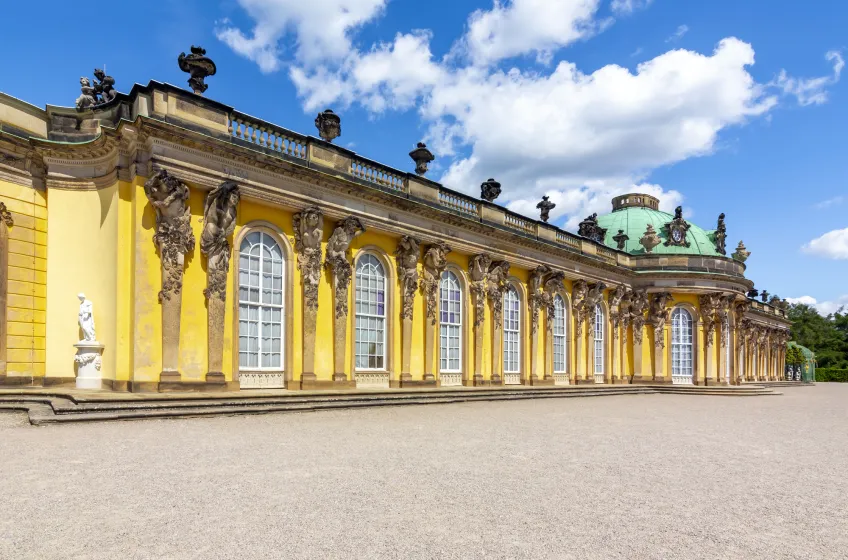
Sanssouci Palace is Potsdam’s crown jewel and a must-see for any visitor. Built as the summer retreat for Frederick the Great, this rococo masterpiece is often compared to Versailles—albeit on a more intimate, personal scale. The name Sanssouci means “without worries,” and it’s easy to see why he chose the name; the palace is perched on terraced vineyards, overlooking manicured gardens, fountains, and sculptures.
The surrounding Sanssouci Park is equally impressive, sprawling over 700 acres and home to several other notable buildings including the New Palace (Neues Palais), the Chinese House, and the Picture Gallery. It’s a great place to spend a full afternoon exploring on foot or by bicycle.
The New Palace (Neues Palais)
Located at the western end of Sanssouci Park, the New Palace is a grand statement of Prussian power and post-Seven Years’ War opulence. With over 200 rooms and lavish interiors, it served as a royal guesthouse and later as a residence for German emperors. The Marble Hall and Grotto Hall are particularly jaw-dropping, with intricate detailing and artistic flair that showcases the height of Prussian baroque.
You can take a guided tour to access the rooms and learn about the life of the royals who once walked its corridors. It’s less crowded than Sanssouci and just as impressive.
Dutch Quarter (Holländisches Viertel)
One of the most distinctive neighbourhoods in Potsdam, the Dutch Quarter is made up of around 150 red-brick houses built in the 18th century for Dutch craftsmen invited to the city. The area today is lively and full of character, with boutiques, artisan shops, cosy cafés, and restaurants.
Wandering the cobbled streets, you’ll feel more like you’re in Amsterdam than in eastern Germany. It’s a fantastic spot for a relaxed afternoon stroll, some souvenir shopping, or a lunch break between palaces.
Cecilienhof Palace
Cecilienhof is best known as the site of the Potsdam Conference in 1945, where Churchill, Truman, and Stalin met to discuss post-war Europe. The palace, built in the style of an English Tudor manor, was the last of the Hohenzollern palaces and offers a fascinating insight into 20th-century history.
Inside, you can visit the conference room where decisions that shaped modern Europe were made. The surrounding Neuer Garten is less formal than Sanssouci Park but equally beautiful, with lakeside paths and meadows.
Babelsberg Film Studio and Park
The Babelsberg Film Studio is the oldest film studio in the world and still active today. It’s the birthplace of German cinema and played a vital role in early 20th-century film, producing classics like Metropolis. While the actual working studio isn’t always open to visitors, the adjacent Filmpark Babelsberg offers a theme park experience with behind-the-scenes film sets, stunt shows, and exhibitions.
Babelsberg Park, nearby, is also worth a visit. It offers dramatic views over the Glienicke Bridge (also known as the “Bridge of Spies”) and across the Havel River. It’s perfect for a walk or picnic.
Glienicke Bridge (Bridge of Spies)
Spanning the Havel River and connecting Potsdam with Berlin, the Glienicke Bridge is famous for Cold War espionage. It was the site of several spy exchanges between the East and West, earning its nickname, the “Bridge of Spies.”
Today, it’s a peaceful crossing with fantastic views of the surrounding water and parks. It’s worth walking or cycling across just for the history and scenery. There are informative panels nearby explaining its role in Cold War history.
Museum Barberini
One of Potsdam’s cultural highlights, Museum Barberini is a modern art museum housed in a reconstructed baroque palace. It hosts top-tier exhibitions of Impressionist and contemporary art, with works by artists such as Monet, Renoir, and Richter.
It’s a great option for a rainy day or a cultural break between outdoor adventures. The museum café is also a popular local hangout.
Potsdam's Historic City Centre (Alter Markt)
The Alter Markt is Potsdam’s old town square and the heart of its historic centre. Here you’ll find the grand St. Nicholas Church, the reconstructed City Palace (now housing the Brandenburg parliament), and the Museum Barberini.
This area is a mix of historic architecture and new development done in classical style, giving it a unique charm. There are plenty of cafés and restaurants, making it a nice place to relax and take in the surroundings.
Belvedere on the Pfingstberg
This 19th-century belvedere offers one of the best panoramic views in Potsdam. Inspired by Roman villas, the twin towers rise above the Pfingstberg hill and provide sweeping views over the city, lakes, and forests.
It’s a bit of a climb to get there, but absolutely worth it for the view. The surrounding parkland is less crowded than Sanssouci and perfect for peaceful walking.
Alexandrowka Russian Colony
This picturesque settlement of wooden Russian-style houses was built in the 1820s for a group of Russian singers. It reflects the close ties between the Prussian and Russian royal families at the time.
Today, the houses are still inhabited and maintained in their original style. There’s a small museum and a lovely Russian café serving traditional dishes like borscht and blinis.
Practical Advice for Visitors
Getting There
Potsdam is easily accessible from Berlin and makes for an excellent day trip or a longer stay. The S-Bahn line S7 connects central Berlin to Potsdam Hauptbahnhof in about 40 minutes. Regional trains (RE1) are slightly faster and run frequently from Berlin Hauptbahnhof.
If you're driving, the journey takes around 30–45 minutes depending on traffic. Potsdam is also well-connected by cycle routes, and it’s possible (and enjoyable) to bike here from the western parts of Berlin along scenic trails.
Parking
Parking in Potsdam is generally manageable, especially near the palace areas. There are several public car parks near Sanssouci Park, the Dutch Quarter, and the city centre. Expect to pay around €1–2 per hour. Free street parking can be found further from the centre, but be mindful of time limits and resident-only zones.
During peak seasons and weekends, it’s best to arrive early or use public transport to avoid the stress of finding a spot.
Dining
Potsdam offers a surprisingly diverse culinary scene. For traditional German fare, head to Gasthaus Kade, a rustic tavern near the Dutch Quarter. Restaurant Juliette offers French fine dining in an intimate setting. If you're after Italian, Pino's is a local favourite with great pizza and pasta.
For coffee and cake, Café Guam in the Dutch Quarter is cosy and stylish, while Café Heider, across from the Nauener Tor, is a classic café with old-world charm.
Don't miss trying Potsdamer Stange, a local beer, or a slice of Baumkuchen, a layered cake beloved in the region.
Shopping
Shopping in Potsdam is a delight if you enjoy boutique finds and local craftsmanship. The Dutch Quarter is home to artisan shops, pottery studios, and antique stores. Look for handmade jewellery, ceramics, and vintage books.
The Brandenburger Straße is the main shopping street, lined with fashion outlets, bookshops, and sweet shops. Krongut Bornstedt, near Sanssouci Park, also has a market-style feel with local products, beers, and crafts.
When to Visit
Spring (April to June) and early autumn (September to October) are the best times to visit, offering mild weather and fewer crowds. Summer (July–August) is beautiful but can be busy, especially around major sights. Winter has its charm too, especially with Potsdam’s Christmas markets and the romantic, snow-dusted palaces.
For photographers and walkers, late spring is ideal as the parks are in full bloom.
Local Events
One of the biggest events is the Potsdam Palace Night (Schlössernacht), held in August, when the Sanssouci Park is lit up with installations, concerts, and performances well into the night.
The Potsdam International Film Festival (Sehsüchte), held in April, attracts filmmakers and cinephiles from around the world, with screenings and discussions.
The Potsdam Christmas Markets, spread across the city in December, are particularly charming, especially the one in the Dutch Quarter with its festive wooden huts and mulled wine.
Exploring Beyond Potsdam
If you have extra time, explore nearby Werder an der Havel, a pretty town on the river known for fruit wines and cherry blossoms in spring. It’s only 20 minutes by train or car.
Schwielowsee, to the southwest, offers lakeside relaxation, boat hire, and picturesque villages like Caputh, where Albert Einstein had a summer house.
Berlin, of course, is just next door and offers endless museums, nightlife, and cultural highlights if you want to combine city buzz with Potsdam’s tranquillity.
Potsdam manages to feel both regal and relaxed, a city steeped in history yet full of life. With its unique blend of grand palaces, leafy parks, and vibrant cultural scene, it’s a destination that rewards curious travellers who take the time to explore its many layers. Whether you’re visiting for a day or staying for a long weekend, Potsdam is guaranteed to leave a lasting impression.
Shortlist
- Your Shortlist is empty