
Discover Brandenburg | A Visitor's Introduction to Brandenburg
Recommended places to visit, places to stay and things to do in Brandenburg
Brandenburg is the wide-open, lake-dotted region that surrounds Berlin, offering a peaceful, pastoral counterpoint to the buzz of the German capital. With its mix of charming villages, royal palaces, UNESCO-listed parks, and vast nature reserves, Brandenburg is the perfect destination for lovers of history, outdoor adventure, and rural relaxation. Often overlooked in favour of its big-city neighbour, Brandenburg rewards those who venture beyond Berlin’s city limits with tranquil waterways, baroque beauty, and a deep connection to Prussian heritage.
Whether you’re paddling through forested canals in the Spreewald, cycling past windmills in Uckermark, or strolling through the palace gardens of Potsdam, Brandenburg’s understated beauty and cultural depth make it one of Germany’s most rewarding regions to explore.
Recommended Brandenburg accommodation: Hotels Bed & Breakfasts Apartments
Pre-book Berlin Attractions, Tours & Experiences
Why is Brandenburg Worth a Visit?
Brandenburg is worth visiting for its natural tranquillity, rich history, and easy-going charm. This is a place where Prussian kings built palaces, where Lutheran churches still ring through sleepy villages, and where nature thrives in protected landscapes, from moors to lakes to forests.
It’s ideal for slow travel. Here, you can canoe through reed-lined waterways, bike along former railway lines, and wander through cobbled old towns barely touched by mass tourism. Unlike more crowded parts of Germany, Brandenburg offers space to breathe, with hundreds of lakes, miles of forest, and a deep sense of authenticity. And yet, it’s never far from the capital—most places are just an hour or two from Berlin by train or car.
Whether you're interested in Prussian royal history, WW2 and Cold War sites, birdwatching, spa towns, or simply switching off and relaxing by a lake, Brandenburg offers something truly unique, just beyond Berlin’s borders.
Brandenburg Highlights: Things to See and Do in Brandenburg
Potsdam and Sanssouci Palace
Potsdam is the crown jewel of Brandenburg and a must-see for any visitor. Once the summer residence of Prussian kings, it’s now a beautifully preserved city full of palaces, parks, and history.
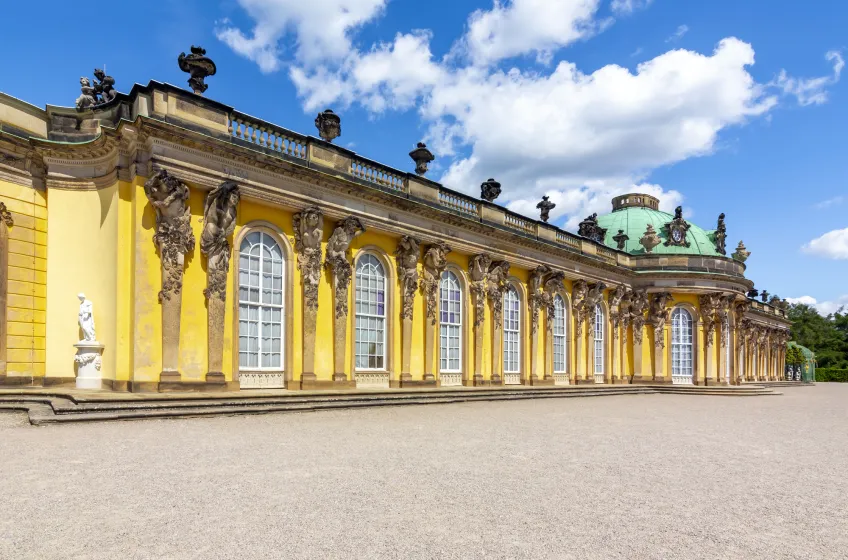
The star attraction is Sanssouci Palace, often called the “Versailles of Prussia”. Built by Frederick the Great, this rococo masterpiece is set amid terraced vineyards and sweeping baroque gardens. Take your time exploring the surrounding Park Sanssouci, home to several other architectural gems, including the New Palace, the Chinese House, and the Orangery Palace.
Don’t miss Cecilienhof Palace, site of the 1945 Potsdam Conference between Churchill, Truman, and Stalin, and Glienicke Bridge, the Cold War “Bridge of Spies” linking Potsdam and Berlin.
Spreewald
The Spreewald Biosphere Reserve, about an hour south of Berlin, is one of Germany’s most unique natural areas. Its maze of natural canals and waterways, carved by the Spree River, has earned it UNESCO recognition.
Traditional wooden punts glide through villages like Lübbenau, Lehde, and Burg, where Sorbian traditions—an ethnic Slavic minority group—still survive. Try a Kahnfahrt (punting boat ride) or hire a kayak for a self-guided paddle through this magical wetland. Don’t leave without trying the region’s famous Spreewald gherkins—pickled cucumbers that come in dozens of varieties.
Brandenburg an der Havel
Often overshadowed by its more famous neighbour, Potsdam, Brandenburg an der Havel is a charming and historic city in its own right. It gave the state its name and dates back over 1,000 years. The Cathedral of St. Peter and Paul is a highlight, as is the old town’s network of waterways, islands, and bridges.
This is also a great base for exploring the surrounding Brandenburger Seenplatte, a lake district perfect for boating, fishing, and swimming.
Uckermark
North of Berlin lies the Uckermark, a quiet, spacious region of rolling hills, meadows, and sleepy villages. It’s one of Germany’s most unspoilt rural areas and a favourite for Berliners seeking peace on weekends.
Uckermark is ideal for cycling, birdwatching, and walking. Look out for cranes in autumn, when thousands gather before migrating. Visit the charming towns of Templin (with its medieval walls and thermal spa) and Prenzlau, or explore the Grumsin Beech Forest, part of a UNESCO-listed primeval forest network.
Tropical Islands Resort
If you’re travelling with children—or just want something quirky—head to Tropical Islands, a massive indoor waterpark housed in a converted airship hangar near Krausnick. It's the world's largest indoor rainforest, complete with pools, lagoons, slides, and fake beaches.
While a little surreal, it’s great fun for families or those needing a warm retreat during cold months.
Bad Saarow and Scharmützelsee
Just an hour from Berlin, Bad Saarow is a lakeside spa town on the edge of Lake Scharmützelsee, one of Brandenburg’s most beautiful lakes. Known for its health resorts, saunas, and mineral springs, it's a top choice for relaxation.
You can rent a boat, enjoy the Therme Spa, or dine at one of the town’s upmarket lakeside restaurants. The surrounding area is perfect for gentle hikes and golf.
Beelitz-Heilstätten
One of Brandenburg’s most atmospheric attractions, Beelitz-Heilstätten is an abandoned tuberculosis sanatorium complex turned into a tourist site. Some buildings are crumbling, while others have been stabilised for safe viewing. The Baumkronenpfad (tree-top walkway) gives visitors a bird’s-eye view of the buildings and forest.
This is a photographer’s dream and a fascinating site for those interested in “lost places” and urban exploration.
Oranienburg and Sachsenhausen Memorial
Just north of Berlin lies Sachsenhausen, one of the most important former Nazi concentration camps open to visitors today. The Sachsenhausen Memorial and Museum offers sobering but vital insights into Germany’s darkest chapter, with exhibitions covering both Nazi and Soviet use of the site.
Nearby Oranienburg has a baroque palace with manicured gardens and a peaceful riverside setting.
Rheinsberg
Rheinsberg is a lovely lakeside town with a palace that once housed Prussian crown prince Frederick (later Frederick the Great). The Rheinsberg Palace, reflected in the calm lake waters, is romantic and peaceful, with lovely gardens and a small opera festival in summer.
It’s also a popular sailing and paddling destination, as it sits on the edge of the Mecklenburg Lake District.
Havelland and Werder an der Havel
The Havelland region west of Berlin is best known as the home of poet Theodor Fontane and as an idyllic landscape of fruit orchards, small lakes, and sleepy villages. The town of Werder an der Havel is a real charmer, especially in May, when the Tree Blossom Festival (Baumblütenfest) brings wine stands, music, and blossom-covered trees into full bloom.
It’s also a good wine-growing region—rare this far north—and has some surprisingly good local vintages.
Wittenberg (technically in Saxony-Anhalt, but closely connected)
Just outside Brandenburg’s official borders but commonly visited from Potsdam or Berlin, Wittenberg is where Martin Luther nailed his 95 Theses, sparking the Protestant Reformation. The Lutherhaus, Castle Church, and Stadtkirche are all UNESCO-listed and steeped in 16th-century history.
It makes a great day trip by train and ties perfectly into Brandenburg’s historic and religious narrative.
Practical Advice for Visitors
Getting There
Brandenburg is easily accessible from Berlin by regional train. Towns like Potsdam, Oranienburg, Brandenburg an der Havel, Lübben, and Bad Saarow are all well served by the S-Bahn or RE trains. You can also reach many places by car or even by boat—waterways link much of the region.
The Berlin ABC transport ticket often covers travel into parts of Brandenburg, making day trips from the capital simple and affordable.
Parking
If you're travelling by car, parking is generally stress-free and inexpensive. Even in busier places like Potsdam or Bad Saarow, you’ll find ample public car parks, and many attractions have on-site parking. Rural areas have minimal restrictions, though be mindful of narrow village roads.
Dining
Brandenburg’s cuisine is hearty and local. Try:
-
Spreewald gherkins – in every shape and flavour
-
Hecht (pike) and Zander (pike-perch) – local freshwater fish
-
Königsberger Klopse – meatballs in creamy caper sauce
-
Wild game – like venison or wild boar, common in forested areas
-
Local wines and ciders – particularly around Werder
In towns like Potsdam and Brandenburg an der Havel, you’ll find a good mix of German and international food. In the countryside, cosy Landgasthöfe (country inns) offer traditional fare with regional ingredients.
Shopping
The best souvenirs include Spreewald pickles, artisan honey, handmade soaps, and pottery from local markets. In Uckermark and Havelland, many organic farms sell jams, wines, cheeses, and juices directly to the public. Potsdam has boutiques selling design goods and fashion, as well as flea markets and antique shops.
When to Visit
Brandenburg is beautiful year-round, but timing your visit depends on your interests:
-
Spring (April–May): Tree blossoms in Werder, mild weather, and fewer crowds.
-
Summer (June–August): Perfect for boating, swimming, festivals, and picnics by the lakes.
-
Autumn (September–October): Forests turn golden, ideal for hiking and harvest festivals.
-
Winter (December–February): Peaceful, with Christmas markets in towns like Potsdam, but many outdoor attractions go quiet.
Local Events
-
Baumblütenfest (Werder) – One of Germany’s biggest blossom festivals, usually in May
-
Potsdamer Schlössernacht – A magical summer night of music and lights in Sanssouci Park
-
Havelfest (Brandenburg an der Havel) – Water-themed town festival in early summer
-
Spreewald Festival (Lübbenau) – Celebrating Sorbian culture with punting, costumes, and food
-
Christmas Markets – Potsdam, Brandenburg an der Havel, and smaller villages all host festive markets with local crafts and food
Exploring Beyond Brandenburg
Once you’ve seen Brandenburg, consider:
-
Saxon Switzerland National Park – South-east of Berlin for dramatic sandstone cliffs
-
Mecklenburg Lake District – North of Brandenburg, perfect for houseboat holidays
-
Berlin – Naturally, many visitors combine Brandenburg with several days in the capital
-
Poland – Brandenburg borders Poland to the east; towns like Frankfurt an der Oder offer easy crossings
Brandenburg is the calm breath of fresh air that many travellers don’t realise they need. It’s where lakes replace traffic, forests replace crowds, and villages welcome you with open arms. Whether you're coming for the palaces of Potsdam, the waterways of the Spreewald, or just a slower pace of life, Brandenburg is a gentle yet deeply rewarding region that invites you to linger, reflect, and explore.
Shortlist
- Your Shortlist is empty