
Discover Lüneburg | A Visitor's Introduction to Lüneburg
Recommended places to visit, places to stay and things to do in and around Lüneburg
Lüneburg is a charming medieval town in northern Germany, located just 50 km southeast of Hamburg. With its beautifully preserved Hanseatic architecture, cobbled streets, and centuries-old salt mining history, Lüneburg feels like stepping back in time—yet it's far from sleepy. This lively university town blends historical character with a youthful energy, offering visitors an authentic slice of German culture, history, and everyday life. Whether you're fascinated by Gothic red-brick facades, love small-town cafés, or simply want to explore somewhere a bit off the tourist trail, Lüneburg is a captivating destination that punches well above its weight.
Recommended Lüneburg Hotels & Other Accommodation
Pre-book Lüneburg Attractions, Tours & Experiences
Why is Lüneburg Worth a Visit?
Lüneburg is worth visiting for its rare combination of medieval charm and vibrant modern life. Once one of the wealthiest towns in northern Europe due to its salt trade—earning it the nickname "White Gold Town"—Lüneburg is rich in both history and character. Its architecture tells a story of prosperity, with stunning gabled houses, intricate brickwork, and an impressively intact Altstadt (old town) that miraculously survived World War II bombings.
Unlike many picturesque towns that can feel like museum pieces, Lüneburg remains very much alive. Thanks to its large student population from Leuphana University, the town is buzzing with cafés, pubs, independent shops, and cultural venues. The atmosphere is friendly and relaxed, and you'll rarely encounter large tour groups, making it a perfect place for slow travel and genuine local experiences.
Whether you’re a history buff, a foodie, a photography lover, or simply someone looking to explore somewhere a little less travelled, Lüneburg will enchant you with its mix of storybook beauty and laid-back northern German charm.
Lüneburg Highlights: Things to See and Do in Lüneburg
Stintmarkt and the Ilmenau Riverfront
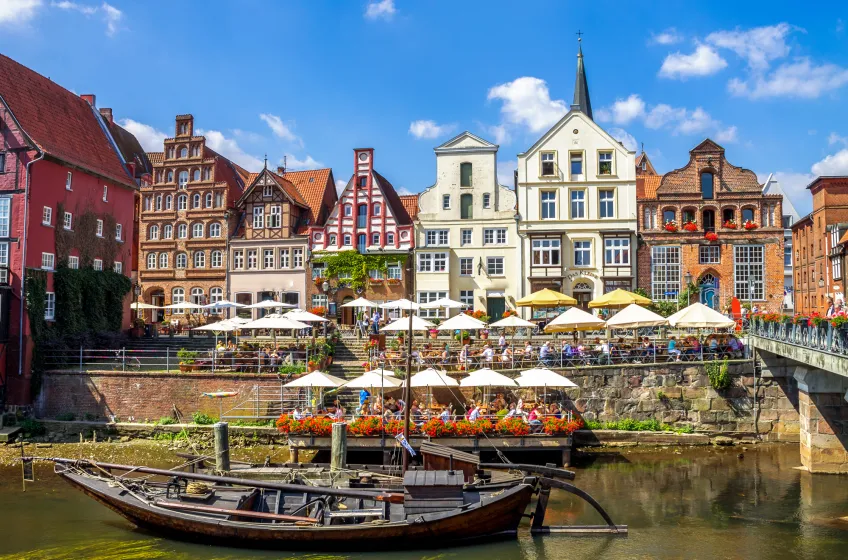
The Stintmarkt is arguably the most iconic part of Lüneburg. This old fish market by the Ilmenau River has transformed into a bustling riverside promenade lined with restaurants, pubs, and beer gardens. With half-timbered buildings leaning precariously over the water and boats gently bobbing along the river, it's the perfect place for an afternoon drink or a romantic evening meal. In summer, it’s the social heart of the town, alive with laughter and clinking glasses.
Lüneburg Town Hall (Rathaus)
Lüneburg’s Town Hall is one of the most beautiful and oldest in Germany, with parts dating back to the 13th century. From the outside, it looks like a patchwork of Gothic, Renaissance, and Baroque styles—each representing an era when the town added to its wealth. Inside, guided tours take you through ornately decorated rooms including the grand council chamber with its wooden ceiling and frescoes. The bell tower chimes daily, and if you're lucky, you’ll hear live organ music during a tour.
German Salt Museum (Deutsches Salzmuseum)
Salt put Lüneburg on the map, and the German Salt Museum—housed in a former saltworks—tells the full story. It’s interactive and surprisingly fascinating, offering insight into how salt was extracted and traded, and how it brought the town immense wealth in the Middle Ages. You’ll see original equipment, watch demonstrations, and learn why salt was once more valuable than gold. Great for kids and adults alike.
Am Sande Square
This wide, cobbled square is the heart of Lüneburg’s old town and has been the commercial centre since medieval times. Surrounded by beautifully preserved merchant houses with intricate gables, it’s an ideal spot to pause and admire the town’s unique architecture. Don’t miss the Chamber of Commerce building and the Gothic-style St. John's Church (St. Johanniskirche) at the western end, whose famously tilted tower is a local curiosity.
St. John's Church (St. Johanniskirche)
The oldest of Lüneburg’s three main churches, St. John’s is an impressive brick Gothic structure dating from the 14th century. Its leaning tower is the result of shifting ground from the salt mines below—a visible reminder of the town’s unusual geological history. Inside, you’ll find a beautiful organ once played by Johann Sebastian Bach during his time in Lüneburg as a student. Climb the tower for fantastic panoramic views of the red rooftops and green countryside.
Water Tower (Wasserturm)
The Wasserturm is a beautifully restored water tower offering one of the best views in town. You can take the lift or climb the stairs for a 360-degree view over the historic centre, the saltworks, and the surrounding Lüneburger Heide (heathland). There's also a small exhibition inside about the tower’s construction and use. Sunsets here are magical.
Historic Breweries and Beer Tasting
Lüneburg was once home to over 80 breweries, and the brewing tradition is still strong. Visit the traditional Krone Brewery or the popular Brauhaus Nolte for a taste of locally brewed beer. Many pubs serve their own house beers and hearty northern German fare. Beer lovers should also check out local festivals such as the Lüneburger Bierfest.
Kalkberg Nature Reserve
Just a short walk from the town centre, Kalkberg is a small but steep hill that offers peaceful walking trails and superb views over Lüneburg. Once a limestone quarry and salt mine, it’s now a protected area with rare plants and bats living in its old tunnels. It’s also a lovely place for a picnic or to stretch your legs between sightseeing stops.
Lüneburg Museum
This town museum is housed in a modern building but covers the region's long history from prehistory through the medieval boom years and into modern times. Expect detailed exhibits on the salt trade, town development, and local culture. It’s well-curated, and all exhibits have English translations.
Old Harbour and Industrial History
Walk along the old harbour near the salt museum and you’ll find historical cranes, warehouses, and shipping tools that tell the story of Lüneburg's role in the Hanseatic League. The "Alter Kran" (Old Crane), a 14th-century wooden crane used for unloading goods, is a striking symbol of the town’s trading past.
Leuphana University and Contemporary Culture
While not a tourist attraction in the usual sense, the university adds modern life to Lüneburg’s historic setting. The campus, partially designed by renowned architect Daniel Libeskind, is worth a look if you're interested in contemporary architecture. The university also hosts public events, lectures, film screenings, and exhibitions throughout the year.
Lüneburger Heide Nature Park
Though technically just outside the town, this heathland region is easily accessible and makes a perfect day trip from Lüneburg. In late summer, the heather blooms into a sea of purple, attracting walkers, cyclists, and photographers. The area is car-free in many parts, offering peaceful paths, charming villages, and even horse-drawn carriage rides.
Practical Advice for Visitors
Getting There
Lüneburg is well connected and easy to reach. From Hamburg, it's just a 30-minute journey by regional train (RE or Metronom lines), making it an excellent day trip or weekend break from the city. Trains run frequently throughout the day. If you’re coming from Berlin, the journey takes around 2.5 to 3 hours by train with a change in Hamburg.
Driving is also an option, with the A39 motorway linking Lüneburg to major routes. However, the historic centre is best explored on foot, so it’s usually easier to park outside the core and walk in.
Parking
There are several multi-storey car parks around the Altstadt, including at "Parkhaus am Rathaus", "Parkhaus City", and "Parkhaus Lünepark". Parking fees are reasonable, and signage is clear. Avoid driving into the narrowest parts of the old town, where streets are cobbled and tight. Free parking options are limited and tend to fill up early.
Dining
Lüneburg has a thriving food scene, blending traditional German cuisine with international flair. Try Gasthaus Krone for rustic fare and local beers, or Mälzer Brau- und Tafelhaus, a brewpub serving schnitzel, sausages, and its own craft beer. For something more refined, Anna’s Café & Restaurant offers modern German dishes with a seasonal twist.
Vegetarian and vegan options are becoming more common—check out Avenir or Café Zeitgeist for excellent meat-free meals. For coffee and cake, Café Lässig and Das Kleine Café are favourites among locals and students.
Shopping
Lüneburg is full of independent shops and boutiques, especially around streets like Bäckerstraße and Kleine Bäckerstraße. You’ll find everything from handmade jewellery to quirky homeware and eco-fashion. Don’t miss Lehmanns Laden for local products, or Wassermühle for books and gifts in a historic water mill setting.
There’s also a weekly market on Wednesdays and Saturdays at the Marktplatz, where you can buy fresh produce, flowers, cheese, and crafts.
When to Visit
Lüneburg is beautiful year-round. Spring and summer are ideal for enjoying the riverside, outdoor dining, and walks in the heath. Autumn brings colourful foliage and fewer crowds, while winter is cosy and festive, with a lovely Christmas market in the old town.
The heather bloom in Lüneburger Heide (August to early September) is a major seasonal highlight and well worth timing your visit around if you enjoy nature.
Local Events
-
Lüneburg Christmas Market (late November to Christmas Eve): A magical event set in the old town square with stalls selling gifts, mulled wine, and traditional treats.
-
Bierfest (May/June): Local breweries showcase their best, with live music and beer tasting.
-
Südwärts Festival (Autumn): A multi-day music and cultural festival featuring indie bands and art performances.
-
Heideblütenfest (in nearby Amelinghausen): Celebrating the blooming of the heather with parades, concerts, and traditional costumes.
Exploring Beyond Lüneburg
-
Hamburg: Just 30 minutes away, perfect for a day trip to explore Germany’s second-largest city with its harbour, Elbphilharmonie, and museums.
-
Lüneburger Heide: Visit the nature park for hikes, biking, and heather blooms—accessible by car, bike, or bus.
-
Celle: A charming town about 1.5 hours away, known for its half-timbered houses and ducal palace.
-
Winsen (Luhe): A small town along the River Luhe with a lovely castle and parks, about 25 minutes by train.
Lüneburg may be small, but it’s endlessly rewarding. With its walkable centre, rich history, lively culture, and easy connections, it offers the perfect mix of exploration and relaxation. Whether you stay for a day or linger for a long weekend, this Hanseatic gem will leave you wondering why more people haven’t discovered it yet.
Shortlist
- Your Shortlist is empty