
Discover Hanover | A Visitor's Introduction to Hanover
Recommended places to visit, places to stay and things to do in and around Hanover
Hanover (Hannover in German) is the capital of Lower Saxony in northern Germany, a city that blends royal heritage with modern energy. Known for its beautiful gardens, vibrant cultural scene, and role as a major trade fair hub, Hanover is both a business centre and a welcoming city for travellers. It has been rebuilt after heavy damage in the Second World War but retains historic gems, wide green parks, and lively neighbourhoods. With its mix of history, culture, and nature, Hanover is a city that rewards visitors looking for more than just the usual tourist trail.
Recommended Hanover accommodation: Hotels Bed & Breakfasts Apartments
Pre-book Hanover Attractions, Tours & Experiences
Why is Hanover Worth a Visit?
Hanover is worth visiting for its unique combination of historic landmarks, extensive green spaces, and contemporary cultural life. Unlike many German cities, Hanover has one of the largest pedestrianised city centres, making it easy to explore on foot. The city is also famous for its grand Herrenhausen Gardens, once the pride of the royal House of Hanover, which later gave Britain three kings.
The city’s cultural life is lively, with museums, theatres, and music festivals, while its food and nightlife scene offers everything from traditional German pubs to modern cafés and clubs. Hanover also stands out for its accessibility: it’s well connected by rail and air, making it an easy stop on a wider German or European itinerary. For those who enjoy exploring beyond the obvious, Hanover is a refreshing and friendly destination.
Hanover Highlights: Things to See and Do in Hanover
Herrenhausen Gardens (Herrenhäuser Gärten)
These baroque gardens are Hanover’s most famous attraction, once belonging to the royal family of Hanover. They are modelled after Versailles, with elegant fountains, sculptures, and symmetrical flowerbeds. The gardens also include the Berggarten, a botanical garden with tropical greenhouses and exotic plants, and the Grosser Garten, the most formal and impressive section. Summer events, including open-air concerts and fireworks festivals, bring the gardens to life.
New Town Hall (Neues Rathaus)
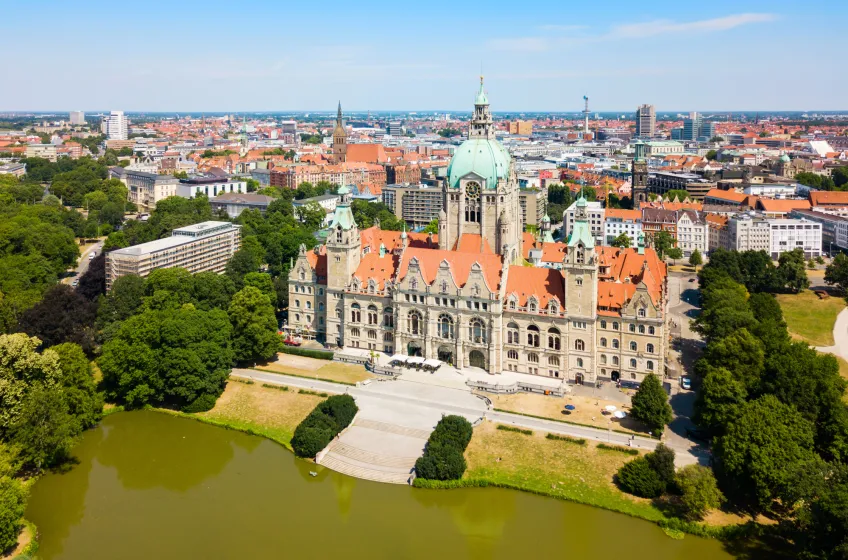
Hanover’s New Town Hall looks more like a fairytale palace than a municipal building. Built in the early 20th century, it features a grand dome that visitors can ascend via a unique curved lift for panoramic views of the city. Inside, there are fascinating models showing how Hanover looked in different eras: the Middle Ages, pre-1945, post-war ruins, and the modern city.
Old Town (Altstadt)
Hanover’s Old Town is a small but charming area of timber-framed houses, cobbled streets, and cosy cafés. Much of it was reconstructed after wartime destruction, but it still feels atmospheric. Key sights include the Market Church (Marktkirche) with its brick Gothic style and the Old Town Hall. Kramerstrasse is especially picturesque, lined with half-timbered houses and small shops.
Maschsee Lake
This large artificial lake south of the city centre is one of Hanover’s favourite leisure spots. It’s ideal for walking, cycling, boating, or just relaxing by the water. In summer, the Maschseefest festival transforms the area with food stalls, music, and cultural performances. It’s also a popular place for joggers and families.
Hanover Zoo (Erlebnis-Zoo Hannover)
This zoo is one of the best in Germany, designed with themed areas like Yukon Bay, Gorilla Mountain, and the African Zambezi River, where visitors can take a boat ride past hippos and flamingos. It’s very family-friendly and offers an engaging mix of entertainment and education.
Sprengel Museum
For modern art enthusiasts, the Sprengel Museum is a must-visit. It houses one of Germany’s most important collections of 20th- and 21st-century art, with works by Picasso, Klee, Nolde, and Niki de Saint Phalle, as well as extensive photography and media art collections. The building itself is striking, with contemporary architecture that complements its exhibits.
Eilenriede Forest
Hanover is often called “the green city,” and Eilenriede is a big reason why. This enormous urban forest—twice the size of New York’s Central Park—offers miles of walking and cycling trails, playgrounds, and quiet corners. It’s perfect for escaping city life without leaving town.
Marktkirche and Aegidienkirche
The Market Church (Marktkirche) is Hanover’s main Protestant church, notable for its red-brick Gothic design and impressive interior. The Aegidienkirche, by contrast, stands as a poignant memorial: left in ruins after WWII bombing, it has been preserved as an open-air war memorial with a peaceful, reflective atmosphere.
Hanover Adventure Line (Roter Faden)
A fun way to explore the city is to follow the “Red Thread” (Roter Faden), a painted line on the pavement that links 36 major sights around Hanover. A guidebook is available from the tourist office, and it’s a self-guided walking tour that covers everything from historic buildings to modern landmarks.
Lower Saxony State Museum (Niedersächsisches Landesmuseum)
This museum offers a wide-ranging collection, from natural history and archaeology to art and ethnology. Highlights include medieval art, works by European masters, and displays on Lower Saxony’s history and culture. It’s especially good if you’re visiting with children, thanks to its engaging exhibits.
Hanover Trade Fair Grounds (Messegelände)
Hanover is world-famous for hosting international trade fairs, such as Hannover Messe (industry) and CeBIT (technology, though recently discontinued as a fair). Even if you’re not attending a fair, the site itself is impressive, with futuristic halls and the Expo 2000 structures.
Practical Advice for Visitors
Getting There
Hanover is exceptionally well connected. By air, Hanover Airport has regular flights across Europe and beyond, and a direct train connects the airport to the city centre in around 20 minutes. By train, Hanover is a major hub on Germany’s high-speed ICE network, with direct connections to Berlin (1.5 hours), Hamburg (1.5 hours), Frankfurt (2.5 hours), and Munich (4.5 hours). By car, the city lies on major motorways (A2 and A7), making it easy to reach from across Germany.
Parking
Parking in the city centre is well organised, with plenty of underground garages and park-and-ride facilities. Spaces in the Altstadt can be limited, so using multi-storey car parks around the city is often easier. The Red Thread walking route is best done without a car, so park and explore on foot.
Dining
Hanover’s food scene is varied. Traditional Lower Saxon cuisine includes dishes like Grünkohl mit Pinkel (kale with sausage), Bregenwurst (a type of sausage), and hearty potato-based meals. Local restaurants such as Broyhan Haus serve regional dishes in historic settings. For international options, the city centre and Linden district have a wide range of cuisines, from Turkish kebabs to fine Italian. Don’t miss sampling a local beer such as Gilde, brewed in Hanover since the Middle Ages.
Shopping
Hanover is excellent for shopping, with Germany’s first pedestrianised shopping street, Georgstrasse, and the large Ernst-August-Galerie shopping centre. The Old Town has independent boutiques and craft shops, while the weekly markets, especially at Lister Meile and Marktkirche, are perfect for fresh produce, flowers, and local products. For something unique, pick up souvenirs themed around Niki de Saint Phalle’s colourful sculptures, which are scattered around the city.
When to Visit
Hanover is a year-round destination. Spring (April–June) brings blooming gardens, especially in Herrenhausen. Summer (July–August) is great for outdoor festivals and lake activities. Autumn (September–October) offers colourful foliage in Eilenriede and wine festivals. Winter (December) is festive, with Hanover’s Christmas market around the Old Town lit up with wooden stalls, mulled wine, and traditional crafts.
Local Events
-
Hannover Messe (April): One of the world’s largest industrial trade fairs.
-
Maschseefest (July–August): A lively lakeside festival with food, music, and entertainment.
-
Schützenfest Hannover (July): The world’s largest marksmen’s fair, featuring parades, funfairs, and shooting competitions.
-
Herrenhausen International Fireworks Competition (May–September): Teams from around the world compete with dazzling fireworks displays in the Herrenhausen Gardens.
-
Christmas Market (December): Traditional stalls and festive atmosphere in the Old Town.
Exploring Beyond Hanover
-
Celle (40 minutes by train): A beautiful town with over 400 half-timbered houses and a Renaissance castle.
-
Hameln (45 minutes by train): The town of the Pied Piper legend, with charming medieval streets and folklore shows.
-
Steinhuder Meer (30 minutes by car/train): A large lake popular for sailing, cycling, and birdwatching.
-
Hildesheim (30 minutes by train): Known for its UNESCO World Heritage churches, including St. Michael’s.
-
Wolfsburg (1 hour by train): Home of Volkswagen and the impressive Autostadt car-themed park.
Hanover may not be Germany’s most obvious tourist city, but that’s part of its appeal. With its royal gardens, historic architecture, lively festivals, and welcoming atmosphere, it offers an experience that combines cultural depth with relaxed, everyday charm. Whether you’re admiring fireworks in the Herrenhausen Gardens, strolling along the Red Thread, or enjoying a beer by Maschsee Lake, Hanover invites you to discover a side of Germany that’s both authentic and unexpected.
Shortlist
- Your Shortlist is empty