
A Visitor's Introduction to The White Cliffs of Dover
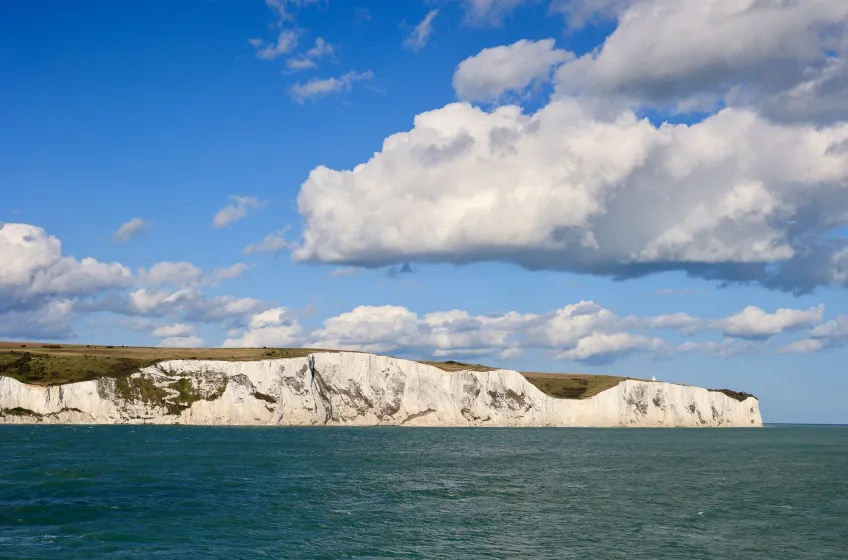
The White Cliffs of Dover are one of Britain’s most iconic natural landmarks, located on the southeastern coast of England in the county of Kent. Towering up to 110 metres above sea level, the chalk cliffs face the Strait of Dover and offer expansive views across the English Channel. These cliffs are particularly visible from ferries arriving in the port town of Dover and have long served as a powerful symbol of Britain's resilience and identity, especially during times of conflict. The striking white colour of the cliffs is due to their chalk composition, formed from the skeletal remains of marine organisms deposited during the Late Cretaceous period.
The cliffs stretch for about 16 kilometres from Kingsdown in the north to Capel-le-Ferne in the south and are managed in part by the National Trust, which maintains public access to key sections including the popular walking routes between Dover and South Foreland Lighthouse. While the cliffs themselves are a natural attraction, the surrounding area includes a range of historical sites, visitor centres and panoramic viewpoints that enrich the experience.
Recommended Dover accommodation: Hotels Bed & Breakfasts Pub Accommodation
Why Are The White Cliffs Worth a Visit?
The White Cliffs of Dover offer a blend of natural beauty, historical significance and recreational opportunity, making them a worthwhile destination for visitors interested in geology, wildlife, walking, or military history. Their iconic status is not only visual but symbolic, representing a point of arrival and departure that has played a central role in British history, particularly during both World Wars. The cliffs afford some of the most dramatic coastal scenery in southern England and provide excellent vantage points for observing passing ships, migratory birds and, on clear days, the coastline of France across the Channel.
For walkers, the area offers well-maintained coastal paths that traverse wildflower meadows, cliff-top grasslands and ancient woodland. History enthusiasts will find notable landmarks nearby, including wartime tunnels and beacons, while nature lovers can spot an array of flora and fauna, particularly butterflies, skylarks and kestrels. The cliffs are accessible year-round and can be explored through a range of routes catering to different levels of ability and time constraints.
White Cliffs Highlights
The White Cliffs Themselves
The cliffs are formed from layers of soft, white chalk interspersed with bands of flint. Their bright appearance, especially under sunlight, makes them stand out starkly against the surrounding sea and sky. Their unique geology attracts not only sightseers but also researchers and conservationists interested in the processes of erosion and sedimentation.
South Foreland Lighthouse
This 19th-century Victorian lighthouse, located atop the cliffs near St Margaret’s Bay, is managed by the National Trust and is accessible via the cliff-top walking path from Dover. South Foreland was the first lighthouse to use an electric light and was frequented by scientific pioneers including Michael Faraday and Guglielmo Marconi, who conducted early radio experiments here. Visitors can explore the restored interior, enjoy sea views from the balcony, and learn about maritime navigation history.
National Trust Visitor Centre
Located at Langdon Cliffs, just outside Dover, the Visitor Centre provides information on the area’s ecology and history. It includes a café, gift shop and interpretation boards. The centre is a starting point for several waymarked walks and provides access to picnic areas and restrooms. Staff and volunteers are often on hand to offer advice on walking routes and wildlife spotting.
Cliff-Top Walks
One of the most popular activities is walking the coastal paths that run along the edge of the cliffs. The route between Dover and South Foreland is especially popular, taking roughly 1.5 to 2 hours each way. The path offers uninterrupted views of the sea, wildflower meadows and grazing livestock. Interpretation panels along the route explain the local geology and biodiversity.
Samphire Hoe
Created from the chalk and soil excavated during the construction of the Channel Tunnel, Samphire Hoe is a unique nature reserve located at the base of the cliffs, accessible by tunnel from the main A20 road. The area is popular for walking, angling and birdwatching, and is home to species including peregrine falcons, orchids and sea carrots. A visitor centre, toilets and café are available on-site.
Fan Bay Deep Shelter
This Second World War-era shelter complex was carved into the cliffs by the Royal Engineers and can be accessed via guided tours managed by the National Trust. The tunnels were used to house troops manning nearby gun batteries and include original fittings, graffiti and a glimpse into life during wartime. Visitors should be prepared for narrow tunnels and wear appropriate footwear.
St Margaret's Bay
This small coastal village is nestled at the base of the cliffs and features a shingle beach, tearooms and pubs. It was a favourite retreat of notable figures such as Ian Fleming and Noël Coward. The bay is also a popular starting point for Channel swimmers attempting to cross to France.
Dover Castle
While not part of the cliffs themselves, Dover Castle sits atop the eastern heights of the town and offers commanding views of the Channel. The castle has Roman origins and has been continuously modified through the Norman and medieval periods into modern times. It played a critical role during Operation Dynamo in 1940. Visitors can explore the Great Tower, underground hospital, secret wartime tunnels and exhibitions.
Wildlife and Seasonal Flora
The chalk grassland supports a variety of plant species, including horseshoe vetch, wild thyme and marjoram. In summer, butterflies such as the Adonis blue and chalkhill blue are common, and the cliffs are home to nesting seabirds, including fulmars and kittiwakes. Birdwatchers and photographers often visit during spring and autumn migration periods.
Channel Views
On clear days, the view from the cliffs across the Strait of Dover to France is particularly striking, with the French coast visible just 34 kilometres away. The view includes shipping lanes, ferries, and, at times, distant wind farms and cargo ships. The site is a popular location for photography, especially around sunrise and sunset.
Nearby Attractions
The town of Dover, located immediately west of the cliffs, offers several sites of historical and cultural interest. Dover Castle is the most prominent, but visitors can also explore the Roman Painted House, an excavated Roman dwelling with detailed wall frescoes. The Dover Museum contains exhibits on local archaeology and includes the Bronze Age Dover Boat, one of the oldest seafaring vessels ever discovered.
To the north, Deal Castle and Walmer Castle—both built during the reign of Henry VIII—offer insight into coastal defence systems. Further afield, the city of Canterbury is accessible by train or car and features Canterbury Cathedral, a UNESCO World Heritage Site with a rich ecclesiastical history. The Kent Downs Area of Outstanding Natural Beauty, which includes the cliffs, extends inland and offers additional walking and cycling opportunities through rolling countryside and traditional villages.
To the east of the cliffs, Folkestone is a short drive away and is home to the Creative Quarter, a hub for local artists and independent businesses. The Folkestone Harbour Arm and the Lower Leas Coastal Park also offer attractive seafront spaces for visitors.
Practical Advice for Visitors
The White Cliffs are open throughout the year and can be accessed on foot, by car or by public transport. The National Trust-managed Langdon Cliffs Visitor Centre is the primary access point, with a car park (charges apply), toilets, and café. Public footpaths and waymarked routes provide safe access to the cliff-top trails. Dogs are welcome but should be kept on leads due to livestock and sheer drops.
Weather conditions can affect access, particularly during high winds or heavy rain, so visitors should check forecasts and dress appropriately. Good walking shoes are essential, as paths can be uneven and muddy. Sunscreen, water and windproof clothing are recommended depending on the season.
Dover is well-connected by rail, with regular services from London St Pancras and London Victoria. Local buses and taxis connect the train station to the cliffs and surrounding areas. If driving, the site is signposted from the A2 and A20. Accommodation options in Dover and nearby villages range from guesthouses to hotels, many with views of the Channel.
Visitors should also be aware that erosion is an ongoing natural process affecting the cliffs, and staying within marked paths is essential for safety. The cliffs do not have fencing along much of their length, so caution is advised, especially for families with children or during windy conditions.
Guided tours are available for some features, including Fan Bay Deep Shelter and South Foreland Lighthouse, and booking in advance may be necessary during peak periods. The cliffs are also popular during annual events such as wildlife walks, historical re-enactments and conservation days hosted by the National Trust and local organisations.
Conclusion
The White Cliffs of Dover remain one of Britain’s most enduring natural and cultural landmarks. Combining dramatic scenery, historical depth and ecological richness, they offer a rewarding experience for a wide variety of visitors. Whether as a short scenic stop or the focus of a day’s walking and exploration, the cliffs provide a compelling insight into the coastal heritage of southeast England.
Shortlist
- Your Shortlist is empty