
Discover Dover | A Visitor's Introduction to Dover
Recommended places to visit, places to stay and things to do in and around Dover
Dover is one of England’s most iconic coastal towns, located on the southeastern tip of Kent where the English Channel meets the chalky cliffs of Britain. Famed for its dramatic White Cliffs, imposing medieval Dover Castle, and its role as a major historical and transport hub, Dover offers visitors a powerful blend of natural beauty, military history, and cross-Channel adventure. Whether you're passing through on your way to France or staying to explore the surrounding countryside, Dover makes a rewarding destination for history buffs, hikers, and heritage lovers alike.
Recommended Dover Accommodation: Hotels Bed & Breakfasts Pub Accommodation
Why is Dover Worth a Visit?
Dover is worth visiting for its unique position as a gateway between Britain and continental Europe, both geographically and historically. Its strategic importance dates back to Roman times, and over the centuries it has played a critical role in defending England’s shores. Today, that rich history is reflected in its extraordinary castle, wartime bunkers, and coastal fortifications.
But there’s more to Dover than its past. The White Cliffs of Dover remain one of the most iconic natural landmarks in the UK—towering chalk cliffs that have symbolised hope, resilience, and homecoming throughout British history. With walking trails that follow the cliff tops, secret beaches, and stunning sea views, the landscape alone makes a visit worthwhile.
Add to that a steadily improving town centre, excellent connections to London and Europe, and nearby natural and cultural attractions, and Dover becomes more than just a ferry port—it’s a destination in its own right.
Dover Highlights: Things to See and Do in Dover
Dover Castle
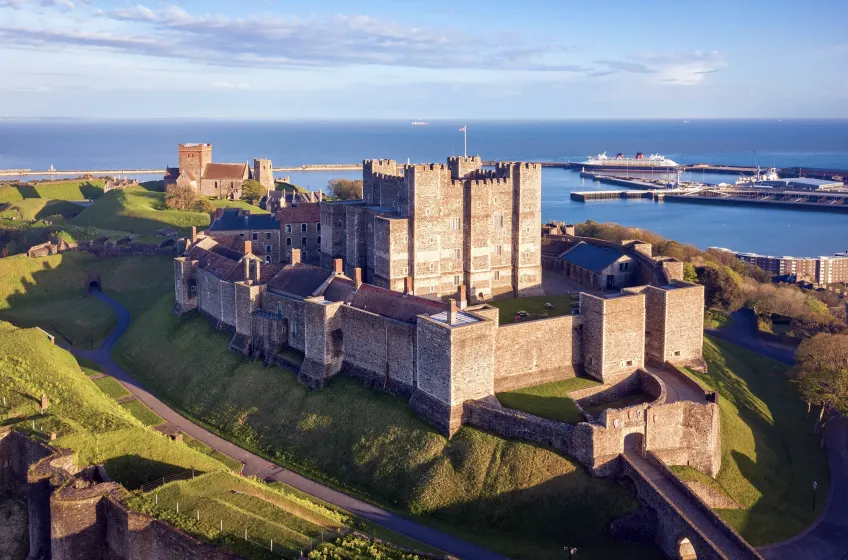
Known as the "Key to England," Dover Castle is one of the most spectacular and historically significant castles in the country. Sitting high above the town on Castle Hill, it has defended the realm for over 900 years. The castle offers a full day’s worth of exploration, with medieval towers, a recreated royal court in the Great Tower, and extensive underground wartime tunnels that were used during Operation Dynamo in World War II. The views over the Channel from the ramparts are unmatched, and the whole site is brilliantly maintained by English Heritage.
The White Cliffs of Dover
Perhaps Britain’s most famous natural landmark, the White Cliffs are a must-see. The best way to experience them is on foot: start at the National Trust Visitor Centre on Langdon Cliffs and take the cliff-top walk east towards South Foreland Lighthouse. On a clear day, you can see the coast of France across the Channel. The walk is about 4 miles (round trip), with dramatic views, birdlife, and quiet grassy spots to stop for a picnic.
Fan Bay Deep Shelter
Hidden beneath the cliffs, Fan Bay Deep Shelter is a remarkable WWII site that can be visited on guided tours through the National Trust. These tunnels were built to house soldiers manning gun batteries and are accessed via a metal stairwell in the cliff. Inside, you’ll find preserved bunk beds, messages scrawled on the walls, and chilling echoes of wartime life. It’s a fascinating and slightly eerie experience—not for the claustrophobic, but a unique part of Dover’s wartime story.
Dover Museum and Bronze Age Boat Gallery
Located in the town centre, Dover Museum is a compact but informative place that offers a deeper look at the town’s history—from Roman artefacts to modern maritime life. The highlight is the Bronze Age Boat Gallery, which houses the world’s oldest known seagoing boat, over 3,000 years old. This internationally significant find was discovered during roadworks in the 1990s and is now on permanent display in an atmospheric gallery.
South Foreland Lighthouse
Perched on the cliffs east of Dover, South Foreland Lighthouse is a Victorian beacon with a scientific twist—it was the first lighthouse to use electricity and was once visited by Michael Faraday. Managed by the National Trust, it’s open for tours, with interactive displays and a delightful tearoom nearby. The views over the Channel are sublime, and the walk there along the cliff path is as enjoyable as the destination itself.
Western Heights and Drop Redoubt
Often overshadowed by the castle, the Western Heights are a vast network of 18th- and 19th-century fortifications built to repel Napoleon’s armies. You can explore large earthworks, the impressive Drop Redoubt fortress, and a series of winding military tunnels and staircases. Much of the area is open-access, perfect for a self-guided walk, though occasional guided tours provide fascinating detail about this lesser-known defensive marvel.
Dover Patrol Memorial at St Margaret’s at Cliffe
A short drive or walk along the coast brings you to St Margaret’s at Cliffe, a charming village with a hidden beach and some of the best cliff views in Kent. The Dover Patrol Memorial, standing tall on the clifftop, honours those who served in the Dover Patrol during WWI. The area is peaceful, with scenic walking paths and coastal air that feels wonderfully bracing.
Dover’s Beaches
Dover has a few pebbly beaches, including Dover Beach right by the ferry terminal and Shakespeare Beach, a short walk west along the seafront. While not the most glamorous beaches in Kent, they offer quiet spots to sit by the water, and Shakespeare Beach is also the start point for many Channel swimmers attempting the crossing to France.
Cruise Terminal and Marina Curve
The Dover Marina Curve is a relatively recent development offering a pedestrian-friendly space between the marina and cruise terminal. It’s a pleasant place for a seaside stroll, with food kiosks, seating, and views of the harbour and ferries. It’s part of an ongoing regeneration plan aimed at improving the town’s waterfront appeal.
Practical Advice for Visitors
Getting There
Dover is easy to reach by both road and rail. High-speed trains from London St Pancras reach Dover Priory station in just over 1 hour, while slower trains from Charing Cross and Victoria take around 2 hours. The town is connected by the A2/M2 from London or M20/A20 from Folkestone and Ashford. If you’re coming from France, regular ferries run from Calais to Dover (about 90 minutes), with foot passengers and cars both catered for.
Parking
There are several pay-and-display car parks in Dover, including Castle Hill, St James Retail Centre, and De Bradelei Wharf. If visiting the castle, on-site parking is free for English Heritage members but paid for others. Cliff-top walks often begin at the National Trust White Cliffs Car Park, which charges a daily fee—again, free for National Trust members.
Dining
Dover’s food scene is improving, with a mix of traditional pubs, seaside cafés, and global cuisine. The White Horse near the castle is a charming old pub filled with signatures of Channel swimmers. Il Rustico is a well-rated Italian spot in town, while Dinos, a family-run restaurant, serves hearty Greek dishes. For fish and chips, try New Moon Fish Bar near the beach.
At the National Trust visitor centre, the White Cliffs Tearoom offers light lunches and excellent cakes with sea views. For something more elegant, Dover Marina Hotel’s waterfront restaurant is a pleasant place for lunch or dinner.
Shopping
Dover has a mix of high-street shops, independent retailers, and outlets. St James Retail Park is home to several big-name stores, while De Bradelei Wharf offers discounted fashion and homewares. For more local charm, check out Dover Collectables, Curiosity of Dover, and pop into Maison Dieu, a Gothic town hall that occasionally hosts craft markets and events.
When to Visit
The best time to visit Dover is between May and September, when the weather is mild and the cliffs are at their most photogenic. Summer is ideal for walking and sightseeing, although it can be busy with ferry travellers and cruise ship visitors. Spring and early autumn are less crowded but still pleasant for outdoor activities. Winter is quieter, with fewer crowds at the castle and attractions, but some sites may have reduced hours.
Local Events
Dover hosts several events throughout the year, including:
-
White Cliffs Walking Festival (August): A week-long celebration of guided walks around the cliffs and countryside.
-
Dover Regatta (Summer): A family-friendly event with live music, stalls, and water-based activities by the marina.
-
Dover Film Festival (March): Featuring archive footage of life in Dover from decades past.
-
Christmas at the Castle: A magical seasonal event with lights, markets, and festive cheer.
Exploring Beyond Dover
There’s plenty to see nearby if you’re planning to use Dover as a base:
-
Folkestone (20 minutes by car or train): A revitalised seaside town with a buzzing arts scene and the Creative Quarter.
-
Canterbury (30 minutes by train): A must-visit for its cathedral, medieval streets, and museums.
-
Deal (15 minutes by train or car): A charming coastal town with a Tudor castle, pebble beach, and lively high street.
-
Walmer Castle: Just beyond Deal, this former home of the Duke of Wellington has lovely gardens and a peaceful seafront setting.
-
Samphire Hoe: A nature reserve created from Channel Tunnel excavation spoil—perfect for quiet coastal walks below the cliffs.
Dover may often be seen as a place to pass through, but those who stop and explore will discover a destination full of drama, heritage, and beauty. From the soaring white cliffs to the underground wartime bunkers, from ancient Roman relics to modern marina strolls, Dover offers a compelling mix of past and present. Whether you’re walking the edge of England or standing atop the tower of a medieval fortress, Dover delivers unforgettable views and stories in equal measure.
Shortlist
- Your Shortlist is empty