
Discover Dover Castle | A Visitor's Introduction to Dover Castle
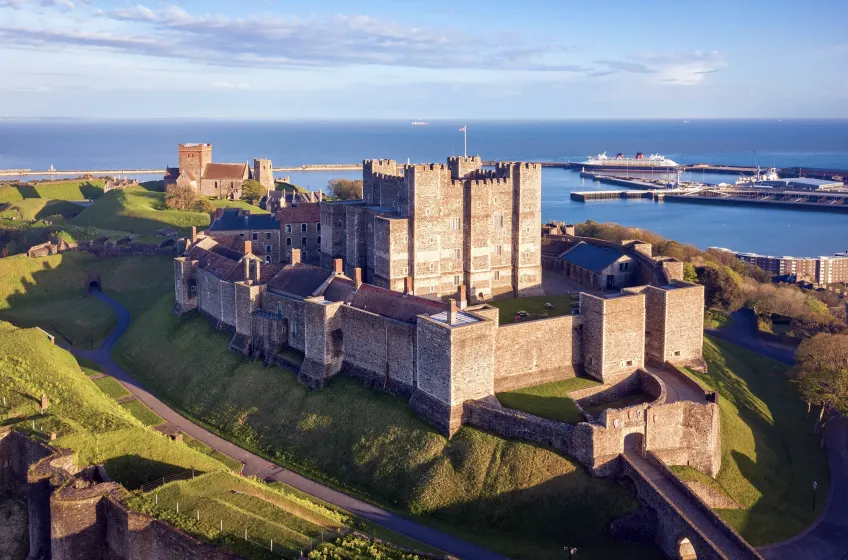
Dover Castle stands on the iconic White Cliffs of Dover, overlooking the narrowest point of the English Channel, and has been a key defensive site for over 2,000 years. Located in Kent, in the south-east corner of England, it is one of the most historically significant castles in the country. Known as the "Key to England", it has served as a Roman lighthouse, a medieval fortress, a royal palace, and a command centre during the Second World War. Its long and complex history is matched by its impressive scale, with extensive battlements, underground tunnels, and panoramic views across the Channel to France on clear days.
Today, Dover Castle is managed by English Heritage and welcomes hundreds of thousands of visitors each year. The site combines outdoor exploration, immersive historical interpretation, and family-friendly exhibitions, offering a layered insight into England's military, political, and architectural past.
Pre-book Dover Castle tickets and tours
Recommended accommodation near Dover Castle: Hotels Bed & Breakfasts Pub Accommodation
Why is Dover Castle worth a visit?
Dover Castle is one of the few places in England where multiple layers of history are preserved and accessible in one location. Visitors can walk through a Roman lighthouse, climb the walls of a Norman keep, explore secret wartime tunnels, and stand in rooms once used by medieval kings. Its location atop the cliffs gives it not only a strategic military advantage but also sweeping views that add a striking visual dimension to the visit. Whether interested in Roman Britain, the medieval period, Napoleonic defences or 20th-century conflict, visitors will find relevant and engaging content.
Unlike many castles that preserve only fragments of their original structure, Dover Castle has maintained a high level of integrity. Its inner keep remains largely intact and has been sympathetically restored to reflect its 12th-century use. The wartime tunnels, meanwhile, offer a rare chance to experience the underground operations of WWII. The combination of outdoor space, interpretive exhibits, and hands-on activities makes Dover Castle suitable for a wide audience, including families, history enthusiasts, and international tourists.
Dover Castle Highlights
The Great Tower (Keep)
The centrepiece of Dover Castle is the Great Tower, built by Henry II in the 1180s as a symbol of royal authority and a stronghold against attack. Standing over 25 metres tall, the keep is a textbook example of Norman military architecture. Its thick stone walls and central position within the castle make it a formidable defensive structure.
Inside, the Great Tower has been recreated to show how it might have appeared in the late 12th century. Rooms are furnished with period-appropriate tapestries, furniture, and objects, creating an immersive experience. Visitors can explore the King’s Hall, Royal Chapel, bedchambers, and domestic quarters, many with costumed interpreters offering insights into daily life in Henry II’s court.
The Roman Pharos and Saxon Church
At the highest point of the castle grounds stands one of Britain’s oldest buildings: the Roman pharos (lighthouse), built in the 1st century AD to aid navigation across the Channel. It remains remarkably intact, standing beside the Anglo-Saxon Church of St Mary in Castro, which was later constructed using Roman bricks. This pairing of Roman and Saxon structures within a medieval castle site is highly unusual and offers a vivid illustration of continuous occupation and strategic importance across centuries.
Medieval Tunnels
Beneath the castle lie a series of medieval tunnels, originally dug in the 13th century to allow soldiers to move unseen around the fortress during times of siege. These passages provide an insight into medieval military planning and the practical challenges of castle defence. Some sections are open to the public and have been stabilised and partially restored to allow for safe exploration.
Napoleonic Tunnels
During the late 18th century, as the threat of invasion from Napoleonic France loomed, the medieval tunnels were extended and adapted to house troops, store supplies, and provide a protected communication network. These tunnels were among the first in Britain to house a barracks entirely underground. The brick-lined passages and storerooms illustrate the adaptability of the site and its continued military relevance into the modern era.
Secret Wartime Tunnels and Operation Dynamo
Perhaps the most famous aspect of Dover Castle’s 20th-century history is its role in Operation Dynamo—the evacuation of Allied troops from Dunkirk in 1940. The Secret Wartime Tunnels were used as an operations hub, led by Vice Admiral Bertram Ramsay. Today, a guided multimedia tour takes visitors through these tunnels, recreating the dramatic events of Dunkirk with sound, light, and video installations. Additional exhibitions explain the wider role of Dover in WWII, including its use as a regional hospital and command centre.
Underground Hospital
Another part of the tunnel complex has been recreated to show the wartime underground hospital used during the Second World War. Visitors can walk through operating theatres, wards, and medical offices, complete with mannequins and equipment that demonstrate the conditions faced by patients and medical staff. Ambient sounds and narration enhance the realism of the experience.
Battlements and Defences
The castle’s outer defences include extensive curtain walls, gatehouses, and towers. Walking the battlements offers commanding views of the surrounding countryside, the town of Dover, and the English Channel. These walls provide insight into the evolution of military engineering, with features dating from the Norman, medieval, and Napoleonic periods.
Princess of Wales's Royal Regiment Museum
Housed within the castle, this museum tells the story of one of the British Army’s oldest regiments. Exhibits include uniforms, medals, weaponry, and personal stories from soldiers who served from the 17th century to the present day. This museum adds an additional military-historical dimension to the broader experience of visiting Dover Castle.
The Inner and Outer Baileys
The castle complex includes multiple baileys—fortified courtyards—which once contained barracks, stables, and service buildings. Today, these large open spaces are often used for special events, reenactments, and seasonal displays. Visitors are free to wander through these areas, many of which contain interpretive signage and views over the cliff edges.
Costumed Interpretation and Live Demonstrations
Throughout the year, Dover Castle hosts historical re-enactments and events featuring costumed interpreters. These may include knight tournaments, falconry displays, and living history encampments. During school holidays, children’s trails and interactive storytelling sessions are often scheduled, enhancing the educational aspect of the visit.
Castle Café and Visitor Facilities
The main café, located within the castle grounds, offers a range of hot meals, drinks, and light snacks. Seasonal outdoor kiosks serve refreshments during peak visitor periods. There is also a well-stocked gift shop selling books, souvenirs, and local produce. Picnic areas are available for those bringing their own food, and toilet facilities, including accessible toilets and baby-changing areas, are located near the café and entrance points.
Nearby Attractions
Dover Castle is situated close to several other attractions that make a visit to the area worthwhile. The White Cliffs of Dover, managed by the National Trust, are a short distance from the castle and offer dramatic walks along the coastline with views across the Channel. Samphire Hoe, a nature reserve created from Channel Tunnel spoil, offers peaceful walking trails and birdwatching opportunities. The Dover Museum and Bronze Age Boat Gallery in the town centre provide archaeological context to the region's prehistory, while the South Foreland Lighthouse, located further along the cliffs, is another historic site open to visitors.
Further afield, the city of Canterbury with its cathedral and medieval streets is under an hour away, while Walmer Castle and Deal Castle, both built by Henry VIII, offer additional examples of coastal fortifications in the region. Folkestone’s Creative Quarter and harbour arm redevelopment offer arts and dining options for visitors continuing their journey along the coast.
Practical Advice for Visitors
Dover Castle is managed by English Heritage and is open most of the year, with reduced opening hours in winter. It is advisable to check the official website for up-to-date opening times and ticket prices. Entry includes access to all areas of the site, including the Great Tower, tunnels, and museums. Tickets can be purchased in advance online or at the gate, with discounts for English Heritage members, families, and groups.
Parking is available on site, included in the admission price, with designated spaces for disabled visitors. The site is large and involves a fair amount of walking, often on uneven ground or steep paths. Sensible footwear is recommended. Some areas, including parts of the tunnel tours, may not be suitable for visitors with mobility issues, though accessible routes are available for much of the site.
Guided tours of the Secret Wartime Tunnels operate at timed intervals and can be busy during peak times—booking a time slot on arrival is recommended. Dogs are welcome on leads in outdoor areas but are not permitted inside buildings or tunnels, with the exception of assistance dogs.
There are limited indoor areas in the event of poor weather, so visitors should come prepared for variable conditions. The size of the site and the number of attractions mean that a full visit typically takes between three and five hours, though some visitors may choose to spend the entire day. For those interested in returning or exploring other English Heritage properties, membership may be a cost-effective option.
Shortlist
- Your Shortlist is empty