
Discover The Costa Blanca | A Visitor's Introduction to The Costa Blanca
Recommended places to stay, places to visit and things to do on and near The Costa Blanca
The Costa Blanca is a sun-soaked stretch of Mediterranean coastline in Spain’s Alicante province, running from Dénia in the north to Pilar de la Horadada in the south. Known for sandy beaches, whitewashed villages, lively resorts, dramatic headlands and year-round sunshine, this varied region is a perfect destination for families, couples, walkers, golfers and travellers seeking an easy coastal break. With historic towns, mountain scenery, marine reserves and everything from quiet coves to major nightlife centres, the Costa Blanca offers far more variety than its resort reputation suggests.
Browse Costa Blanca Hotels and Other Accommodation
Pre-book Costa Blanca Activities, Tours and Experiences
Why is Costa Blanca Worth a Visit?
The Costa Blanca is worth visiting because it combines dependable beach weather with a surprisingly diverse landscape. The coast includes broad urban beaches, rocky coves, dune systems, cliffs and sheltered bays, while mountains rise sharply just inland.
Its towns also differ considerably. Alicante offers museums, a castle and a lively waterfront. Benidorm is known for high-rise hotels, nightlife and family attractions. Altea has a whitewashed old quarter, while Dénia combines beaches, a castle, a working port and strong food culture.
Travellers seeking quieter surroundings can explore places such as Moraira, Jávea, Villajoyosa and the inland Guadalest Valley. Hikers have access to the Serra Gelada, Montgó and Peñón de Ifach, while snorkelling and diving are possible around marine reserves and rocky headlands.
The region works throughout much of the year. Summer suits beach holidays, while spring, autumn and winter are better for walking, sightseeing, cycling and golf.
Costa Blanca Highlights: Things to See and Do in Costa Blanca
Explore Alicante
Alicante is the Costa Blanca’s principal city and main transport gateway.
Its historic centre contains narrow streets, restaurants and attractive squares, while the Explanada de España provides a palm-lined promenade beside the marina. Postiguet Beach lies directly below the city’s most famous landmark, Santa Bárbara Castle.
Alicante works well as both a city-break destination and a base for coastal excursions. Its railway, tram and bus connections are among the best in the region.
Visit Santa Bárbara Castle
Santa Bárbara Castle stands on Mount Benacantil above Alicante.
The fortress has origins stretching back many centuries and contains walls, courtyards, towers and exhibition spaces. Its main attraction is the panoramic view over the city, harbour and Mediterranean.
Access is possible on foot, by road and through a lift from near Postiguet Beach, although arrangements can change.
Visit early or late in the day during summer, as the exposed upper areas become extremely hot.
Relax on Alicante’s Beaches
Postiguet is the most convenient beach for visitors staying in central Alicante.
San Juan Beach, north-east of the centre, is much longer and generally better suited to a full beach day. Its broad sands are backed by apartments, restaurants and tram stops.
The beaches become busy in July and August. Early morning is best for space, cooler temperatures and calmer surroundings.
Experience Benidorm
Benidorm is the Costa Blanca’s largest and most famous resort.
Its skyline, broad beaches and concentration of hotels make it unlike anywhere else on the Spanish coast. Levante Beach is associated with lively bars and entertainment, while Poniente Beach generally has a calmer atmosphere.
Benidorm suits visitors looking for convenience, nightlife, family attractions and a wide choice of accommodation. It is less suitable for travellers seeking an intimate historic setting, although the old-town area adds some traditional character.
Walk Through Benidorm Old Town
Benidorm’s compact old town occupies the headland between Levante and Poniente beaches.
Narrow streets contain tapas bars, shops and whitewashed buildings. The Balcón del Mediterráneo viewpoint overlooks both sides of the coast and is especially attractive around sunset.
The surrounding streets become very busy in the evening.
Visit Altea
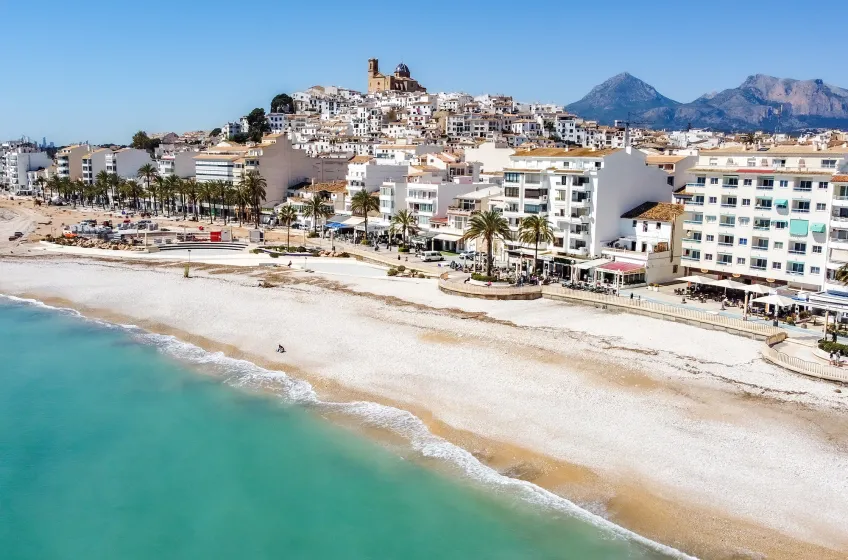
Altea is one of the Costa Blanca’s most attractive towns.
Its whitewashed old quarter climbs a hillside above the sea, with cobbled lanes leading to the blue-domed Church of Nuestra Señora del Consuelo. Small galleries, boutiques and restaurants fill the surrounding streets.
The climb is steep, but the views and atmosphere are worth the effort. Visit in the morning or evening to avoid heat and larger groups.
The lower town has a long waterfront promenade with pebble beaches and restaurants.
Explore Calpe
Calpe is a popular resort dominated by the enormous limestone rock of Peñón de Ifach.
The town has sandy beaches, a fishing harbour, Roman remains and a compact old quarter. High-rise development is extensive, but the mountain and coastal scenery remain impressive.
Calpe is a good base for beach holidays, seafood and walking.
Climb Peñón de Ifach
Peñón de Ifach rises dramatically from the coast at Calpe.
A walking route leads through a tunnel and continues towards the summit. The upper section is steep, rocky and exposed, with polished surfaces that can become slippery.
Access may be regulated and advance booking may be required. Proper footwear is essential.
Visitors uncomfortable with heights should remain on the lower paths, which still provide excellent views.
Visit the Calpe Salt Lake
A large saltwater lagoon lies behind Calpe’s coastal development.
Flamingos and other birds are often visible from surrounding roads and paths. The contrast between wildlife, apartment towers and the Peñón creates an unusual urban landscape.
Observe birds from a distance and avoid entering restricted areas.
Discover Jávea
Jávea, also known as Xàbia, combines a historic inland centre, port district and several coastal areas.
The old town contains stone buildings, a fortified church and a market, while the port has restaurants and a pebble beach. Arenal Beach is the main sandy resort area.
The surrounding headlands contain viewpoints, coves and walking routes. A car is useful because the different districts are spread out.
Swim at Cala Granadella
Cala Granadella is a small cove south of Jávea.
Its clear water and rocky surroundings make it popular for swimming, snorkelling and kayaking. The beach itself is pebbly rather than sandy.
Parking and road access are often restricted during peak summer periods. Arrive early and check current arrangements.
The cove can become extremely crowded despite its remote appearance.
Visit Dénia
Dénia is one of the Costa Blanca’s most interesting northern towns.
A castle rises above the centre, while the port handles fishing boats, ferries and leisure vessels. Long sandy beaches extend north, with rockier coves to the south.
Dénia has a particularly strong food reputation and works well for travellers who want a genuine town alongside resort facilities.
Explore Dénia Castle
Dénia Castle occupies a hill above the old centre.
Its walls and terraces reveal layers of Islamic, medieval and later history. The upper areas provide views over the town, harbour and Montgó mountain.
The route is steep and exposed, so avoid the hottest part of the day.
Walk in Montgó Natural Park
Montgó mountain rises between Dénia and Jávea.
The park contains Mediterranean scrub, limestone scenery and several walking routes. Some paths are gentle, while the summit approaches are steep and rocky.
Carry water, sun protection and an offline map. Summer heat makes longer routes unsuitable during the middle of the day.
Visit Villajoyosa
Villajoyosa is known for its colourful seafront houses and long chocolate-making tradition.
The old fishing district overlooks a broad sandy beach, while inland streets contain a market, churches and local businesses. The town feels more relaxed than nearby Benidorm.
Several chocolate producers have museums, shops or visitor experiences, though opening arrangements vary.
Explore Guadalest
Guadalest is a dramatic hill village inland from Benidorm.
Its historic centre is reached through a rock-cut gateway and contains castle remains, viewpoints and small museums. The turquoise reservoir below adds to the scenery.
The village receives many coach groups, so arrive early or visit later in the afternoon.
Combine Guadalest with nearby mountain roads and smaller villages for a fuller day out.
Visit the Algar Waterfalls
Les Fonts de l’Algar is a series of pools and waterfalls near Callosa d’en Sarrià.
Boardwalks and paths follow the river through a narrow valley. Swimming may be allowed in designated areas depending on conditions and current regulations.
The site becomes extremely busy in summer and can feel commercialised. Water remains cold even during hot weather.
Wear shoes with good grip, as wet surfaces are slippery.
Explore Elche
Elche lies inland from the coast and is famous for its vast palm groves.
The Palmeral forms a historic cultural landscape of gardens, irrigation channels and thousands of date palms. The Huerto del Cura is one of the easiest gardens to visit.
Elche also has museums, churches and a traditional centre. It makes a useful cultural excursion from Alicante or the southern resorts.
Visit Santa Pola
Santa Pola is a coastal town south of Alicante with beaches, a fishing harbour and salt marshes.
The nearby natural park attracts flamingos and other birdlife. Boat trips depart for Tabarca Island, while the town itself is known for seafood and a relaxed maritime atmosphere.
The coastline is generally flatter and less dramatic than the northern Costa Blanca.
Take a Boat to Tabarca Island
Tabarca is a small inhabited island off the Alicante coast.
Its walled settlement, clear water and marine reserve make it popular for day trips. Visitors come for swimming, snorkelling, seafood and short walks around the island.
Boats depart from Alicante, Santa Pola and other ports depending on season. Santa Pola usually offers the shortest crossing.
The island becomes crowded in summer, so take an early boat and confirm the final return time.
Explore Torrevieja
Torrevieja is a major southern Costa Blanca resort known for beaches, salt lakes and a large international population.
Its waterfront, marina and urban beaches are busy throughout much of the year. The surrounding salt lagoons create one of the region’s most unusual landscapes.
Torrevieja is practical for long stays and family holidays but has a more modern, spread-out character than northern towns such as Altea or Dénia.
See the Pink Lagoon
Laguna Rosa is part of the salt-lake landscape around Torrevieja.
The water may appear pink because of microorganisms and high salinity, although the intensity changes with weather, season and light.
Swimming and unauthorised access may be prohibited. Use recognised viewpoints and follow local restrictions.
Visit Orihuela
Orihuela lies inland in the southern part of Alicante province.
Its historic centre contains churches, palaces, museums and links with poet Miguel Hernández. The city receives fewer international visitors than the coastal resorts.
Orihuela Costa, by contrast, is a separate coastal area of beaches, golf courses and residential developments.
Practical Advice for Visitors
Getting There
Alicante-Elche Airport is the main gateway to the Costa Blanca.
Buses, taxis, private transfers and hire cars connect the airport with Alicante, Benidorm, Torrevieja and other resorts. Direct public transport is much better for some towns than others.
Valencia Airport may be convenient for northern destinations such as Dénia, although onward travel can take longer.
High-speed and long-distance trains connect Alicante with Madrid and other Spanish cities. Regional trains, trams and buses serve parts of the coast.
Getting Around
The Alicante tram is one of the best public-transport options on the northern Costa Blanca.
It connects Alicante with destinations including Benidorm and continues through connections towards Altea, Calpe and Dénia. Journey times can be long, but the coastal scenery is attractive.
Buses cover many resort towns and inland destinations, though timetables may be limited outside peak areas.
A car provides the greatest flexibility for coves, mountain villages and rural accommodation.
Driving
Roads between major resorts are generally good, but local coastal routes can be narrow and congested.
Mountain roads around Guadalest, Tárbena and inland valleys contain steep sections and sharp bends. Drive carefully and avoid stopping outside designated viewpoints.
Traffic becomes heavy near beaches during summer weekends.
Parking
Parking varies greatly between destinations.
Large resorts have public garages and controlled street parking, while small coves may have very limited spaces. Seasonal road closures or shuttle systems are common at popular beaches.
Do not park on verges, access roads or protected land. Fines and towing are possible.
Choosing Where to Stay
Alicante is best for a city-and-beach break with strong transport links.
Benidorm offers the widest choice of hotels, nightlife and family entertainment. Altea suits couples and travellers seeking a more attractive old-town atmosphere.
Calpe is convenient for beaches and Peñón de Ifach. Dénia is excellent for food, ferries and longer stays, while Jávea suits visitors with a car who want access to varied coves.
Torrevieja and Orihuela Costa are practical for self-catering, golf and winter sun.
Beaches
Costa Blanca beaches range from broad urban sands to small rocky coves.
Sandy beaches usually have the best facilities, while secluded coves may require steep approaches and have no services. Many northern coves are pebbly rather than sandy.
Always follow beach flags and lifeguard instructions. Currents, waves and sudden depth changes can occur even on apparently calm days.
Water shoes are useful for rocky entries and pebble beaches.
Dining
Costa Blanca cooking combines Valencian rice traditions with seafood, vegetables and inland meat dishes.
Paella, arroz a banda, fideuà, grilled fish and shellfish appear widely. Inland restaurants may specialise in lamb, sausages and stews.
Lunch generally begins after 1.30pm, while dinner commonly starts after 8.30pm.
Restaurants in major resorts often cater to international schedules, but the best traditional rice places may require advance booking.
Try Arroz a Banda
Arroz a banda is one of the coast’s classic rice dishes.
The rice is cooked in a concentrated fish stock, often with cuttlefish or other seafood. It may be served with allioli.
Traditional versions are usually prepared for at least two people and can take time to cook.
Taste Dénia Red Prawns
Dénia is particularly famous for its red prawns.
They are valued for their intense flavour and are often served simply boiled or grilled. Prices can be very high, especially for larger specimens.
Ask the price by weight before ordering.
Try Turrón
The Alicante area is strongly associated with turrón.
Alicante-style turrón is hard and contains whole almonds, while Jijona-style turrón is softer and more finely ground. Although traditionally linked with Christmas, it is sold throughout the year.
Jijona, inland from Alicante, is the main centre of production.
Drink Local Wine
Alicante province produces several distinctive wines.
Monastrell is widely used for rich reds, while sweet Moscatel wines are associated with coastal and northern areas. Fondillón is a historic aged wine produced in limited quantities.
Wine bars and specialist shops in Alicante, Dénia and other larger towns provide the easiest introduction.
Shopping
Typical purchases include turrón, wine, olive oil, ceramics, salt and preserved seafood.
Resort markets sell clothing, crafts and household goods, though quality varies. Specialist food shops are better for regional products.
Many coastal towns hold weekly markets, but days and locations differ.
When to Visit
April to June is one of the best periods for warm weather, walking and quieter beaches.
September and October are also excellent, with warm sea temperatures and fewer peak-season visitors.
July and August are hot, crowded and expensive. Popular beaches, roads and restaurants become extremely busy.
Winter is mild and popular with long-stay visitors. Swimming conditions are cooler, but sightseeing, golf and walking can be very pleasant.
Weather
The Costa Blanca has a generally dry Mediterranean climate.
Summers are hot and sunny, while winters are mild. Northern areas can receive more rain than the southern coast.
Heavy downpours and local flooding can occur, especially in autumn. Do not drive through floodwater or ignore weather warnings.
Sun exposure remains strong outside summer, so use sunscreen and carry water.
Local Events
The Costa Blanca hosts religious festivals, Moors and Christians celebrations, bonfires and maritime events throughout the year.
Alicante’s major summer bonfire festival fills the city with temporary monuments, fireworks and street celebrations.
Moors and Christians festivals are especially important in towns such as Alcoy and Villajoyosa.
Dénia, Benidorm, Elche and Torrevieja each have distinctive local celebrations.
Dates vary annually, so check current programmes before arranging travel around a particular event.
Safety and Common Visitor Problems
The Costa Blanca is generally safe, but theft can occur in resorts, markets, beaches and car parks.
Do not leave bags, electronics or luggage visible inside a vehicle. Keep valuables secure while swimming.
Summer heat, dehydration and sunburn are more common problems than serious crime. Avoid strenuous walks during the hottest part of the day.
Take particular care around cliffs, rocky coves and mountain paths. Informal routes may be unstable or exposed.
Exploring Beyond Costa Blanca
Valencia offers major museums, the City of Arts and Sciences and a lively historic centre.
Murcia has an ornate cathedral, excellent food and a largely pedestrianised centre.
Cartagena combines Roman archaeology with a dramatic natural harbour.
Alcoy is known for industrial heritage, mountain scenery and its elaborate Moors and Christians festival.
The Sierra de Aitana offers cooler mountain landscapes and walking inland from Benidorm.
The Costa Cálida continues south into Murcia with warm-water beaches, the Mar Menor and quieter coastal areas.
Shortlist
- Your Shortlist is empty