
Discover Alicante | A Visitor's Introduction to Alicante
Recommended places to stay, places to visit and things to do in and near Alicante
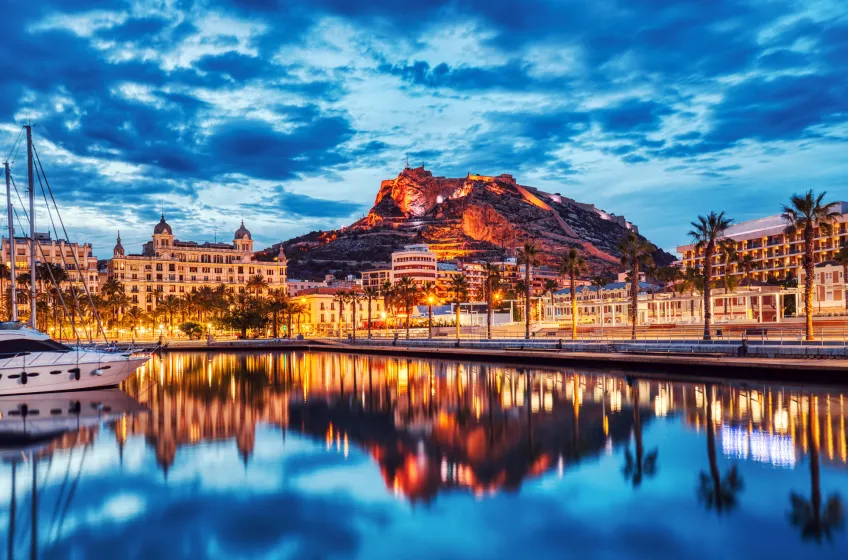
Alicante is a lively Mediterranean city on Spain’s Costa Blanca, built around a sandy urban beach, a busy marina and the imposing Mount Benacantil. Known for Santa Bárbara Castle, palm-lined promenades, seafood restaurants and dependable sunshine, this compact city is a perfect destination for couples, families, foodies and travellers seeking an easy city-and-beach break. With a walkable historic centre, excellent transport links and day trips to islands, resorts and mountain towns, Alicante makes an appealing base for exploring south-eastern Spain.
Browse Alicante Hotels and Other Accommodation
Pre-book Alicante Activities, Tours and Experiences
Why is Alicante Worth a Visit?
Alicante is worth visiting because it combines the convenience of a regional city with the relaxed atmosphere of a seaside resort. Postiguet Beach lies directly beside the centre, so visitors can move easily between sightseeing, swimming and waterfront dining without needing a car.
The city’s most distinctive feature is Santa Bárbara Castle, which rises dramatically above the coast. From its terraces, the views extend across the harbour, old town, beaches and surrounding hills.
Alicante is also a strong base for the wider Costa Blanca. The coastal tram reaches places such as Villajoyosa, Benidorm, Altea and Calpe, while boats connect the city with Tabarca Island during suitable conditions and seasons.
The historic centre is smaller than those of Valencia or Murcia, but it has colourful lanes, attractive squares and a lively evening atmosphere. Two full days are enough for the main sights, while three or four nights allow time for beaches and a day trip.
Alicante Highlights: Things to See and Do in Alicante
Visit Santa Bárbara Castle
Santa Bárbara Castle stands on Mount Benacantil above Alicante.
The fortress developed over many centuries and contains walls, courtyards, towers and defensive structures from different periods. Its strategic position explains why the site was so important to successive rulers.
The main reason to visit is the view. From the upper terraces, visitors can see Postiguet Beach, the marina, city centre and coastline stretching north and south.
Access is possible on foot, by road and usually by lift from near the beach, although arrangements can change. The walk is steep and exposed, so avoid the hottest part of the day in summer.
Explore the Barrio de Santa Cruz
Santa Cruz is Alicante’s most picturesque old neighbourhood.
Whitewashed houses, bright doors, flowerpots and narrow stairways climb the lower slopes of Mount Benacantil. The area feels more like a small village than part of a modern city.
The lanes are steep and uneven, but several small terraces provide attractive views across the rooftops.
Visit early in the morning or around sunset, and remember that this remains a residential neighbourhood.
Relax on Postiguet Beach
Postiguet Beach lies directly below Santa Bárbara Castle.
Its central location makes it ideal for combining sightseeing with a few hours beside the sea. The beach has a promenade, seasonal facilities and easy access to restaurants and public transport.
It becomes crowded during summer, especially around the central entrances. Early morning is best for more space and cooler temperatures.
Keep valuables secure and follow lifeguard flags before entering the water.
Walk Along the Explanada de España
The Explanada de España is Alicante’s best-known promenade.
Rows of palm trees line a distinctive mosaic pavement made from millions of small coloured tiles arranged in a wave pattern. Cafés, stalls and historic buildings overlook the route.
The promenade is especially pleasant in the evening, when temperatures fall and residents gather near the marina.
Explore Alicante Marina
The marina sits beside the Explanada and Postiguet Beach.
Yachts, excursion boats, restaurants and leisure spaces line the waterfront. It is a useful starting point for boat trips and provides attractive views towards the castle.
The area is polished and tourist-oriented, so explore nearby central streets for more varied dining.
Visit the Basilica of Santa María
The Basilica of Santa María is Alicante’s oldest active church.
It was built on the site of a former mosque and has a richly decorated Baroque façade. The interior combines Gothic structure with later chapels and ornamentation.
The church stands close to the contemporary art museum and old-town lanes.
Access may be affected by services.
Explore the Alicante Museum of Contemporary Art
The Museum of Contemporary Art, commonly known as MACA, occupies a historic building beside the Basilica of Santa María.
Its collection includes important works of modern and contemporary Spanish art, alongside changing exhibitions. Artists associated with the museum include Eusebio Sempere, who had strong links with the region.
The museum is compact and provides an excellent indoor break during hot or wet weather.
Visit the Co-Cathedral of San Nicolás
The Co-Cathedral of San Nicolás stands in the historic centre.
Its restrained Renaissance exterior hides a large blue-domed interior, chapels and an elegant cloister. The building is dedicated to Saint Nicholas, one of Alicante’s principal patron figures.
The peaceful interior contrasts with the busy streets and restaurants nearby.
Walk Through Plaza del Ayuntamiento
Plaza del Ayuntamiento is one of Alicante’s most formal civic spaces.
The Baroque town hall dominates the square, while arcades and stone façades create an enclosed atmosphere. A marker inside the building is traditionally associated with Spain’s official reference point for measuring altitude.
The square provides an easy route between the waterfront and historic centre.
Explore Calle Mayor and the Old Centre
Calle Mayor and the surrounding lanes connect Alicante’s main religious and civic landmarks.
Restaurants, bars and small shops occupy the ground floors of colourful buildings. The area becomes particularly lively in the evening.
Continue towards Plaza de San Cristóbal and Rambla de Méndez Núñez for a broader walk through central Alicante.
Visit Mercado Central
Alicante’s Central Market is one of the best places to experience local food culture.
Stalls sell fish, shellfish, meat, fruit, vegetables, cheese and cured products. The market is busiest in the morning and usually becomes quieter by early afternoon.
The building and surrounding streets have an important place in the city’s modern history.
It is a good stop for picnic supplies, snacks and regional products.
Explore the Archaeological Museum
The Provincial Archaeological Museum, usually called MARQ, is one of Alicante’s strongest cultural attractions.
Its exhibitions cover prehistoric settlement, Iberian culture, the Roman period and the medieval history of the province. Displays explain archaeological techniques as well as presenting objects.
The museum is particularly suitable for families and visitors interested in the wider history of the Costa Blanca.
Walk Through Canalejas Park
Canalejas Park runs along part of the waterfront south of the marina.
Large trees, sculptures and shaded paths make it a useful retreat during hot weather. The park connects the central promenade with the harbour and southern districts.
It is less monumental than the Explanada but often calmer.
Explore El Palmeral Park
El Palmeral is a landscaped park south of the city centre.
Palm trees, ponds, bridges and walking paths create a green environment near the coast. The park is popular with families and local residents.
It is best reached by bus, taxi or bicycle rather than on foot from the historic centre.
Visit San Juan Beach
San Juan is one of the best beaches near Alicante.
Its long, broad sands extend north-east of the city and are backed by apartments, restaurants and sports facilities. The area feels more spacious and resort-like than Postiguet.
Trams and buses connect it with central Alicante.
The beach is popular for long walks as well as swimming, particularly outside peak summer hours.
Walk Around Cabo de las Huertas
Cabo de las Huertas is a rocky headland between San Juan and Albufereta.
Small coves, clear water and rugged shoreline create a more natural setting than Alicante’s main sandy beaches. It is popular for snorkelling and coastal walks.
Access to some coves involves uneven rocks, and facilities are limited. Water shoes and sun protection are useful.
Stay away from unstable cliff edges and follow local restrictions.
Visit Albufereta
Albufereta is a smaller beach and residential district north of central Alicante.
The sheltered bay is associated with ancient settlement and offers calmer surroundings than the busiest central beaches. The nearby archaeological area of Lucentum preserves remains of a Roman town.
The district is easy to reach by tram.
Explore the Lucentum Archaeological Site
Lucentum contains the remains of ancient Roman Alicante.
Visitors can see traces of streets, baths, houses and defensive walls. The site is quieter and less visually dramatic than major Roman cities such as Tarragona, but it provides important local context.
There is limited shade, so avoid visiting during the hottest afternoon hours.
Take a Boat to Tabarca Island
Tabarca is a small inhabited island off the Alicante coast.
Its walled village, rocky shoreline and protected marine environment make it one of the most popular excursions from the city. Visitors come for swimming, snorkelling, seafood and short walks.
Boat services depend on weather and season. Confirm the final return time before leaving Alicante.
The island becomes crowded during summer, so choose an early departure when possible.
See the Volvo Ocean Race Museum Area
Alicante has strong links with international sailing and major ocean-racing events.
Waterfront exhibitions and maritime spaces near the harbour explain aspects of offshore racing, navigation and Alicante’s role as a sailing venue. Names and access arrangements may change depending on current use.
The harbour setting makes this an easy addition to a waterfront walk.
Practical Advice for Visitors
Getting There
Alicante-Elche Miguel Hernández Airport lies south-west of the city.
Airport buses and taxis connect it with central Alicante. The bus is generally the simplest public-transport option, while taxis are more convenient for late arrivals or groups.
High-speed trains connect Alicante with Madrid, while other services run towards Valencia, Murcia and destinations along the Mediterranean corridor.
Long-distance coaches provide additional connections throughout the Costa Blanca and south-eastern Spain.
Getting Around
Central Alicante is compact and best explored on foot.
The castle, old town, marina, Postiguet Beach and main shopping streets are all close together. The tram is extremely useful for San Juan Beach and coastal destinations north of the city.
Local buses serve the airport, outer neighbourhoods and southern districts.
Cycling is possible along parts of the waterfront, though traffic and summer crowds require care.
Parking
Driving in central Alicante can be inconvenient.
Street parking is controlled, and many roads near the old centre are narrow or restricted. Public garages are available around the marina, market and commercial centre.
Park once and explore on foot or by tram.
Summer parking near San Juan and smaller coves fills quickly.
Choosing Where to Stay
The historic centre is ideal for restaurants, nightlife and easy sightseeing.
The area around Postiguet Beach suits visitors wanting immediate access to the sea, though prices may be higher and traffic more noticeable.
The city centre around the Central Market offers shopping, transport and better-value accommodation.
San Juan Beach is a good option for a resort-style stay, but journeys into the historic centre take longer.
Dining
Alicante’s food culture combines Valencian rice traditions with seafood and produce from the surrounding province.
Rice dishes are usually the main event and may need to be ordered for at least two people. Traditional restaurants often prepare them from scratch, so expect a wait.
Lunch normally begins after 1.30pm, while dinner commonly starts after 8.30pm.
The old centre, market area and waterfront contain the widest choice of restaurants.
Try Arroz a Banda
Arroz a banda is one of Alicante’s classic rice dishes.
The rice is cooked in a deeply flavoured fish stock, often with cuttlefish or other seafood. It is frequently served with allioli.
Good versions are savoury and relatively dry rather than soupy.
Taste Arroz del Senyoret
Arroz del senyoret is a seafood rice dish in which prawns, fish and shellfish are already peeled or prepared.
Its name refers to the idea that a well-to-do diner could eat it without using their hands. It is convenient, rich and widely available along the Alicante coast.
Try Turrón de Alicante
Alicante-style turrón is a hard nougat made with whole almonds, honey, sugar and egg white.
It differs from the softer, ground-almond version associated with nearby Jijona. Although traditionally eaten at Christmas, both types are sold throughout the year.
Specialist shops usually offer better quality and more information than generic souvenir outlets.
Eat Seafood
Alicante restaurants serve prawns, squid, red mullet, sea bass and seasonal shellfish.
Some whole fish and shellfish are priced by weight. Ask for the estimated total before ordering.
Busy local restaurants near the market or in nearby coastal towns may offer better value than the most prominent marina establishments.
Drink Alicante Wine
Alicante province produces red, white and sweet wines.
Monastrell is important for rich reds, while Moscatel is used for aromatic and sweet styles. Fondillón is a distinctive aged wine with deep historical roots in the province.
Wine bars and specialist shops offer regional selections by the glass or bottle.
Shopping
Avenida Maisonnave is Alicante’s main modern shopping street.
The old centre contains independent businesses, souvenir shops and food stores, while Mercado Central is useful for regional produce.
Typical purchases include turrón, wine, olive oil, salt, ceramics and preserved seafood.
Most ordinary shops close on Sundays.
When to Visit
April to June is excellent for warm weather, sightseeing and beach time before the peak summer crowds.
September and October are also very appealing, with warm sea temperatures and generally pleasant evenings.
July and August are hot, busy and expensive. Visit the castle and exposed archaeological sites early in the morning.
Winter is mild and often sunny, making Alicante a popular destination for walking, food and longer stays.
Weather
Alicante has a dry Mediterranean climate with hot summers and mild winters.
Sun exposure can be intense throughout much of the year, so carry water and use sunscreen.
Heavy rain and local flooding can occasionally occur, particularly during autumn. Follow official warnings and never drive through floodwater.
Evenings may feel cool outside summer, especially near the sea.
Local Events
The Hogueras de San Juan is Alicante’s principal festival.
Large artistic monuments are installed throughout the city before being burned during the final celebrations. Fireworks, street parties, music and parades create an intense atmosphere.
The event is spectacular but noisy and crowded. Accommodation should be booked well in advance.
Holy Week, Moors and Christians celebrations and maritime events also take place during the year.
Dates and programmes vary annually, so check current arrangements before planning around a particular event.
Safety and Common Visitor Problems
Alicante is generally safe, but pickpocketing can occur around the market, beaches, festivals and transport hubs.
Do not leave bags or phones unattended on the beach. Keep luggage hidden when using a hire car.
Heat, dehydration and sunburn are more common visitor problems than serious crime. Avoid strenuous uphill walking in the middle of summer afternoons.
Take care on polished paving, castle steps and rocky coastal paths.
Exploring Beyond Alicante
Elche is known for its vast palm groves, historic centre and distinctive local traditions.
Villajoyosa has colourful seafront houses, sandy beaches and a long chocolate-making history.
Benidorm offers major beaches, nightlife and family attractions.
Altea has a whitewashed hilltop old town and a relaxed coastal atmosphere.
Calpe is dominated by Peñón de Ifach and combines beaches with mountain walking.
Guadalest is a dramatic inland village overlooking a turquoise reservoir.
Tabarca Island provides the easiest boat excursion for swimming, snorkelling and seafood.
Shortlist
- Your Shortlist is empty