
Bouches-du-Rhône | A Visitor's Introduction to Bouches-du-Rhône
Recommended places to visit, places to stay and things to do in Bouches-du-Rhône
Bouches-du-Rhône is one of France’s most vibrant and varied departments, located in the Provence region in the South of France. Home to sun-soaked coastlines, bustling cities, wild marshlands, and charming Provençal villages, this region captures the essence of southern France in all its colour and character. With the Mediterranean Sea to the south, the Alpilles and Luberon hills to the north, and the unique wetlands of the Camargue to the west, Bouches-du-Rhône offers a rich mix of landscapes, cultures, and experiences.
Whether you’re here for the art and energy of Marseille, the Roman ruins of Arles, the white horses and flamingos of the Camargue, or the fragrant markets of Aix-en-Provence, Bouches-du-Rhône is a destination that offers something for every kind of traveller.
Recommended Bouches-du-Rhône Accommodation: All Hotels 4&5 Star Luxury Hotels Budget Hotels Family-Friendly Hotels Spa & Wellness Hotels Boutique Hotels Bed & Breakfasts
Pre-book Bouches-du-Rhône Attractions, Tours & Experiences
Why is Bouches-du-Rhône Worth a Visit?
Bouches-du-Rhône is worth visiting for its unique blend of Provençal charm, Mediterranean atmosphere, and cultural depth. It’s a department of contrasts: from the gritty dynamism of Marseille, France’s oldest city, to the tranquil hilltop villages and vineyards inland; from the wild, windswept Camargue to the dramatic cliffs and calanques of the Mediterranean coast.
Rich in history and proud of its traditions, the area is a feast for the senses—bouillabaisse on the Vieux-Port, cicadas singing in the olive groves, lavender and rosemary scents drifting through the air. With world-class museums, Roman amphitheatres, fishing ports, and natural wonders, Bouches-du-Rhône invites slow exploration and spontaneous adventure in equal measure.
Bouches-du-Rhône Highlights: Things to See and Do in Bouches-du-Rhône
Marseille
The beating heart of Bouches-du-Rhône, Marseille is a port city with more than 2,600 years of history. France’s second largest city is rough around the edges but endlessly fascinating. Start at the Vieux-Port (Old Port), where fishing boats bob beside yachts and seafood restaurants. Visit Le Panier, the city’s oldest district, with colourful street art and artisan shops, and don’t miss the panoramic views from Basilique Notre-Dame de la Garde, which watches over the city from its hilltop perch.
Culture lovers should explore MuCEM (Museum of European and Mediterranean Civilisations), the cutting-edge modern museum set beside the sea, and history buffs will enjoy Fort Saint-Jean and the Abbaye Saint-Victor. For a refreshing escape, take a boat trip to Château d’If, the island prison made famous in The Count of Monte Cristo.
Aix-en-Provence
Elegant and cultured, Aix-en-Provence is the quintessential Provençal city, with tree-lined boulevards, baroque fountains, and a lively student and arts scene. Visit the Cours Mirabeau, a beautiful avenue lined with cafés and boutiques, then explore the old town’s markets, especially the daily food market at Place Richelme.
Aix is closely associated with painter Paul Cézanne, and you can visit his former studio at Atelier Cézanne, as well as follow the “Cézanne Trail” around town. The city is also a great base for day trips into the Luberon or to the Sainte-Victoire mountain, which featured in many of Cézanne’s works.
Arles
Known for its remarkable Roman heritage, Arles is a small city with huge historical importance. Its amphitheatre, still used for concerts and events, dates back to the 1st century AD. Explore the Roman theatre, Cryptoporticus, and the Alyscamps, a famous Roman necropolis. Arles is also deeply linked to Vincent van Gogh, who painted many of his masterpieces here—including Starry Night Over the Rhône. Follow the Van Gogh walking trail to see the sites that inspired his paintings.
The city’s charm continues with its narrow streets, lively squares, and Provençal flair. Don’t miss the Rencontres d’Arles photography festival in summer, which draws artists and visitors from around the world.
The Camargue
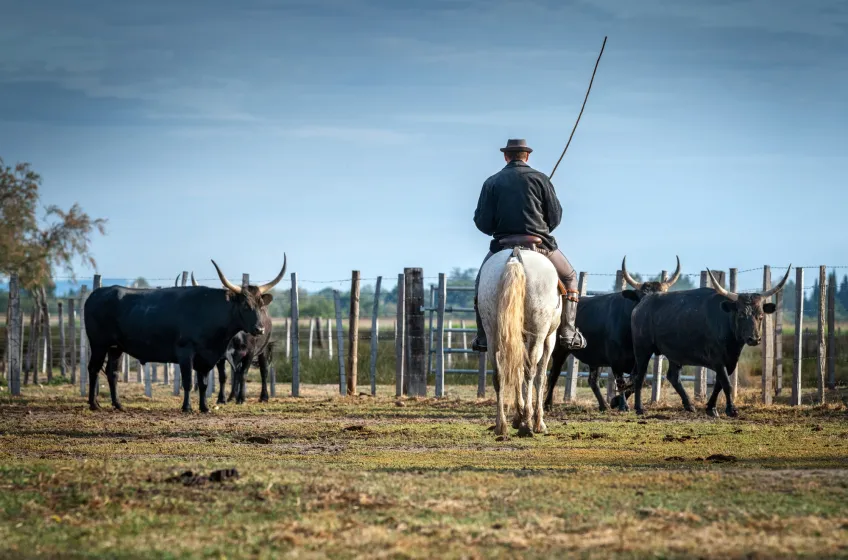
A wild, flat expanse of wetlands, salt pans, and rice fields, the Camargue is one of Europe’s most distinctive natural regions. Famous for its white horses, black bulls, and flocks of pink flamingos, it’s a paradise for wildlife lovers and photographers. Explore the Parc Naturel Régional de Camargue, go birdwatching in La Capelière or Pont de Gau, or take a horseback ride through the marshes.
The Camargue’s spiritual centre is the small town of Saintes-Maries-de-la-Mer, where pilgrims honour Saint Sara, patron saint of the Roma. It also offers beaches, bull games (non-lethal), and a distinctive culture found nowhere else in France.
Les Baux-de-Provence
Perched dramatically on a rocky spur in the Alpilles hills, Les Baux-de-Provence is one of the most beautiful villages in France. Its ruined castle, narrow stone streets, and panoramic views draw visitors year-round. At the foot of the village, the Carrières de Lumières is a must-see: this former quarry now hosts immersive multimedia art exhibitions projected onto the stone walls—impressive and emotional in equal measure.
Nearby, hike or cycle through the Alpilles Regional Nature Park, filled with olive groves, vineyards, and limestone ridges.
Cassis and the Calanques
The small fishing town of Cassis, framed by cliffs and vineyards, is the starting point for exploring the Calanques National Park—a series of dramatic limestone inlets between Marseille and Cassis. These fjord-like coves are accessible by boat, on foot, or by kayak, and offer some of the most spectacular coastal scenery in France. The turquoise waters, white cliffs, and hidden beaches make for unforgettable swimming and hiking experiences.
Cassis itself is a delight, with a colourful harbour, seafood restaurants, and nearby Cassis AOC vineyards producing crisp white wines.
Martigues
Often called the “Venice of Provence,” Martigues is a lesser-known gem. It’s a waterside town where canals meet the sea, and colourful houses line the quays. Visit the Miroir aux Oiseaux, a picturesque canal scene that has inspired many painters, and explore the charming old quarter. It’s also close to the Etang de Berre, a vast inland lagoon popular for watersports and birdwatching.
Salon-de-Provence
Famous as the home of Nostradamus, Salon-de-Provence has a rich past and a relaxed vibe. Visit the Château de l’Empéri, a former residence of the archbishops of Arles, now housing a military museum. Stroll through the historic centre, full of fountains and local shops, and enjoy a visit to a traditional savonnerie (soap factory), where Marseille soap is still made by hand.
La Ciotat
Located east of Marseille, La Ciotat is a charming seaside town with a rich maritime history. It’s famously the birthplace of petanque and an early centre of film-making (the Lumière brothers filmed one of the first motion pictures here). Today, it’s known for its beaches, scenic hikes, and relaxed atmosphere. Don’t miss the Parc du Mugel, a botanical garden with sea views and shaded paths.
Practical Advice for Visitors
Getting There
Bouches-du-Rhône is easily accessible by train, plane, and road. Key transport hubs include:
-
Marseille Provence Airport – for international and domestic flights
-
Marseille Saint-Charles station – high-speed TGV services from Paris (3 hours), Lyon, Nice, and Barcelona
-
Well-connected autoroutes (A7, A55, A51, A54) for car travellers
A car is useful, especially for rural areas, the Camargue, and hilltop villages. Trains and buses connect the major towns and cities.
Parking
Cities like Marseille and Aix have underground car parks—look for "P" signs. Expect to pay for street parking. In villages, free or low-cost parking is usually available just outside the centre. During festivals and summer months, parking can be competitive—early arrival is advised.
Dining
Food here is bold, fresh, and sun-kissed. Try:
-
Bouillabaisse (fish stew) in Marseille
-
Aioli (garlic mayonnaise served with vegetables and fish)
-
Tapenade and olive oil
-
Camargue rice, salt, and bull meat
-
Navettes de Marseille (anise-flavoured biscuits)
Local wines include Cassis whites, Les Baux reds, and Côteaux d’Aix-en-Provence rosés.
Markets in Aix, Arles, and Saint-Rémy offer the full bounty of Provence: herbs, honey, fruit, cheeses, and lavender products.
Shopping
Pick up:
-
Savon de Marseille (olive oil soap)
-
Provençal textiles and ceramics
-
Olive oil and tapenade
-
Camargue salt and spices
-
Local wines and liqueurs
Markets in Aix-en-Provence, Arles, and Saint-Rémy-de-Provence are among the best.
When to Visit
-
Spring (April–June): Warm days, wildflowers, and fewer crowds—perfect for exploring.
-
Summer (July–August): Festivals and beach days, but also high heat and tourists—book early.
-
Autumn (September–October): Harvest time, wine events, and ideal weather.
-
Winter (November–March): Quieter, good for city visits and coastal walks; snow in the Alpilles and inland hills.
Local Events
-
Festival d’Avignon (just over the border, but influential here too)
-
Festival de Marseille (June–July): Contemporary dance and theatre
-
Aix Festival (July): International opera and classical music
-
Rencontres d’Arles (July–September): Major photography exhibition
-
Fête des Gardians in Arles (May): Celebration of Camargue culture
Exploring Beyond Bouches-du-Rhône
This department is ideally placed for broader exploration:
-
Luberon villages (Gordes, Bonnieux, Lourmarin) – 45 minutes to 1 hour
-
Pont du Gard and Nîmes – Roman masterpieces just to the west
-
Côte Bleue – a quieter, scenic stretch of coastline west of Marseille
-
Verdon Gorge – further afield but worth a day trip
Bouches-du-Rhône is where Provence meets the sea, where ancient history meets street art, and where flamingos fly over rice paddies while pétanque clinks in shady squares. With its unmatched diversity, bold character, and Provençal soul, this southern French gem offers a sensory-rich, culture-packed experience you’ll never forget. Whether you're a sun-seeker, art lover, foodie, or adventurer, Bouches-du-Rhône welcomes you with open arms and a glass of pastis in hand.
Shortlist
- Your Shortlist is empty