
Discover Arles | A Visitor's Introduction to Arles
Recommended places to visit, places to stay and things to do in and around Arles
Arles is a historic and atmospheric town in the Provence region of the South of France, located along the banks of the Rhône River. Once a major Roman city and later a muse to Vincent van Gogh, Arles is a cultural and architectural treasure. With its UNESCO-listed Roman monuments, sun-drenched streets, colourful markets, and deep-rooted Provençal traditions, Arles offers a captivating blend of antiquity and artistic flair.
Whether you're a history buff, art lover, photographer, or simply after that quintessential Provençal charm, Arles delivers a warm, walkable, and wonderfully evocative experience in the heart of southern France.
Recommended Arles Accommodation: Hotels Bed & Breakfasts
Why is Arles Worth a Visit?
Arles is worth visiting for its outstanding Roman heritage, its deep ties to Van Gogh, and its role as a vibrant cultural hub in Provence. The town’s relaxed pace and sun-bleached stone architecture invite slow exploration. Roman ruins—including a remarkably well-preserved amphitheatre—stand side by side with medieval chapels, museums, and leafy squares, while nearby Camargue wetlands and Provençal countryside provide spectacular natural surroundings.
Arles also boasts a strong identity rooted in Provençal folklore, bull traditions, and seasonal festivals, giving it a unique flavour that you won’t find elsewhere. Add to that excellent food, regular markets, art exhibitions, and a laid-back southern rhythm, and you’ve got one of the most soulful small cities in France.
Arles Highlights: Things to See and Do in Arles
Arènes d’Arles (Roman Amphitheatre)
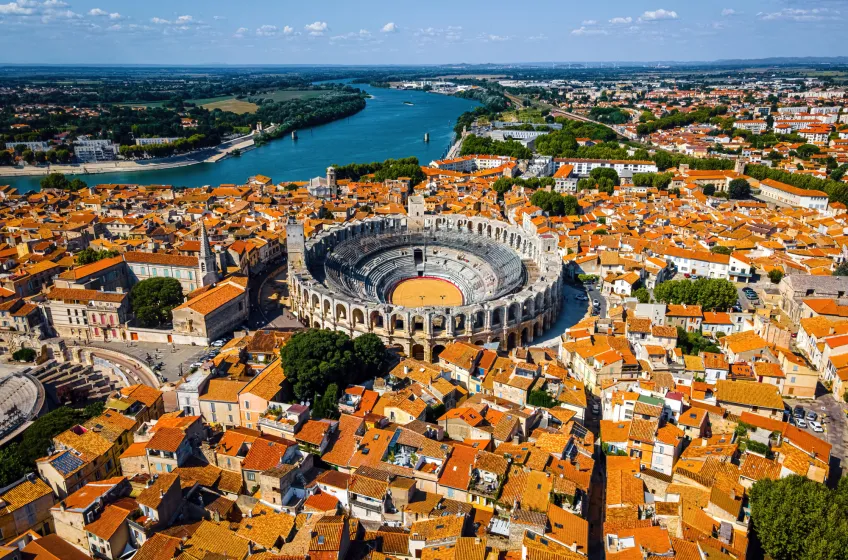
Built in the 1st century AD, Arles’ Roman amphitheatre is one of the best-preserved in France and still hosts events today. It once held 20,000 spectators and was used for gladiatorial games in Roman times. Today, it’s the dramatic stage for courses camarguaises (non-lethal bull games), concerts, and plays.
Climb the towers for panoramic views over the rooftops of Arles, and try to visit during a traditional festival when the arena comes alive with colour, horses, and celebration.
Théâtre Antique (Roman Theatre)
A few steps from the amphitheatre lies Arles’ Roman theatre, also dating back to the 1st century BC. Although partially ruined, it remains an evocative site with columns, statues, and a still-used stage. It was one of the earliest stone theatres in Roman Gaul and continues to host summer concerts and cultural performances.
Alyscamps
Just outside the ancient city walls, the Alyscamps is a hauntingly beautiful Roman necropolis lined with centuries-old stone sarcophagi. Mentioned by Dante in the Divine Comedy, the site was once one of the most famous burial grounds in the Christian world.
The tree-lined avenue of tombs has a solemn, poetic atmosphere and was famously painted by Van Gogh and Gauguin during their time in Arles.
Van Gogh Trail
Arles was home to Vincent van Gogh from 1888 to 1889, during one of his most prolific periods. While no original paintings remain in the city, you can follow the Van Gogh Trail, which marks the locations of some of his most famous works, including:
-
The Yellow House
-
Café Terrace at Night
-
Starry Night Over the Rhône
-
The Garden of the Hospital in Arles
The Espace Van Gogh, housed in the former hospital where Van Gogh was treated, now features a beautiful courtyard and rotating art exhibitions.
Fondation Vincent van Gogh Arles
This modern art foundation celebrates Van Gogh’s legacy while showcasing works by contemporary artists. Housed in a restored 15th-century building, it offers a thoughtful and curated perspective on art, colour, and emotion—very much in the spirit of Van Gogh.
Place du Forum
This lively square is at the heart of Arles’ social life. Lined with cafés and restaurants, it’s perfect for a lazy lunch or evening drink. One corner is home to the famous Café Van Gogh, immortalised in his painting Café Terrace at Night, and still proudly painted in its signature yellow.
Arles Market
Held Wednesdays and Saturdays, Arles’ market is one of the largest and most colourful in Provence. It stretches along the Boulevard des Lices and overflows with:
-
Fresh produce
-
Provençal herbs and spices
-
Cheese, charcuterie, olives, and bread
-
Lavender products, textiles, and handmade crafts
It’s a feast for the senses and a perfect place to stock up on picnic supplies or gifts.
Musée Départemental Arles Antique
This excellent museum offers a deep dive into Arles’ Roman past. Highlights include:
-
A full-size Roman barge, recovered from the Rhône and superbly preserved
-
Mosaics, sculptures, and everyday Roman objects
-
An impressive bust of Julius Caesar, discovered in the Rhône
It's a must-visit for anyone curious about ancient history and archaeology.
Cloître Saint-Trophime
This beautiful Romanesque cloister, attached to the 12th-century Saint-Trophime Cathedral, is one of Arles’ architectural highlights. Its sculpted capitals depict biblical scenes and medieval life in vivid detail, and its peaceful atmosphere provides a quiet break from the bustling streets.
The cathedral’s main portal is also richly carved and well worth admiring.
Camargue Excursions
Arles is the gateway to the Camargue, a vast and wild delta region famous for:
-
Flamingos
-
White horses
-
Black bulls
-
Salt flats and rice paddies
You can take a 4x4 safari, go horseback riding, or visit a manade (working ranch) to see Camargue bull herding and cowboy life up close. Birdwatchers will love the nearby Parc Ornithologique du Pont de Gau.
Practical Advice for Visitors
Getting There
By Train: Arles is on the regional rail network, with direct services to:
-
Avignon (20 minutes)
-
Nîmes (30 minutes)
-
Marseille (1 hour)
From Paris, take the TGV to Avignon or Nîmes, then transfer to a local train to Arles.
By Car: Arles is well connected by road. From:
-
Avignon – 45 minutes
-
Aix-en-Provence – 1 hour
-
Montpellier – 1 hour 15 minutes
By Air: The nearest airports are Nîmes, Marseille, and Montpellier, all within easy driving distance.
Parking
There are several car parks around the town centre, including:
-
Parking des Lices (central and convenient)
-
Parking Lamartine (near the river)
-
Free and paid lots slightly outside the centre with a short walk in
Streets in the old town are narrow and often pedestrianised, so park once and explore on foot.
Getting Around
Arles is compact and very walkable, with most attractions within easy reach of each other. For visiting the Camargue or nearby sights like Les Baux-de-Provence or Saint-Rémy-de-Provence, a car is helpful.
Bikes are available to rent and are a great option for reaching rural areas or heading out along the Rhône.
Dining
Arles’ food scene is rich in Mediterranean and Provençal flavours. Local specialities include:
-
Gardiane de taureau (bull meat stew with red wine)
-
Brandade de morue (salt cod purée)
-
Tapenade, aïoli, and other regional condiments
-
Goat’s cheese, olive oil, and Camargue rice
-
Rosé and red wines from nearby Costières de Nîmes and Alpilles vineyards
Restaurants range from traditional bistros to creative fine dining. Look for those offering terrace seating under the plane trees.
Try:
-
Le Gibolin for modern Provençal cuisine
-
Le Galoubet for charm and local flavours
-
La Chassagnette (just outside town) for Michelin-starred, garden-to-table excellence
Shopping
Explore local boutiques and artisan shops for:
-
Provençal textiles
-
Handmade pottery
-
Lavender products
-
Olive oils and herbes de Provence
-
Local wines and Camargue rice
The town also has a growing number of art galleries and photography shops, reflecting its creative spirit.
When to Visit
-
Spring (April–June): Ideal weather, blooming landscapes, and festivals.
-
Summer (July–August): Peak season, with vibrant markets and festivals, but also heat and crowds.
-
Autumn (September–October): Warm weather lingers, with grape and rice harvests.
-
Winter (November–March): Quiet, with fewer tourists and a moody beauty. Great for cultural visits.
Local Events
-
Féria d’Arles (Easter and September): Bullfighting, concerts, and Provençal parades.
-
Les Rencontres de la Photographie (July–September): A major international photography festival transforming the city into an open-air gallery.
-
Drôles de Noëls (December): Arles’ magical Christmas festival with street theatre and light shows.
-
Provençal Festivals: Celebrate costume parades, saint’s days, and bull games throughout the summer.
Exploring Beyond Arles
Arles is perfectly placed for day trips across Provence:
-
Les Baux-de-Provence: A dramatic hilltop village and castle, 30 minutes away.
-
Saint-Rémy-de-Provence: A charming town with Roman ruins and Van Gogh sites.
-
Aigues-Mortes and Saintes-Maries-de-la-Mer: For the Camargue’s salt marshes, flamingos, and beaches.
-
Avignon: Papal palaces and bridge legends just under an hour by train or car.
Arles is a place where history and art walk hand in hand under the Provençal sun. From Roman ruins to Van Gogh’s golden light, from bull games to photography festivals, this small city packs in centuries of culture with effortless southern charm. Whether you're here for a few days or passing through en route to the Camargue, Arles will leave you enriched, inspired, and wanting more.
Shortlist
- Your Shortlist is empty