
DiscoverLimousin | A Visitor's Introduction to Limousin
Recommended places to visit, places to stay and things to do in Limousin
Limousin is a former region in central France, now part of the larger Nouvelle-Aquitaine region, and one of the country’s best-kept secrets. Limousin is defined by its lush green landscapes, historic towns, quiet villages, pristine rivers, and a slower, more traditional way of life. Often bypassed by the tourist crowds, this peaceful region offers a rich combination of natural beauty, cultural heritage, and rustic French charm.
For those seeking authenticity, tranquillity, and a deeper connection with rural France, Limousin is a destination that promises both discovery and serenity. Whether you’re interested in outdoor adventures, historical sites, artisan crafts, or simply relaxing in a countryside gîte, Limousin has something to enchant you.
Includes the départements: Corrèze Creuse Haute-Vienne
Recommended Limousin accommodation: Hotels 4&5 Star luxury Hotels Chateau Hotels Budget Hotels Family-Friendly Hotels Bed & Breakfasts
Why is Limousin Worth a Visit?
Limousin is worth visiting for its unspoiled natural landscapes, rich history, and genuine way of life. Unlike the bustling cities and crowded coastal resorts of France, Limousin offers space, calm, and a deep sense of place. Here, you’ll find vast forests, gently rolling hills, sparkling lakes, and winding rivers that create a perfect playground for hiking, fishing, kayaking, and wildlife spotting.
Culturally, Limousin is a region steeped in tradition. It has a long-standing reputation for fine craftsmanship, especially Limoges porcelain, Aubusson tapestries, and leather goods. Medieval villages and Romanesque churches dot the countryside, while small towns like Limoges, Tulle, Guéret, and Uzerche offer vibrant markets, impressive architecture, and friendly local hospitality.
With its low population density, Limousin feels spacious and untouched, making it ideal for travellers who value peace, authenticity, and the charm of the French countryside.
Limousin Highlights: Things to See and Do in Limousin
Limoges – The Porcelain Capital
The capital of the former Limousin region, Limoges is world-famous for its fine porcelain. A visit to the Musée National Adrien Dubouché reveals over 12,000 ceramic pieces, while the Bernardaud porcelain factory offers guided tours showing porcelain production from clay to finished work.
Beyond porcelain, Limoges is a city of history and character. The Quartier de la Boucherie is a preserved medieval district full of timber-framed houses, the Cathédrale Saint-Étienne stands in Gothic splendour, and the Jardin de l’Évêché provides a quiet, flower-filled escape overlooking the Vienne River.
Oradour-sur-Glane – A Memorial to Tragedy
Just northwest of Limoges lies Oradour-sur-Glane, a preserved martyr village and memorial site commemorating the massacre of its inhabitants by Nazi forces in June 1944. The burnt-out cars, empty houses, and rusting remains offer a haunting and powerful reminder of the horrors of war.
The Centre de la Mémoire nearby offers background on the tragic events and the broader context of WWII in France. A sombre but vital place to visit.
Collonges-la-Rouge – A Ruby-Coloured Gem
In the south of the region, Collonges-la-Rouge is a fairytale village built entirely of deep red sandstone. With turreted manors, artisan boutiques, and flower-lined lanes, it’s one of the “Plus Beaux Villages de France” and a must-see in Corrèze.
Avoid the peak afternoon crowds by arriving early or later in the day, and don’t forget to sample local walnut liqueur or a rustic lunch in one of the village's outdoor cafés.
Aubusson – Tapestry and Textiles
Nestled in the Creuse valley, Aubusson has been renowned for its tapestry weaving since the 15th century. Visit the Cité Internationale de la Tapisserie to see centuries of woven masterpieces and explore how this craft continues to evolve today—including new commissions like those inspired by The Lord of the Rings.
Aubusson also offers charming riverside walks, local markets, and antique shops where you might just find a tapestry piece to take home.
Uzerche – The Pearl of the Limousin
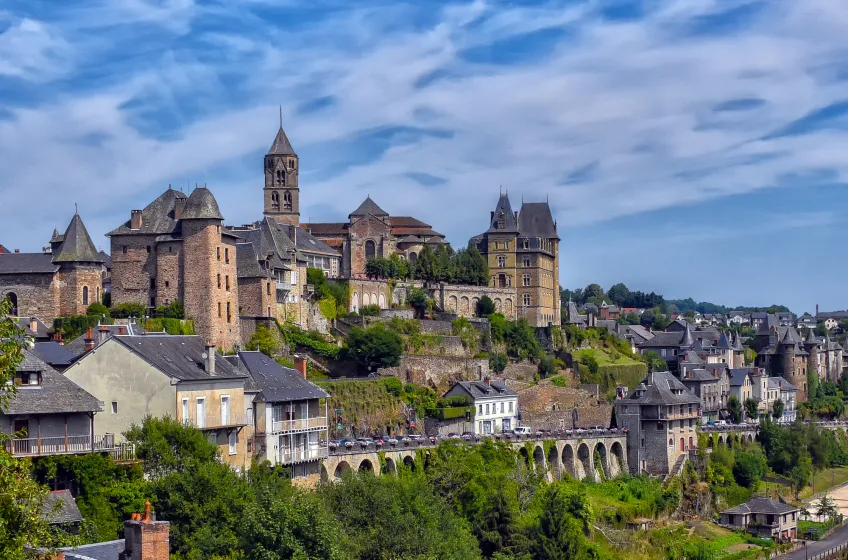
Dramatically perched above the Vézère River in Corrèze, Uzerche is a hilltop town of towers, turrets, and winding lanes. Its monastic past is visible in the Abbey Church of Saint-Pierre, and the surrounding nature makes it ideal for kayaking, walking, and cycling.
The town is particularly lively on market days and during summer festivals, when music and food take over the main square.
Lake Vassivière – Outdoor Paradise
Spanning the Haute-Vienne and Creuse border, Lac de Vassivière is one of the largest lakes in France and a haven for nature lovers. Sailing, paddleboarding, swimming, and fishing are all available, as are walking and cycling trails around the forested shore.
In the middle of the lake, Île de Vassivière is home to a contemporary art centre and sculpture park, accessible by footbridge or boat. It’s a wonderful blend of nature and creativity in a stunning setting.
Turenne – A Timeless Village
With its stone houses cascading down a hillside beneath the ruins of an ancient château, Turenne is another of Limousin’s officially designated “most beautiful villages.” It was once the seat of a powerful viscountcy and has preserved much of its medieval character.
Climb to the castle ruins for panoramic views over the surrounding hills and enjoy a drink on the leafy square beneath centuries-old lime trees.
Monts de Blond – Walking Among Legends
Located in northern Haute-Vienne, the Monts de Blond are a range of low, forested hills full of walking and cycling trails, prehistoric stones, and panoramic viewpoints. The area is wrapped in legend, with tales of druids, fairies and mysterious lights in the woods.
The villages of Montrol-Sénard and Mortemart nearby are beautifully preserved, with traditional architecture and peaceful streets ideal for a relaxing day trip.
Gorges de la Vézère and Gorges de la Creuse
The rivers of Limousin have carved some spectacular gorges over millennia. The Gorges de la Vézère near Treignac and the Gorges de la Creuse around Crozant offer wild landscapes, hidden ruins, and dramatic cliffs that are perfect for hiking, picnicking, or painting.
The Crozant area was a favourite of 19th-century painters like Monet and Guillaumin, and you can follow the Valley of the Painters trail to see what inspired them.
Château de Val
Technically just over the border in Cantal, Château de Val is a stunning lakeside castle that feels like something out of a storybook. Located near Bort-les-Orgues, it rises dramatically from the shores of a reservoir, with its towers reflected in the water.
You can tour the interiors, relax by the beach, or take part in summer concerts and art exhibitions held in the castle courtyard.
Practical Advice for Visitors
Getting There
Limousin is centrally located and best reached by car for those wanting to explore the rural areas. Limoges has a regional airport (Limoges-Bellegarde) with flights from the UK (London, Bristol, Manchester) and domestic routes. Direct trains connect Limoges to Paris (approx. 3.5 hours), and there are also train links to Brive-la-Gaillarde, Uzerche, and other towns.
Driving is the most practical way to explore the villages, lakes, and countryside, as public transport is limited outside the main towns.
Parking
Free or low-cost parking is widely available in most towns and villages. Even in Limoges, central parking is accessible and well-signposted. In peak summer months, it’s wise to arrive early at popular spots like Collonges-la-Rouge or Lake Vassivière to secure a space.
Dining
Limousin cuisine is hearty and rooted in local produce. Look out for:
-
Limousin beef – some of the finest in France
-
Pounti – a savoury loaf made with pork, herbs and prunes
-
Clafoutis – a baked dessert with cherries
-
Chestnut dishes – especially in autumn
-
Goat cheeses, walnuts, and honey
You’ll find auberges and small restaurants offering fixed-price menus at excellent value, especially at lunch. Some excellent spots include:
-
Le Cheverny in Limoges (modern French)
-
L’Auberge de la Mandragore near Saint-Junien (rustic and seasonal)
-
Les Flots Gourmands in Treignac (local ingredients with river views)
Shopping
Local markets are a way of life here. Weekly markets in towns like Aubusson, Brive, Felletin, and Eymoutiers are ideal for stocking up on cheese, charcuterie, local wines, fresh bread and seasonal produce.
Specialities to take home include:
-
Limoges porcelain
-
Aubusson tapestry
-
Enamel jewellery
-
Chestnut liqueur and preserves
-
Handmade soaps and woollen items
When to Visit
The best time to visit Limousin is from May to October, when the weather is warm and the countryside is in full bloom. July and August are the busiest months, with festivals and open-air events, but even then, you’ll rarely feel crowded.
Spring (April–June) brings wildflowers and mild weather, while autumn (September–October) is beautiful for its foliage, chestnut season, and quieter villages.
Winter is peaceful but cold, and while some tourist attractions reduce hours, it’s a good time for cosy stays, log fires, and enjoying the region’s rustic charm without interruption.
Local Events
Limousin has a strong calendar of local festivals and traditional events:
-
Festival 1001 Notes (July–August): Classical and contemporary music in Limoges and beyond
-
Festival de la Tapisserie in Aubusson (summer): Tapestry exhibitions, demonstrations, and art events
-
Fête de la Châtaigne (October): Chestnut fairs throughout the region
-
Foire des Saints Innocents in Limoges (April): One of the oldest traditional fairs in France
-
Marché de Noël in Limoges and Tulle (December): Christmas markets with local crafts and festive fare
Exploring Beyond Limousin
Limousin is well positioned for exploring central France. Just beyond its borders, you can discover:
-
The Dordogne Valley (to the west): Famous for medieval towns, châteaux, and river canoeing
-
The Auvergne Volcanoes (to the east): Hiking and dramatic scenery
-
The Berry region (to the north): Home of George Sand and elegant country estates
-
Périgord-Limousin Regional Natural Park: Straddling Haute-Vienne and Dordogne, ideal for wildlife and heritage villages
Limousin is a place where time moves gently, and the beauty of nature and heritage quietly reveals itself. With its rolling green hills, artisan traditions, friendly towns and peaceful lakes, this is a destination that allows you to slow down, reconnect, and explore the heart of rural France. Whether you’re travelling for culture, cuisine, countryside or calm, Limousin offers an unforgettable—and refreshingly untouristed—escape.
Shortlist
- Your Shortlist is empty