
Discover Corrèze | A Visitor's Introduction to Corrèze
Get expert advice and recommendations for places to stay and things to do in Corrèze
Corrèze is a picturesque department in the Nouvelle-Aquitaine region of south-central France, nestled between the Dordogne and the Massif Central. Known for its rolling hills, medieval villages, lush forests and quiet rivers, Corrèze is a destination that’s rich in natural beauty and authentic French charm. This unspoilt corner of France is perfect for those who want to escape the crowds and discover the slower pace of rural life, complete with outdoor adventures, historical gems, and hearty regional cuisine.
Whether you're a history buff, nature lover, or someone looking for an off-the-beaten-path holiday, Corrèze offers a compelling mix of rustic tranquillity and cultural treasures.
Recommended Corrèze accommodation: Hotels
Why is Corrèze Worth a Visit?
Corrèze is worth visiting for its unique blend of natural landscapes, medieval heritage, and traditional rural life that has remained wonderfully untouched by mass tourism. It’s a place where you can wander cobbled lanes in ancient villages, hike through dramatic gorges and tranquil valleys, and enjoy local markets brimming with regional produce.
What makes Corrèze stand out is its authenticity. Unlike more commercialised areas of France, Corrèze feels lived-in and local. Its villages—several of which are classified among the “Plus Beaux Villages de France”—are not just beautiful but also full of character and stories. The area is also known for its clean air, quiet roads, and abundant wildlife, making it a haven for walkers, cyclists and anyone who loves the great outdoors.
Whether you’re kayaking down the Dordogne, exploring ruined castles, or sampling artisan cheese in a bustling Saturday market, Corrèze offers an experience that’s both grounding and enriching.
Corrèze Highlights: Things to See and Do in Corrèze
Collonges-la-Rouge
Arguably the jewel in Corrèze’s crown, Collonges-la-Rouge is a fairytale village built almost entirely from deep red sandstone. The narrow streets, turreted manor houses, and Romanesque church make this one of the most photogenic places in France. It’s best explored on foot, and visiting early in the morning or late afternoon will help you avoid the busiest periods. Don’t miss the chance to sample some local walnut liqueur while you’re here.
Turenne
Another of France’s official “Most Beautiful Villages”, Turenne is perched dramatically on a hilltop and crowned by the ruins of a medieval château. The views from the top stretch across the Limousin countryside, and the village’s sloping streets are lined with Renaissance houses, small chapels and peaceful gardens. It’s a perfect spot for a romantic afternoon stroll or a quiet lunch at a terrace café.
Uzerche
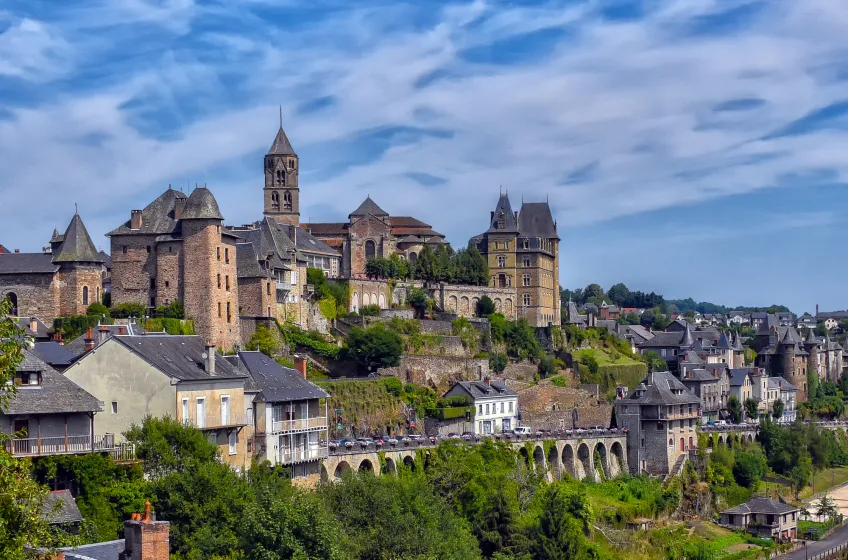
Known as “the pearl of the Limousin”, Uzerche sits proudly on a bend of the Vézère River. The skyline is a mix of towers, turrets and church spires, while the town itself offers a blend of historical architecture and leafy riverside walks. The Saturday market here is excellent for picking up cheese, charcuterie and handmade crafts, and there are kayak and canoe rentals for those wanting to explore the river.
Tulle
The departmental capital of Corrèze, Tulle is a working town with a charming old centre. It’s famous for lace-making and accordion production, and it hosts the annual “Festival de l’Accordéon” in September. The Gothic-style Cathedral of Notre-Dame and the Museum of Accordion are both worth a visit, and the steep streets and hidden stairways of the town centre are full of character.
Gimel-les-Cascades
This tiny village is home to one of the most stunning natural sights in Corrèze: a series of cascading waterfalls that tumble 143 metres down through mossy rocks and forest. You can follow marked paths to different viewpoints or explore the nearby historic village, with its stone houses, ruined castle and 12th-century church. It’s particularly beautiful in spring and early summer when the water is at its fullest.
Argentat-sur-Dordogne
A riverside gem, Argentat-sur-Dordogne is known for its traditional slate-roofed houses and quays once used by river traders. Today, it’s a peaceful town perfect for boat trips, riverside cycling, and riverside dining. The Quai Lestourgie, with its picture-perfect façades and flower displays, is one of the most photogenic spots in the region.
Château de Sédières
Set within 130 hectares of woodland, this Renaissance château is a centre for culture and art in Corrèze. During the summer months, it hosts exhibitions, concerts, theatre and outdoor events. The estate also has lovely walking trails, a small lake for paddle-boating, and picnic spots surrounded by nature.
Brive-la-Gaillarde
Corrèze’s largest town, Brive is lively, friendly and a bit more cosmopolitan than its rural surroundings. The old town is full of boutiques, bistros and bakeries, and the food market—especially the one on Saturday mornings—is one of the best in the area. Brive is a great base for exploring the rest of the region, with good transport links and accommodation options.
Lac du Causse
Just outside Brive, this man-made lake offers a variety of water sports including sailing, paddleboarding and swimming, as well as walking and cycling paths around its scenic perimeter. It’s a popular spot for families, especially in summer, with picnic areas and a couple of relaxed restaurants nearby.
Les Pans de Travassac
These dramatic slate quarries near Donzenac offer a unique window into Corrèze’s industrial heritage. The vertical walls of slate are awe-inspiring, and guided tours explain how slate has been extracted and used across France for centuries. It’s an unusual but memorable stop, especially for anyone interested in geology or history.
Plateau de Millevaches
For lovers of wide-open spaces and wilder landscapes, the Plateau de Millevaches offers vast moorland, peat bogs, forests and crystal-clear streams. Despite the name (“mille vaches” translates as “a thousand cows”), it’s not overrun with livestock but rather a remote and tranquil area ideal for hiking, cycling and star-gazing. There are nature reserves, birdwatching hides, and plenty of hidden hamlets to explore.
Practical Advice for Visitors
Getting There
Corrèze is best accessed by car, as public transport within the department is limited and many of the best villages and nature spots are remote. Brive–Vallée de la Dordogne Airport offers seasonal flights from the UK and other parts of France. Alternatively, you can take the train to Brive-la-Gaillarde from Paris (about 4.5 hours) or Limoges, then hire a car locally. Driving from Paris takes about 5–6 hours, and from Toulouse about 2.5 hours.
Parking
Most villages and tourist attractions in Corrèze have free or low-cost parking, usually just outside the village centre. In popular places like Collonges-la-Rouge, parking can fill up in high season, so it’s best to arrive early or later in the day. Brive-la-Gaillarde and Tulle have multi-storey car parks and on-street parking, often with pay-and-display meters.
Dining
Corrèze is known for its rustic, filling cuisine. Look out for dishes like farçous (herb-filled fritters), duck confit, pounti (a sort of meatloaf with prunes), and locally raised Limousin beef. For a special meal, try Le Miel des Muses in Brive or Auberge de la Xaintrie in Saint-Privat. Many villages have traditional auberges offering hearty set menus at lunchtime, which are excellent value.
If you’re self-catering, visit one of the weekly markets for regional treats like goat cheese, walnuts, honey, and clafoutis (a cherry-filled dessert typical of the region). Local wines come mainly from neighbouring Cahors or the nearby Corrèze AOC, which is gaining a reputation for its quality reds.
Shopping
Corrèze is a great place to shop for artisan products and handmade crafts. In villages like Collonges-la-Rouge and Turenne, you’ll find small boutiques selling ceramics, textiles, and woodwork. Brive has a wider range of shops, including delicatessens and bookshops, while the Saturday market is ideal for stocking up on food souvenirs.
Walnut oil, chestnut flour, regional wines and handmade soaps are among the most popular local products to take home.
When to Visit
The best time to visit Corrèze is from late spring to early autumn. May, June and September are ideal for avoiding crowds and enjoying mild weather, while July and August offer the liveliest atmosphere and most events, though it can get hot. Autumn (October) brings colourful foliage and quieter villages, and some excellent mushroom-foraging opportunities.
Winter is peaceful and atmospheric, particularly in the higher parts of the department, but many attractions and restaurants operate limited hours or close altogether.
Local Events
Corrèze hosts several charming local festivals throughout the year. Notable ones include:
-
Festival de l’Accordéon in Tulle (September): A week of music, dancing and performances across the town.
-
Festival de la Vézère (July–August): Classical concerts in stunning locations like abbeys and castles.
-
Fête de la Noix in Saillac (October): A celebration of the local walnut harvest with tastings, markets and demonstrations.
-
Medieval Days in Turenne and Collonges-la-Rouge (various dates): Re-enactments, markets and music in a historic setting.
Exploring Beyond Corrèze
If you have time to spare, Corrèze makes a perfect base for exploring nearby attractions. The Dordogne Valley is just to the west, with more famous villages like Rocamadour and Sarlat-la-Canéda. The Lot and Cantal departments offer dramatic gorges, high plateaus, and volcanic landscapes.
You could also venture into the Parc Naturel Régional de Millevaches, which extends into neighbouring Creuse and Haute-Vienne, or take a scenic drive to Limoges, famous for its porcelain and medieval quarter.
Corrèze may not be the best-known part of France, but for those who make the journey, it offers a deep sense of place, abundant beauty, and a refreshing slice of authentic French life. Whether you come for the medieval villages, the dramatic natural scenery, or the simple pleasure of a long lunch under a linden tree, Corrèze delivers a rich and memorable experience.
Shortlist
- Your Shortlist is empty