
Discover Franche-Comté | A Visitor's Introduction to Franche-Comté
Recommended places to visit, places to stay and things to do in Franche-Comté
Franche-Comté is a lush and picturesque region in Central France, nestled between Burgundy to the west and Switzerland to the east. Now part of the larger Bourgogne-Franche-Comté administrative region, it retains a strong identity shaped by its forested mountains, traditional villages, and hearty cuisine. Known for its natural beauty, watchmaking heritage, and signature cheeses like Comté, Franche-Comté is perfect for travellers looking to explore authentic rural France, enjoy outdoor activities, and experience rich cultural traditions without the crowds.
Includes the départements: Belfort Doubs Haute-Saône Jura
Recommended Franche-Comté accommodation: All Hotels 4&5 Star Luxury Hotels Chateau Hotels Budget Hotels Family-Friendly Hotels Bed & Breakfasts
Why is Franche-Comté Worth a Visit?
Franche-Comté is worth visiting for its harmonious blend of pastoral charm, mountainous landscapes, and cultural depth. The region is home to the Jura Mountains, vast pine forests, crystal-clear rivers, and scenic lakes, making it a haven for hikers, cyclists, and nature lovers. In winter, the area transforms into a serene snow-covered playground ideal for cross-country skiing and snowshoeing.
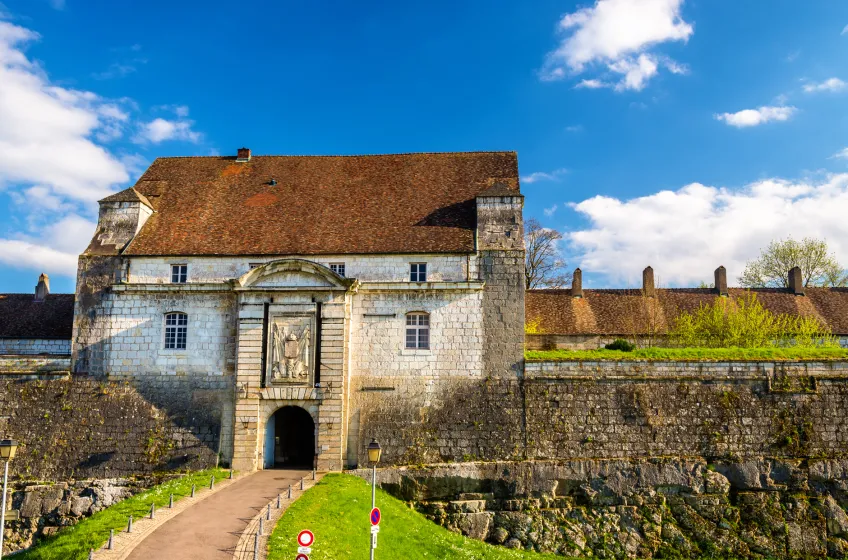
Historically, Franche-Comté was once part of the Holy Roman Empire and has strong ties to Switzerland, reflected in its fortified towns, Romanesque architecture, and Germanic-influenced traditions. Its capital, Besançon, is a UNESCO World Heritage Site famed for its Vauban citadel and watchmaking history, while charming towns like Dole, Arbois, and Ornans reveal layers of history, art, and gastronomy.
Whether you’re tasting local wines in a medieval cellar, wandering through mountain pastures, or kayaking along peaceful rivers, Franche-Comté offers a genuine French experience grounded in nature, tradition, and slow-paced living.
Franche-Comté Highlights: Things to See and Do in Franche-Comté
Besançon
The capital of Franche-Comté, Besançon is an elegant and culturally rich city set in a loop of the River Doubs. Its star attraction is the Citadel of Besançon, a 17th-century fortress designed by military architect Vauban, offering panoramic views, museums, and a small zoo. The old town is full of grand stone buildings, leafy promenades, and hidden courtyards.
Besançon is also France’s historic watchmaking capital, with the Musée du Temps (Museum of Time) celebrating horology and the city’s role in precision craftsmanship. Stroll along the riverbanks or enjoy a glass of wine in one of the relaxed cafés near Place de la Révolution.
The Jura Mountains
Covering much of the southern half of Franche-Comté, the Jura Mountains are ideal for outdoor enthusiasts. In summer, the region offers hundreds of kilometres of hiking and cycling trails, including sections of the Grande Traversée du Jura. In winter, ski resorts like Les Rousses offer cross-country skiing, downhill skiing, and family-friendly snow sports in a more relaxed setting than the Alps.
The mountains are also rich in flora and fauna, with forests, alpine meadows, and limestone cliffs that are home to chamois, lynx, and golden eagles.
Dole
Dole is a charming riverside town with a medieval core and a strong artistic legacy. Its Collegiate Church of Notre-Dame dominates the skyline, while the Canal des Tanneurs offers idyllic canal-side walks. Dole was the birthplace of Louis Pasteur, and you can visit his childhood home and learn about his revolutionary scientific discoveries.
The town also has a vibrant market and makes an excellent base for exploring the surrounding countryside, including vineyards and quiet villages.
Arbois
Wine lovers shouldn’t miss Arbois, a small town surrounded by vineyards and known for producing Jura’s most distinctive wines, including Vin Jaune and Vin de Paille. Visit wineries such as Domaine Tissot or Domaine Rolet, or enjoy a meal at one of Arbois’s superb restaurants. The town also celebrates Louis Pasteur, who kept a house here, now open as a museum.
The surrounding landscape is dotted with limestone cliffs, caves, and waterfalls, offering superb walking and cycling routes.
Ornans
Often called the “Venice of Franche-Comté,” Ornans is a picture-perfect town built along the River Loue. Its pastel-coloured houses overhang the water, and the setting has inspired generations of artists. The town is the birthplace of 19th-century painter Gustave Courbet, and the Musée Courbet is a highlight for art lovers.
Canoeing along the River Loue is a popular activity, as is hiking through the nearby Vallée de la Loue, known for its wild beauty and scenic trails.
The Royal Saltworks of Arc-et-Senans
A UNESCO World Heritage Site, the Saline Royale at Arc-et-Senans is a remarkable example of industrial architecture and Enlightenment-era design. Built in the 18th century to process salt extracted from nearby saline springs, the complex was designed by visionary architect Claude-Nicolas Ledoux and now houses exhibitions, art installations, and a beautiful garden.
It’s one of the most unique architectural sites in France and offers a fascinating look into the region’s salt-producing heritage.
Baume-les-Messieurs
This dramatic village sits in a natural amphitheatre formed by high limestone cliffs and is officially listed as one of the most beautiful villages in France. The ancient Baume Abbey is a peaceful retreat steeped in history, while nearby attractions include the Cascade des Tufs, a series of beautiful waterfalls flowing over mossy rock, and a vast network of underground limestone caves.
Baume-les-Messieurs is also a popular starting point for walks into the surrounding reculées, Jura’s unique steephead valleys.
Salins-les-Bains
Another salt-producing town, Salins-les-Bains is home to the Grande Saline, an impressive underground saltworks that’s also a UNESCO site. Explore its vast vaults, salt springs, and brine-extraction systems, then unwind at the thermal spa, which offers salt-infused wellness treatments.
Surrounded by wooded hills, Salins is also a good spot for hiking, especially to the nearby Fort Belin and Fort Saint-André.
Château de Joux
Perched high above the Cluse de Pontarlier, this medieval fortress has guarded a strategic mountain pass since the 11th century. Over the centuries, it evolved from a feudal stronghold to a state prison, with famous inmates including Toussaint Louverture, the leader of the Haitian Revolution.
Today, the Château de Joux is open to visitors and offers sweeping views over the Jura landscape, as well as exhibitions on its military and political history.
Lakes and Waterfalls
Franche-Comté is rich in lakes and rivers perfect for swimming, boating, and fishing. Popular lakes include Lac de Chalain, Lac de Saint-Point, and Lac de Vouglans, which offers beaches and water sports. The region’s many waterfalls, especially the Cascades du Hérisson, are best seen in spring or after rainfall and make for stunning day trips.
Practical Advice for Visitors
Getting There
Franche-Comté is easily accessible by train, car, or plane. Major towns like Besançon, Dole, and Belfort are served by TGV trains, with connections to Paris (2–3 hours) and Lyon (2 hours). For international travellers, Geneva Airport (Switzerland) is ideal for visiting the southern Jura region, while Basel-Mulhouse Airport serves the northern areas.
A car is recommended for exploring the rural areas, mountains, and hidden gems, especially if you plan to visit lakes, vineyards, or hiking trails.
Parking
Most towns and villages offer ample parking, with many free or reasonably priced options. In smaller villages and tourist sites, arrive early during summer to find space. Larger towns like Besançon and Dole have central car parks, often underground, and are well signposted.
Dining
Franche-Comté cuisine is hearty, rustic, and deeply satisfying. Local specialities include fondue Comtoise, tartiflette, Morteau sausage, smoked ham, trout from mountain streams, and dishes prepared with Vin Jaune and morel mushrooms. Don’t miss Tarte aux Myrtilles (blueberry tart) for dessert.
Restaurants range from Michelin-starred establishments in Arbois and Dole to countryside fermes-auberges, where you’ll find generous portions and a warm welcome.
Shopping
Local markets are perfect for buying Comté, Mont d’Or, goat cheese, local honey, absinthe, wines, and handmade crafts. Arbois, Poligny, Dole, and Besançon host excellent weekly markets.
You’ll also find artisan shops selling wooden toys, watchmaking tools, pottery, and textiles—particularly in mountain towns like Moirans-en-Montagne and Morez.
When to Visit
May to September is the best time to visit Franche-Comté, with mild temperatures ideal for outdoor activities. June and early July are particularly beautiful for wildflowers and hiking. Autumn (September–October) brings grape harvests, wine festivals, and golden forests.
Winter (December–March) is perfect for skiing and snowshoeing in the Jura Mountains. Smaller ski resorts offer a relaxed, family-friendly alternative to the Alps, with beautiful cross-country trails and winter scenery.
Local Events
La Percée du Vin Jaune (February): A major wine festival rotating through Jura towns to celebrate the first opening of the new vintage of Vin Jaune.
Les Eurockéennes (July): One of France’s biggest music festivals, held near Belfort, featuring international and French artists.
Transjurassienne (February): A legendary cross-country ski race through the Jura Mountains, attracting competitors from across Europe.
Besançon International Music Festival (September): A prestigious classical music event with performances across the city.
Pastoral Rando (June): A festival celebrating traditional agriculture and alpine grazing, often featuring parades and tastings.
Exploring Beyond Franche-Comté
From Franche-Comté, it’s easy to explore Switzerland—Lausanne and Neuchâtel are only 1.5 to 2 hours away. Burgundy lies just to the west, offering historical cities like Dijon and wine towns such as Beaune.
To the north, the Vosges Mountains provide more walking and cycling opportunities, while Alsace is within reach for those interested in fairy-tale towns and Alsatian wines.
Franche-Comté is a region that rewards slow travel, curiosity, and a love for nature. With its emerald valleys, alpine lakes, strong culinary traditions, and welcoming atmosphere, it remains an undiscovered gem for those wanting to experience the true soul of rural France. Whether you're hiking through Jura forests, sipping wine in a medieval town, or watching cheese mature in an ancient cellar, Franche-Comté invites you to breathe deep, linger longer, and savour every moment.
Shortlist
- Your Shortlist is empty