
Discover Erfurt | A Visitor's Introduction to Erfurt
Recommended places to visit, places to stay and things to do in and around Erfurt
Erfurt is a beautifully preserved medieval city in the heart of Germany, serving as the capital of the state of Thuringia. Known for its timber-framed buildings, cobbled streets, and one of the best-preserved old towns in the country, Erfurt is a charming blend of history, architecture, and laid-back German culture. This city has deep historical roots, with a heritage stretching back over 1,200 years. Erfurt is the perfect destination for history lovers, architecture enthusiasts, and anyone looking to experience an authentic slice of central Germany, away from the bigger and more crowded cities like Berlin or Munich.
Recommended Erfurt accommodation: Hotels Apartments
Pre-book Erfurt Attractions, Tours & Experiences
Why is Erfurt Worth a Visit?
Erfurt is worth visiting for its stunningly intact medieval city centre, including one of the most beautiful market squares in Europe. Unlike many German cities that suffered extensive bombing during the Second World War, Erfurt’s Old Town survived relatively unscathed, allowing modern-day visitors to wander through centuries of architectural history. The city's charm lies in its atmospheric streets, iconic landmarks like the Krämerbrücke (Merchants' Bridge), and a strong cultural and religious legacy — this is, after all, where Martin Luther lived and studied as a monk before launching the Protestant Reformation.
The city also offers a relaxed, walkable vibe with friendly locals, a lively student population thanks to the University of Erfurt, and plenty of green spaces and riverside cafés to unwind in. Whether you're after picturesque architecture, unique museums, local Thuringian cuisine, or just a quieter, more authentic city break in Germany, Erfurt delivers all of that and more.
Erfurt Highlights: Things to See and Do in Erfurt
Krämerbrücke (Merchants' Bridge)
The Krämerbrücke is Erfurt's most iconic landmark. A unique medieval bridge that is completely covered with half-timbered buildings, it’s home to artisan shops, galleries, and cafés. It feels like stepping into a fairy tale. Built in the 14th century, it’s one of the few remaining inhabited bridges in Europe. You can stroll across while browsing handmade goods, jewellery, and local delicacies, or simply enjoy the atmosphere with a coffee at one of the small cafés on either end.
Erfurt Cathedral (Dom St. Marien)
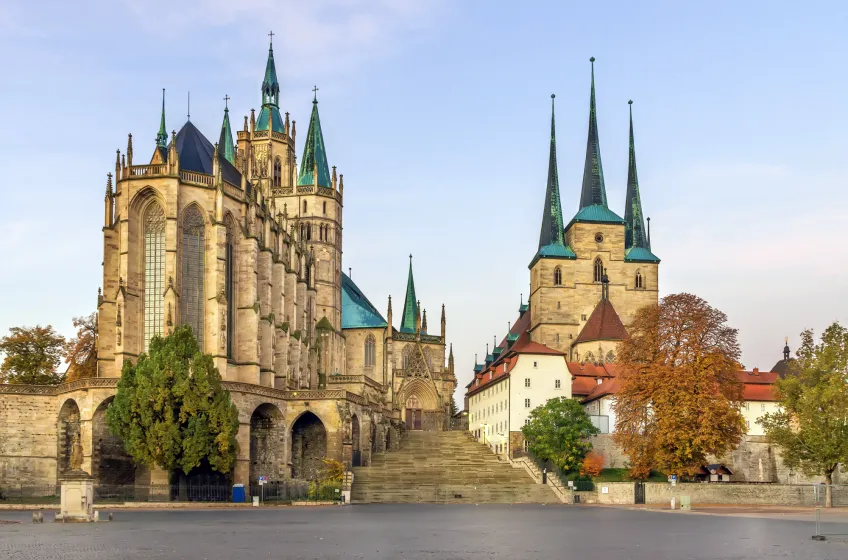
Towering above Domplatz (Cathedral Square), Erfurt Cathedral is an awe-inspiring Gothic structure with Romanesque foundations. Inside, visitors can admire its stunning stained glass, medieval furnishings, and the massive Gloriosa bell — the largest free-swinging medieval bell in the world. The views from the steps leading up to the cathedral are picture-perfect, especially at sunset or during winter’s Christmas market.
St. Severus Church (Severikirche)
Next to the cathedral, this equally striking church is often mistaken as part of the same building. Together, the twin churches dominate the skyline and form one of the most dramatic church ensembles in Germany. The interior of St. Severus is richly decorated, and the crypt holds the sarcophagus of Saint Severus himself.
Augustinerkloster (Augustinian Monastery)
This is where Martin Luther lived as a monk from 1505 to 1511 before his pivotal role in the Reformation. The monastery is beautifully preserved and now serves as a museum, guesthouse, and place of reflection. You can visit his cell, explore the peaceful cloisters, and learn about Luther’s life and theological development.
Domplatz (Cathedral Square)
This vast square is one of the largest and most beautiful in Germany, often buzzing with markets, festivals, and events. It’s a great place to sit and people-watch, especially during the Erfurt Christmas Market or summer concerts. The square is framed by historic buildings and the dramatic cathedral steps.
Petersberg Citadel (Zitadelle Petersberg)
Perched on a hill above the city, this massive Baroque fortress offers panoramic views and a fascinating insight into military history. You can walk the star-shaped ramparts, tour the underground passageways, or simply enjoy the open green space and its views over Erfurt’s rooftops.
Old Synagogue and Jewish Heritage Sites
Erfurt is home to one of the oldest synagogues in Europe, dating back to the 11th century. It’s now a museum that showcases the Erfurt Treasure — a stunning hoard of medieval Jewish coins, jewellery, and artefacts hidden during a time of persecution. Nearby are other reminders of Erfurt’s once-thriving medieval Jewish community, including a mikveh (ritual bath) and archaeological remains.
Anger Square and Shopping Streets
Anger is Erfurt’s bustling shopping hub, lined with department stores, boutiques, and cafés. From here, many of Erfurt’s elegant streets radiate out, including the Willy-Brandt-Platz and Bahnhofstraße. The blend of old and new architecture makes it a pleasant place to explore on foot.
Egapark
One of the largest and most beautifully maintained horticultural parks in Germany, Egapark is a must-visit for nature lovers. With themed gardens, a butterfly house, and seasonal flower displays, it’s especially lovely in spring and summer. Children will enjoy the playgrounds and animal enclosures, while adults can relax in the tranquil surroundings.
Natural History Museum and Kunsthalle Erfurt
Located in the heart of the city, the Natural History Museum offers a look at the flora, fauna, and geology of Thuringia, ideal for families. Just a short stroll away, the Kunsthalle in the historic Haus zum Roten Ochsen hosts rotating exhibitions of contemporary art and photography.
Thuringian Specialities and Beer Gardens
Erfurt is a brilliant place to sample local Thuringian cuisine, especially the famed Thüringer Rostbratwurst — a spiced sausage best enjoyed from a street vendor or in a traditional beer garden. Local dumplings (Klöße) and Sauerbraten are also popular. The beer culture is thriving too, with several local breweries and cosy taverns serving up regional brews.
Christmas Market
Erfurt’s Christmas market is one of Germany’s finest and most atmospheric. Held on Domplatz beneath the illuminated cathedral steps, it’s a magical experience complete with mulled wine, handcrafted gifts, carousels, and festive food. The backdrop of the medieval city adds an unmatched sense of enchantment.
Practical Advice for Visitors
Getting There
Erfurt is easily accessible by train and road. It lies on Germany’s high-speed ICE railway line, with direct connections to Berlin (approx. 2 hours), Frankfurt (approx. 2.5 hours), and Munich (around 3 hours). The main station, Erfurt Hauptbahnhof, is centrally located and well-connected to the rest of the city via trams and buses.
If you're flying in, the nearest major airport is Leipzig/Halle (about 1.5 hours by train or car), though Frankfurt and Berlin airports are also viable options.
Driving to Erfurt is straightforward, with good access via the A4 and A71 motorways.
Parking
Parking in Erfurt’s city centre can be a bit tight, especially on weekends and during major events. There are several underground and multi-storey car parks, such as Anger 1, Domplatz, and Am Stadion, all within walking distance of major attractions. Pay attention to signs indicating resident-only zones. If you’re staying overnight, check if your accommodation offers parking or can provide a guest pass.
Dining
Erfurt offers a great mix of traditional and modern dining. For a hearty local meal, try Wirtshaus Christoffel, a medieval-style tavern with authentic Thuringian fare. Zum Goldenen Schwan near the Krämerbrücke is also popular for local dishes and beer.
Vegetarian and international options are also increasingly available. Green Republic caters to plant-based diets, while Pier 37 offers creative international cuisine with a view over the Gera river.
Don’t leave without trying a Bratwurst im Brötchen (sausage in a bun) from one of the many street vendors.
Shopping
Erfurt is a great place for boutique shopping. Alongside big brands in Anger 1 and the Thüringen Park mall, the Old Town is filled with artisan shops, particularly on and around the Krämerbrücke. Look for locally made pottery, handmade paper goods, jewellery, and carved wooden ornaments. There's also a lively market on Domplatz several days a week, where you can pick up local produce, flowers, and regional specialities.
When to Visit
Erfurt is a year-round destination, but spring and autumn are particularly lovely, with mild temperatures and fewer tourists. Summer is great for open-air events and long evenings at beer gardens. Winter, especially during Advent, brings the magic of the Christmas market.
If you’re hoping to avoid crowds while still enjoying pleasant weather, consider visiting in late April to early June, or in September.
Local Events
Erfurt hosts several key events throughout the year:
Erfurter Weihnachtsmarkt (late November to late December) – One of Germany’s top Christmas markets, held on Domplatz with over 200 stalls.
Krämerbrückenfest (June) – A lively city festival with music, street theatre, and medieval-themed events centred around the famous bridge.
DomStufen-Festspiele (July/August) – Open-air opera and theatre performances staged on the cathedral steps, creating a spectacular visual and acoustic experience.
Buga Erfurt Events – Although the Bundesgartenschau (National Garden Show) was hosted in 2021, many of the related spaces like Egapark continue to host seasonal floral and cultural events.
Exploring Beyond Erfurt
If you’ve got a bit more time, there are several worthwhile day trips from Erfurt:
Weimar – Just 25 minutes away by train, Weimar is a UNESCO World Heritage site and home of Goethe, Schiller, and the Bauhaus movement.
Gotha – Around 30 minutes west, this small city has a beautiful Baroque palace, Friedenstein Castle, and a quaint Old Town.
Thuringian Forest – Ideal for hikers and nature lovers, the forest is about an hour away and offers miles of walking trails, scenic drives, and traditional guesthouses.
Arnstadt – One of the oldest towns in central Germany, just a 20-minute train ride away. Known for its connection to J.S. Bach, it offers a quiet charm and historical significance.
Erfurt may not always be the first city that comes to mind when planning a German getaway, but that’s exactly what makes it so special. With its medieval streets, rich cultural history, and welcoming atmosphere, Erfurt is a hidden gem that offers a truly authentic experience of central Germany. Whether you’re wandering over ancient bridges, sipping coffee in a cobbled square, or taking in the dramatic beauty of the cathedral skyline, Erfurt is a city that invites you to slow down, explore, and fall under its spell.
Shortlist
- Your Shortlist is empty