
A Visitor's Introduction to The Bank of England Museum
The Bank of England Museum, located within the City of London’s financial district, offers a unique insight into the history and role of the United Kingdom’s central bank. Situated on Threadneedle Street, within the secure perimeter of the Bank itself, the museum is housed in a purpose-built space that occupies part of the building’s original 18th-century structure. Though relatively compact compared to other London museums, it holds a wealth of historical artefacts, interactive displays, and educational exhibits relating to banking, finance, and the economy. With free entry and a location in the heart of the capital, the museum provides an informative experience suitable for all ages, from students and tourists to those with a keen interest in economic history.
Recommended City of London accommodation: Hotels Bed & Breakfasts Pub Accommodation
Pre-book London Attractions, Tours & Experiences
Why is The Bank of England Museum worth a visit?
The Bank of England Museum is worth visiting because it offers a rare opportunity to explore the inner workings of one of the world’s oldest and most influential central banks. Founded in 1694, the Bank of England has played a central role in shaping not only British economic policy but also global finance. The museum presents this complex history in an accessible and engaging format, combining historical documents, original artefacts, and modern multimedia. Visitors can learn about the Bank’s founding, its changing responsibilities over time, and how it influences monetary policy today.
One of the museum’s unique strengths is its ability to make abstract financial concepts understandable. Through interactive displays and real-world examples, it explains everything from inflation to interest rates in practical terms. Additionally, it appeals to a broad audience: while enthusiasts of economic history will find detailed archival material and rare exhibits, casual visitors are drawn in by hands-on experiences, such as the opportunity to handle a genuine gold bar or see how counterfeit notes are detected.
Bank of England Museum Highlights
The Rotunda and Historic Architecture
The entrance to the museum takes visitors into an area of the Bank that still retains features of Sir John Soane’s original design. Soane, one of Britain’s most important architects, significantly influenced the building’s aesthetic in the early 19th century. While the museum is a modern construction, some elements of the historic fabric have been preserved and incorporated into the exhibits, giving visitors a feel for the institution’s architectural legacy.
The Bank’s Origins and Foundation Charter
A section of the museum is dedicated to the establishment of the Bank of England in 1694. Original documents, including the Royal Charter and early share ledgers, are displayed with context about the Bank’s founding purpose: to raise funds for the government during wartime. These early records highlight the Bank’s initial role as a lender to the state and demonstrate how it evolved into the central bank of a growing financial empire.
Evolution of Banknotes and Currency
The development of British banknotes is comprehensively covered in the museum’s currency gallery. This display traces the history of paper money from handwritten notes signed by individual clerks to the modern polymer notes in use today. The exhibits explain the increasing sophistication of anti-counterfeiting measures and feature examples of both legitimate and forged notes from various eras.
Gold and the Vault Display
One of the most memorable features for many visitors is the display of gold bars, including the opportunity to try lifting a real bar of gold encased in a secure display box. This offers a tangible sense of the Bank’s role in managing the UK’s gold reserves. The exhibit also explains how gold is stored, traded, and valued, as well as the Bank’s role in maintaining financial stability.
Counterfeit Detection and Security Features
Another interactive area is focused on banknote security and counterfeit prevention. It presents the evolution of note features such as watermarks, microprinting, holograms, and polymer substrates. Visitors can use magnifying tools and UV lights to examine notes for themselves, gaining a clearer understanding of the science behind secure currency.
Monetary Policy and Economic Stability
The museum includes a section dedicated to explaining how the Bank of England controls inflation and interest rates to manage the economy. Through animated videos, touchscreen games, and scenario simulations, it breaks down the otherwise complex concepts of monetary policy. This part of the museum is especially informative for those curious about how central banks influence national financial wellbeing.
Wartime Role of the Bank
Several exhibits focus on the Bank’s role during times of national crisis, particularly during the two World Wars. Displays include wartime propaganda, bomb damage reports, and accounts of how the Bank safeguarded assets and gold reserves. These sections demonstrate the Bank’s resilience and strategic importance during turbulent periods.
The Chief Cashier and Personal Stories
A series of displays about past Chief Cashiers of the Bank of England humanises the institution by sharing personal stories and responsibilities of the individuals whose signatures appear on British banknotes. Personal correspondence, photographs, and press clippings bring to life the human side of monetary management.
Temporary Exhibitions and Themed Displays
The museum hosts temporary exhibitions on a rotating basis, often tied to anniversaries, topical issues, or specific items in the Bank’s collection. Recent themes have included women in finance, the history of pensions, and changing financial technologies. These exhibitions are well-curated and provide fresh perspectives on different aspects of economic and social history.
Children's Activities and Learning Resources
While the core subject matter might seem adult-focused, the museum caters well to younger visitors. Educational materials, quizzes, and themed trails make the visit engaging for children. Schools can arrange workshops or guided tours aligned with the national curriculum, and activity sheets help younger visitors understand economic principles through stories and characters.
Facilities
The Bank of England Museum includes several visitor-friendly facilities to ensure a comfortable experience. The museum is fully wheelchair accessible, with step-free access and lifts available throughout. Seating is provided in several areas, and large-print guides are available upon request. A small shop near the entrance sells a selection of books, souvenirs, and educational items related to the Bank and the history of money.
Although there is no café on site, the museum’s central location means a wide variety of food and drink options are available within a short walking distance. The museum also offers cloakroom facilities for small bags and coats, and public toilets are available within the building. For educational groups, there are dedicated learning spaces that can be booked in advance.
Nearby Attractions
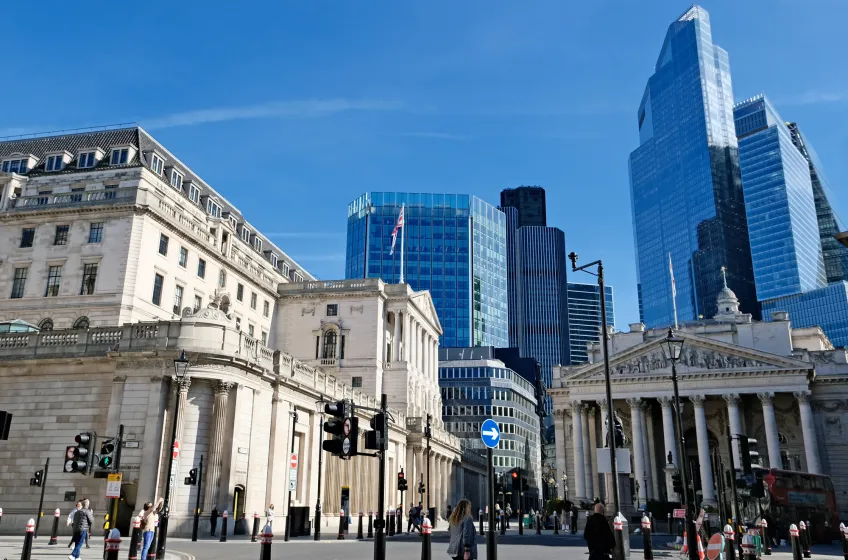
The Bank of England Museum is located in the heart of the City of London, an area rich in history and notable landmarks. Just a few steps away is the Royal Exchange, a grand neoclassical building now home to luxury boutiques and restaurants but originally established as a centre for commerce in the 16th century.
Opposite the museum, visitors will find Mansion House, the official residence of the Lord Mayor of London, with occasional open days and guided tours. Also nearby is the Guildhall complex, which includes the Guildhall Art Gallery and the historic Roman Amphitheatre, uncovered during modern excavations.
For those interested in architecture, the surrounding streets include a mix of historic and contemporary design, from Wren churches such as St Mary-le-Bow to modern skyscrapers like The Gherkin and The Leadenhall Building. A short walk leads to the Museum of London (soon to be relocating), St Paul’s Cathedral, and the Barbican Centre. The Tower of London and the Monument to the Great Fire of London are also within walking distance or a brief journey by Tube.
Practical Advice
The Bank of England Museum is free to enter and open Monday to Friday, typically from 10am to 5pm, though visitors are advised to check the official website for the latest opening times and holiday closures. As the museum is located within the secure perimeter of the Bank itself, all visitors must go through a security screening process similar to airport checks, so it is advisable to travel light.
The museum is best accessed via Bank Station, which connects to several London Underground lines, including the Central, Northern, and Waterloo & City lines. The station has several exits, so signage should be followed carefully. Other nearby stations include Liverpool Street and Moorgate, both of which are within a 10–15-minute walk.
Photography is allowed in most parts of the museum, but flash and tripods are not permitted. As it is a working financial institution, the surrounding area can be busy on weekdays, particularly during the morning and evening commute, so quieter visits may be better timed for mid-morning or early afternoon.
Visitors with specific interests in monetary policy or historical archives should consider contacting the museum in advance, as staff may be able to provide additional resources or recommend particular exhibits. The museum also offers an app and audio guides for self-led tours, which can be helpful for those wishing to explore the exhibits in more depth.
Overall, the Bank of England Museum offers a well-rounded and accessible introduction to the world of central banking and British financial history, combining informative displays with interactive elements in a setting of historic significance.
Shortlist
- Your Shortlist is empty