
Schleswig-Holstein | A Visitor's Introduction to Schleswig-Holstein
Recommended places to visit, places to stay and things to do in Schleswig-Holstein
Schleswig-Holstein is Germany’s northernmost state, wedged between the North Sea and the Baltic Sea. With its sweeping coastlines, windswept islands, charming seaside towns, and fascinating blend of German and Danish heritage, this region is a haven for beach lovers, sailors, and history buffs alike. It’s the land of two seas, famous for its thatched-roof houses, maritime traditions, and wide horizons, where the salty air and relaxed pace of life make every visit feel like a coastal holiday.
Recommended Schleswig-Holstein accommodation: Hotels Bed & Breakfasts Holiday Homes
Pre-book Schleswig-Holstein Attractions, Tours & Experiences
Why is Schleswig-Holstein Worth a Visit?
Schleswig-Holstein is worth visiting for its natural beauty, cultural richness, and unique position between two seas. Along the North Sea coast, you’ll find the UNESCO-listed Wadden Sea National Park, where tidal flats stretch for miles and wildlife thrives. The Baltic coast is gentler, with sandy beaches, seaside resorts, and sailing harbours. The state’s islands, from bustling Sylt to car-free Hallig islands, offer experiences ranging from luxury retreats to pure tranquillity.
The region’s towns are equally captivating. Lübeck, the “Queen of the Hanseatic League,” boasts a fairy-tale old town and world-famous marzipan. Kiel is a lively port city with a proud sailing tradition, while Flensburg reflects its Danish heritage in its architecture and culture. With open skies, fresh sea breezes, and a wealth of history, Schleswig-Holstein combines relaxation and discovery in a way that few regions can.
Schleswig-Holstein Highlights: Things to See and Do in Schleswig-Holstein
Lübeck: The Hanseatic Queen
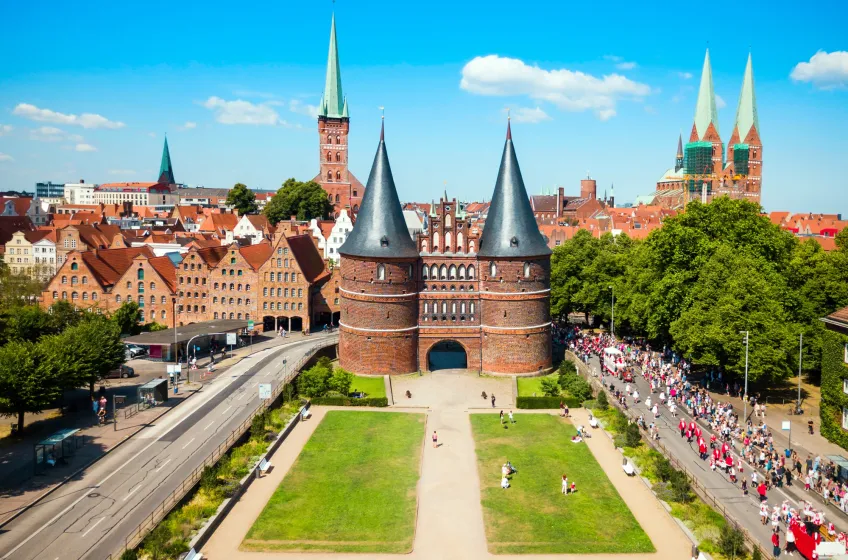
A UNESCO World Heritage Site, Lübeck is the jewel of Schleswig-Holstein. Once the leading city of the Hanseatic League, it dazzles with its red-brick Gothic architecture, medieval gates, and winding alleys. Don’t miss the Holstentor, the city’s iconic twin-towered gate, and the Marienkirche, a stunning Gothic church. The town hall, salt warehouses, and riverside warehouses tell the story of Lübeck’s trading power. Lübeck is also the birthplace of marzipan, and sampling it at Café Niederegger is a must.
Sylt
Germany’s most glamorous island, Sylt is known for its long sandy beaches, chic resorts, and thatched-roof cottages. Popular with celebrities, it combines high-end restaurants with rugged dunes and scenic bike trails. Towns like Westerland and Kampen offer lively nightlife, while quieter corners like Keitum showcase Frisian charm. Sylt is connected to the mainland by the Hindenburgdamm causeway, making it accessible by train or car shuttle.
Kiel and Kiel Week
The capital city, Kiel, is a bustling harbour town and sailing hub. Its waterfront, marinas, and naval history make it an interesting stop, but the city truly comes alive during Kiel Week (Kieler Woche) in June. This is the world’s largest sailing festival, attracting ships, sailors, and visitors from around the globe for races, concerts, and festivities.
Wadden Sea National Park
Stretching along the North Sea coast, the Wadden Sea is a UNESCO World Heritage Site and one of the world’s most important tidal ecosystems. Twice a day, the tide recedes to reveal vast mudflats, where visitors can take guided walks and spot seals, migratory birds, and unique plant life. The park is also the gateway to the Hallig Islands, tiny inhabited islets that flood during storms and offer a truly offbeat travel experience.
Flensburg
Close to the Danish border, Flensburg is a historic port city with a strong maritime and Scandinavian flavour. Its charming old town features colourful merchants’ houses, cobbled streets, and hidden courtyards. The Rum Museum reflects Flensburg’s trading history, and the harbour is lined with classic sailing ships. The city is also a gateway for exploring Angeln, the picturesque peninsula between Flensburg and Schleswig.
Schleswig and the Viking Museum Haithabu
The town of Schleswig, on the Schlei fjord, is famous for its cathedral and for the nearby Viking Museum Haithabu (Hedeby), a UNESCO World Heritage Site. Once one of the most important Viking trading settlements, the site includes an archaeological museum and reconstructed Viking houses. It’s a must for anyone interested in early medieval history.
Fehmarn
Known as the “sunshine island,” Fehmarn is one of Germany’s most popular Baltic holiday islands. It’s a paradise for surfers, kiteboarders, and families, with wide beaches and a laid-back vibe. Fehmarn is also linked to Denmark by ferry, making it a convenient stop for cross-border trips.
Friedrichstadt
Nicknamed “Little Amsterdam,” Friedrichstadt is a picturesque town built by Dutch settlers in the 17th century. Its canals, gabled houses, and cobbled streets give it a distinctly Dutch feel. It’s perfect for a peaceful day trip with boat rides, small museums, and cosy cafés.
Heligoland
A remote archipelago in the North Sea, Heligoland is famous for its dramatic red sandstone cliffs, unique wildlife, and tax-free shopping. It’s a birdwatcher’s paradise, particularly during migration season, and the sight of seals lounging on nearby sandbanks is unforgettable. Boats depart daily from the mainland, making it an adventurous excursion.
Glücksburg Castle
Near Flensburg lies Glücksburg Castle, one of the most important Renaissance castles in Northern Europe. Surrounded by a lake, the whitewashed castle looks straight out of a fairy tale and offers guided tours through its richly decorated rooms. It’s also historically significant as the ancestral home of the current Danish royal family.
Eckernförde
This charming Baltic seaside town is known for its sandy beaches, herring festivals, and cosy old town. The Eckernförde Bight is popular for swimming and sailing, while the town centre is filled with shops and restaurants serving fresh seafood.
Tönning and Multimar Wattforum
On the North Sea side, Tönning is a small harbour town with a highlight: the Multimar Wattforum, an interactive exhibition centre about the Wadden Sea. It’s a great family destination, with aquariums, hands-on displays, and information about marine life.
Practical Advice for Visitors
Getting There
Schleswig-Holstein is well connected by road and rail. Hamburg Airport is the nearest major international hub, with direct train links to Lübeck, Kiel, and Flensburg. Domestic flights also serve Sylt.
Trains connect major towns, though exploring islands and rural areas often requires a car. Ferries run to the East and North Frisian islands, as well as to Denmark from Kiel, Flensburg, and Puttgarden (Fehmarn).
Parking
In cities like Lübeck, Kiel, and Flensburg, car parks and park-and-ride facilities are available, but old towns are often pedestrianised. On the islands, parking is limited; some (like Juist and Langeoog) are car-free, requiring ferry and bike transport.
Dining
Seafood dominates Schleswig-Holstein’s cuisine. Specialities include Matjes herring, labskaus (corned beef, potatoes, beetroot, and herring), and freshly caught North Sea shrimp. On the Baltic side, fish rolls (Fischbrötchen) are a quick and tasty snack.
In Lübeck, don’t miss Niederegger marzipan, while in Flensburg, try a glass of Flensburger beer or rum from the city’s maritime past.
Shopping
Popular souvenirs include Lübeck marzipan, Frisian tea sets, local ceramics, and sailor-themed gifts. The North Sea islands sell woollen goods and amber jewellery. Flensburg is good for Danish design items, thanks to its cross-border influence.
When to Visit
Summer (June–August) is the most popular time, with warm weather, beach holidays, and festivals. Late August is perfect for seeing the heather bloom in inland areas like the Geest. Spring and early autumn are quieter but pleasant, with milder temperatures and fewer crowds. Winter is stormy but atmospheric on the North Sea coast, with Lübeck’s Christmas market adding seasonal charm.
Local Events
-
Kiel Week (June): The world’s largest sailing festival, with regattas, concerts, and fireworks.
-
Travemünde Week (July): Another major sailing event on the Baltic coast.
-
Lübeck Christmas Market (December): One of the most atmospheric in northern Germany, held in the medieval old town.
-
Biikebrennen (21 February): A North Frisian tradition where giant bonfires chase away winter.
-
Wacken Open Air (near Itzehoe, August): The world’s largest heavy metal festival, drawing fans from around the globe.
Exploring Beyond Schleswig-Holstein
To the south lies Hamburg, an easy extension to any Schleswig-Holstein trip. To the north, Denmark beckons, with Copenhagen just a few hours away by train or car. The North Sea islands are gateways to the open sea, while inland Lower Saxony offers the heathlands and medieval towns of the Lüneburg region.
Schleswig-Holstein offers travellers the chance to experience Germany’s maritime soul: long walks along the tidal flats, fresh seafood by the harbour, sailing festivals, and historic Hanseatic towns. It’s a place where nature and culture meet at the edge of the sea, delivering a refreshing and memorable northern German escape.
Shortlist
- Your Shortlist is empty