
Discover Pyrénées-Orientales | A Visitor's Introduction to Pyrénées-Orientales
Recommended places to visit, places to stay and things to do in Pyrénées-Orientales
The Pyrénées-Orientales is a richly diverse department in the South of France, part of the Languedoc-Roussillon region and bordering Spain, Andorra, and the Mediterranean Sea. With the Pyrenees mountains rising to the west, sun-drenched beaches along the Mediterranean coast to the east, and a vibrant Catalan culture that pulses through every town and village, Pyrénées-Orientales offers a captivating blend of landscapes, languages, and lifestyles.
Whether you’re drawn to medieval hill towns, beach resorts, mountain trails, or Catalan festivals, Pyrénées-Orientales is a uniquely rewarding destination. It’s a place where you can breakfast by the sea, hike above the clouds, and enjoy tapas in a medieval square—all in one day.
Recommended Pyrénées-Orientales Accommodation: Hotels
Why is Pyrénées-Orientales Worth a Visit?
Pyrénées-Orientales is worth visiting because it offers a unique meeting point between France, Spain, and the Mediterranean. Its strong Catalan identity gives it a distinct cultural flavour, seen in everything from street names and festivals to food and architecture. The region enjoys over 300 days of sunshine a year and boasts a remarkably varied geography—from snow-capped peaks and lush vineyards to hidden coves and historic towns.
This is a land for outdoor lovers, history buffs, beachgoers, and foodies alike. You can explore Romanesque abbeys, paddle in turquoise coves, hike rugged gorges, and sip Roussillon wines—all without the crowds found in more tourist-heavy parts of southern France. With welcoming towns, scenic drives, and a relaxed pace of life, Pyrénées-Orientales is ideal for anyone seeking authentic travel experiences in a beautifully unspoilt corner of France.
Pyrénées-Orientales Highlights: Things to See and Do in Pyrénées-Orientales
Collioure
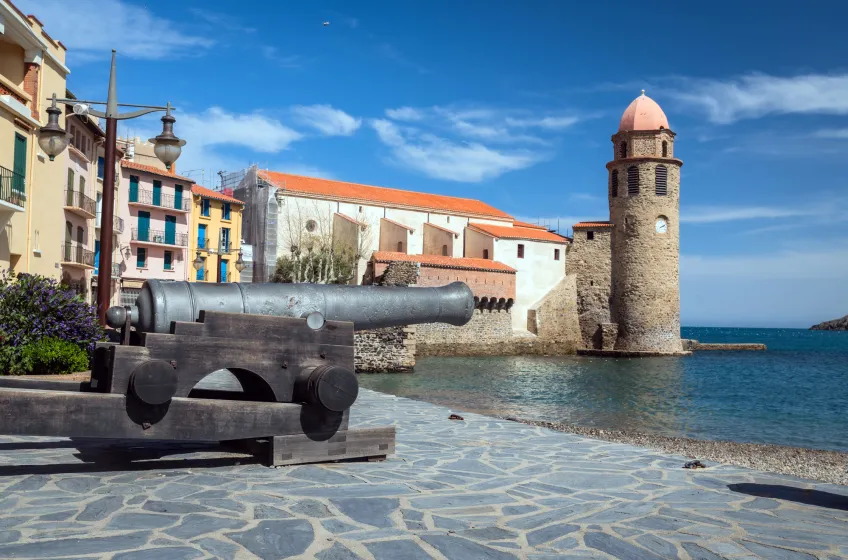
Often considered the jewel of the Côte Vermeille, Collioure is a postcard-perfect seaside town that has inspired generations of artists, including Matisse and Derain. With its colourful Catalan houses, medieval castle, palm-fringed harbour, and pebbled beaches, Collioure is as romantic as it gets. Visit the Royal Castle, explore the Church of Notre-Dame-des-Anges, and browse local galleries. Come early in the morning or stay overnight to experience its charm without the crowds.
Perpignan
The capital of Pyrénées-Orientales, Perpignan is a lively and culturally rich city with a strong Catalan identity. Wander the narrow streets of the old town, visit the Palace of the Kings of Majorca, and climb Le Castillet for views across the rooftops. Don’t miss the Musée Hyacinthe Rigaud for a fine collection of Catalan and French art, and enjoy tapas in one of the many bustling squares. Perpignan is also the gateway to the rest of the department, with excellent transport links.
Villefranche-de-Conflent
This medieval walled town, listed as one of the “Plus Beaux Villages de France,” is nestled at the confluence of mountain rivers. With its pink-stone ramparts, artisan shops, and cobbled lanes, Villefranche-de-Conflent is straight out of a storybook. Take the steep path (or funicular) up to Fort Liberia for panoramic views, and don't miss the Canalettes Caves nearby, known for their dramatic rock formations and underground concerts.
Banyuls-sur-Mer
Further down the coast from Collioure lies Banyuls-sur-Mer, a quieter but equally charming seaside town famous for its fortified wines and marine nature reserve. Stroll along the promenade, visit the Maillol Museum dedicated to the local sculptor Aristide Maillol, and sample the sweet Banyuls wine at a vineyard or cave. It’s also a great base for diving, hiking, or scenic drives along the Corniche road.
Canigou Mountain
Considered the spiritual symbol of Catalonia, Mount Canigou (2,784m) towers over the region and is a magnet for hikers and nature lovers. The trek to the summit is challenging but rewarding, with panoramic views from the Mediterranean to the Pyrenees. Easier walks around Casteil, Vernet-les-Bains, and Prades offer gentler alternatives with stunning scenery and charming villages.
Prades and the Conflent Valley
Prades, nestled in the foothills of Canigou, is a market town full of character and home to the Pablo Casals Festival, a renowned chamber music event held each summer. Explore nearby Romanesque sites like Saint-Michel-de-Cuxa Abbey and Saint-Martin-du-Canigou Monastery, both spectacularly set in mountain landscapes. The Conflent Valley is also a fantastic base for cycling and hiking.
The Little Yellow Train (Le Train Jaune)
This scenic narrow-gauge railway connects Villefranche-de-Conflent to Latour-de-Carol, climbing through the Pyrenees in bright yellow carriages. Known as the Canary Train, it passes over dramatic viaducts, forests, and mountain villages. In summer, open-air carriages offer unbeatable views. It’s both a relaxing journey and a historical experience—this line has been operating since 1910.
Salses Fortress (Forteresse de Salses)
Near the border with Aude, the Forteresse de Salses is a unique military structure built by the Spanish in the late 15th century. Blending medieval and early modern fortification styles, it’s surprisingly well preserved and makes for a fascinating visit. Take a guided tour through the barracks, ramparts, and underground passages, and learn about its role in the conflict between France and Spain.
Céret
A lively town with strong artistic roots, Céret is famous for its modern art museum, Musée d’Art Moderne, which features works by Picasso, Chagall, and Matisse. The town also hosts cherry festivals in spring and bustling Saturday markets year-round. Its setting among the Albères foothills makes it a great stop for walkers and cyclists, with lovely nearby trails and riverside picnic spots.
Ille-sur-Têt and Les Orgues
Just outside Ille-sur-Têt, you’ll find Les Orgues, a surreal and otherworldly landscape of natural rock formations resembling giant organ pipes. This mini-Bryce Canyon of the French Pyrenees is a short walk from the car park and well worth the detour for geology lovers and photographers alike.
Saint-Cyprien and Argelès-sur-Mer
For a classic seaside experience, Saint-Cyprien and Argelès-sur-Mer offer long sandy beaches, family-friendly amenities, and lively summer atmospheres. Both towns also have marinas, beach clubs, and nature reserves nearby, like Mas Larrieu and the Lagune de Canet. From here, you can also take boat trips along the coast or try water sports.
Thuir and the Byrrh Cellars
Inland from Perpignan, the small town of Thuir is home to the famous Caves Byrrh, where you can tour the enormous wine cellars and see the largest oak vat in the world. Byrrh is a fortified aperitif made from red wine and quinine—a distinctly local flavour and a great souvenir. Thuir itself has a relaxed vibe, with a lovely central square and market.
Practical Advice for Visitors
Getting There
Pyrénées-Orientales is accessible by train, road, and air. Perpignan is the main transport hub with a TGV station linking it to Paris (5 hours), Montpellier, and Barcelona. Perpignan–Rivesaltes Airport has seasonal flights to major European cities. The A9 motorway runs through the region, making it easy to reach by car from Spain or the rest of southern France. Renting a car is highly recommended if you want to explore the mountains, coast, and countryside.
Parking
Towns and villages generally offer ample parking, though during summer months, places like Collioure and Argelès can get very busy—arrive early or use park-and-ride services. In mountain villages and beach areas, parking is often free or inexpensive, but keep coins handy for meters and car parks.
Dining
The region’s Catalan cuisine is full of flavour and Mediterranean flair. Try boles de picolat (spicy meatballs), pa amb tomàquet (tomato bread), escalivada (roasted vegetables), and grilled sardines. Look out for Roussillon wines, especially reds from Banyuls, Collioure, and Côtes du Roussillon-Villages. Seafood is fresh and plentiful along the coast, while inland you’ll find hearty mountain dishes. Many towns have traditional ferme-auberges (farm restaurants) and lively markets showcasing local produce.
Shopping
Pyrénées-Orientales is rich in local crafts and products. Look for Catalan espadrilles, ceramics, handmade textiles, olive oils, and regional wines. The markets in Céret, Collioure, and Elne are particularly good for artisan goods. In Perpignan, explore the independent boutiques around Rue Paratilla and Place Gambetta.
When to Visit
The region is a year-round destination, with something for every season:
-
Spring (April–June): Wildflowers, mild weather, and fewer crowds—great for hiking and sightseeing.
-
Summer (July–August): Beach weather, festivals, and long, sunny days—book accommodation early.
-
Autumn (September–October): Harvest season, vineyard tours, and warm sea temperatures.
-
Winter (November–March): Snow in the mountains for skiing or cosy village stays—Perpignan and the coast remain relatively mild.
Local Events
Pyrénées-Orientales is a land of festivals. Highlights include:
-
Festa Major (August): A Catalan celebration held in many towns, with music, dance, and street food.
-
Visa pour l’Image (September): International photojournalism festival in Perpignan.
-
Festival Pablo Casals (July–August): A world-class chamber music festival in Prades.
-
Cherry Festival in Céret (May): Celebrates the start of the cherry harvest with parades and local produce.
-
Saint Jean’s Fire (23 June): Traditional Catalan celebration with bonfires and music, especially atmospheric around Mount Canigou.
Exploring Beyond Pyrénées-Orientales
If you have more time, you’re within easy reach of:
-
Andorra: For skiing and duty-free shopping (2–3 hours by car).
-
Barcelona: One of Europe’s most exciting cities, just over 2 hours by train.
-
Carcassonne: A fairy-tale medieval walled city just to the north.
-
Narbonne and the Corbières wine region: For vineyard tours and Roman history.
Pyrénées-Orientales is a region where cultures blend, landscapes amaze, and every village has its own story. From the fiery festivals of Catalan tradition to the peaceful mountain trails of Canigou and the coastal elegance of Collioure, this is a destination with heart, soul, and sun in equal measure. Whether you come for a weekend or a full exploration, you’ll discover a corner of France that feels like nowhere else.
Shortlist
- Your Shortlist is empty