
Discover Perpignan | A Visitor's Introduction to Perpignan
Perpignan is a colourful and charismatic city in southern France, nestled between the Pyrenees and the Mediterranean in the Pyrénées-Orientales department of the Occitanie region. Just 30 km from the Spanish border, Perpignan has a unique Catalan identity that infuses everything from its architecture and food to its festivals and language. With its palm-lined boulevards, ochre-hued facades, and a backdrop of snow-capped mountains, Perpignan is a vibrant gateway to both the French and Spanish Mediterranean.
This warm and welcoming city is perfect for travellers interested in cultural crossover, history, sunny weather, and easy access to beaches, vineyards, and mountain adventures.
Recommended Perpignan Accommodation: Hotels Bed & Breakfasts
Why is Perpignan Worth a Visit?
Perpignan is worth visiting for its distinctive Catalan character, warm Mediterranean charm, and strategic location. Unlike other French cities, Perpignan pulses with the energy of two cultures: French and Catalan. You'll hear both languages spoken, see Catalan flags flying proudly, and taste Spanish influences in the local cuisine. This cultural fusion gives Perpignan a flair and personality all its own.
The city’s compact size makes it easy to explore on foot, while its climate—over 300 days of sunshine a year—means it’s pleasant nearly year-round. Its past as the capital of the Kingdom of Majorca in the 13th century gives Perpignan a unique architectural heritage, seen in its Gothic palace, narrow medieval lanes, and Mediterranean-style houses. And beyond the city, there are golden beaches, historic fortresses, and the dramatic peaks of the Pyrenees to explore.
Whether you're intrigued by history, excited to try Catalan specialities, or planning a beach-meets-mountain getaway, Perpignan offers an experience that feels both authentically French and distinctly different.
Perpignan Highlights: Things to See and Do in Perpignan
Palais des Rois de Majorque (Palace of the Kings of Majorca)
Perpignan’s star attraction is this impressive 13th-century palace, a remnant of the city’s days as the capital of the Kingdom of Majorca. Perched on a hill with commanding views over the city and towards the Pyrenees, the Palais des Rois de Majorque is part fortress, part royal residence. Explore its massive walls, tranquil courtyards, and the beautiful Gothic chapel. It’s especially atmospheric at sunset and hosts concerts and events during summer.
Le Castillet
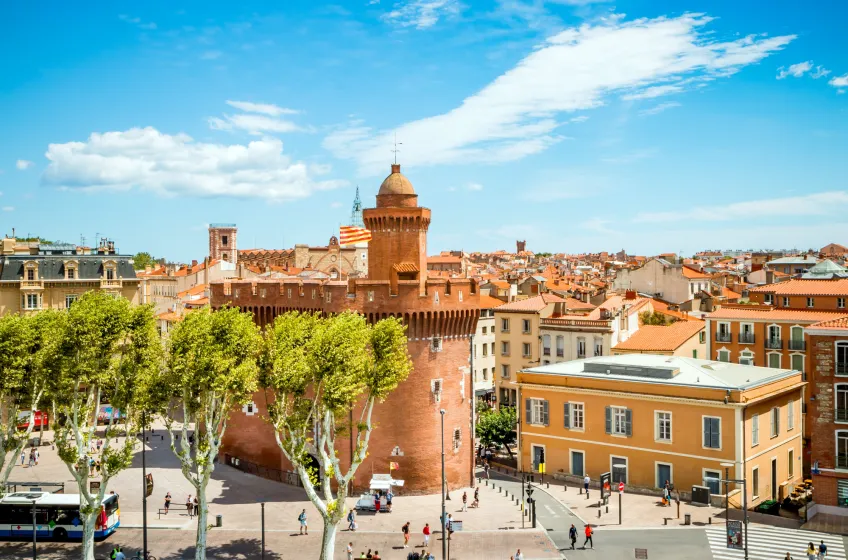
Once the main gate to the walled city, Le Castillet is now the symbol of Perpignan. This distinctive red-brick tower with its domed roof once served as a prison and now houses the Casa Pairal, a museum of Catalan folk traditions. Climb to the top for excellent views over the rooftops of Perpignan and the surrounding countryside.
Place de la République
This lively square is the social hub of Perpignan, surrounded by cafés, restaurants, and shops. It’s a perfect spot to sip a coffee or pastis and watch local life unfold. During festivals and weekends, it often hosts performances, markets, and open-air concerts. It’s also home to Le Théâtre de l’Archipel, Perpignan’s main cultural venue for music, theatre, and dance.
Perpignan Cathedral (Cathédrale Saint-Jean-Baptiste)
This 14th-century Gothic cathedral is located near the old Jewish quarter and has a distinctive southern French feel, with its Catalan-influenced architecture and a large, single nave. Don’t miss the adjacent Campo Santo, a rare example of a medieval cloistered cemetery, now used as an open-air venue for cultural events.
Rue Paratilla and Les Halles Vauban
For a taste of authentic local life, head to Rue Paratilla, a bustling street lined with delicatessens, grocers, and Catalan food stalls. Then explore Les Halles Vauban, Perpignan’s covered market offering fresh produce, cheese, seafood, and takeaway tapas-style dishes. It’s ideal for picking up picnic ingredients or enjoying lunch with the locals.
Hôtel Pams
Tucked away on Rue Émile Zola, the Hôtel Pams is an unexpected gem. This ornate Belle Époque mansion, once the home of a wealthy industrialist, is now open to the public. Its grand staircase, marble mosaics, and art nouveau décor reflect the opulence of late 19th-century Perpignan. Entry is free, and it’s well worth a short visit.
Musée Hyacinthe Rigaud
Named after the famous 17th-century portraitist born in Perpignan, this fine arts museum offers a sophisticated collection of paintings, sculptures, and decorative arts. Highlights include works by Rigaud himself, as well as Maillol, Picasso, and Dufy. The building itself is a beautifully restored hôtel particulier, and the modern extension adds an elegant contrast.
Canal de la Basse and the Quai Vauban
For a peaceful walk or an early evening drink, stroll along the Canal de la Basse, which winds through the city centre. The Quai Vauban, lined with restaurants and bars, is ideal for people-watching and enjoying a relaxed Mediterranean meal. The view of the historic bridges and palm trees is especially charming at dusk.
Saint-Jacques Quarter
This traditional quarter, located just behind the cathedral, is the heart of Perpignan’s Roma (Gitan) community and full of local character. It’s a working-class neighbourhood with colourful houses, street music, and a raw energy. While parts of the area can be a bit gritty, it's an important part of the city’s identity. Visit during the Saint-Jacques Festival in summer for concerts and community celebrations.
Practical Advice for Visitors
Getting There
Perpignan is served by the Perpignan-Rivesaltes Airport, with seasonal flights from the UK and other European cities. The city is also on the high-speed TGV line, with connections from Paris (5 hours), Toulouse (2.5 hours), and Barcelona (1.5 hours). For drivers, the A9 motorway connects Perpignan to Montpellier, Narbonne, and the Spanish border.
Parking
There are several convenient car parks in the city centre, including Clémenceau, Wilson, and Arsenal. Parking is metered on the street and can be busy during peak hours, but out-of-centre park & ride services offer a stress-free alternative. Once in the centre, it’s best to explore on foot.
Dining
Perpignan’s cuisine reflects its Catalan roots—think tapas, charcuterie, grilled meats, and seafood with garlic and tomato-based sauces. Try boles de picolat (Catalan meatballs), pa amb tomàquet (bread with tomato), and local wines from Roussillon. Great restaurants include Le Figuier, set in a charming courtyard, and Casa Sansa, one of the oldest eateries in town. For something modern, try Via Del Vi, offering creative Catalan fusion dishes.
Shopping
Explore the narrow lanes around Rue de l’Ange and Place Gambetta for independent boutiques, regional products, and artisan crafts. Don’t miss La Maison Quinta, specialising in Catalan ceramics and textiles, or Cavavin, a great spot for local wines. The Saturday market at Place Cassanyes is full of local colour and good for bargain-hunting.
When to Visit
The best time to visit Perpignan is from April to June and September to October, when the weather is sunny but not too hot, and the city is full of life without the summer crowds. July and August are hot and busy, especially during the Estivales and music festivals. Winter is mild and quiet, ideal for sightseeing and exploring the surrounding countryside.
Local Events
Perpignan is a city that loves festivals. In February, Visa pour l’Image, the world’s leading photojournalism festival, attracts international crowds. Sant Jordi Day in April celebrates Catalan literature and love with bookstalls and roses. Summer sees the Guitares au Palais guitar festival and Les Jeudis de Perpignan, with free music performances every Thursday evening. In August, the Assumption Day Festival and Saint-Jacques Festival fill the streets with parades and celebration.
Exploring Beyond Perpignan
Perpignan is an ideal base for discovering the surrounding region. Head east to the beaches at Canet-en-Roussillon, Argelès-sur-Mer, or the charming fishing village of Collioure, beloved by artists like Matisse and Derain. West of the city, the Cathar castles of Quéribus and Peyrepertuse sit dramatically on mountain ridges. You can also venture into the Pyrenees for hiking or skiing, or cross into Spain—Barcelona is just a couple of hours away by train.
Perpignan is a southern French city with a twist—a rich blend of Mediterranean sunshine, Catalan flair, and historical intrigue. Whether you’re exploring Romanesque chapels, feasting on tapas by the canal, or soaking in mountain views from an ancient fortress, Perpignan delivers an experience that feels delightfully different from the rest of France. Warm, proud, and full of personality, it's a destination that invites you to slow down, dive into its culture, and enjoy life Catalan-style.
Shortlist
- Your Shortlist is empty