
Discover Nyon | A Visitor's Introduction to Nyon
Recommended places to visit, places to stay and things to do in and around Nyon
Nyon is an elegant lakeside town in the canton of Vaud, set on the northern shore of Lake Geneva between Geneva and Lausanne. Known for its white hilltop castle, Roman heritage, old-town streets and views towards the French Alps, this compact town is a perfect destination for history enthusiasts, walkers, food lovers and travellers seeking an easy escape from Geneva. With its waterfront promenade, museums and boat connections, Nyon offers a relaxed combination of Swiss culture and Mediterranean-style lake scenery.
Recommended Nyon hotels and other accommodation
Pre-book Nyon Attractions, Tours & Experiences
Why is Nyon Worth a Visit?
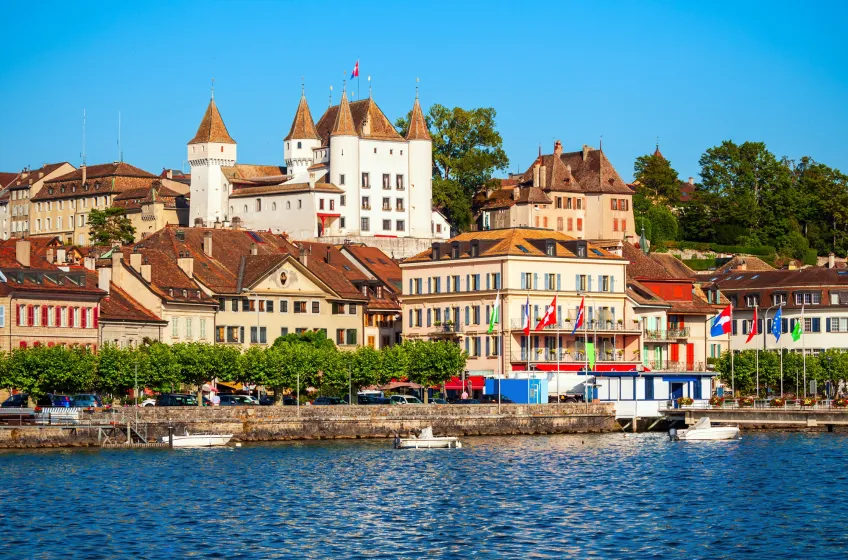
Nyon is worth visiting because it brings together Roman history, medieval architecture and one of the finest positions on Lake Geneva. The old town stands above the water, with narrow streets descending towards the harbour and broad views across the lake towards the Alps and Mont Blanc region on clear days.
The town was founded as a Roman colony during the first century BC and remains one of the most important Roman sites in western Switzerland. Archaeological finds, columns and museum displays reveal its former role as Colonia Iulia Equestris.
Nyon is also remarkably easy to reach. Frequent trains from Geneva make it ideal for a half-day or full-day excursion, while its harbour provides seasonal boat links with other Swiss and French lakeside destinations.
Although compact, Nyon feels more substantial than a village. It has good restaurants, specialist shops, cultural events and a lively weekly market, yet remains far calmer than Geneva or Lausanne.
Nyon Highlights: Things to See and Do in Nyon
Nyon Castle
Nyon Castle is the town’s defining landmark, standing above the old centre with five distinctive towers.
The whitewashed building developed from a medieval fortress and later served administrative and judicial purposes. It now contains museum displays devoted to the town’s history, decorative arts and regional ceramics.
The castle terrace is one of Nyon’s best viewpoints. From here, the rooftops descend towards Lake Geneva, with the French shore and Alpine peaks visible in suitable weather.
Allow around an hour for the interior, followed by time to explore the surrounding lanes and viewpoints.
Nyon Old Town
Nyon’s old town occupies the slope between the railway station and lake.
Its streets contain historic houses, fountains, arcades, cafés and small independent shops. Grand-Rue is one of the principal routes, while narrower lanes provide quieter architectural details and glimpses of the water.
The centre is compact but moderately steep. Walking downhill towards the lake is easy, though the return to the station involves a noticeable climb.
Morning is best for the market and local activity, while evenings are particularly pleasant around the restaurants and terraces.
Roman Columns
Three Roman columns stand on a terrace above Lake Geneva and have become one of Nyon’s most recognisable sights.
They mark the former location of a major public building in the Roman settlement. Although reconstructed from surviving material, they provide an effective reminder of the town’s ancient importance.
The terrace also offers one of the classic views across the lake. It is especially attractive during late afternoon, when the light falls across the water and French mountains.
Roman Museum
The Roman Museum of Nyon is built around archaeological remains beneath the old town.
Its displays explain the foundation and development of Colonia Iulia Equestris, including public buildings, daily life, trade and religious practices. Objects include pottery, inscriptions, coins and architectural fragments.
Part of the appeal comes from seeing the museum integrated with the remains of the Roman basilica.
The museum is relatively small and can usually be explored in around an hour.
Lake Geneva Museum
The Lake Geneva Museum, or Musée du Léman, examines the natural, cultural and technological history of the lake.
Exhibitions cover navigation, fishing, scientific research, storms, wildlife and the development of tourism. Historic boats, models and rescue equipment help explain how people have used and understood the lake.
The museum is particularly suitable for families and provides a useful wet-weather attraction close to the waterfront.
Nyon Harbour
Nyon’s harbour is the centre of its lakeside activity.
Passenger boats, sailing vessels and small leisure craft use the waterfront, while restaurants and cafés occupy nearby streets. The harbour provides broad views towards the French shore and is an excellent place for a relaxed walk.
Seasonal boats may connect Nyon with Geneva, Lausanne, Yvoire and other destinations around Lake Geneva.
Schedules vary considerably through the year, so check the final return sailing before planning an international boat excursion.
Lakeside Promenade
The promenade extends along the shore from the harbour through parks and residential areas.
It is suitable for gentle walking, jogging and cycling, with frequent benches and open views across the water. In summer, the lakefront becomes lively with swimmers, families and people eating outdoors.
Continue away from the central harbour for quieter stretches and less crowded viewpoints.
Plage de Nyon
Nyon’s public lakeside bathing area provides access to Lake Geneva during the warmer months.
Facilities may include lawns, changing areas, swimming zones and places to sit beside the water. The lake remains cool outside midsummer, even when air temperatures are warm.
Water shoes can be useful on stony or uneven shorelines. Follow local instructions regarding diving, boats and supervised areas.
Temple de Nyon
The Reformed church stands in the historic centre near the castle.
Its restrained interior reflects the Protestant heritage of the region, while parts of the building preserve earlier architectural elements. The elevated setting contributes to the historic skyline above the lake.
The church remains active, so access may be restricted during services, ceremonies or concerts.
Prangins Castle
Prangins Castle lies just east of Nyon and houses part of the Swiss National Museum.
The elegant 18th-century residence contains exhibitions on Swiss society, domestic life, politics and economic history. Furnished rooms help illustrate the lives of wealthy families during the Enlightenment period.
The grounds include formal gardens and an extensive historic kitchen garden where herbs, vegetables and medicinal plants are cultivated.
Prangins can be reached by bus, bicycle or a pleasant walk from Nyon, depending on the route chosen.
Walk Between Nyon and Prangins
The route between Nyon and Prangins combines residential streets, green spaces and sections near the lake.
It provides an enjoyable way to link the two towns without relying entirely on public transport. The castle and gardens make a natural destination before returning by bus or on foot.
The full route is relatively easy, although summer heat can make exposed sections tiring. Carry water and sun protection.
Visit the Weekly Market
Nyon holds a lively market in and around its old-town streets.
Stalls may sell fruit, vegetables, cheese, bread, flowers, prepared food and regional products. The market provides a more local experience than the town’s museums and waterfront attractions.
Arrive during the morning, as food stalls and produce sellers generally finish earlier than permanent shops.
Market arrangements can change during public holidays and major events.
Explore the Vineyards of La Côte
Nyon lies within easy reach of the La Côte wine region, which stretches along the slopes between Geneva and Lausanne.
Vineyards surround villages such as Begnins, Duillier, Coinsins and Mont-sur-Rolle. Chasselas is the principal white grape, while Pinot Noir, Gamay and other varieties are also produced.
Small estates may offer tastings, but many require advance appointments. Regional restaurants and wine bars provide an easier way to sample local bottles without driving.
Walking through the vineyards is particularly attractive during spring and autumn.
Take a Boat to Yvoire
Yvoire is a fortified medieval village on the French shore of Lake Geneva.
Seasonal passenger boats can make it an easy international excursion from Nyon. The village has stone houses, flower-filled lanes, a small harbour and remains of medieval fortifications.
Yvoire becomes very busy during summer afternoons. Taking an early boat provides a calmer experience.
Carry valid identification and check both the final sailing and any customs requirements for purchases made in France.
Explore the Jura Foothills
The Jura mountains rise behind Nyon and provide a dramatic contrast to the lakeshore.
Villages such as Saint-Cergue offer walking, viewpoints and winter activities. Higher routes provide views over Lake Geneva towards the Alps.
Regional trains connect Nyon with Saint-Cergue and La Cure, making the mountains accessible without a car.
Weather is often cooler and cloudier than beside the lake, so carry an additional layer.
Practical Advice for Visitors
Getting There
Nyon lies on the main railway line between Geneva and Lausanne.
Frequent trains connect Nyon with Geneva in roughly 15 to 25 minutes, depending on the service. Lausanne is generally around 30 to 40 minutes away.
Geneva Airport is the nearest major international gateway. Direct trains or simple connections make the journey to Nyon straightforward.
The railway station is at the upper edge of the town centre. The castle and old town are around 10 minutes away on foot, while the lakefront requires a further downhill walk.
Getting Around
Central Nyon is compact and best explored on foot.
The streets between the station, castle and harbour are steep in places. Visitors with limited mobility may prefer to use local buses for the return uphill from the lake.
Buses connect Nyon with Prangins, surrounding villages and vineyard areas. The narrow-gauge railway towards Saint-Cergue begins close to the main station.
Boats provide seasonal transport across and along Lake Geneva but are less frequent than trains.
Parking
Public car parks are available near the railway station, old town and lakefront.
Street parking is controlled by payment zones and time restrictions. Spaces in the historic centre are limited, and narrow streets make driving inconvenient.
Rail travel is usually easier for visitors arriving from Geneva or Lausanne.
During festivals and summer weekends, arrive early or use parking outside the central area.
Dining
Nyon has a strong selection of restaurants for a town of its size.
Menus range from traditional Swiss and French-influenced cooking to Italian, Mediterranean and international options. Fish from Lake Geneva may appear on some menus, although its origin should be checked when local sourcing matters.
The old town offers atmospheric dining, while restaurants near the harbour provide lake views and outdoor terraces.
Reservations are advisable on Friday and Saturday evenings and during major events.
Wine
La Côte is one of the principal wine regions of Vaud.
Chasselas is the most characteristic local wine, usually dry, light and mineral. It pairs well with cheese, fish and simple regional dishes.
Pinot Noir, Gamay and blended reds are also common. Some producers make sparkling wine and sweeter specialities.
Use public transport, taxis or a designated driver when visiting several wineries.
Shopping
Nyon’s old town contains independent food shops, boutiques, bakeries and specialist retailers.
Regional purchases include La Côte wine, cheese, chocolate, honey and preserves. Market stalls provide good opportunities to buy seasonal produce.
The town has a practical range of everyday shops near the station and central streets.
Most ordinary shops close on Sundays, although selected bakeries, railway-station businesses and restaurants remain open.
When to Visit
April to June is excellent for lakeside walks, vineyard scenery and comfortable sightseeing temperatures.
July and August are best for swimming, boat trips and outdoor dining. They also bring the largest crowds and occasional periods of intense heat.
September and October offer vineyard colours, harvest activity and generally pleasant walking conditions.
December brings seasonal decorations, markets and a quieter atmosphere, though boat services are limited.
Winter is suitable for museums, old-town walks and excursions towards snowy Jura villages, but lakeside weather may be misty or wet.
Local Events
The Paléo Festival takes place near Nyon and is one of Switzerland’s largest music festivals. It attracts major international performers and very large crowds.
Visions du Réel is an important international documentary film festival held in Nyon.
The town also hosts markets, concerts, sporting events and lakeside celebrations throughout the year.
Festival periods can cause accommodation shortages and changes to local transport, so book well ahead when travelling for a specific event.
Dates vary annually and should be checked before making arrangements.
Exploring Beyond Nyon
Geneva is the easiest city excursion, offering museums, international institutions, parks and an extensive waterfront.
Lausanne has a lively hillside centre, the Olympic Museum and attractive neighbourhoods beside Lake Geneva.
Morges is known for its castle, harbour and seasonal flower displays.
Rolle has a lakeside castle, promenade and access to the La Côte vineyards.
Saint-Cergue provides woodland walks, Jura views and winter activities within easy reach by train.
Yvoire offers a French medieval village experience across the lake, while Divonne-les-Bains provides markets, parks and spa-town surroundings just over the border.
Shortlist
- Your Shortlist is empty