
A Visitor's Introduction to The Palace of Holyroodhouse
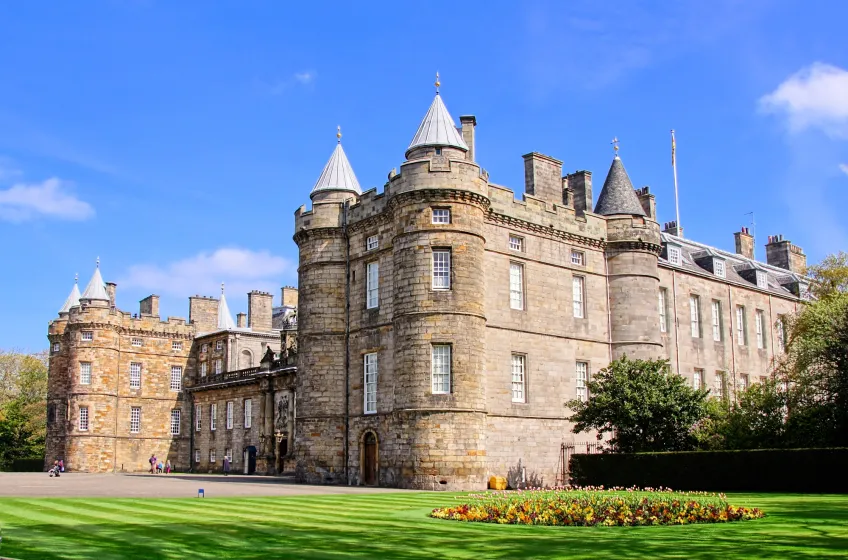
The Palace of Holyroodhouse stands at the foot of the Royal Mile in Edinburgh, facing Holyrood Park and the dramatic bulk of Arthur’s Seat. As the official residence of the British monarch in Scotland, it combines royal ceremony with a layered history stretching back to a medieval abbey founded in 1128. Visitors encounter furnished State Apartments, atmospheric ruins, formal gardens and rooms closely associated with Mary, Queen of Scots. The palace remains a working royal residence, hosting ceremonies and audiences during the annual Royal Week in Scotland, while welcoming the public for most of the year when not in official use.
Recommended Edinburgh accommodation: Hotels Bed & Breakfasts Pub Accommodation Apartments
Pre-book Edinburgh Attractions, Tours & Experiences
Why is Holyroodhouse worth a visit?
Holyroodhouse brings together Scottish history, art and living monarchy in one compact site. You can walk through rooms used for state occasions, examine portraits of Scotland’s rulers, and stand in the chambers where pivotal moments unfolded, including the 1566 murder of David Rizzio. The contrast between the baroque palace and the roofless nave of Holyrood Abbey next door is striking, and the setting beside Holyrood Park offers wide views and a sense of space rare in a capital city. For many, it is also the natural end-point of a walk down the Royal Mile, providing context to Edinburgh’s Old Town and Scotland’s royal story.
Holyroodhouse highlights
State Apartments
A sequence of 17th-century rooms arranged for ceremony and display, furnished with paintings, tapestries and decorative arts from the Royal Collection. They are used today for investitures, audiences and receptions during royal visits.
The Great Gallery
The largest room in the palace, lined with a series of paintings depicting Scottish monarchs, traditionally attributed to Jacob de Wet. It remains a principal setting for large receptions and significant events.
The Throne Room
A formal chamber containing thrones and seating used for ceremonial functions. The room illustrates the symbolism and etiquette of court life in Scotland.
The Privy Chamber and Ante-Chambers
More intimate rooms used historically for meetings and informal audiences. Their arrangement shows how access to the monarch was managed through a progression of spaces.
Mary, Queen of Scots’ Chambers
A suite strongly associated with Mary, Queen of Scots, including her bedchamber and outer chamber. The rooms contain objects linked to her life and provide insight into the turbulent politics of 16th-century Scotland.
The Rizzio Murder Site
Within Mary’s outer chamber, tradition places the 1566 killing of her secretary, David Rizzio, here, a moment that shaped the remainder of Mary’s reign. The setting lends atmosphere to one of Scotland’s most recounted episodes.
The Royal Dining Room
A later addition used for formal meals during royal stays. The table settings and silverware illustrate the continuing ceremonial functions of the palace.
The Quadrangle and Forecourt
Approached by an open forecourt with a richly carved fountain inspired by Linlithgow Palace, the entrance leads to a symmetrical quadrangle typical of late 17th-century palatial design.
Holyrood Abbey Ruins
The remains of the Augustinian abbey founded by King David I form a sombre, roofless nave beside the palace. The abbey hosted coronations and royal weddings before the Reformation, and its surviving arches and tombs evoke the site’s medieval origins.
Palace Gardens
Formal lawns and borders extend to the edge of Holyrood Park, with views to Salisbury Crags. Seasonal planting, mature trees and quiet paths offer a calm contrast to the city streets above.
Architecture of James V’s Tower
The north-west tower, begun under James V in the 16th century, is one of the oldest surviving parts of the palace. Its sturdy, defensive character differs from the later classical ranges built in the 17th century.
Portraiture and Tapestries
Rooms display historic tapestries and portraiture, including images of Scottish and British rulers. These decorative schemes were intended to impress visitors and remain central to the palace’s visual impact.
Bonnie Prince Charlie’s Association
In 1745 Charles Edward Stuart used the palace as his headquarters during the Jacobite rising, holding court in rooms still on view. This brief occupation adds an 18th-century chapter to the site’s story.
Changing Royal Exhibitions
A dedicated gallery at the palace hosts rotating exhibitions drawn from the Royal Collection, often focusing on art, photography or royal themes. Exhibitions change through the year, providing reasons to return.
Views to Holyrood Park and Arthur’s Seat
From the gardens and approaches, there are open views to the parkland and volcanic cliffs of Salisbury Crags. The landscape setting is an integral part of the visit.
Facilities and visitor experience
Visitor Reception and Security
Entry is through a welcome area with ticketing and security screening. Timed tickets help manage flow, and staff are on hand to advise on routes and current closures when official functions take place.
Multimedia Guides
Handheld or app-based guides are typically available in multiple languages, offering room-by-room commentary, context and optional family trails.
Café
A café located in the Mews Courtyard serves light meals, cakes and afternoon teas, with indoor seating and, in fair weather, outdoor tables sheltered from the wind.
Shop
The palace shop stocks books, exhibition catalogues, Scottish crafts and items inspired by the Royal Collection, alongside souvenirs tied to the palace’s history.
Accessibility
Step-free routes and lifts provide access to the State Apartments and principal visitor areas. Accessible toilets are available, and folding stools can usually be borrowed. Staff can advise on less crowded times and the best paths through the site.
Cloakroom and Pushchairs
Large bags and rucksacks may need to be stored, and pushchairs are often not permitted in historic interiors; baby carriers are usually available to borrow for the duration of your visit.
Photography and Conduct
For conservation and security, photography is generally restricted inside historic rooms, though it is usually permitted in the gardens and forecourt. Eating and drinking are not allowed in the State Apartments.
Schools and Groups
Education materials and group visit options are offered, with discounts for larger parties and, at times, private guided tours outside regular hours.
Nearby attractions
Scottish Parliament
Directly opposite the palace, the parliament building offers guided tours and exhibitions on devolved government, with striking contemporary architecture by Enric Miralles.
Holyrood Park and Arthur’s Seat
A short walk from the gate leads into a royal park of lochs, meadows and crags. The ascent of Arthur’s Seat rewards with wide views over Edinburgh and the Firth of Forth.
Dynamic Earth
An interactive science centre at the base of Salisbury Crags explores the story of the planet, popular with families and located a few minutes’ walk away.
Canongate and the Royal Mile
Heading uphill from the palace, the Canongate section of the Royal Mile includes historic closes, the Museum of Edinburgh and the 17th-century Canongate Kirk.
John Knox House and The Scottish Storytelling Centre
Further along the Royal Mile, this historic house and adjacent centre provide context to Reformation-era Edinburgh and host regular events.
St Giles’ Cathedral
The High Kirk of Edinburgh sits near the midpoint of the Royal Mile and is noted for its crown spire, Thistle Chapel and stained glass.
National Museum of Scotland
A 15–20 minute walk or a short bus ride from the palace, the museum presents Scottish history, science, art and world cultures under a grand Victorian roof.
Calton Hill
North of the palace area, this hill offers monuments, an observatory and excellent city vistas, especially at sunset.
Holyrood Distillery
Close by in the Southside, this modern distillery runs tours and tastings focused on whisky and gin, adding a contemporary flavour to the area’s attractions.
Practical advice
Check for Royal Use
As a working royal residence, parts of the palace can close at short notice for official events, particularly around the monarch’s annual week in Scotland. It is wise to confirm opening arrangements before you set out.
Book Timed Tickets
Advance booking helps secure preferred entry times, especially in summer, during school holidays and when exhibitions are newly opened.
Allow Enough Time
Most visitors spend between ninety minutes and two hours exploring the palace, abbey and gardens, with longer needed if you also visit the exhibition gallery.
Dress and Footwear
Floors can be uneven in the abbey ruins and gardens. Comfortable shoes and layers suit Edinburgh’s changeable weather, even in summer.
Security and Bag Policy
Airport-style screening operates at entry, and there may be restrictions on large bags. Travel light to speed your visit.
Accessibility Planning
If you have specific mobility or sensory needs, consult accessibility information in advance. Staff can advise on lifts, step-free routes, hearing support and quieter times.
Families with Young Children
Pushchairs may not be allowed in all historic rooms, but baby carriers are commonly provided. Look out for family versions of the multimedia guide to keep younger visitors engaged.
Photography Etiquette
Assume no photography in the State Apartments unless clearly signposted otherwise, and use the gardens and forecourt for pictures of the exterior and abbey.
Combine with Nearby Sites
Plan time to explore Holyrood Park or the Scottish Parliament on the same day. The palace is at the end of several bus routes and within walking distance of Waverley station via the Royal Mile.
Ticket Upgrades and Returns
Tickets are often eligible for conversion to a return pass valid for a year with a signature at point of purchase. If this is offered, it can be good value, especially if you intend to see a later exhibition.
Shortlist
- Your Shortlist is empty