
Discover Hérault | A Visitor's Introduction to Hérault
Recommended places to visit, places to stay and things to do in Hérault
Hérault is a sun-drenched department in the South of France, nestled in the Languedoc-Roussillon region along the Mediterranean coast. Known for its stunning variety of landscapes—from vineyard-covered hills to golden beaches and medieval towns—Hérault is a paradise for lovers of nature, history, and authentic French culture. This region boasts everything from dynamic cities and sleepy stone villages to rugged gorges and sparkling rivers, making it a wonderfully diverse destination for explorers of all types.
Whether you're into wine tasting, hiking, beachcombing, or admiring Gothic architecture, Hérault delivers with unpretentious charm and unforgettable scenery.
Recommended Hérault Accommodation: Hotels
Why is Hérault Worth a Visit?
Hérault is worth visiting for its effortless blend of coastline, countryside, and culture. Its Mediterranean climate ensures long, hot summers and mild winters, making it a year-round destination. This region has a distinct character thanks to its Occitan roots, Roman heritage, and centuries-old winemaking traditions.
The variety within Hérault is one of its biggest draws: one moment you could be strolling through the elegant streets of Montpellier, the next kayaking through the dramatic Gorges d’Héric or sunbathing in Cap d’Agde. Unlike more overrun parts of southern France, Hérault remains relatively under the radar, allowing for a more relaxed and authentic experience. Food lovers will relish its seafood, cheeses, and wines, while outdoor enthusiasts will find endless opportunities for hiking, cycling, and watersports.
Whether you’re after cultural heritage, coastal relaxation, or countryside rambles, Hérault offers a compelling mix that keeps visitors returning year after year.
Hérault Highlights: Things to See and Do in Hérault
Montpellier
The capital of Hérault, Montpellier is a youthful and artistic city filled with classical architecture, shaded squares, and a buzzing student population. The historic centre, known as L’Écusson, is a maze of narrow, medieval streets lined with boutiques, bars, and restaurants. Don’t miss the Place de la Comédie, Montpellier Cathedral, and the modern Antigone district designed by Spanish architect Ricardo Bofill. Art lovers should explore the Musée Fabre, one of France’s most important fine art museums outside Paris.
Saint-Guilhem-le-Désert
Often cited as one of the most beautiful villages in France, Saint-Guilhem-le-Désert is tucked away in the Gellone Valley. This ancient pilgrim stop along the Way of St James enchants visitors with its stone houses, Romanesque abbey, and tranquil river setting. It’s a great place for a slow afternoon of wandering, followed by a riverside meal or dip in the nearby clear waters. The surrounding cliffs and forest paths also make for excellent hiking.
Cirque de Navacelles
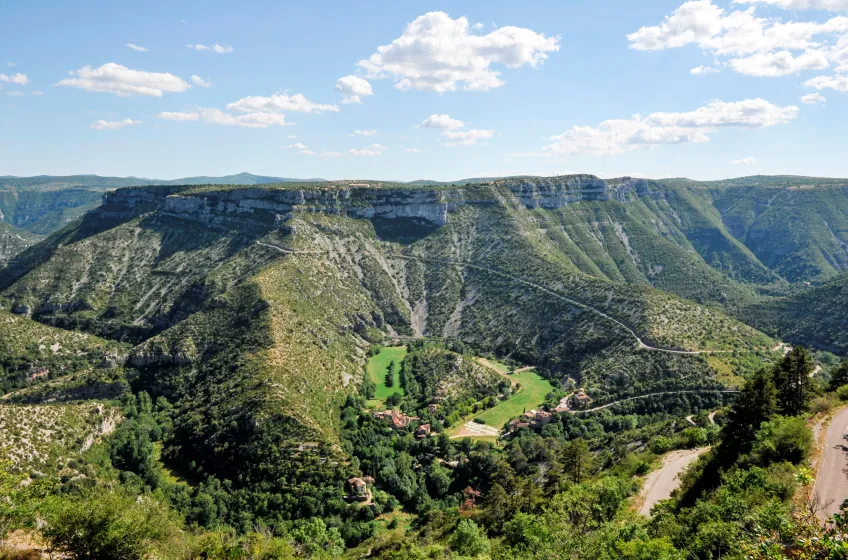
An awe-inspiring geological formation, the Cirque de Navacelles is a vast natural amphitheatre carved into the limestone plateau by the River Vis. Standing on the viewpoint at Blandas, the sweeping views across the dramatic horseshoe gorge are breathtaking. A drive down into the gorge rewards you with the charming hamlet of Navacelles and opportunities to swim in the cool river or follow walking trails that wind through this extraordinary landscape.
Béziers
Béziers is one of the oldest cities in France and steeped in history, particularly that of the Cathars and the Albigensian Crusade. Its most striking feature is the Cathédrale Saint-Nazaire, perched above the River Orb, best seen from the lovely Pont Vieux. The nearby Fonseranes Locks on the Canal du Midi are a marvel of 17th-century engineering and make for a fascinating visit. Béziers also comes alive in August during the Feria, a lively celebration featuring bullfighting, music, and street parties.
Cap d’Agde
Cap d’Agde is Hérault’s main seaside resort and offers a classic Mediterranean holiday with a French twist. Expect sandy beaches, clear waters, lively nightclubs, and a huge naturist village that’s become one of the largest in Europe. Families will enjoy Aqualand water park, while boat enthusiasts can explore the marina or take cruises along the coast. It's an ideal spot to unwind in the sun after a few days of cultural sightseeing.
Lac du Salagou
Located inland, the Lac du Salagou is an artificial lake surrounded by striking red earth (known as ‘ruffes’) and rolling hills. It’s a beloved spot for walking, cycling, windsurfing, and swimming. The scenery here is otherworldly and provides a serene break from coastal crowds. Nearby, the abandoned village of Celles—once evacuated due to the dam project—offers an atmospheric detour.
Pézenas
This delightful town, once home to Molière, is rich in Renaissance architecture and creative flair. Wander its cobbled streets filled with artisan workshops, antique shops, and Saturday markets. Pézenas is particularly charming in the evening, when the golden stone glows under the setting sun. Try some of the local petits pâtés de Pézenas, a sweet and savoury pastry said to have British origins.
Gorges d’Héric
A haven for hikers and nature lovers, the Gorges d’Héric lie within the Caroux-Espinouse mountains. A well-paved trail runs alongside the gorge, taking you past waterfalls, rock pools, and granite cliffs. Swimming is possible in several natural basins along the way. In the summer, it’s a popular place to cool off and enjoy the dramatic scenery.
Marseillan and the Étang de Thau
This pretty port town lies on the edge of the Étang de Thau, a large lagoon known for its oyster and mussel beds. Marseillan itself has a laid-back charm, with waterfront cafés, a historic Noilly Prat vermouth distillery open for tours, and a gentle pace of life. It's a lovely place to sample fresh seafood, go paddleboarding on the lagoon, or just watch the boats bobbing in the harbour.
Villeneuvette
A former royal cloth-making factory town founded by Colbert in the 17th century, Villeneuvette is now a peaceful village with cobbled lanes and architectural charm. Surrounded by woodland and streams, it makes for a quirky and quiet stop, especially when combined with a visit to the nearby waterfalls of Les Chutes de la Vis.
The Haut-Languedoc Regional Nature Park
Covering large parts of inland Hérault, this vast park is a protected area filled with mountains, forests, and picturesque hamlets. It’s ideal for hiking, mountain biking, and spotting wildlife. The park includes several of the department’s highlights, including the Gorges d’Héric and the Plateau des Lacs. Autumn is particularly beautiful here, when the leaves blaze red and gold.
Practical Advice for Visitors
Getting There
Hérault is well connected by road, rail, and air. Montpellier has an international airport with regular flights from the UK and across Europe. Béziers Cap d’Agde Airport offers a smaller selection of flights. High-speed trains connect Montpellier and Béziers to Paris, Lyon, and Marseille. Driving is often the most convenient way to explore the region’s rural and coastal areas, with major autoroutes like the A9 and A75 running through the department.
Parking
In larger towns such as Montpellier and Béziers, paid parking is widespread, with underground car parks available near the centres. Smaller towns often offer free parking on the outskirts with pedestrian access to the old quarters. In rural spots and at natural attractions, look for designated parking areas, especially in peak season when demand increases.
Dining
Hérault is a feast of Mediterranean flavours. Fresh seafood is a staple along the coast, especially oysters and mussels from the Étang de Thau. Inland, you’ll find hearty cassoulet, goat cheeses, and dishes cooked with wild herbs. Look out for wine bars and bistros serving local tipples from the Pic Saint-Loup and Faugères vineyards. For an elegant meal, try Leclere in Montpellier or L’Entre Pots in Pézenas. Village cafés and seaside shacks offer simpler but equally satisfying fare.
Shopping
Markets are the best way to shop like a local. Pézenas has a famous Saturday market filled with regional produce and crafts. Montpellier boasts a mix of high-street brands and independent boutiques, especially around Rue de l’Argenterie. Antique lovers should keep an eye out for brocante fairs, particularly in the summer. Local products worth taking home include olive oil, honey, Languedoc wines, and craft pottery.
When to Visit
Spring (April to June) and early autumn (September to October) are the best times to visit Hérault, with warm temperatures, fewer crowds, and lively festivals. July and August offer beach-perfect weather but can get crowded, particularly in coastal resorts. Winter is mild and quiet—ideal for cultural sightseeing and countryside walks without the tourist hustle.
Local Events
Hérault is home to a vibrant calendar of festivals. The Béziers Feria in August draws thousands for music, bullfighting, and dancing. Montpellier Danse, held in June and July, is a prestigious contemporary dance festival. Pézenas hosts numerous arts and craft fairs, while the oyster festival in Bouzigues each summer celebrates the region’s seafood bounty. Autumn brings wine harvest festivals throughout the vineyards.
Exploring Beyond Hérault
If you’ve got extra time, there’s plenty to see just beyond the department’s borders. To the west lies Carcassonne, a spectacular fortified medieval city. To the east, the Camargue offers wild horses, pink flamingos, and salt flats. Northward, the Cévennes National Park is a dramatic mountain region perfect for extended hiking. Closer to home, the village of Roquebrun—sometimes called the “Little Nice of Hérault”—sits idyllically along the River Orb and makes a great day trip for canoeing and wine tasting.
Hérault blends the beauty of southern France with a depth of culture and nature that invites exploration without the crowds. Whether you're drawn to the coast, the countryside, or the charm of ancient towns, this unassuming department delivers a rich and varied travel experience.
Shortlist
- Your Shortlist is empty