
Discover Montpellier | A Visitor's Introduction to Montpellier
Montpellier is a vibrant and elegant city in the south of France, located just a few miles from the Mediterranean Sea in the Occitanie region. Known for its rich blend of history and modernity, it’s a city where medieval alleyways meet contemporary architecture, and classical museums stand alongside buzzing bars and street art. With its large student population, warm climate, and laid-back energy, Montpellier is one of France’s most dynamic and livable cities.
Whether you’re here for a weekend of cultural exploration, seaside escapes, or sunny strolls through historic streets, Montpellier offers a perfect mix of urban sophistication and southern charm.
Recommended Montpellier Accommodation: Hotels Bed & Breakfasts
Why is Montpellier Worth a Visit?
Montpellier is worth visiting for its unique atmosphere—a city that feels both centuries old and forward-thinking. It doesn’t rely on obvious tourist clichés but instead charms visitors with its artistic spirit, intellectual heritage, and Mediterranean lifestyle. With roots dating back to the 10th century, Montpellier has grown into a centre for education, medicine, and the arts. It's home to one of the oldest universities in the world and France’s first medical school still in operation today.
The city’s walkable historic centre, known as L’Écusson, is a treasure trove of medieval alleyways, Gothic churches, and hidden courtyards. But just as compelling are its modern districts designed by world-renowned architects, like Antigone and Port Marianne. Add in a thriving food scene, lively markets, nearby beaches, and over 300 days of sunshine a year, and Montpellier becomes an irresistible destination for culture lovers, foodies, and sun-seekers alike.
Montpellier Highlights: Things to See and Do in Montpellier
Place de la Comédie
Often referred to as the "heart of Montpellier," the Place de la Comédie is a grand, open square surrounded by elegant 19th-century buildings, cafés, and the Opéra Comédie. A lively meeting point by day and night, this square is the perfect starting point for exploring the city. Don’t miss the impressive Three Graces fountain at its centre, a popular photo spot. Street performers, flower stalls, and buzzing terraces give it a constantly vibrant atmosphere.
L’Écusson (Historic Centre)
Montpellier's Old Town, L’Écusson, is a labyrinth of narrow, winding streets full of character. Here you’ll find everything from ancient churches to independent bookshops and artisan boutiques. Look out for medieval mansions like the Hôtel de Varennes, hidden courtyards, and the lively Rue de l’Ancien Courrier for boutique shopping. It’s a great place to simply wander, with surprises around every corner—quiet squares, quirky cafés, and vibrant street art.
Musée Fabre
The Musée Fabre is Montpellier’s premier art museum and one of the most important in southern France. Housed in a beautifully restored 18th-century mansion, the museum features works from the Renaissance to contemporary art, including paintings by Delacroix, Courbet, and Montpellier-born Frédéric Bazille. The adjoining Hôtel de Cabrières-Sabatier d’Espeyran displays fine decorative arts in period rooms, offering a glimpse into bourgeois life in the 19th century.
Promenade du Peyrou and Arc de Triomphe
At the edge of the old town, the Promenade du Peyrou offers sweeping views towards the Cévennes mountains and is one of Montpellier’s most picturesque spots. The tree-lined promenade is flanked by an elegant statue of Louis XIV and the city’s own Arc de Triomphe. Nearby is the Saint-Clément Aqueduct and a beautiful water tower, both reminders of the city’s engineering prowess in past centuries. This is a favourite place for locals to relax, particularly in the golden light of late afternoon.
Montpellier Cathedral (Cathédrale Saint-Pierre)
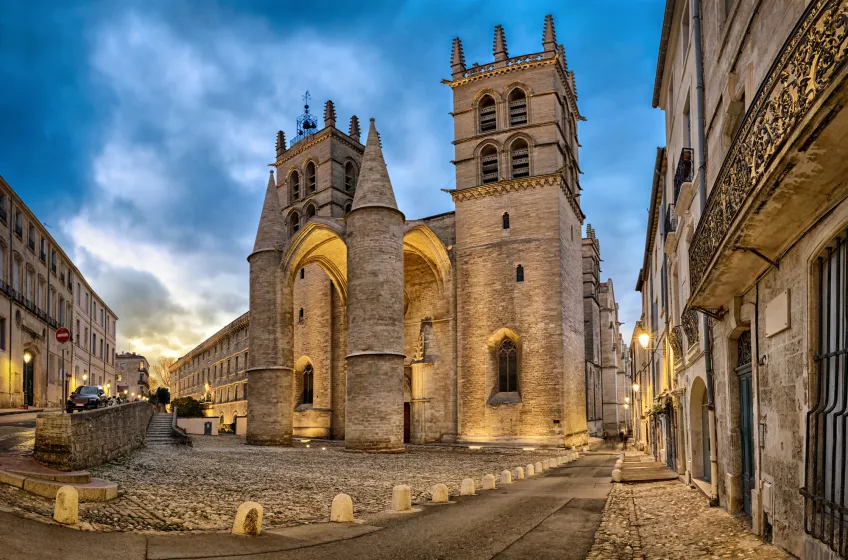
This imposing Gothic cathedral with its distinctive fortress-like porch and twin cylindrical towers is a striking sight in the historic centre. Built in the 14th century, it remains an active place of worship and a stunning architectural landmark. Step inside to admire the high vaulted ceilings, stained glass windows, and peaceful ambiance. It’s right next to the old medical school, which you can also visit by guided tour.
Jardin des Plantes
Montpellier's Jardin des Plantes is the oldest botanical garden in France, founded in 1593 for medical students. It's a serene place to escape the city buzz, with centuries-old trees, medicinal plants, greenhouses, and winding paths. Free to enter, it offers a shady, contemplative walk just minutes from the city centre. It’s particularly lovely in spring and early summer when many plants are in full bloom.
Antigone District
A bold experiment in urban planning, the Antigone district was designed by Spanish architect Ricardo Bofill in the 1980s. Inspired by classical architecture, the area features wide boulevards, neoclassical facades, and symmetrical plazas. It’s a fascinating contrast to the medieval heart of Montpellier and shows how the city embraces architectural innovation. Walk from Place de Thessalie to the Lez River for a striking change of scene.
Marché des Arceaux
Held under the arches of the old aqueduct near the Peyrou promenade, the Marché des Arceaux is Montpellier’s most beloved market. Open on Tuesdays and Saturdays, it offers a mouth-watering array of regional produce—fresh fruit and veg, cheeses, olives, wines, and baked goods. It’s also a social event, with locals gathering for coffee, gossip, and a taste of the latest seasonal treats. Great for picnic supplies or just soaking up local life.
Pavillon Populaire
This free photography gallery on the Esplanade Charles-de-Gaulle regularly hosts high-quality exhibitions featuring both historical and contemporary photography. It’s a small but rewarding cultural stop, and often a great way to see lesser-known or thought-provoking works. Its central location makes it easy to combine with nearby sights or a break in the shade of the Esplanade’s plane trees.
Les Halles Castellane
For a real taste of Montpellier life, head to Les Halles Castellane, the city's main covered food market. Open daily (except Mondays), it’s packed with stalls offering cheeses, meats, fresh fish, pastries, and more. Grab a few local delicacies and take a seat at one of the communal counters, or simply enjoy browsing the high-quality produce.
Beach Day at Palavas-les-Flots
While Montpellier doesn’t sit directly on the coast, the beaches are just 20 minutes away by tram and bus. Palavas-les-Flots is the closest and most popular, offering wide sandy stretches, a family-friendly vibe, and plenty of seaside eateries. For a wilder, more natural experience, head to Espiguette Beach further east, or cycle along the Lez River to Villeneuve-lès-Maguelone for birdwatching and quieter sands.
Practical Advice for Visitors
Getting There
Montpellier is easy to reach by train, with direct high-speed TGV services from Paris (about 3.5 hours), Lyon, and Marseille. Montpellier Méditerranée Airport is about 15 minutes from the city centre by taxi or shuttle, with regular flights from the UK and other European cities. The city is well connected by road, with the A9 and A75 motorways nearby. For local travel, Montpellier’s efficient tram network is a great way to get around.
Parking
Driving in the historic centre is tricky due to narrow streets and pedestrian zones. However, there are several large car parks around the city centre—such as Comédie, Corum, and Antigone—with easy access to tram stops. Many visitors opt to use Park & Ride (“Parking Relais”) facilities on the city outskirts, which include free tram travel into town.
Dining
Montpellier’s food scene combines Mediterranean freshness with Occitan flair. Local dishes often feature seafood, olive oil, and sun-ripened vegetables. Try le brandade de morue (salt cod purée), tielle sétoise (spicy octopus pie from nearby Sète), and local wines from Pic Saint-Loup or Grès de Montpellier vineyards. For something special, book a table at La Réserve Rimbaud, a riverside Michelin-starred restaurant, or enjoy modern bistro fare at Pastis. For casual eats, head to Rue du Faubourg du Courreau or Rue de l’Aiguillerie.
Shopping
Montpellier offers a great mix of chain stores, boutiques, and artisanal shops. The Polygone shopping centre connects the Comédie to the Antigone district, but don’t miss the smaller independent shops in the old town for fashion, jewellery, and local crafts. Book lovers should visit Le Grain des Mots, while foodies will love Fromagerie Philippe or Maison Bonnaire for regional gourmet treats. The Sunday flea market at Mosson is also worth a rummage.
When to Visit
Montpellier is a year-round destination, but the best times to visit are spring (April to June) and autumn (September to October), when the weather is warm but not too hot and the city is lively without being overrun. Summer brings festivals, beach days, and long evenings on café terraces, but also higher prices and more crowds. Winter is mild, with fewer tourists and a laid-back pace, perfect for cultural trips.
Local Events
Montpellier’s cultural calendar is packed with events. In June and July, the Montpellier Danse Festival attracts top contemporary dance companies from around the world. Festival Radio France Occitanie Montpellier (July) features classical and jazz concerts, many of them free. Les Estivales, held on Friday evenings in summer, transforms the Esplanade into a night market of wine tastings, food stalls, and music. The city also celebrates cinema, street arts, and contemporary design with various festivals throughout the year.
Exploring Beyond Montpellier
Montpellier is perfectly placed for day trips. Head west to Saint-Guilhem-le-Désert and the Pont du Diable, where ancient architecture meets wild swimming spots. Visit the oyster beds and seafood restaurants of Bouzigues, or take a wine-tasting tour through the Pic Saint-Loup vineyards. The Camargue, with its wild horses and flamingos, is just over an hour away, while the walled medieval city of Aigues-Mortes offers history and salt marshes in one.
Montpellier is one of France’s most underrated urban gems. With its elegant streets, Mediterranean climate, rich culture, and close proximity to both beaches and countryside, it makes a perfect base for a southern French getaway. Whether you're soaking up the sun on a terrace, strolling through medieval lanes, or catching an open-air concert, Montpellier delivers that rare blend of energy and ease that makes a city truly memorable.
Shortlist
- Your Shortlist is empty