
A Visitor's Introduction to Fishbourne Roman Palace
Fishbourne Roman Palace, situated just outside Chichester in West Sussex, is the largest known Roman residence in Britain and one of the most remarkable archaeological sites in the country. Dating back to around AD 75, it is believed to have been built only a few decades after the Roman conquest of Britain, possibly for a local ruler who had allied himself with Rome. The site was rediscovered in the 1960s during the laying of a water main, and subsequent excavations revealed an extensive palace complex with mosaics, bathhouses, and formal gardens.
Today, the palace is managed by the Sussex Archaeological Society and combines preserved archaeological remains with reconstructions, a museum, and gardens that bring to life aspects of Roman domestic life. Its mosaics, which rank among the finest in Britain, and its scale, comparable to imperial residences in Rome itself, make it a destination of both national and international importance.
Recommended Chichester accommodation: Hotels Bed & Breakfasts Pub Accommodation
Why Is Fishbourne Roman Palace Worth a Visit?
Fishbourne Roman Palace is worth visiting for its exceptional insight into Roman Britain and its ability to convey what life was like for the elite in the first century AD. Unlike many Roman sites in the UK that focus on military life and forts, Fishbourne highlights domestic luxury, social status, and cultural exchange between Romans and the local population.
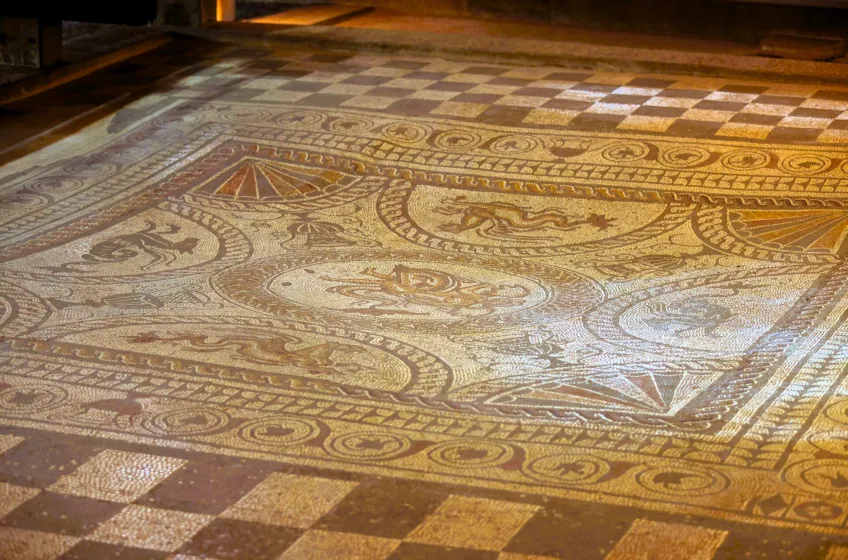
The site is particularly renowned for its mosaics, including the famous Cupid on a Dolphin design, which is among the earliest and most intricate examples in Britain. The reconstructed gardens, laid out to reflect the original Roman design, provide a rare glimpse of how ornamental and practical planting might have looked nearly 2,000 years ago.
The museum brings together artefacts discovered on-site, including pottery, tools, and personal items, giving visitors a more rounded picture of daily life in Roman Sussex. Interactive displays and reconstructions help to make the experience accessible to families, schools, and casual visitors as well as enthusiasts of history and archaeology. The combination of authentic remains, reconstructions, and interpretive displays makes Fishbourne a uniquely immersive experience.
Fishbourne Roman Palace Highlights
The Palace Mosaics
Fishbourne is famous for its mosaics, many of which remain in situ. These range from simple black-and-white geometric patterns to elaborate coloured scenes. The best known is the Cupid on a Dolphin mosaic, which depicts a winged figure riding a sea creature. Other highlights include intricate floral and geometric designs that demonstrate the high level of craftsmanship achieved by Roman artisans working in Britain.
The Hypocaust System
The palace contains remains of underfloor heating systems, known as hypocausts, which were used to warm rooms, particularly baths and reception areas. The visible remains show how the floors were raised on pillars, allowing hot air from furnaces to circulate beneath them. This technology illustrates the sophistication and comfort enjoyed by the building’s occupants.
The North Wing and Reception Rooms
The north wing, partially preserved, gives visitors a sense of the grandeur of the palace. Large reception rooms with mosaic floors would have been used to impress guests and demonstrate the wealth and status of the owner. The scale of these rooms, unusual for Britain at the time, underlines the palace’s importance.
The Roman Gardens
The gardens at Fishbourne are a major highlight, representing the earliest known formal gardens in Britain. They have been carefully reconstructed based on archaeological evidence, including planting beds, pathways, and water features. Visitors can walk among box hedges, herbs, and flowering plants similar to those that would have been cultivated by the Romans. These gardens illustrate the blending of practicality and ornament typical of Roman horticultural design.
The Museum and Artefacts
The on-site museum displays a wide range of objects uncovered during excavations. These include pottery, jewellery, coins, tools, and household items. Together they provide a vivid picture of daily life in the palace and the wider community. Models and reconstructions help visitors visualise the full scale of the original building, which would have covered an area roughly equivalent to Buckingham Palace.
The Reconstructed Roman Room
A fully reconstructed Roman chamber shows how the rooms may have looked in their original state. Painted wall plaster, furniture, and replica artefacts bring the space to life, offering a sense of colour and atmosphere often missing from archaeological ruins.
The Learning and Discovery Area
Designed with younger visitors in mind, this area includes hands-on activities such as mosaic-making, handling replica objects, and dressing in Roman-style clothing. It enhances the educational value of a visit and makes the site more engaging for families and school groups.
Temporary Exhibitions and Events
Fishbourne hosts changing exhibitions and seasonal events that explore aspects of Roman culture and archaeology in greater depth. These may include displays on Roman food, fashion, or military life, as well as workshops and re-enactments that bring the past to life.
Conservation in Action
Visitors can often see areas where conservation and archaeological research are ongoing. Interpretive boards explain the challenges of preserving delicate mosaics and structures, highlighting the work required to maintain such a significant heritage site for future generations.
Nearby Attractions
Fishbourne Roman Palace lies only a short distance from Chichester, where visitors can explore Chichester Cathedral, known for its medieval and modern art, and the Pallant House Gallery, a leading centre for modern British art. The Novium Museum, built over the remains of a Roman bathhouse, offers complementary insights into Chichester’s Roman past.
To the west lies Bosham, a picturesque coastal village associated with early Christian history and the Bayeux Tapestry. Further afield, Chichester Harbour Area of Outstanding Natural Beauty offers opportunities for walking, sailing, and birdwatching. For those interested in Roman history more broadly, Bignor Roman Villa, located in the South Downs about 30 minutes’ drive from Fishbourne, contains another fine collection of mosaics set within a rural villa complex.
Practical Advice
Fishbourne Roman Palace is open most of the year, although winter opening hours may be shorter and the site occasionally closes for conservation work. Tickets can be purchased on-site or online, with concessions available for children, students, and seniors. Family tickets and annual passes are also offered.
The site is well-suited for families and school visits, with accessible displays and hands-on activities. Most areas, including the museum and gardens, are wheelchair accessible, though some uneven surfaces should be expected. Accessible toilets are available, and assistance dogs are welcome.
There is a café serving light refreshments such as sandwiches, cakes, and hot and cold drinks. A gift shop sells books, replicas, and souvenirs linked to Roman history and archaeology. Parking is available on-site, and the palace is only a few minutes’ drive or a short bus journey from Chichester city centre.
Photography is usually permitted, though flash may not be allowed near mosaics. Guided tours are available on certain days, and it is worth checking the official website in advance for details of talks, events, or temporary exhibitions. Allow at least one to two hours for a visit, more if you wish to explore the gardens and exhibitions in detail.
Conclusion
Fishbourne Roman Palace offers an extraordinary opportunity to step into the world of Roman Britain, not through military ruins but through the luxury of an elite residence. Its mosaics, gardens, and museum collections make it one of the most engaging and informative Roman sites in the UK. Whether you are an archaeology enthusiast, a family looking for an educational day out, or a casual visitor curious about history, Fishbourne provides a vivid and memorable experience. Its proximity to Chichester and other heritage sites further enhances its appeal, making it an essential destination for anyone exploring West Sussex.
Shortlist
- Your Shortlist is empty