
Discover Chur | A Visitor's Introduction to Chur
Recommended places to visit, places to stay and things to do in and around Chur
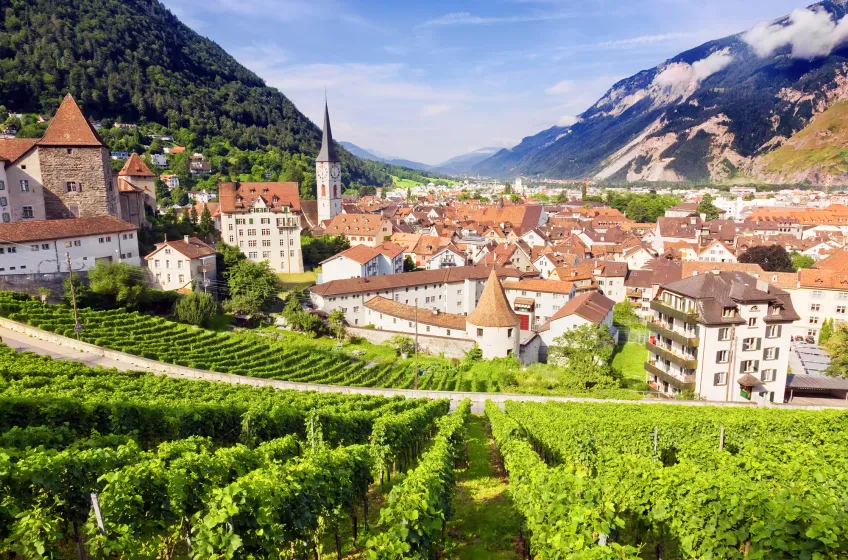
Chur is the capital of Graubünden and one of Switzerland’s oldest continuously inhabited settlements, set in the Rhine Valley where Alpine routes converge. Known for its car-free old town, Roman heritage, mountain railway connections and easy access to the Grisons Alps, this compact city is a perfect destination for history enthusiasts, rail travellers and visitors beginning a journey through eastern Switzerland. With colourful streets, excellent museums and a cable car rising directly from the city, Chur offers an appealing combination of culture and mountain scenery.
Recommended Chur hotels and other accommodation
Pre-book Chur Attractions, Tours & Experiences
Why is Chur Worth a Visit?
Chur is worth visiting because it works both as an attractive destination in its own right and as one of Switzerland’s best transport bases. The historic centre is small, atmospheric and easy to explore, while trains continue towards Arosa, Davos, St Moritz, the Rhine Gorge and several famous panoramic railway routes.
The city’s history stretches back thousands of years. Archaeological evidence points to prehistoric settlement, while the Romans established a presence here because of Chur’s strategic position near Alpine passes. Medieval churches, bishops’ buildings and narrow lanes add further layers to the old town.
Chur also provides a useful introduction to Graubünden’s cultural diversity. German is the main everyday language, but Romansh and Italian are both important within the wider canton. Regional food, architecture and place names reflect this mixture.
Although many travellers pass through Chur on their way to mountain resorts, spending at least one night allows time to explore the old town, visit a museum and ride into the surrounding hills. Two or three nights provide a stronger base for railway and countryside excursions.
Chur Highlights: Things to See and Do in Chur
Explore Chur Old Town
Chur’s old town is a compact network of pedestrian streets, small squares and historic houses.
Poststrasse, Reichsgasse and the lanes around Arcas contain colourful façades, cafés, boutiques and restaurants. Many buildings have decorative shutters, bay windows and painted details.
The old town feels lively without being crowded and is easy to explore without a fixed route. Look for hidden courtyards, fountains and passages between the main streets.
Early morning is best for quiet photographs, while evening brings a warmer atmosphere around the restaurants and wine bars.
Visit Arcas Square
Arcas is one of Chur’s most attractive public spaces.
The gently curved square is lined with colourful houses and overlooked by wooded slopes. Its architecture gives it a particularly intimate atmosphere.
Cafés and occasional events add life during warmer months. Arcas is also a useful starting point for exploring the quieter southern side of the old town.
See St Martin’s Church
St Martin’s Church is one of Chur’s principal landmarks.
Its tall tower rises above the old town, while the interior reflects the city’s Reformed Protestant heritage. The church has medieval origins but was altered over later centuries.
The building is relatively restrained compared with the nearby cathedral, providing an interesting contrast between Chur’s Protestant and Catholic traditions.
The surrounding square and narrow streets are worth exploring even when the interior is closed.
Visit Chur Cathedral
Chur Cathedral stands in the elevated episcopal district above the old town.
Dedicated to the Assumption of Mary, the cathedral contains Romanesque, Gothic and later decorative elements. Its interior includes carved choir stalls, religious art and historic tombs.
The building forms part of a larger complex connected with the Bishop of Chur. Some surrounding areas remain in religious or administrative use.
The uphill walk from the centre is short but steep in places.
Explore the Episcopal Court
The episcopal district beside the cathedral is one of Chur’s most historically important areas.
Walls, gateways and institutional buildings create a quieter atmosphere than the commercial old town below. The site reflects Chur’s long role as the centre of an influential bishopric.
Access to individual buildings may be limited, but the courtyards, exterior architecture and elevated position are worth seeing.
Visit the Rätisches Museum
The Rätisches Museum explores the history and culture of Graubünden.
Its collections cover archaeology, traditional life, religion, politics, crafts and domestic culture. The museum is especially useful for understanding the canton’s linguistic and geographical complexity.
Displays help explain the differences between Alpine valleys and the historical role of mountain passes.
Allow around 90 minutes for a general visit.
Discover the Bündner Kunstmuseum
The Graubünden Museum of Fine Arts is one of Chur’s strongest cultural attractions.
Its collection focuses on artists connected with Graubünden and Switzerland, including works by Angelika Kauffmann, Giovanni Segantini and Alberto Giacometti. Contemporary exhibitions add a modern dimension.
The museum combines a historic villa with a striking modern extension.
It stands close to the railway station and can be visited conveniently on arrival or departure day.
Visit the Graubünden Natural History Museum
The Natural History Museum presents the geology, plants and animals of Graubünden.
Displays explain the formation of the Alps, local wildlife, minerals and changing mountain environments. Families will find accessible exhibits and recognisable Alpine species.
The museum is a useful wet-weather attraction and complements outdoor trips into the surrounding mountains.
Ride the Brambrüesch Cable Car
Brambrüesch is Chur’s local mountain and can be reached directly from the city.
A cable-car system climbs from near the centre to open meadows, forests and walking routes above the Rhine Valley. This immediate access to mountain terrain is one of Chur’s most distinctive advantages.
Summer activities include walking, mountain biking and visits to mountain restaurants. Winter may bring skiing, sledging and snowshoeing when conditions permit.
Check lift schedules and weather before setting out, as operation can be seasonal or affected by maintenance.
Walk on Brambrüesch
Brambrüesch has routes ranging from gentle family paths to longer mountain walks.
The plateau offers views towards the surrounding Graubünden peaks and down into the Rhine Valley. Forest sections provide shade during summer, while open meadows are attractive in spring and early autumn.
Longer routes may continue towards Dreibündenstein, where historic territories once met.
Carry water and check the final cable-car descent before beginning a longer walk.
Ride the Arosa Railway
The railway from Chur to Arosa is one of Switzerland’s most scenic regular train journeys.
It begins by travelling through Chur’s streets before climbing into the Schanfigg Valley. The route crosses viaducts, passes forests and follows steep mountain slopes towards Arosa.
Ordinary regional tickets are sufficient, and the journey can be enjoyed as a day excursion without booking a premium panoramic service.
Sit by the window and allow time in Arosa for a walk beside the lakes or a mountain excursion.
Walk Along the Plessur River
The Plessur flows through Chur before joining the Rhine.
Paths beside the river provide a quieter alternative to the old town and connect residential areas, green spaces and routes towards the surrounding hills.
The walk is particularly useful for visitors seeking a gentle activity before a train journey or evening meal.
Explore Welschdörfli
Welschdörfli lies west of the old town and has archaeological and nightlife associations.
The area was an important Roman and medieval settlement zone. Remains and historical information reveal Chur’s long development outside the present old-town core.
Today, parts of the district contain bars, restaurants and cultural venues, making it livelier in the evening.
See the Obertor and Historic Gates
Chur once had substantial defensive walls and gates.
The Obertor is one of the most recognisable surviving entrances to the old town. Its painted clock and traditional appearance create a strong sense of arrival.
Other traces of the historic fortifications can be found around the edge of the centre.
Explore the Haldenstein Area
Haldenstein lies just north of Chur and is known for vineyards, castles and village scenery.
The area produces wine on sunny slopes above the Rhine Valley. Walking routes connect historic buildings, farms and viewpoints.
Haldenstein can be reached by local transport and makes a pleasant half-day excursion, especially during spring or autumn.
Practical Advice for Visitors
Getting There
Chur is one of eastern Switzerland’s principal railway hubs.
Direct or straightforward trains connect it with Zurich, Basel, St Gallen, Sargans and destinations throughout Graubünden. The journey from Zurich generally takes around one hour and 15 minutes to one hour and 30 minutes.
Zurich Airport is the most convenient major international gateway. Rail travel normally requires a change in Zurich or another main station.
Chur railway station lies immediately beside the city centre. The old town can be reached on foot in around five to ten minutes.
Getting Around
Central Chur is compact and best explored on foot.
Local buses serve residential districts, Haldenstein and surrounding communities. The Brambrüesch cable-car station is within walking distance of the old town.
Trains provide the most convenient transport for excursions to Arosa, Landquart, Sargans and the Rhine Gorge.
The old town contains cobbled and sloping streets, though most distances are short.
Parking
Public garages are available near the railway station, old town and major shopping areas.
The historic centre is largely pedestrianised, so driving into the central streets is unnecessary.
Street parking is regulated by payment zones and time restrictions. Hotel parking may cost extra.
Rail travel is generally easier for visitors arriving from Zurich or other Swiss cities.
Dining
Chur is an excellent place to try Graubünden cuisine.
One of the best-known dishes is Capuns, made from a filling of dough or meat wrapped in Swiss chard leaves and cooked in a creamy sauce. Recipes vary between valleys and restaurants.
Maluns consists of grated potato cooked with flour and butter, often served with cheese or apple sauce. Pizokel are Graubünden-style dumplings or noodles.
Barley soup, dried meat and mountain cheese are also common. The old town contains traditional inns, modern cafés and international restaurants.
Try Bündnerfleisch
Bündnerfleisch is air-dried beef associated with Graubünden.
It is sliced very thinly and served as a starter or part of a cold platter with cheese, pickles and bread. The flavour is concentrated but not heavily smoky.
Food shops and butchers sell vacuum-packed portions suitable for travel, subject to customs rules.
Wine
The Rhine Valley north of Chur is one of eastern Switzerland’s important wine-producing areas.
Pinot Noir is particularly significant, while white varieties are also grown on sunny slopes around places such as Haldenstein, Malans and Maienfeld.
Chur’s wine bars and restaurants provide an easy introduction to regional bottles. Winery visits often require advance arrangements.
Shopping
The pedestrian centre contains Swiss retailers, independent shops and food businesses.
Typical regional purchases include Bündnerfleisch, mountain cheese, nut tart, local wine and herbal products.
Bündner Nusstorte is a rich pastry filled with caramelised walnuts. It keeps well and is one of the easiest local products to take home.
Most ordinary shops close on Sundays, apart from selected railway-station and tourist businesses.
When to Visit
May and June are excellent for old-town sightseeing, green landscapes and lower-level walking.
July and August provide the fullest mountain-lift and hiking schedules. Chur can become hot because of its valley location, while higher areas remain cooler.
September and October are especially attractive for clear air, autumn colour and regional wine.
December brings festive lights and seasonal events, while nearby mountains may offer early winter activities.
January to March is suitable for combining the city with skiing in Arosa, Lenzerheide or other Graubünden resorts.
April, May, October and November can be transition periods for mountain lifts and restaurants.
Local Events
Chur hosts cultural festivals, concerts, markets and public events throughout the year.
The city’s theatre, concert venues and museums maintain an active programme, while summer brings outdoor performances and street activity.
Graubünden food and wine events may take place during autumn.
Christmas markets and Advent events add seasonal atmosphere to the old town.
Dates vary annually, so check the programme before arranging travel around a particular event.
Exploring Beyond Chur
Arosa is reached by a highly scenic mountain railway and offers lakes, walking and winter sports.
The Rhine Gorge, sometimes called the Swiss Grand Canyon, lies west of Chur and can be explored by train, foot or rafting excursion.
Lenzerheide offers mountain biking, skiing, walking and access to a high valley lake.
Maienfeld is associated with the story of Heidi and lies among vineyards north of Chur.
Bad Ragaz is known for thermal bathing, luxury hotels and access to the Tamina Gorge.
Davos and Klosters offer mountain railways, museums and extensive hiking or skiing.
St Moritz can be reached through the Albula railway route, one of Switzerland’s finest rail journeys.
Bellinzona and Ticino lie south across the Alps, while Liechtenstein is easily accessible through Sargans and the Rhine Valley.
Shortlist
- Your Shortlist is empty