
Discover Stonehenge | A Visitor's Introduction to Stonehenge
Stonehenge, situated on Salisbury Plain in Wiltshire, is one of the world’s most recognisable prehistoric monuments and a UNESCO World Heritage Site. Consisting of a ring of massive standing stones, some weighing up to 25 tonnes, it is believed to have been constructed in several stages between 3000 and 1600 BC. The purpose of the monument has long been the subject of debate, with theories ranging from religious and ceremonial use to astronomical alignment and burial practices.
Managed today by English Heritage, Stonehenge is visited by more than a million people annually. The site includes the iconic stone circle, the wider archaeological landscape with its burial mounds and avenues, and a modern visitor centre with exhibitions and reconstructed Neolithic houses. Its enduring mystery and cultural significance make it one of the most visited and studied ancient sites in the world.
Pre-book Stonehenge skip-the-line and tour options
Recommended accommodation near Stonehenge: Hotels Bed & Breakfasts Pub Accommodation
Why is Stonehenge Worth a Visit?
Stonehenge is worth visiting for its unique combination of historical importance, cultural symbolism, and atmospheric setting. It is one of the most sophisticated surviving stone circles, reflecting remarkable prehistoric engineering and social organisation. The fact that the stones were transported from as far away as Wales demonstrates the scale of effort and communal significance involved in its construction.
The site’s alignments with the solstices give it astronomical and ritual significance, with the sunrise at the summer solstice and the sunset at the winter solstice lining up with key stones in the circle. These connections suggest the builders understood seasonal cycles and may have used the monument to mark time, agriculture, or religious festivals.
Beyond its archaeological value, Stonehenge has a powerful symbolic role in British culture. It attracts people of varied backgrounds and beliefs, from historians and scientists to artists, poets, and modern-day druids. Its location on the open plain gives it a dramatic presence, particularly at dawn or dusk, and enhances its atmosphere of mystery.
Stonehenge Highlights
The Stone Circle
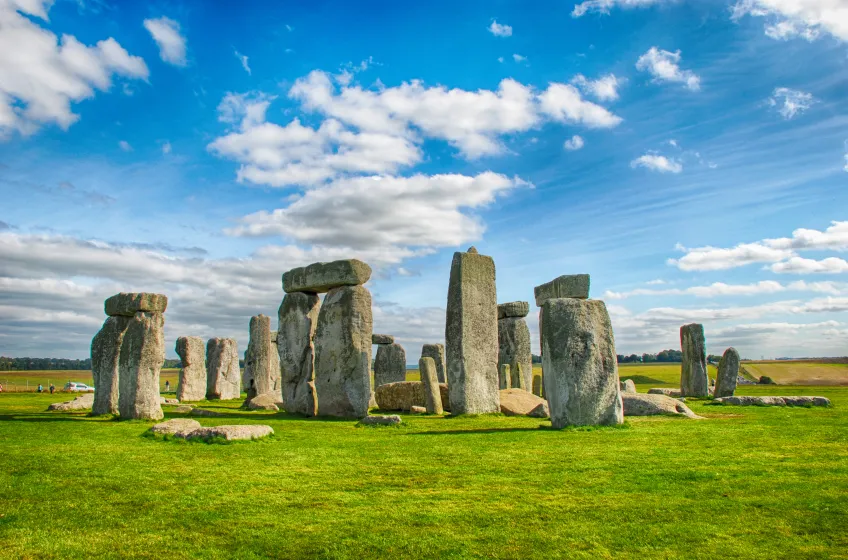
The main feature of the site, the stone circle, consists of large sarsen stones arranged in a horseshoe and outer circle, with smaller bluestones set within. Some of the stones are capped by horizontal lintels, creating trilithons. Walking around the monument allows visitors to appreciate its scale, craftsmanship, and alignment with the surrounding landscape.
The Heel Stone and Avenue
The Heel Stone, a solitary upright stone located outside the main circle, is aligned with the sunrise at the summer solstice. It forms part of the ceremonial Avenue, a processional route linking the monument to the River Avon. Together they highlight the broader ritual and geographical context of Stonehenge beyond the central circle.
The Aubrey Holes
These are 56 chalk pits surrounding the stone circle, named after the 17th-century antiquarian John Aubrey who first recorded them. Excavations suggest they may have held wooden posts or stones in earlier phases of the monument. Some of the holes were later used for cremation burials, providing evidence of Stonehenge as an important funerary site.
The Cursus
North of the stone circle lies the Stonehenge Cursus, a vast rectangular earthwork over 2 miles long. Its exact function is unknown, but it may have been used for ceremonial or processional purposes. Its presence illustrates the larger ritual landscape of which Stonehenge was only a part.
Burial Mounds
Scattered around the plain are numerous round barrows, dating mainly from the Bronze Age. These burial sites underline the area’s long-standing spiritual and cultural significance. Many can be seen from the path around the stones, linking Stonehenge with the lives and deaths of the communities who built and used it.
The Visitor Centre
Opened in 2013, the visitor centre provides context for the stones through interactive exhibitions, artefacts, and reconstructions. Displays include tools, pottery, jewellery, and human remains found in the area, shedding light on the people who built and used Stonehenge. A 360-degree audiovisual display allows visitors to experience the solstices from inside the circle, regardless of the season.
Neolithic Houses
Outside the visitor centre, reconstructed Neolithic houses based on archaeological evidence from the nearby settlement at Durrington Walls show how people may have lived during the time Stonehenge was built. Furnished with replica tools, hearths, and food stores, these provide a tangible connection to everyday life 4,500 years ago.
Special Access Visits
While the general public can only walk around the stones from a short distance, English Heritage offers special access tours, known as Stone Circle Experiences, at dawn or dusk. These allow small groups to enter the circle itself, offering a closer and more atmospheric encounter with the monument.
Facilities
Stonehenge has modern facilities to support its large number of visitors. The visitor centre includes a café serving hot and cold meals, snacks, and drinks, with seating both indoors and outdoors. A well-stocked shop offers books, souvenirs, gifts, and locally sourced products.
Toilets, including accessible facilities and baby-changing rooms, are available. The site is accessible for wheelchair users, with step-free routes from the visitor centre to the stones. A shuttle bus runs between the visitor centre and the monument, though visitors can also walk the 1.5-mile route through the landscape.
Audio guides are available via mobile app, offering detailed commentary in multiple languages. Guided tours can also be booked for those wanting expert interpretation. Parking is available on site, included in the price of admission for ticket holders.
Nearby Attractions
Stonehenge is part of a wider prehistoric landscape that is rich in archaeological sites. Just a short distance away is Woodhenge, a Neolithic timber circle thought to have had ceremonial significance. Durrington Walls, one of the largest Neolithic settlements in Europe, lies nearby and is believed to have been home to the builders of Stonehenge.
The city of Salisbury, around 9 miles to the south, offers additional attractions, including Salisbury Cathedral, which houses one of the best-preserved original copies of Magna Carta. The cathedral’s soaring spire and historic close make it a worthwhile addition to a visit.
To the north lies Avebury, another UNESCO World Heritage Site, with one of the largest stone circles in Europe. Unlike Stonehenge, Avebury allows visitors to walk freely among the stones and also includes a museum and manor house.
The wider Wiltshire countryside offers further historic sites such as Old Sarum, an Iron Age hillfort later developed into a medieval settlement, and Silbury Hill, the largest man-made prehistoric mound in Europe.
Practical Advice
Stonehenge is open throughout the year, though opening hours vary seasonally. It is advisable to book tickets in advance, as timed entry slots are used to manage visitor numbers. English Heritage members and National Trust members (for England) can enter for free, but still need to reserve a slot.
The stones are located in an exposed, open plain, so weather conditions can be unpredictable. Warm clothing, waterproofs, or sun protection may be required depending on the season. Comfortable shoes are recommended, as the walk from the visitor centre to the monument covers uneven ground.
Photography is permitted, though the use of drones is not allowed. Visitors should be aware that touching the stones is not permitted except during special access visits.
By car, Stonehenge is accessible from the A303, with signposted directions to the visitor centre. Public transport is more limited, but buses such as the Stonehenge Tour Bus run from Salisbury railway station, which has regular connections to London and other cities.
During the summer and winter solstices, access arrangements differ, with thousands of people gathering to watch the sunrise or sunset. These events are free but extremely crowded, and visitors should be prepared for limited facilities.
Stonehenge offers an experience that combines archaeology, history, and atmosphere in one of Britain’s most iconic landmarks. Whether visited as part of a broader exploration of Wiltshire’s prehistoric landscape or as a stand-alone destination, it provides an unforgettable encounter with the ancient past.
Shortlist
- Your Shortlist is empty