
Discover Stirling | A Visitor's Introduction to Stirling
Recommended places to visit, places to stay and things to do in and around Stirling
Stirling is one of Scotland’s most historically important and visually striking cities, often referred to as the “Gateway to the Highlands”. Located where the Lowlands meet the Highlands, Stirling boasts a commanding position on the River Forth and has been at the heart of Scottish history for centuries. Known for its mighty castle, dramatic battles, and royal connections, Stirling blends medieval heritage with a lively modern atmosphere.
Whether you’re drawn by tales of William Wallace, Robert the Bruce, or Mary, Queen of Scots, or you simply want to explore a charming city steeped in history, Stirling offers a compelling mix of old and new, all in a walkable and scenic setting.
Recommended Stirling Accommodation: Hotels Bed & Breakfasts Pub Accommodation
Why is Stirling Worth a Visit?
Stirling is worth visiting for its remarkable history, stunning views, and rich cultural offerings. It played a pivotal role in the Wars of Scottish Independence and was once a royal burgh and capital. The Old Town, crowned by Stirling Castle, is one of the best-preserved historic quarters in Scotland, filled with cobbled lanes, medieval buildings, and fascinating stories.
But Stirling isn’t just about the past. Today, it’s a university city with a vibrant feel, excellent shopping, galleries, theatres, and easy access to the Highlands. It's also an ideal base for exploring the Loch Lomond and The Trossachs National Park, the Falkirk Wheel, and central Scotland's lochs, glens, and castles.
Compact yet packed with things to see and do, Stirling is a must-visit for history lovers, families, photographers, and outdoor adventurers alike.
Stirling Highlights: Things to See and Do in Stirling
Stirling Castle
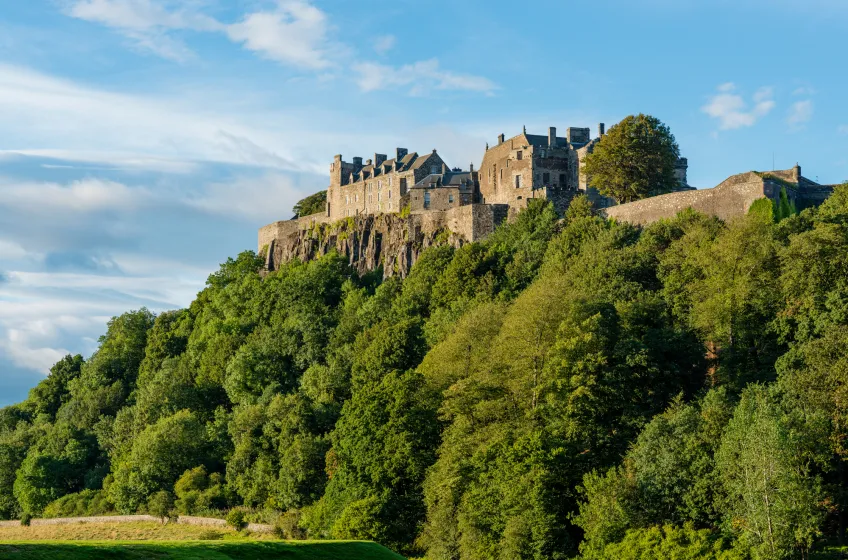
Perched on a volcanic outcrop and surrounded by steep cliffs, Stirling Castle is one of the grandest and most significant castles in Scotland. Once a residence of the Stewart kings and queens, the castle has seen coronations, sieges, and royal drama.
Visitors can explore the Royal Palace, Great Hall, Chapel Royal, and Stirling Heads Gallery, all beautifully restored. Costumed guides bring the history to life, and the views from the battlements over the surrounding countryside are breathtaking.
Allow at least two hours for your visit — more if you enjoy detailed historical exhibitions. Booking tickets online is recommended during peak season.
The National Wallace Monument
This iconic tower stands proudly on Abbey Craig, overlooking the city. Built in the 19th century to commemorate Sir William Wallace, hero of the Battle of Stirling Bridge, the monument offers a rewarding climb with fantastic views and historical insight.
Inside, you'll find exhibitions on Wallace’s life, the Wars of Independence, and a replica of Wallace’s broadsword. The spiral staircase (246 steps) leads to an open-air crown at the top, offering panoramic views of Stirling, the Forth Valley, and the Ochil Hills.
There’s also a visitor centre and woodland walk up to the tower if you’d prefer to skip the courtesy shuttle.
Bannockburn Heritage Centre
Just south of Stirling is The Battle of Bannockburn Experience, a high-tech visitor attraction that brings the famous 1314 battle to life using immersive 3D displays and interactive storytelling.
You’ll stand in Robert the Bruce’s command tent, plan your tactics, and watch the battle unfold through digital reconstructions. The centre also includes a statue of Bruce, a memorial rotunda, and views over the battlefield. A must for history buffs, it’s best to book in advance, especially during school holidays.
Stirling Old Town and The Holy Rude
Stirling’s Old Town is a joy to wander. Cobbled streets, medieval buildings, and dramatic views create a uniquely atmospheric walk between the castle and the city centre. Highlights include:
-
Church of the Holy Rude – dating from the 15th century, this church hosted the coronation of King James VI and still holds regular services.
-
Old Town Jail – an interactive museum offering guided tours, spooky tales, and insight into Victorian justice.
-
Mar’s Wark – the ruins of a Renaissance mansion with commanding views over the valley.
The Back Walk, a scenic path that circles the Old Town’s hilltop, offers excellent photography opportunities and a peaceful way to see the city from different angles.
Stirling Smith Art Gallery and Museum
This friendly local museum offers an eclectic mix of art, archaeology, and social history. From early tools to paintings by the Scottish Colourists, and even Robert the Bruce’s only surviving portrait, the Stirling Smith is both informative and surprisingly rich for a regional gallery.
Admission is free, and the café and garden are lovely spots to pause.
Cambuskenneth Abbey
Just across the River Forth from the city centre lies the ruins of Cambuskenneth Abbey, founded in 1140. It was an important royal burial site — King James III and his queen Margaret of Denmark are interred here.
Today, the site is quiet and atmospheric, with the surviving bell tower open to visitors during summer months. It’s a peaceful place for a riverside walk or picnic and can be reached by footbridge from Riverside.
Stirling Bridge and the Battlefield
The modern Stirling Bridge stands near the site of the historic Battle of Stirling Bridge (1297), where William Wallace and Andrew Moray famously defeated the English army. A monument marks the spot, and the surrounding area is ideal for a reflective riverside walk.
The Old Stirling Bridge, built in the 15th century, is one of the best-preserved stone arch bridges in Scotland and makes a scenic crossing point on foot.
University of Stirling and Airthrey Loch
Set in sprawling parkland to the north of the city, the University of Stirling campus is regularly named among the most beautiful in the UK. It features a serene loch with walking trails, landscaped gardens, and views of the Wallace Monument.
The campus is also home to the MacRobert Arts Centre, which hosts theatre productions, films, and exhibitions. It’s a great place for a quieter stroll or a cultural evening out.
Blair Drummond Safari Park
A 10-minute drive from Stirling, this family-friendly wildlife park is one of Scotland’s top attractions for kids. It features lions, elephants, giraffes, rhinos, and even boat rides to Chimp Island. There are adventure playgrounds, a petting farm, and daily talks and feeding sessions.
It’s especially busy during school holidays, so booking in advance is advised.
Practical Advice for Visitors
Getting There
Stirling is very well connected:
-
By train: Frequent services from Glasgow (40 minutes), Edinburgh (50 minutes), Perth (45 minutes), and beyond. The train station is just a 5-minute walk from the city centre.
-
By car: Stirling is easily reached via the M9 motorway, with ample signposting from major cities.
-
By bus: There are regular buses to and from surrounding towns and cities, including Citylink coaches on longer-distance routes.
Parking
Stirling has plenty of parking, including car parks at Castleview Park & Ride, Wellgreen, and the Old Town. Parking near the castle is limited and gets busy in summer, so consider using the park and ride or walking from the town centre.
Street parking is available but often metered, so check signage carefully.
Dining
Stirling offers a mix of cosy cafés, pubs, and independent restaurants. Some popular spots include:
-
The Birds and the Bees – a charming pub with hearty Scottish meals and a rustic atmosphere.
-
Brea – a well-regarded restaurant focusing on Scottish produce and traditional dishes.
-
The Allan Park – a stylish gastropub serving modern Scottish and British fare.
-
Darnley Coffee House – a great little café in the Old Town with homemade cakes and sandwiches.
-
Mintleaf – an excellent Indian restaurant for a spicier option.
Shopping
Stirling has a mix of high street brands and independent shops, mainly clustered around The Thistles Shopping Centre, Port Street, and the Old Town.
There are also small boutiques, bookshops, antique dealers, and artisan shops selling Scottish crafts, jewellery, and textiles. For foodies, look out for local delis, bakeries, and farmers’ markets (usually held monthly in the city centre).
When to Visit
Stirling is a year-round destination, though the best time to visit is spring through autumn (April to October), when the weather is most favourable for sightseeing and walking.
Summer brings events and festivals, but also more visitors. Autumn is especially scenic in the surrounding countryside, and winter sees festive markets and Christmas lights, with the castle often looking magical under a dusting of snow.
Local Events
-
Stirling Highland Games (August) – Traditional sports, food, and entertainment on the games field.
-
Bloody Scotland (September) – A popular international crime-writing festival featuring top authors.
-
Stirling Bridge International Arts Festival (summer) – A celebration of music and culture from around the world.
-
Stirling Winter Festival (December) – Markets, lights, and festive entertainment.
-
Various events at the castle and Wallace Monument – Including reenactments, music, and family days.
Check the local events calendar to see what’s on during your visit.
Exploring Beyond Stirling
Stirling’s central location makes it an ideal hub for exploring:
-
Doune Castle – 15 minutes west, famous for Outlander, Monty Python, and Game of Thrones.
-
The Trossachs and Loch Katrine – 40 minutes away, perfect for hiking and boat tours.
-
Callander and the Bracklinn Falls – Gateway to the Trossachs with scenic walks.
-
Falkirk Wheel and The Kelpies – 30 minutes away, iconic modern Scottish landmarks.
-
Gleneagles, Perth, or the Fife villages – all within an hour for day trips.
Stirling is a place where Scotland’s dramatic history, natural beauty, and modern vibrancy come together. Whether you're exploring its grand castle, tracing the steps of national heroes, or simply enjoying a stroll through historic streets, Stirling leaves a deep and lasting impression. Compact yet culturally rich, easy to reach yet full of Highland spirit, it’s one of Scotland’s most rewarding destinations — and one you’ll want to return to.
Shortlist
- Your Shortlist is empty