
A Visitor's Introduction to Bannockburn
The Battle of Bannockburn Visitor Centre is a major heritage attraction located near Stirling in central Scotland. Operated by the National Trust for Scotland, the centre offers an immersive and educational experience focusing on one of the most significant events in Scottish history—the Battle of Bannockburn, which took place in June 1314. This battle was a pivotal moment in the First War of Scottish Independence, when King Robert the Bruce led Scottish forces to victory against the English army commanded by King Edward II. The visitor centre, along with the historic battlefield and the iconic equestrian statue of Robert the Bruce, provides a rich and engaging exploration of medieval warfare, national identity, and Scotland's struggle for sovereignty.
Located on the site of the original battlefield, the centre blends modern technology with historical storytelling to bring the events of the 14th century to life. It is a destination that appeals to a wide audience, from families and school groups to history enthusiasts and tourists interested in Scotland’s national story. The combination of digital displays, hands-on activities, and outdoor exploration makes it a distinctive cultural experience in the heart of Scotland.
Recommended Stirling accommodation: Hotels Bed & Breakfasts Pub Accommodation
Pre-book Stirling Attractions, Tours & Experiences
Why Is Bannockburn Worth a Visit?
The Battle of Bannockburn Visitor Centre is worth visiting for its compelling combination of history, technology, and national significance. At the heart of the attraction is the 3D immersive experience, which places visitors in the midst of the medieval battlefield. Using state-of-the-art motion capture and digital modelling, the Battle Room allows participants to understand the tactics, terrain, and atmosphere of the battle. Visitors can also take part in an interactive Battle Game where they command virtual armies and explore alternative outcomes based on strategic choices.
Beyond the technology, the site offers a chance to reflect on a defining moment in Scotland’s past. The victory at Bannockburn had lasting repercussions for Scottish independence and is considered a cornerstone of national identity. Visiting the site provides historical context and insight into Robert the Bruce's leadership and the socio-political tensions of the period.
The surrounding grounds add further depth to the experience. Visitors can walk on part of the historic battlefield, view the famous statue of Robert the Bruce, and take in interpretive displays that explain the location’s topography and strategic importance. The site also offers panoramic views of the surrounding landscape, helping visitors to visualise the movements and positions of the medieval armies.
For those interested in military history, political history, or the formation of national narratives, Bannockburn offers a focused and well-curated visit. It is a key destination for understanding Scotland's medieval past and its ongoing resonance in the present.
Bannockburn Highlights
The Battle Room
The centrepiece of the experience is the Battle Room, a digitally animated recreation of the Battle of Bannockburn. Developed using cutting-edge technology, it allows visitors to step into the action with immersive visuals and sound. The animation is based on the best available historical evidence and presents the unfolding events from both Scottish and English perspectives. Visitors learn about the weapons, formations, and leadership decisions that shaped the outcome.
The Battle Game
The interactive Battle Game lets visitors test their strategic skills by taking control of either the Scottish or English forces. Participants make tactical decisions and see how their strategies compare to those of Robert the Bruce or Edward II. The game is educational and engaging, particularly for younger audiences, and highlights the complexities of medieval combat.
The Historical Displays
Inside the visitor centre, informative exhibits outline the political context of the War of Independence, the biographies of key figures such as Robert the Bruce and Edward II, and the broader medieval setting. Artefacts, replica weapons, and multimedia presentations contribute to a well-rounded understanding of the battle’s significance.
Robert the Bruce Statue
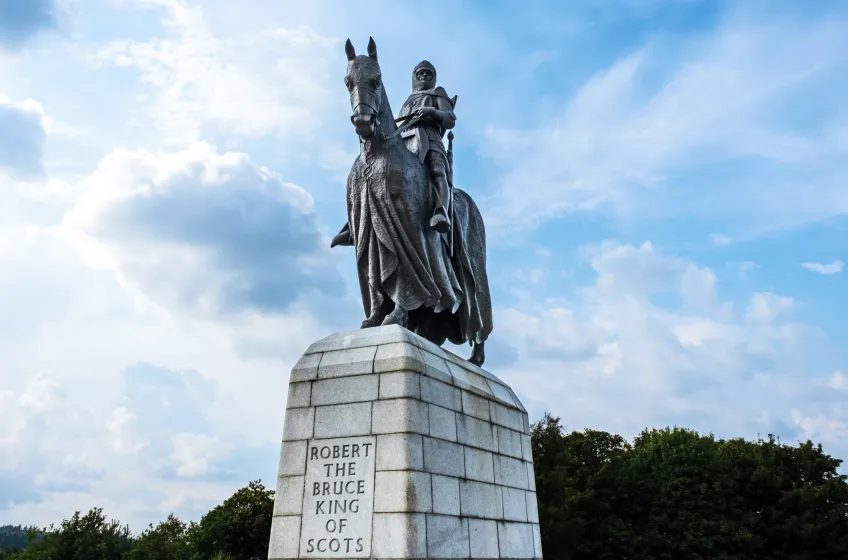
Just outside the visitor centre stands the iconic statue of Robert the Bruce on horseback, a landmark commissioned in 1964 to mark the 650th anniversary of the battle. Created by sculptor Pilkington Jackson, the statue captures Bruce in a defiant pose and has become one of the most recognised images associated with the site.
The Battlefield
While the exact location of much of the battle is still debated, visitors can explore part of the battlefield area, which is marked with interpretation panels and walking paths. This outdoor component allows a more physical connection with the site, helping visitors to grasp the scale and terrain of the historic encounter.
Bruce’s View
A short walk from the visitor centre leads to a viewpoint known as Bruce’s View, which offers a panoramic look over the Carse of Stirling and the surrounding landscape. The elevated position provides insight into the strategic choices made by Bruce during the battle and helps contextualise the movements of troops across the area.
Medieval Warfare Interpretation
Additional exhibits within the centre focus on medieval warfare techniques, including the use of schiltrons (tight formations of spearmen used by the Scots) and cavalry tactics. These displays explain how smaller, more mobile forces could resist the larger English army, challenging assumptions about military superiority in medieval Europe.
Education and Schools Programme
The site is particularly popular with school groups, offering curriculum-linked educational sessions that include role-playing activities, guided tours, and hands-on learning. The approach is designed to make history accessible and memorable for young learners.
Audio Guides and Digital Resources
Visitors can access audio guides that provide detailed information about the exhibits and the battlefield, available in multiple languages. There is also an official app with additional content, including maps and timelines, enhancing the experience before, during, and after a visit.
The Shop and Café
The visitor centre includes a well-stocked gift shop with books, souvenirs, and locally made products related to Scottish history and culture. The on-site café offers light meals, hot drinks, and snacks, making it a convenient place to pause during a visit.
Nearby Attractions
The Battle of Bannockburn Visitor Centre is situated just a short distance from several other notable attractions in the Stirling area, making it ideal for a combined itinerary.
Stirling Castle, one of Scotland’s most important royal residences, is less than three miles away. The castle has been extensively restored and includes exhibitions on the Stewart kings and queens, military history, and the lives of courtiers and servants.
The Wallace Monument, located on the Abbey Craig hill overlooking Stirling, commemorates William Wallace, another key figure in the Wars of Independence. The monument offers sweeping views and a series of exhibitions about Wallace’s life and legacy.
Stirling Old Town, with its cobbled streets and historic buildings, is also worth exploring. Attractions here include the Church of the Holy Rude, the Old Town Jail, and the Stirling Smith Art Gallery and Museum.
For those interested in nature, the nearby Ochil Hills provide walking and hiking opportunities, while the River Forth and its surrounding wetlands are home to a range of birdlife and offer scenic paths and cycling routes.
Practical Advice
The Battle of Bannockburn Visitor Centre is located just off the A872 road and is easily accessible by car, with free on-site parking available. It is also served by local bus routes from Stirling city centre, and Stirling railway station is approximately three miles away, connecting to major Scottish cities including Glasgow and Edinburgh.
The visitor centre is open year-round, though opening times vary slightly between seasons. It is advisable to check the official website for up-to-date information on hours, ticket prices, and any temporary closures or events. Advance booking is recommended during peak tourist periods and school holidays, especially for the interactive Battle Game, which operates on scheduled time slots.
The site is wheelchair-accessible, with level pathways, lifts, and accessible toilets. Assistance dogs are welcome. Information panels and audio guides are available in accessible formats to accommodate different needs.
Most visitors spend between 1.5 and 2.5 hours at the site, though those taking a leisurely walk around the battlefield or combining their visit with the café and shop may stay longer. Guided tours and staff-led activities are offered regularly and can enhance the understanding of the site.
Weather in central Scotland can be unpredictable, so visitors are advised to bring suitable clothing for outdoor exploration. The battlefield area is mostly grass and gravel paths, which can become muddy in wet weather.
The visitor centre provides a family-friendly environment, with interactive features designed to appeal to children, including educational games and digital storytelling. Facilities such as baby changing areas and high chairs in the café are available.
Conclusion
The Battle of Bannockburn Visitor Centre offers a rich and multifaceted experience that combines historical depth with modern interpretive techniques. By presenting a nationally significant event in an accessible and engaging format, it allows visitors to connect with the story of Scotland’s fight for independence in a meaningful way. With its location close to other major heritage sites in the Stirling area, it makes for a rewarding addition to any tour of central Scotland. Whether you're drawn by medieval history, national heritage, or simply curious about one of Scotland's defining moments, Bannockburn is a site well worth discovering.
Shortlist
- Your Shortlist is empty