
Discover The Somme Battlefield | An Introduction to The Somme Battlefield
The Somme Battlefield, located in northern France’s Hauts-de-France region, is one of the most significant and sobering sites in World War I history. Stretching across the peaceful countryside of the Somme department, this area witnessed one of the bloodiest and most tragic military campaigns of the Great War. Today, the landscape is marked by cemeteries, memorials, preserved trenches, and museums that serve as powerful reminders of the sacrifice and suffering endured here. Visiting the Somme Battlefield is a moving experience—one that invites reflection, remembrance, and a deeper understanding of the human cost of war.
Recommended Somme Battlefield Accommodation: Hotels Bed & Breakfasts
Why is the Somme Battlefield Worth a Visit?
The Somme Battlefield is worth visiting not only for its historical importance but also for the profound emotional and educational journey it offers. The Battle of the Somme, which began on 1 July 1916, resulted in over a million casualties, making it one of the deadliest battles in history. What began as a British and French offensive turned into a prolonged and harrowing conflict, with little territorial gain but enormous loss of life.
Today, the area has been thoughtfully preserved and commemorated. Walking through the still-visible trenches, standing before endless rows of white headstones, or reading the names of the missing etched in stone, visitors can grasp the scale of the conflict in a deeply personal way.
Yet despite its sorrowful past, the Somme is also a place of great beauty. Rolling fields, peaceful villages, and quiet woods now cover the scars of war. It's a place where history and tranquillity coexist, offering a unique and meaningful travel experience.
Somme Battlefield Highlights: Things to See and Do on the Somme Battlefield
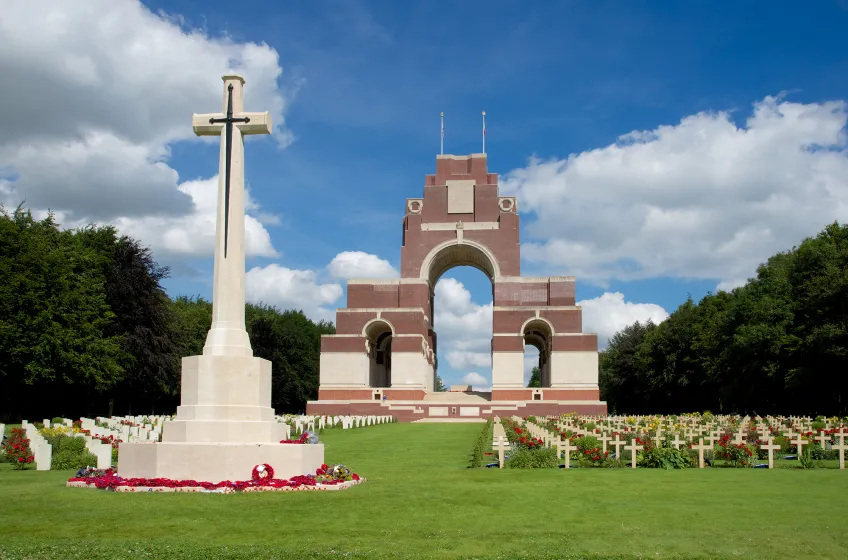
Thiepval Memorial to the Missing
This imposing and deeply moving memorial is dedicated to the 72,000 British and South African soldiers who died in the Somme sector and have no known grave. Designed by Sir Edwin Lutyens, the red brick and white stone arches bear the names of the missing, creating a solemn monument to those lost. An on-site visitor centre offers historical context and personal stories, helping to humanise the staggering numbers.
The memorial stands on ground that saw fierce fighting, and nearby are several Commonwealth War Graves cemeteries.
Beaumont-Hamel Newfoundland Memorial Park
This well-preserved battlefield park honours the Royal Newfoundland Regiment, which suffered devastating losses on the first day of the Battle of the Somme. It is one of the few places where the trench lines have been left largely untouched, giving visitors a visceral sense of the terrain and conditions.
The site includes the haunting Danger Tree, a preserved trench system, and several memorials, including a bronze caribou—the emblem of Newfoundland—overlooking the battlefield.
Lochnagar Crater
Near the village of La Boisselle, the Lochnagar Crater is the result of a massive mine detonated by British forces on 1 July 1916. At 100 metres wide and 30 metres deep, it remains one of the largest surviving craters from the war. Surrounded by countryside, the site is both dramatic and peaceful, offering a poignant place to contemplate the scale and violence of trench warfare.
Information panels and memorials around the crater provide context, and visitors often leave crosses and poppies in remembrance.
Delville Wood and South African National Memorial
Located near Longueval, Delville Wood was the scene of intense and costly fighting for South African troops. The memorial and museum here pay tribute to the South African soldiers who served and died during the war. The forest has been regrown, but pathways trace the original trench lines.
The Delville Wood Museum provides detailed exhibits and archival footage, and the adjacent cemetery is beautifully maintained, offering a serene space for reflection.
Ulster Tower
Modelled after Helen’s Tower in Northern Ireland, the Ulster Tower commemorates the men of the 36th (Ulster) Division who fought with great bravery during the Battle of the Somme. It's one of the first memorials erected on the Western Front and remains a powerful symbol of sacrifice.
There is a small visitor centre nearby, often staffed by volunteers from Northern Ireland, who provide personal insights and historical background.
Historial de la Grande Guerre (Museum of the Great War) – Péronne
This comprehensive museum in the Château de Péronne offers a deep and balanced exploration of the First World War from French, British, and German perspectives. The displays focus on the experiences of soldiers and civilians, with uniforms, weapons, letters, and artefacts providing a rich narrative.
Interactive exhibits and thoughtfully curated content make it accessible and informative for all ages. The museum is a must-visit for anyone wanting to understand the broader context of the Somme battlefield.
Somme 1916 Museum – Albert
Located in a former air raid shelter beneath the town’s basilica, this underground museum offers an immersive look into life in the trenches. Visitors walk through reconstructed dugouts, scenes from the front line, and displays of weapons, uniforms, and personal items.
Albert itself was heavily damaged during the war and has been carefully rebuilt. The golden statue of the Virgin atop the basilica is a well-known symbol—it famously leaned during the war and was said to signal the end of the conflict when it finally fell.
Pozières Memorial and Windmill Site
Pozières saw some of the fiercest fighting during the battle, particularly involving Australian troops. The site includes a memorial to the 1st Australian Division, as well as a stark windmill site that was fiercely contested. Interpretive panels and a peaceful cemetery nearby honour the thousands of Australians who died here.
Circuit of Remembrance
The Circuit du Souvenir (Remembrance Trail) is a well-signposted route that connects many of the major sites across the Somme battlefield. Stretching from Albert in the west to Péronne in the east, it allows visitors to explore the battlefield by car, bike, or on foot. Maps and guides are available from tourist offices, and the route is a meaningful way to structure a day—or several days—of exploration.
Practical Advice for Visitors
Getting There
The Somme battlefield is easily accessible by road and train. The town of Albert is a central hub, located about 1.5 hours by car from Paris. Trains from Paris Gare du Nord to Albert or Amiens are frequent and take between 1 and 2 hours depending on the route.
Driving is the most flexible way to explore the battlefield, especially for visiting remote memorials and cemeteries. Car hire is available in nearby cities like Amiens or Arras.
Parking
Most memorials and museums have dedicated, free parking. Some of the smaller sites are located along country roads with pull-off areas for vehicles. Signage is generally good, and the roads are quiet and easy to navigate.
Dining
There are a number of small cafés and restaurants in towns like Albert, Péronne, and Bapaume. Traditional Picardy cuisine includes hearty dishes such as ficelle picarde (savoury crêpes with ham and mushrooms) and tarte au maroilles (cheese tart). For a sit-down meal, Hotel Royal Picardie in Albert and Auberge de la Vallée d’Ancre in Authuille offer excellent local fare.
Picnics are a great option when touring the battlefield—several sites have designated areas or benches, and local markets in towns provide fresh bread, cheese, and fruit.
When to Visit
The best time to visit the Somme battlefield is from April to October, when the weather is mild and the landscape is at its most beautiful. Spring and early summer bring wildflowers and green fields, while autumn adds golden hues and fewer crowds.
The area is especially poignant during the week of 1 July, the anniversary of the Battle of the Somme, when commemorative events and ceremonies are held across the region.
Winter visits are quieter, and while some smaller museums may reduce hours, the atmosphere can be hauntingly reflective.
Local Events
Each year on 1 July, dawn services and remembrance events are held at Thiepval, Beaumont-Hamel, and other major memorials. Armistice Day (11 November) is also marked with ceremonies throughout the region.
Temporary exhibitions, guided tours, and battlefield walks are often organised by local historical associations and museums, particularly in the summer months.
Exploring Beyond the Battlefield
While focused on remembrance, the Somme region also offers charming towns, nature reserves, and peaceful riverside walks. Amiens, with its towering cathedral and floating gardens, is just 40 minutes away and makes for a relaxing cultural detour. The Baie de Somme, one of France’s most beautiful coastal areas, is around an hour’s drive and provides a tranquil contrast to the battlefield’s intensity.
Shortlist
- Your Shortlist is empty