
Discover Neuchâtel | A Visitor's Introduction to Neuchâtel
Recommended places to visit, places to stay and things to do in and around Neuchâtel
Neuchâtel is an elegant French-speaking town on the northern shore of Lake Neuchâtel in western Switzerland. Known for its warm yellow-stone architecture, hilltop castle, lakeside promenade and long watchmaking tradition, this compact town is a perfect destination for culture lovers, couples and travellers exploring Switzerland by rail. With its historic centre, museums, nearby vineyards and Alpine views across the water, Neuchâtel offers a refined but relaxed lakeside break.
Recommended Neuchâtel hotels and other accommodation
Pre-book Neuchâtel Attractions, Tours & Experiences
Why is Neuchâtel Worth a Visit?
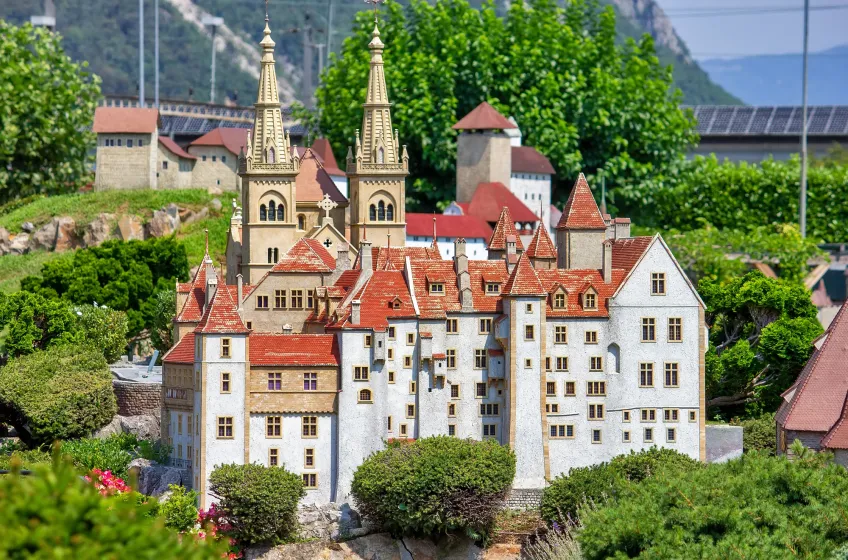
Neuchâtel is worth visiting because it combines the atmosphere of a small historic town with the cultural depth of a regional capital. Its old centre rises gently from the lake towards the castle and collegiate church, with fountains, arcades and pale limestone façades lining the streets.
The lake is central to the town’s appeal. Promenades, parks and harbour areas provide easy walks, while passenger boats offer seasonal journeys towards other towns around the Three Lakes region. On clear days, the distant Alps form a striking backdrop across the water.
Neuchâtel also has strong links with science, archaeology and precision engineering. Museums cover subjects ranging from prehistoric lakeside settlements to art, natural history and mechanical automata. The wider canton’s watchmaking heritage is especially visible in nearby La Chaux-de-Fonds and Le Locle.
The town is compact enough for a day trip from Bern, Lausanne or Geneva, but two nights allow time for the old centre, waterfront, museums and a nearby vineyard or lake excursion.
Neuchâtel Highlights: Things to See and Do in Neuchâtel
Explore Neuchâtel Old Town
Neuchâtel’s old town is a compact network of pedestrian streets, arcades, fountains and small public squares.
Many buildings are constructed from local yellow limestone, giving the centre a warm golden appearance. Place des Halles is one of the liveliest areas, surrounded by historic façades, cafés and market activity.
Rue du Seyon and the smaller lanes nearby contain shops, bakeries and restaurants. The streets become steeper as they approach the castle, but the distances are short.
Explore during the morning for a more local atmosphere, then return in the evening when restaurant terraces fill.
Visit Neuchâtel Castle
Neuchâtel Castle stands above the old town and remains one of the town’s defining landmarks.
The complex developed over many centuries and now contains cantonal government offices. Its towers, courtyards and stone façades reflect Neuchâtel’s former political importance.
Interior access is usually more restricted than at a conventional museum and may depend on guided visits. The exterior and surrounding terraces are still worth the uphill walk.
Views extend across the rooftops towards the lake and distant mountains.
See the Collegiate Church
The Collegiate Church stands immediately beside the castle.
Its architecture combines Romanesque and Gothic elements, while the interior contains historic monuments, carved details and a restrained Protestant atmosphere.
The adjoining cloister is one of the most peaceful spaces in the upper town. The terrace outside also provides excellent views.
The church remains active, so access may be limited during services, concerts or ceremonies.
Walk Along the Lakefront
Neuchâtel’s lakeside promenade is one of the town’s greatest pleasures.
Paths run beside parks, harbour areas and open water, with benches and lawns providing plenty of places to stop. The promenade is mostly flat and suitable for a gentle walk.
On clear days, the Bernese Alps appear across the lake. Sunset can be particularly attractive, although the best light varies with the season.
Continue beyond the busiest harbour area for quieter waterfront sections.
Take a Boat on Lake Neuchâtel
Passenger boats provide a scenic way to explore the lake.
Seasonal services may connect Neuchâtel with Estavayer-le-Lac, Yverdon-les-Bains, Murten and other ports within the Three Lakes region. Some longer journeys use canals linking Lakes Neuchâtel, Murten and Biel.
A boat in one direction and train return is usually more practical than completing a full round trip by water.
Services are much less frequent outside summer, so check the final departure carefully.
Visit the Museum of Art and History
The Museum of Art and History stands close to the lakefront.
Its collections cover fine art, decorative objects and regional history. The museum is especially known for mechanical automata created by the Jaquet-Droz family.
These highly intricate figures demonstrate writing, drawing and musical mechanisms and provide an early example of the region’s precision-engineering skills.
Automata demonstrations may take place only at selected times, so check the programme before visiting.
Explore the Natural History Museum
Neuchâtel’s Natural History Museum examines animals, ecosystems, geology and environmental change.
The museum has a strong reputation for imaginative exhibition design and is suitable for both adults and families. Temporary exhibitions often explore scientific subjects in an accessible way.
It is a good wet-weather option and can be combined easily with the old town.
Visit the Laténium
The Laténium is a major archaeological museum at Hauterive, just east of Neuchâtel.
Its exhibitions cover regional history from prehistoric lakeside communities through the Roman period and into the Middle Ages. Objects include jewellery, tools, weapons, pottery and finds recovered from underwater sites.
An archaeological park beside the lake contains reconstructed features and interpretation of ancient settlement.
Allow at least two hours, particularly when visiting both the museum and outdoor areas.
Relax in the Jardin Anglais
The Jardin Anglais is a landscaped park beside the lake.
Lawns, flowerbeds, sculptures and mature trees make it a pleasant place for a rest between the harbour and museums. It is especially popular during warmer weather.
The park is suitable for picnics and easy waterfront walks. Public events may occasionally take place nearby.
See the Monument to the Republic
The Monument to the Republic stands near the lake and commemorates the establishment of republican government in Neuchâtel.
The sculpture reflects the town’s political history and its transition away from monarchical rule. It is easy to include during a walk through the Jardin Anglais and harbour area.
Visit the Botanical Garden
Neuchâtel Botanical Garden occupies a sloping site above the town.
Its collections include native plants, medicinal species, themed gardens and greenhouses. Woodland paths and elevated views add to the visit.
The garden is particularly attractive from spring to early autumn, although greenhouse sections provide interest throughout the year.
The uphill location is easier to reach by public transport than entirely on foot.
Explore the Centre Dürrenmatt
The Centre Dürrenmatt Neuchâtel is devoted to Swiss writer and artist Friedrich Dürrenmatt.
The building incorporates his former home and was designed by architect Mario Botta. Exhibitions explore Dürrenmatt’s literature, paintings and political ideas.
The centre also provides elevated views over the town and lake. It is most rewarding for visitors interested in literature, modern architecture or Swiss cultural history.
Visit Serrières
Serrières is a western neighbourhood of Neuchâtel associated with industry, water and chocolate production.
The small River Serrière emerges from the rock and flows a short distance towards the lake. Historic industrial buildings reflect the area’s role in manufacturing.
A walk through Serrières reveals a different side of Neuchâtel from the polished old town and waterfront.
Explore Auvernier
Auvernier is a vineyard village immediately west of Neuchâtel.
Stone houses, narrow lanes and wine estates stand on slopes above the lake. The village is small but makes a pleasant destination for a short walk, meal or tasting.
Auvernier can be reached easily by train or bus. A lakeside or vineyard walk back towards Neuchâtel is possible depending on the chosen route.
Wine tastings often require advance arrangements.
Discover Chaumont
Chaumont is a forested ridge above Neuchâtel.
A funicular from La Coudre provides access to walking routes, picnic areas and viewpoints. On clear days, the panorama extends over Lake Neuchâtel towards the Alps.
Chaumont is a useful escape during hot weather and offers gentler countryside than the higher Jura mountains farther north.
The area can be cooler and mistier than the lakeshore, so bring an extra layer.
Practical Advice for Visitors
Getting There
Neuchâtel has excellent rail connections with major Swiss cities.
Direct or straightforward trains run from Bern, Lausanne, Geneva, Basel and Zurich. Bern is generally around 35 to 50 minutes away, while Lausanne usually takes under an hour.
Geneva Airport and Zurich Airport are both practical international gateways. Geneva is often more convenient for travellers combining Neuchâtel with western Switzerland.
The railway station stands above the old town. Lifts, buses and sloping streets connect it with the centre and lakefront.
Getting Around
Central Neuchâtel is compact and best explored on foot.
The route between the lake, old town and castle involves slopes and some steps. Local buses are useful for reaching the station, botanical garden, Laténium and outer neighbourhoods.
A funicular connects La Coudre with Chaumont, while regional trains provide easy access to nearby vineyard villages.
Boat services are scenic but seasonal.
Parking
Public garages are available near the station, old town and waterfront.
Street parking is controlled by payment zones, time limits and resident restrictions. Driving through the historic centre is inconvenient because of narrow streets and pedestrian areas.
Rail travel is generally easier for day visitors arriving from Bern, Lausanne or Geneva.
Dining
Neuchâtel has a broad selection of French-speaking Swiss, European and international restaurants.
Regional menus may include freshwater fish, smoked sausage, rösti, cheese dishes and seasonal game. The old town offers atmospheric dining, while lakefront restaurants provide views at generally higher prices.
Reserve popular restaurants on Friday and Saturday evenings.
Try Neuchâtel Sausage
Saucisson neuchâtelois is a smoked pork sausage associated with the canton.
It is usually cooked slowly and served with potatoes, leeks, lentils or other vegetables. Its flavour is rich and distinctly smoky.
Local butchers and food shops sell versions suitable for cooking at home, subject to customs restrictions when travelling internationally.
Wine
The vineyards around Neuchâtel produce some of Switzerland’s most interesting cool-climate wines.
Chasselas is the principal white grape, while Pinot Noir is widely used for red and rosé wines. Œil-de-Perdrix, a pale Pinot Noir rosé associated with the region, is a local speciality.
Wine bars and restaurants provide the easiest introduction. Visits to smaller producers often require an appointment.
Shopping
Rue du Seyon, Place des Halles and the surrounding centre contain the main shopping areas.
Typical regional purchases include local wine, chocolate, cheese, sausage and watch-related products. Independent food shops and market stalls are especially useful for regional specialities.
Most ordinary shops close on Sundays, apart from selected railway-station and tourist businesses.
When to Visit
April to June is excellent for lakeside walks, gardens and comfortable sightseeing weather.
July and August offer swimming, boat trips and long evenings beside the lake. Warm weekends can become busy around beaches and waterfront areas.
September and October are particularly attractive for vineyards, harvest activity and autumn colours.
December brings seasonal lights and small festive events, although lake services are reduced.
Winter is quiet and suits museums, restaurants and day trips into the snowy Jura, though lakeside weather can be grey or misty.
Local Events
Neuchâtel hosts music, food, cultural and lakeside events throughout the year.
The grape harvest period brings wine-related celebrations to the town and surrounding villages. Large public festivities can attract significant crowds and affect accommodation and transport.
Markets are regularly held around Place des Halles, providing local produce, flowers and prepared food.
Event dates vary annually, so check the programme before arranging a visit around a particular celebration.
Exploring Beyond Neuchâtel
La Chaux-de-Fonds is a major watchmaking city with a distinctive planned layout, an important horology museum and early architecture by Le Corbusier.
Le Locle offers further watchmaking heritage and the unusual underground mills at Col-des-Roches.
The Areuse Gorge provides a dramatic woodland and riverside walk through limestone scenery.
Creux du Van is a vast natural rock amphitheatre above the Val-de-Travers.
Murten is a beautifully preserved walled town beside a smaller lake.
Estavayer-le-Lac combines medieval streets, a castle and beaches on the southern shore of Lake Neuchâtel.
Bern is an easy day trip for its UNESCO-listed old town, museums and River Aare scenery.
Shortlist
- Your Shortlist is empty