
Discover Narbonne | A Visitor's Introduction to Narbonne
Narbonne is a historic city in southern France, nestled in the Aude department of the Occitanie region. Once a bustling Roman port and the first Roman colony outside Italy, Narbonne is now a charming destination steeped in heritage, sunshine, and southern French flair. With its canalside promenades, Gothic cathedral, Roman ruins, and easy access to beaches and vineyards, Narbonne makes an excellent base for exploring the Languedoc countryside and coastline.
A delightful blend of antiquity and Mediterranean lifestyle, Narbonne is perfect for history lovers, wine enthusiasts, and travellers looking for a relaxed but culturally rich French city experience.
Recommended Narbonne Accommodation: Hotels Bed & Breakfasts
Why is Narbonne Worth a Visit?
Narbonne is worth visiting for its deep Roman roots, its walkable city centre, and its enviable location close to both the sea and the Corbières vineyards. Once a significant Roman trade hub and the starting point of the Via Domitia, Narbonne still echoes its past with ancient remnants dotted throughout the city—from underground Roman roads to the remains of a forum. But it’s not all about the past—Narbonne has a laid-back, contemporary vibe with vibrant markets, al fresco dining, and lively cultural events.
The city also boasts the Canal de la Robine, a UNESCO-listed waterway that winds through its heart and gives Narbonne much of its peaceful charm. A short drive or cycle away are wide Mediterranean beaches, scenic wine routes, and the salt pans and flamingos of the nearby lagoons. Whether you’re in the mood for ancient ruins or oysters by the sea, Narbonne is a richly rewarding destination in the South of France.
Narbonne Highlights: Things to See and Do in Narbonne
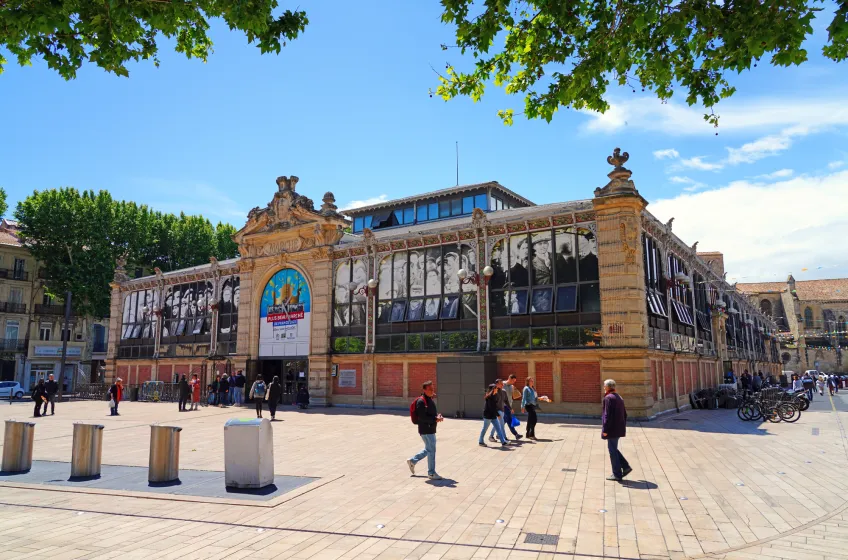
Les Halles de Narbonne
This 19th-century iron-and-glass market hall is one of the most celebrated in France. Open daily from morning to early afternoon, Les Halles is a paradise for food lovers, featuring over 70 stalls selling fresh produce, cheese, seafood, charcuterie, and baked goods. You’ll also find wine bars and tiny eateries where locals tuck into tapas-style dishes. For the full experience, grab some oysters and a glass of Picpoul at the counter and watch the world go by.
Narbonne Cathedral (Cathédrale Saint-Just et Saint-Pasteur)
This impressive Gothic cathedral dominates the city skyline and remains unfinished, giving it a unique architectural character. Construction began in the 13th century, but political and military tensions meant it was never completed. Still, the parts that do exist are awe-inspiring, including the choir and the monumental organ. Behind the cathedral, don’t miss the Cloître Saint-Paul and Palais des Archevêques, home to art and archaeological museums.
Horreum Romain
Beneath the streets of Narbonne lies one of its most intriguing Roman sites—the Horreum, a network of subterranean galleries once used as storage for the Roman forum. Dating back to the 1st century BC, this atmospheric site offers a fascinating glimpse into the city’s past, with displays and reconstructions that help bring ancient Narbo Martius (as it was known) to life.
Via Domitia
In the heart of the city, right next to the main square, lies a striking fragment of the Via Domitia, the ancient Roman road that linked Italy to Spain. Discovered in the 1990s, the preserved section of paving stones sits open to the sky, a quiet reminder of Narbonne’s strategic importance in the Roman Empire. It’s a small but iconic landmark, surrounded by historic façades and cafés.
Canal de la Robine
A scenic offshoot of the Canal du Midi, the Canal de la Robine is a peaceful feature that threads through Narbonne. Lined with plane trees and crossed by charming old bridges, it’s perfect for a relaxed stroll or a bike ride. You can also take boat trips along the canal, offering a different perspective of the city and connecting to the wider canal network of the region.
Narbo Via Museum
Opened in 2021, Narbo Via is Narbonne’s flagship museum dedicated to its Roman heritage. Housed in a stunning contemporary building near the canal, it brings together thousands of artefacts—including sculptures, mosaics, and inscriptions—many of which were hidden away or only recently discovered. The standout feature is the massive wall of Roman funerary stones, arranged like a giant architectural jigsaw.
Abbaye de Fontfroide
Just a short drive southwest of Narbonne, the Abbaye de Fontfroide is a beautifully preserved Cistercian monastery set in a tranquil valley. Founded in the 11th century, it’s a peaceful and evocative place to explore, with cloisters, rose gardens, and vineyards. Guided tours delve into its history, and there’s a restaurant and wine shop on-site. The abbey often hosts classical concerts and art exhibitions.
Narbonne Plage
Only about 15 km from the city centre, Narbonne Plage offers a classic Mediterranean beach experience. Wide sands, calm shallow waters, and a lively promenade make it perfect for families and sun-seekers. It's less crowded than the Riviera, with a laid-back atmosphere. You can get there by car, shuttle bus (in season), or even cycle via a scenic route that passes through vineyards and lagoons.
Étang de Bages-Sigean
Just to the south of Narbonne lies a vast coastal lagoon known for its wildlife, fishing villages, and striking light. The Étang de Bages-Sigean is a paradise for birdwatchers, particularly flamingos and herons, and offers stunning views across salt pans and wind-blown waters. Stop in Bages or Peyriac-de-Mer for a stroll on the boardwalks and lunch overlooking the lagoon. It's a wonderfully peaceful detour, especially at sunrise or sunset.
Musée Lapidaire
Housed in a former church, the Musée Lapidaire is a lesser-known gem that displays a remarkable collection of Roman and medieval stonework. Statues, sarcophagi, and carved fragments line the walls in a hauntingly beautiful setting, illuminated by stained glass windows. It's quiet, atmospheric, and one of the most evocative museum experiences in Narbonne.
Théâtre + Cinéma Scène Nationale
For a dose of culture and contemporary arts, check the programme at Théâtre + Cinéma, Narbonne’s main performance venue. It hosts plays, concerts, film screenings, and dance performances throughout the year. It’s also a great way to experience the city as the locals do.
Practical Advice for Visitors
Getting There
Narbonne is well connected by rail, sitting on the main TGV line between Paris and Barcelona. Trains from Paris Gare de Lyon take around 4.5 hours, and connections are also available from Toulouse, Montpellier, and Marseille. The nearest airports are Béziers Cap d’Agde, Carcassonne, Perpignan, and Montpellier, all under 90 minutes by car or train. By car, the city is accessible via the A9 and A61 motorways.
Parking
The historic centre is mostly pedestrianised, but parking is straightforward. The Les Halles, Médiathèque, and Mirabeau car parks are centrally located and well signposted. Free parking is also available on the outskirts with a shuttle bus or short walk into town. During market hours and summer weekends, the centre can get busy, so arrive early for the best spots.
Dining
Narbonne’s food scene blends Mediterranean freshness with hearty southern French classics. Seafood features heavily, especially local oysters and mussels from the Étang de Thau and nearby lagoons. For a sit-down meal, try L'Original near Les Halles, La Table Saint-Crescent for Michelin-starred fare, or Chez Bebelle inside the market, where your meat order is lobbed across the room from the butcher to the kitchen. Local wines from Corbières, Minervois, and Fitou are widely available and very good value.
Shopping
Narbonne offers a pleasant mix of boutiques, markets, and wine shops. The old town streets are dotted with fashion stores, artisanal food shops, and bookshops. Les Halles is the place to go for gourmet souvenirs—local olive oils, tapenades, charcuterie, and cheeses. Domaine de la Bouysse and Château de l’Hospitalet are nearby wineries with excellent tasting rooms and bottles to take home.
When to Visit
Spring (April to June) and early autumn (September to October) are ideal times to visit, with warm weather, fewer crowds, and plenty of local activity. July and August bring festivals, beach weather, and a lively atmosphere, but also higher temperatures and more tourists. Winters are mild, and while some attractions may be quieter, the city remains lively with markets and events.
Local Events
Narbonne has a lively events calendar. Les Grands Buffets, a famous all-you-can-eat gourmet restaurant, runs year-round but is especially busy during local holidays. Festival Trenet (August) celebrates the legacy of singer Charles Trenet, born in Narbonne. Summer brings open-air concerts, Estivales de Narbonne (wine tasting and live music evenings), and fireworks on Bastille Day. The Christmas Market fills the canal area with lights, stalls, and an ice rink during December.
Exploring Beyond Narbonne
Narbonne makes a superb base for day trips. To the west, Carcassonne and its UNESCO-listed medieval citadel is just an hour away. North, you’ll find the scenic Canal du Midi and the wine routes of Minervois and Corbières. The beaches of Gruissan, with its salt flats and iconic wooden chalets, are about 15 minutes away. South of Narbonne, the African Reserve of Sigean is a semi-wild animal park that’s great for families.
Narbonne offers the perfect mix of culture, history, sunshine, and southern French charm. Whether you're marvelling at Roman relics, sipping wine by the canal, or exploring wild lagoons and medieval abbeys, this laid-back city invites you to slow down and soak up the good life. With its blend of the ancient and the contemporary, the seaside and the vineyards, Narbonne is a destination that quietly leaves a lasting impression.
Shortlist
- Your Shortlist is empty