
Discover Lourdes | A Visitor's Introduction to Lourdes
Recommended places to visit, places to stay and things to do in Lourdes
Lourdes is a small town in the Hautes-Pyrénées, southwestern France, that has achieved worldwide fame as one of the most important pilgrimage destinations in Catholicism. Nestled at the foot of the Pyrenees mountains, Lourdes is known above all for the Marian apparitions witnessed by a local girl, Bernadette Soubirous, in 1858. Since then, millions of pilgrims and visitors from across the globe have travelled here to visit the Grotto of Massabielle and the Sanctuary of Our Lady of Lourdes. But beyond its spiritual significance, Lourdes is also a picturesque town with mountain views, historic architecture, and easy access to the Pyrenean countryside.
Recommended Lourdes Accommodation: Hotels
Why is Lourdes Worth a Visit?
Lourdes is worth visiting for its extraordinary blend of spirituality, history, and natural beauty. The town has become synonymous with healing and faith: the Sanctuary of Our Lady of Lourdes attracts about four million visitors annually, many seeking comfort, miracles, or simply the powerful atmosphere of devotion. Even non-religious visitors often find themselves moved by the solemn processions and candlelit vigils that transform the town after dusk.
At the same time, Lourdes has a charming old quarter, a medieval castle with panoramic views, and access to some of the most scenic landscapes in the Pyrenees. Whether you’re a pilgrim, a history enthusiast, or an outdoor lover, Lourdes offers something unique: a place where spirituality and mountain life coexist.
Lourdes Highlights: Things to See and Do in Lourdes
Sanctuary of Our Lady of Lourdes
The Sanctuary is the heart of Lourdes and spans over 50 hectares of religious and historic sites. It encompasses churches, basilicas, processional routes, and the sacred Grotto of Massabielle. This vast complex is where most visitors spend their time, attending Mass, lighting candles, or simply soaking up the atmosphere. Entry is free and open year-round.
Grotto of Massabielle
The Grotto is where Bernadette Soubirous experienced 18 apparitions of the Virgin Mary in 1858. Pilgrims come to touch the rock, light candles, and collect water from the spring that appeared here, believed by many to have healing properties. Standing in the queue to enter the grotto is an emotional experience, especially when shared with visitors from all over the world.
The Basilica of the Immaculate Conception
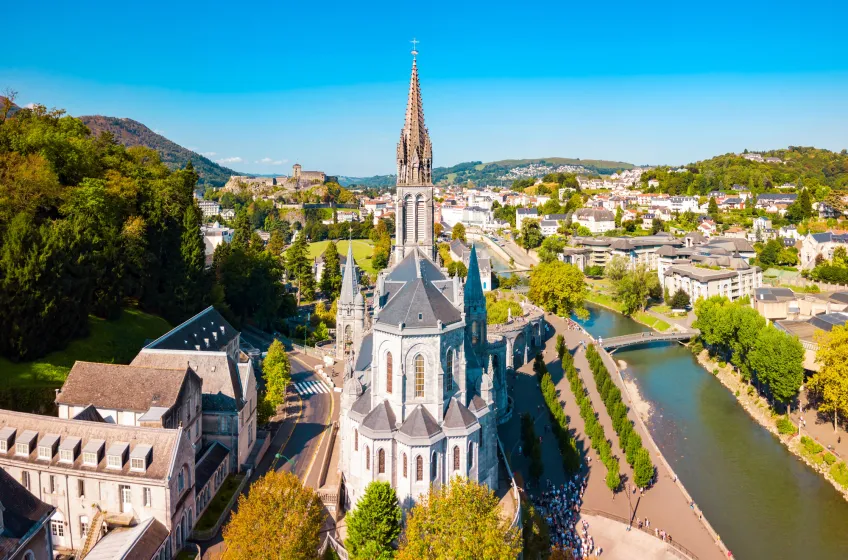
Perched above the grotto, this neo-Gothic basilica was built in the late 19th century. Its stained glass windows tell the story of Bernadette’s life, and the soaring interior creates a sense of awe and tranquillity. The basilica’s spire dominates the Lourdes skyline and is especially striking when illuminated at night.
Basilica of Our Lady of the Rosary
Built in a Roman-Byzantine style, this basilica sits just below the Immaculate Conception and features 15 chapels decorated with colourful mosaics depicting the mysteries of the Rosary. The wide esplanade in front of it is where processions often begin and where crowds gather for major liturgical celebrations.
Basilica of Saint Pius X
A more modern construction, this vast underground basilica was consecrated in 1958 to mark the centenary of the apparitions. With space for 25,000 worshippers, it is one of the largest churches in the world. Its unusual, almost futuristic design is unlike any other religious building in Lourdes and often surprises first-time visitors.
The Torchlight Marian Procession
Every evening from April to October, the sanctuary hosts a moving torchlight procession where thousands of pilgrims carry candles and sing hymns while reciting the Rosary. The sight of flickering lights winding through the sanctuary is unforgettable, whether you participate or watch from the sidelines.
Stations of the Cross (Chemin de Croix)
Set on the Espélugues Hill overlooking the sanctuary, the Stations of the Cross is a dramatic series of life-sized bronze sculptures depicting Christ’s Passion. The climb is steep but rewarding, both spiritually and visually, as you’re rewarded with sweeping views of Lourdes and the Pyrenees.
Château Fort de Lourdes and Musée Pyrénéen
This medieval fortress towers above the town and offers panoramic views of the sanctuary, river, and mountains. Inside, the Musée Pyrénéen showcases regional history, folk art, and mountain traditions. It’s an excellent place to learn about local culture and provides a welcome change of pace from the sanctuary.
Pic du Jer
For a taste of the Pyrenean outdoors without leaving town, take the funicular railway up to the summit of Pic du Jer. From the top, you’ll enjoy breathtaking views over Lourdes, the valley, and the snow-capped Pyrenees. Hiking trails and mountain bike routes also start here, making it ideal for outdoor enthusiasts.
The Cachot
Before the apparitions, Bernadette and her impoverished family lived in this tiny, dark former prison cell. Visiting the Cachot provides insight into her humble origins and the hardship her family endured, offering context to her story.
Musée de Cire de Lourdes (Wax Museum)
This wax museum depicts key scenes from Bernadette’s life and biblical history through over 100 figures. It’s a bit old-fashioned but engaging, especially for families or those interested in a more visual retelling of Lourdes’ history.
Practical Advice for Visitors
Getting There
Lourdes is well connected despite its small size. By train, it’s about 5 hours from Paris Montparnasse (with some direct TGVs) and 2 hours from Toulouse. The town also has a small international airport, Tarbes–Lourdes–Pyrénées, with seasonal flights from the UK and Italy, as well as year-round connections to Paris. By car, it’s accessible via the A64 motorway, with scenic drives into the Pyrenees nearby.
Parking
If you’re driving, there are numerous car parks around the sanctuary, including near the Grotto and the Avenue du Paradis. Many hotels also provide parking for guests. Be prepared for heavy traffic during major pilgrimage dates in summer and at Easter. Walking within Lourdes itself is easy, as most attractions are within a compact area.
Dining
Lourdes offers a mix of traditional French restaurants, international eateries, and plenty of pilgrim-friendly options serving hearty, affordable meals. Regional Pyrenean dishes worth trying include garbure (a rustic cabbage and ham soup), duck confit, and mountain cheeses. For something special, restaurants like Le Magret showcase local produce in a more refined setting. Cafés around Place du Marcadal are great for people-watching.
Shopping
Souvenir shops line the streets near the sanctuary, selling rosaries, candles, and bottles for holy water. While many are kitschy, some offer beautiful handcrafted religious items. Local food products such as Pyrenean honey, sheep’s milk cheese, and Madiran wines make excellent gifts. The covered market (Les Halles) is worth visiting for fresh produce and regional delicacies.
When to Visit
The pilgrimage season runs from Easter through October, with July and August being the busiest months. During this time, the town is alive with processions, services, and international visitors. If you prefer a quieter experience, visit in spring or early autumn, when the weather is mild but crowds are smaller. Winter is much quieter, and while the sanctuary remains open, many hotels and restaurants close.
Local Events
The main religious events include the Feast of Our Lady of Lourdes on 11 February, commemorating the first apparition, and the National Pilgrimage on 15 August (Assumption Day). Both draw large crowds and are marked by special services and processions. Smaller pilgrimages throughout the season add to the international flavour of the town.
Exploring Beyond Lourdes
Lourdes is a perfect base for exploring the wider Pyrenees. Within an hour’s drive you can reach the Cirque de Gavarnie, a UNESCO World Heritage Site famed for its dramatic glacial amphitheatre and waterfalls. The spa town of Cauterets is ideal for thermal baths, hiking, and skiing in winter. You can also explore Pau, with its elegant château and boulevards, or head further south into Spain via the Col du Soulor or Col du Tourmalet, both legendary in the Tour de France.
Lourdes is unlike anywhere else in France. It’s a place of faith and pilgrimage, but also a welcoming Pyrenean town with cultural gems and natural beauty at its doorstep. Whether you come seeking spiritual renewal, historical insight, or simply the experience of one of the world’s most visited religious sites, Lourdes leaves a lasting impression. Even for non-pilgrims, the combination of mountain air, history, and the unique atmosphere of devotion makes it a destination well worth experiencing.
Shortlist
- Your Shortlist is empty