
Discover Hautes-Pyrénées | A Visitor's Introduction to Hautes-Pyrénées
Hautes-Pyrénées is a breathtaking department in the southwest of France, nestled within the Occitanie region and stretching along the Spanish border. Defined by its dramatic Pyrenean mountain scenery, alpine lakes, spa towns, and spiritual landmarks, it’s a haven for nature lovers, adventurers, and those seeking peace in a remarkable landscape. Whether you're hiking to a high-altitude cirque, soaking in thermal waters, skiing pristine slopes, or visiting world-renowned pilgrimage sites, Hautes-Pyrénées is as enriching as it is beautiful.
Recommended Hautes-Pyrénées Accommodation: Hotels
Why is Hautes-Pyrénées Worth a Visit?
Hautes-Pyrénées is worth visiting for its astonishing natural beauty, rich cultural heritage, and wide variety of outdoor experiences. Towering peaks, deep valleys, and glacial lakes define its geography, offering endless opportunities for walking, skiing, and wildlife watching. At the same time, historic towns and villages provide insight into a proud mountain culture with its own traditions, cuisine, and warm hospitality.
Lourdes, one of the most famous pilgrimage sites in the world, draws millions of visitors each year, but there is so much more to discover here. From the wild scenery of the Cirque de Gavarnie to the soothing waters of Cauterets and Bagnères-de-Bigorre, this is a place where spiritual, physical, and sensory journeys combine. It’s a destination that inspires, relaxes, and invigorates in equal measure.
Hautes-Pyrénées Highlights: Things to See and Do in Hautes-Pyrénées
Lourdes
No visit to Hautes-Pyrénées is complete without experiencing Lourdes, one of the most important Catholic pilgrimage sites in the world. In 1858, the Virgin Mary is said to have appeared to a local girl, Bernadette Soubirous, at the Grotto of Massabielle. Today, millions visit the Sanctuary of Our Lady of Lourdes, light candles, attend the nightly torchlight procession, or bathe in the sacred spring. Regardless of religious beliefs, the town has a unique energy and serene beauty.
Cirque de Gavarnie
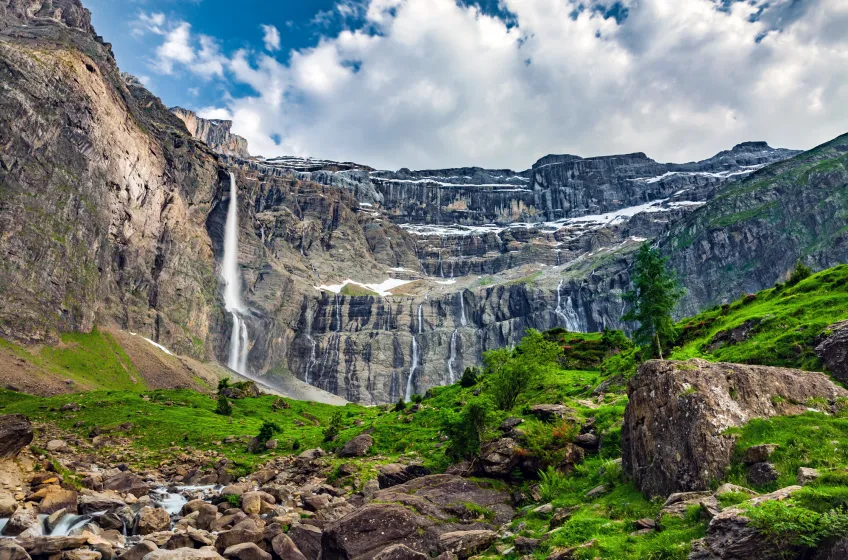
A UNESCO World Heritage Site, the Cirque de Gavarnie is a jaw-dropping natural amphitheatre carved into the limestone mountains. Surrounded by 3,000-metre peaks and featuring one of Europe's tallest waterfalls, it’s an unforgettable hiking destination. The path from the village of Gavarnie is accessible and scenic, leading to the heart of this majestic glacial formation. In summer, alpine meadows bloom with flowers, while in winter, it’s a gateway to snowshoeing and ski touring.
Pic du Midi de Bigorre
This iconic mountain peak offers not only panoramic views over the Pyrenees and as far as the Massif Central, but also houses an astronomical observatory. A cable car from La Mongie takes visitors to the summit at 2,877 metres, where you can walk on a glass-floored skywalk and visit the Pic du Midi Observatory, home to interactive exhibits about the stars and planets. It’s also a spectacular spot for sunset or stargazing events.
Cauterets and Pont d’Espagne
Cauterets is a charming spa and ski town surrounded by dense forests and mountain trails. A short drive from the town brings you to Pont d’Espagne, one of the most scenic spots in the Pyrenees. Here, waterfalls cascade beside stone bridges, and trails lead to high-altitude lakes like Lac de Gaube, a turquoise gem beneath the shadow of Vignemale, the highest French Pyrenean peak.
Bagnères-de-Bigorre and Les Grands Thermes
This elegant spa town offers the perfect blend of relaxation and mountain charm. Les Grands Thermes is a historic spa facility where visitors can enjoy therapeutic baths, saunas, and treatments based on natural thermal waters. The town is also a cultural hub, with art galleries, cafés, and a bustling Saturday market showcasing local produce and crafts.
Col du Tourmalet
Famous among cycling fans, the Col du Tourmalet is one of the most legendary climbs of the Tour de France. Whether you cycle, drive, or hike it, the journey offers awe-inspiring views. In winter, the area is home to the La Mongie ski resort, one of the largest in the Pyrenees. It’s also an excellent base for exploring the Pic du Midi or enjoying alpine sports.
Lac de Payolle
Located at the foot of the Col d’Aspin, Lac de Payolle is a peaceful mountain lake surrounded by forest and pasture. It’s a great spot for family picnics, fishing, walking, or horse riding. In winter, the area transforms into a snow-covered playground for cross-country skiing and sledging.
Saint-Savin and Abbey Church
This hilltop village is a quiet gem overlooking the valley below, with cobbled streets, stone houses, and panoramic views. The Abbey Church of Saint-Savin dates from the 12th century and is one of the region's architectural treasures, featuring Romanesque carvings and a peaceful cloister.
Argelès-Gazost
A pretty spa town located in the heart of the Gaves Valley, Argelès-Gazost is well placed for exploring Gavarnie, Cauterets, and Lourdes. The town itself is peaceful and elegant, with tree-lined boulevards, a lovely public park, and a relaxing thermal spa. It’s also home to the Parc Animalier des Pyrénées, a family-friendly wildlife park with bears, wolves, marmots, and birds of prey in naturalistic settings.
Hautacam
Another favourite among cyclists, Hautacam also boasts a small ski resort and stunning summer hiking routes. In July and August, it’s a peaceful alternative to the more crowded tourist spots, and the mountain scenery is second to none.
Pyrenees National Park (Parc national des Pyrénées)
Many of the department’s natural highlights lie within this protected area. With its dense forests, alpine meadows, dramatic ridges, and rich biodiversity, the park is a sanctuary for wildlife including izards (Pyrenean chamois), marmots, and golden eagles. It offers hundreds of well-marked trails, from gentle walks to multi-day treks, often passing shepherds' huts and pristine lakes.
Practical Advice for Visitors
Getting There
The department’s main gateway is Tarbes-Lourdes-Pyrénées Airport, with seasonal and year-round flights to cities like Paris, London, and Brussels. Toulouse-Blagnac Airport is around two hours away by car and offers a wider choice of international flights. Lourdes and Tarbes are well connected by train from cities such as Toulouse, Bordeaux, and Paris. However, to explore rural and mountainous areas, having a car is highly recommended.
Parking
Most towns and villages in the Hautes-Pyrénées offer ample free or inexpensive parking, especially near trailheads and ski lifts. In Lourdes and other popular spots, designated parking areas can fill up in peak times, so arriving early is advised. Mountain areas often have designated car parks close to hiking routes.
Dining
The cuisine of Hautes-Pyrénées is rustic, satisfying, and full of regional character. Local specialities include garbure (a hearty cabbage and meat soup), truite des Pyrénées (fresh mountain trout), duck confit, and sheep’s milk cheeses such as Ossau-Iraty. In the mountains, many auberges and mountain refuges serve generous home-cooked meals.
Lourdes and Cauterets offer a variety of restaurants and casual dining, while Tarbes and Bagnères-de-Bigorre have more refined options. Look for local products like black Bigorre pork, honey, blueberry tarts, and chestnut-based sweets at markets and shops.
Shopping
Markets are held regularly in most towns, with Tarbes and Bagnères-de-Bigorre hosting especially good ones. These are excellent places to pick up local cheese, cured meats, Armagnac, and artisan crafts. Lourdes has a thriving religious souvenir trade, from rosaries to holy water bottles, but also stocks regional goods. In smaller villages, you’ll find pottery, wool products, and locally made preserves.
When to Visit
Spring (May–June) and autumn (September–October) are ideal for hiking and sightseeing, with comfortable temperatures and fewer crowds. Summer is perfect for mountain sports, family holidays, and alpine scenery, though it’s also the busiest time. Winter brings snow to the higher elevations and is ideal for skiing, snowshoeing, and cosy evenings by the fire in mountain chalets.
Local Events
Lourdes Pilgrimage Season runs from Easter to October, peaking on 15 August (Feast of the Assumption). Tarbes en Tango is a lively August festival celebrating Argentine tango with music, dance, and shows. Jazz à Luz, held in Luz-Saint-Sauveur, brings avant-garde jazz to the mountains each July. Summer also sees numerous village fêtes, night markets, and transhumance festivals, where livestock are ceremonially moved to and from summer pastures.
Exploring Beyond Hautes-Pyrénées
To the east lies the Haute-Garonne, with its own Pyrenean charms and cultural treasures. South across the border into Spain is the stunning Ordesa and Monte Perdido National Park, accessible via mountain trails or short drives. The Basque Country and Atlantic coast are around 2–3 hours away, offering a complete change of scenery with surf beaches, seafood, and coastal towns like Biarritz and Saint-Jean-de-Luz.
Hautes-Pyrénées is a destination of contrasts and wonders—where high mountains meet healing waters, ancient traditions sit alongside natural marvels, and each valley tells its own story. Whether you come to seek spiritual peace, adventure in the wild, or simply the joy of clear skies and fresh mountain air, Hautes-Pyrénées will leave you refreshed, inspired, and longing to return.
Shortlist
- Your Shortlist is empty