
Discover Lot | A Visitor's Introduction to Lot
Lot is a stunning department in the Occitanie region of southwest France, known for its enchanting medieval villages, dramatic limestone cliffs, river valleys, prehistoric caves, and superb gastronomy. Less visited than some of its neighbours, Lot offers a tranquil yet richly rewarding experience, steeped in history, natural beauty, and authentic rural charm. From the winding Dordogne and Lot rivers to its hilltop bastides and mysterious caverns, Lot is a place to slow down and savour life.
Recommended Lot Accommodation: Hotels
Why is Lot Worth a Visit?
Lot is worth visiting for its blend of picturesque landscapes, cultural depth, and unspoiled character. It’s a place where prehistoric cave art sits alongside Romanesque churches, where villages cling to cliffs above meandering rivers, and where every meal feels like a celebration of local tradition. The department offers visitors a taste of the “real” France—untouched, hospitable, and deeply rooted in its past.
It’s ideal for travellers seeking peaceful countryside, historic towns, scenic walks, and gourmet delights. Whether you're exploring ancient caves, paddling down rivers, or enjoying wine tastings in a vineyard, Lot combines relaxation and discovery like few other regions. The sense of timelessness and the beauty of its stone villages and rolling landscapes are utterly captivating.
Lot Highlights: Things to See and Do in Lot
Rocamadour
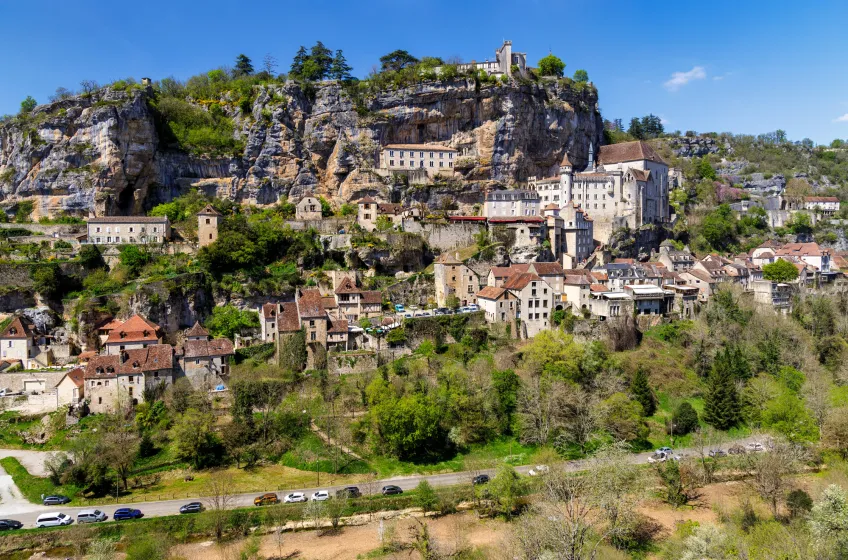
Perched dramatically on a cliffside overlooking the Alzou gorge, Rocamadour is one of France’s most spectacular and spiritual villages. A medieval pilgrimage site, its sanctuary complex includes seven chapels, the Basilique Saint-Sauveur, and the Chapel of Notre-Dame with the famous Black Madonna statue. Climbing the Grand Escalier, the 216-step pilgrimage staircase, is a rite of passage for visitors.
Despite its popularity, Rocamadour retains a reverent atmosphere, especially in the early morning or evening when the crowds thin. Don’t miss the panoramic viewpoint above the village for breathtaking views.
Saint-Cirq-Lapopie
Voted one of France’s most beautiful villages, Saint-Cirq-Lapopie is a hilltop gem overlooking the Lot River. With its steep cobbled lanes, medieval houses with half-timbered facades, and views to die for, it’s easy to see why it has inspired artists and writers for decades. The village is entirely pedestrianised, adding to its charm.
Wander the artisan shops, visit the small museum dedicated to Surrealist writer André Breton, and enjoy lunch at one of the outdoor cafés with views across the valley.
Gouffre de Padirac
One of Europe’s most impressive underground attractions, the Gouffre de Padirac is a vast chasm that leads into a world of subterranean wonders. Visitors descend by lift or stairs into the earth and then board a boat to glide along an underground river. The caverns, filled with enormous stalactites and stalagmites, are beautifully lit and awe-inspiring.
It’s a cool and otherworldly experience, perfect for families and geology enthusiasts alike. Advance booking is recommended, especially in summer.
Cahors
The capital of Lot and a town rich in history, Cahors is best known for its deep red wines and the iconic Pont Valentré, a 14th-century fortified bridge with towers and a legend about a devil’s pact. The Cathédrale Saint-Étienne, with its Romanesque domes and medieval cloister, is also worth visiting.
Cahors is a delightful town to explore on foot, with lively markets, narrow lanes, and riverside promenades. Don’t miss the Villa Malbec for wine tastings and information about the prestigious Cahors AOC wines.
Pech Merle Cave
A true wonder of prehistoric art, the Grotte de Pech Merle near Cabrerets features stunning cave paintings dating back over 20,000 years. These include mammoths, horses, and human handprints—remarkably well-preserved in their natural setting. Unlike many other caves, Pech Merle is still open to the public in small groups, making it a rare and intimate experience.
The accompanying museum provides excellent context on the lives of early humans and the art’s significance.
Figeac
A lively market town with an elegant medieval core, Figeac is the birthplace of Jean-François Champollion, who deciphered the Rosetta Stone. His legacy is celebrated at the Musée Champollion – Les Écritures du Monde, which explores the history of writing systems.
The town itself is full of beautifully preserved merchant houses, arcaded squares, and artisan shops. Its riverside setting on the Célé adds to its appeal, making it a perfect base for exploring the eastern Lot.
Autoire, Loubressac, and Carennac
These three neighbouring villages, all classed among the Most Beautiful Villages of France, are perfect for a scenic driving loop or cycling route. Autoire, nestled in a lush valley, features a dramatic waterfall and stone manor houses. Loubressac offers sweeping views over the Dordogne Valley, while Carennac boasts a Romanesque church and peaceful riverbank walks.
Each has its own character and charm, with quiet streets ideal for a leisurely afternoon stroll.
Montcuq and the Quercy Blanc
In the south of the department lies Montcuq, a vibrant village known for its Sunday market, quirky name (a source of endless puns in French), and relaxed atmosphere. The Quercy Blanc area is named for its white limestone soil and is dotted with bastide towns, rolling vineyards, and sunflower fields. It's a peaceful and scenic corner often overlooked by tourists.
The Lot and Célé Rivers
The Lot River is ideal for canoeing, kayaking, and boat cruising, particularly between Cahors and Saint-Cirq-Lapopie, where the scenery is breathtaking. The Célé River, a quieter tributary, is a favourite for wild swimming and nature lovers. Both rivers offer excellent walking and cycling paths along their banks.
Lalbenque Truffle Market
Lot is renowned for its black truffles, and Lalbenque hosts one of the most important truffle markets in France. Held on Tuesday afternoons from December to March, the market is a fascinating spectacle, with truffle hunters showcasing their aromatic treasures and restaurateurs negotiating prices. Visitors can also join truffle-hunting tours and tastings.
Practical Advice for Visitors
Getting There
Lot is best reached by car, as public transport is limited outside the main towns. The nearest airports are Toulouse-Blagnac (about 1.5 to 2 hours’ drive), Brive–Souillac Airport, and Rodez–Marcillac Airport, both of which serve regional flights.
There are train stations in Cahors, Figeac, and Gourdon, with connections to Toulouse, Paris, and Brive. However, to explore the countryside and villages, a hire car is strongly recommended.
Parking
Parking is generally easy and free in most villages and rural sites. In busier towns like Cahors and Rocamadour, there are designated car parks, some with shuttle buses to the centres during peak times. Always check for signage indicating time limits or fees, especially in tourist hotspots.
Dining
Lot is a foodie’s paradise. Specialities include duck confit, foie gras, Cabécou de Rocamadour (a soft goat cheese), and truffles in season. Wines from the Cahors AOC region, particularly its bold Malbec reds, are excellent companions to local dishes.
For fine dining, try Le Gindreau in Saint-Médard or Le Pont de l’Ouysse near Lacave, both boasting Michelin stars. Country inns and village restaurants serve hearty traditional fare, and many offer set menus that are superb value.
Shopping
Markets are the heart of local life and the best places to buy regional produce. Highlights include Cahors (Wednesday and Saturday), Figeac (Saturday), Martel (Wednesday and Saturday), and Montcuq (Sunday). Look for duck products, wine, cheese, honey, walnuts, saffron, and handmade goods.
Craft shops in Saint-Cirq-Lapopie and Carennac offer pottery, textiles, and jewellery made by local artisans.
When to Visit
Spring (April to June) and autumn (September to October) are the best times to visit, with pleasant weather and fewer tourists. Summer is lively and beautiful but can be hot and crowded in key destinations like Rocamadour.
Winter is quieter, with many attractions closing or reducing hours, but it’s a great time for truffle season and exploring without crowds. Christmas markets and village fêtes still bring charm to the cooler months.
Local Events
Lot has a rich calendar of festivals. Cahors Blues Festival in July brings international musicians to the town’s squares and riverbanks. The Lot of Saveurs food festival celebrates local cuisine with tastings, workshops, and communal meals.
Each village has its own fête votive, often including music, dancing, and fireworks. Gourdon’s Medieval Festival, held in August, features re-enactments, markets, and costumed parades.
Exploring Beyond Lot
Lot borders several other fascinating departments. To the north lies the Dordogne, with its prehistoric caves and châteaux. To the east, the Aveyron offers dramatic gorges and the beautiful town of Conques. Southwards, Tarn-et-Garonne and Tarn provide more bastides and scenic countryside.
The region is also close to the Parc naturel régional des Causses du Quercy, a UNESCO Global Geopark, ideal for nature walks and stargazing under some of France’s clearest skies.
Lot is a region that quietly captivates. It doesn't shout for attention but rather rewards those who seek it out with stunning views, delicious food, rich history, and a rhythm of life that soothes the soul. Whether you're drifting down a river, exploring prehistoric art, or sipping wine in a medieval village, Lot offers a kind of understated magic that lingers long after your visit.
Shortlist
- Your Shortlist is empty