
Discover Lisieux | A Visitor's Introduction to Lisieux
Lisieux is a peaceful town nestled in the verdant countryside of the Pays d’Auge in Normandy, northern France. Known primarily as a major Catholic pilgrimage site dedicated to Saint Thérèse of Lisieux, the town also offers a rich mix of religious heritage, Norman charm, and rural tranquillity. Surrounded by apple orchards, timber-framed farmhouses, and winding country lanes, Lisieux makes a delightful stop for those exploring the spiritual, historical, and gastronomic heart of Normandy.
Recommended Lisieux Accommodation: Hotels Bed & Breakfasts
Why is Lisieux Worth a Visit?
Lisieux is worth visiting for its spiritual importance and tranquil Norman beauty. It’s the second most popular pilgrimage site in France (after Lourdes), drawing visitors from around the world to follow in the footsteps of Saint Thérèse, a young Carmelite nun whose simple faith and writings touched millions. Her story, told through several remarkable landmarks, defines much of the town’s identity.
Beyond its religious significance, Lisieux is also a gateway to the stunning countryside of the Pays d’Auge, a region famed for its cider, cheese, and rolling hills. The town is compact and walkable, with timber-framed houses, lovely parks, and a welcoming atmosphere that makes it ideal for a restful yet rewarding visit.
Lisieux Highlights: Things to See and Do in Lisieux
Basilica of Saint Thérèse
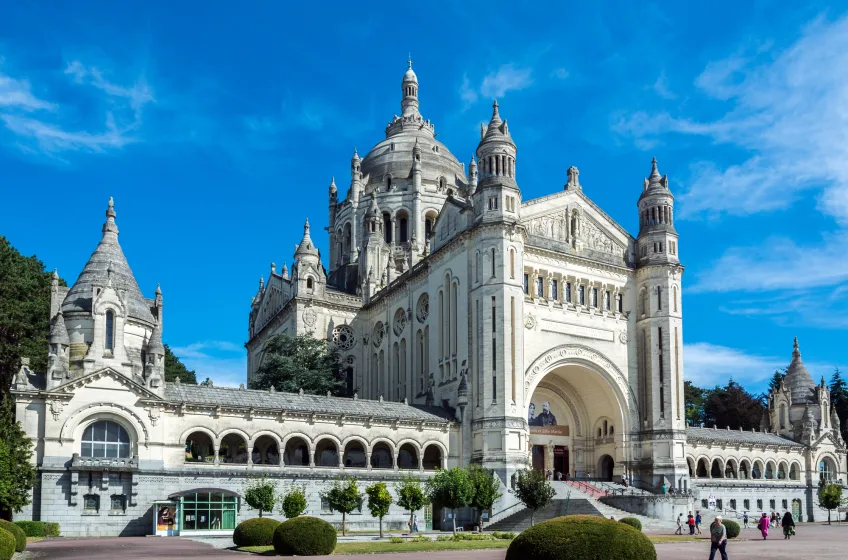
Dominating the skyline of Lisieux, this vast and awe-inspiring basilica is the town’s spiritual heart. Constructed between 1929 and 1954, it honours Saint Thérèse and welcomes over a million visitors each year. Its Roman-Byzantine architecture is striking, and the interior features elaborate mosaics, stained glass, and chapels dedicated to Saint Thérèse’s message of love and humility. The crypt and upper basilica are both open to visitors, and there’s a serene garden for contemplation.
Carmel of Lisieux
Located in the town centre, this is the Carmelite convent where Saint Thérèse lived and died. Her simple cell has been preserved, and visitors can view personal items, writings, and devotional artefacts in the adjoining museum. A visit here offers a more intimate connection to her life than the grand basilica.
Cathédrale Saint-Pierre
The Gothic cathedral of Lisieux is one of Normandy’s oldest, dating back to the 12th century. This is where Saint Thérèse attended Mass as a child, and it remains a quiet, reflective place. Unlike the grand basilica, the cathedral offers an authentic glimpse into medieval Norman architecture with beautiful stonework, pointed arches, and serene chapels.
Les Buissonnets – Childhood Home of Saint Thérèse
This charming 19th-century house just outside the town centre was the home of Thérèse Martin (Saint Thérèse) after the death of her mother. It’s now a museum filled with original furnishings and family belongings. Guided and self-guided tours give a moving insight into the young saint’s upbringing and spiritual development.
Jardin de l'Évêché (Bishop’s Garden)
Next to the cathedral lies a lovely formal garden, perfect for a peaceful stroll. With manicured lawns, ornamental trees, and flower beds, the garden is a quiet place to unwind. There are benches and shaded paths—ideal for picnics or reflection after a day of sightseeing.
Musée d’Art et d’Histoire
For a deeper dive into Lisieux's past, this small museum showcases local archaeology, decorative arts, and historical artefacts. Highlights include Roman remains, medieval stonework, and period furniture. It’s a good option for those looking to explore the town’s pre-modern history beyond its religious legacy.
Local Markets and Regional Food
Lisieux has several weekly markets, the most notable being held on Saturdays in the town centre. Stalls brim with regional produce—apple cider, cheeses like Livarot and Pont-l’Évêque, charcuterie, pastries, and fresh fruits and vegetables. It’s a great way to sample the flavours of the Pays d’Auge and engage with local life.
Practical Advice for Visitors
Getting There
Lisieux is well-connected by rail and road. Regular trains run from Paris Saint-Lazare (approx. 1 hour 45 minutes), making it an easy day trip or weekend getaway from the capital. The town lies along the D613 and D579 roads, offering good access from Caen (45 minutes) and Deauville (35 minutes). Buses also connect Lisieux with smaller towns in the region.
Parking
There are several free and paid car parks in and around the town centre. Parking is generally easy, especially near the basilica and train station. During large pilgrimage events, parking near the basilica can be busy, so it’s advisable to arrive early or use alternative spots a short walk away.
Dining
Lisieux offers a pleasant selection of traditional Norman restaurants and cosy cafés. Le Grand Hôtel de l’Espérance has a classic French menu and a good reputation. Le Pays d’Auge offers hearty local fare, including dishes with Camembert and cream sauces. Crêperies and bistros serve lighter options, and don't miss the chance to enjoy Normandy cider or apple tart.
Shopping
The town centre features independent shops, patisseries, and religious goods stores catering to pilgrims. Local specialities include cider, Calvados, cheeses, and handcrafted souvenirs. Several boutiques near the basilica offer devotional items, books, and gifts related to Saint Thérèse.
When to Visit
The best times to visit Lisieux are spring and early autumn, when the weather is pleasant and the countryside is at its most beautiful. Summer is also lovely, with warm temperatures and blooming gardens, but it can be busier due to holidaymakers and pilgrims. The feast day of Saint Thérèse (1 October) draws large crowds and features special masses and processions. Winter is peaceful and ideal for a contemplative retreat.
Local Events
Lisieux’s religious calendar centres around the feast of Saint Thérèse, with major services and events in late September and early October. Smaller religious festivals take place throughout the year. The town also hosts cultural events like concerts at the basilica, food fairs, and artisan markets, particularly in summer.
Exploring Beyond Lisieux
Lisieux is a perfect base for exploring the Pays d’Auge. Nearby towns like Pont-l’Évêque, Livarot, and Camembert are steeped in Norman charm and offer tastings at cider farms and cheese dairies. The beautiful village of Beuvron-en-Auge is less than 30 minutes away and is listed as one of the “Most Beautiful Villages in France”. Coastal resorts like Deauville and Honfleur are just under an hour’s drive, offering a perfect contrast of seaside elegance and artistic flair.
Shortlist
- Your Shortlist is empty