
Discover Isère | A Visitor's Introduction to Isère
Recommended places to visit, places to stay and things to do in Isère
Isère is a diverse and dramatic department in the Auvergne-Rhône-Alpes region of southeastern France, stretching from the plains of the Rhône valley to the soaring peaks of the French Alps. Home to Grenoble, the self-proclaimed "Capital of the Alps", and a patchwork of mountain ranges, medieval villages, and lush countryside, Isère offers a dynamic mix of history, nature, and culture. Whether you’re an avid skier, history buff, hiker, or simply someone looking to explore a lesser-known slice of Alpine France, Isère provides a captivating and varied experience in every season.
Recommended Isère Accommodation: All Hotels 4&5 Star Luxury Hotels Budget Hotels Bed & Breakfasts
Why is Isère Worth a Visit?
Isère is worth visiting for its unique combination of natural beauty, cultural richness, and historic significance. The department boasts three regional natural parks — Vercors, Chartreuse, and Écrins — each offering distinct landscapes and ecosystems, from limestone plateaux to jagged Alpine peaks. Unlike more tourist-saturated Alpine departments, Isère retains a feeling of authenticity and tranquillity, even in its busier towns.
The city of Grenoble is a vibrant cultural and scientific hub surrounded by mountains on all sides, making it one of the most scenically located urban centres in France. The area also has strong historical roots, evident in its medieval towns like Crémieu and Vizille, Roman ruins, and key World War II resistance sites.
From dramatic gorges and mountain lakes to innovative museums and rustic mountain food, Isère presents an immersive experience that blends outdoor adventure with cultural exploration — ideal for families, couples, solo travellers, and those looking to go beyond the typical Alpine itinerary.
Isère Highlights: Things to See and Do in Isère
Grenoble
Set in a valley where the Drac and Isère rivers meet, Grenoble is a city wrapped in mountain views. Known for its universities and scientific research centres, it's also packed with history, art, and gastronomy. Ride the famous Téléphérique de la Bastille, a bubble-shaped cable car, up to the 19th-century Bastille fort for sweeping views of the city and Alps. The Musée de Grenoble is one of the best provincial art museums in France, with works by Matisse, Picasso, Gauguin, and Monet, as well as impressive antiquities.
Parc National des Écrins
This vast and wild national park in the southeast of Isère is paradise for experienced hikers, climbers, and lovers of rugged, untouched nature. The park is home to glaciers, waterfalls, high-altitude lakes, and over 150 summits above 3,000 metres. Base yourself in La Grave or Le Bourg-d’Oisans for easy access to alpine trails and breathtaking views, particularly the Lac Lauvitel, a glacial lake reached via a moderate hike.
Vercors Regional Natural Park
A land of cliffs, caves, and forests, the Vercors plateau is one of the most scenic and historically resonant areas in Isère. It played a major role in the French Resistance during World War II, and the Mémorial de la Résistance in Vassieux-en-Vercors is a powerful tribute. The Gorges de la Bourne offer one of the most exhilarating drives in France, winding along cliff edges and through tunnels. In winter, resorts like Villard-de-Lans and Autrans are popular for Nordic skiing and snowshoeing.
Château de Vizille
A key site in French revolutionary history, this grand château near Grenoble was the venue for the Assemblée des Trois Ordres in 1788, a pivotal moment leading to the French Revolution. Today, it houses the Musée de la Révolution Française, the only museum in France devoted entirely to this era. The surrounding parklands are beautifully landscaped, with peacocks roaming freely and boats for hire on the lake.
Chartreuse Mountains and Monastery
North of Grenoble, the Chartreuse Mountains are quieter and greener than the more dramatic Écrins or Vercors, ideal for leisurely hikes and bike rides. Visit the Monastère de la Grande Chartreuse, the secluded monastery where Carthusian monks still live in silence. Though the monastery itself isn’t open to the public, the nearby Musée de la Grande Chartreuse gives insight into monastic life and the production of the famous Chartreuse liqueur, which is still made from a secret blend of over 130 herbs.
Les Deux Alpes
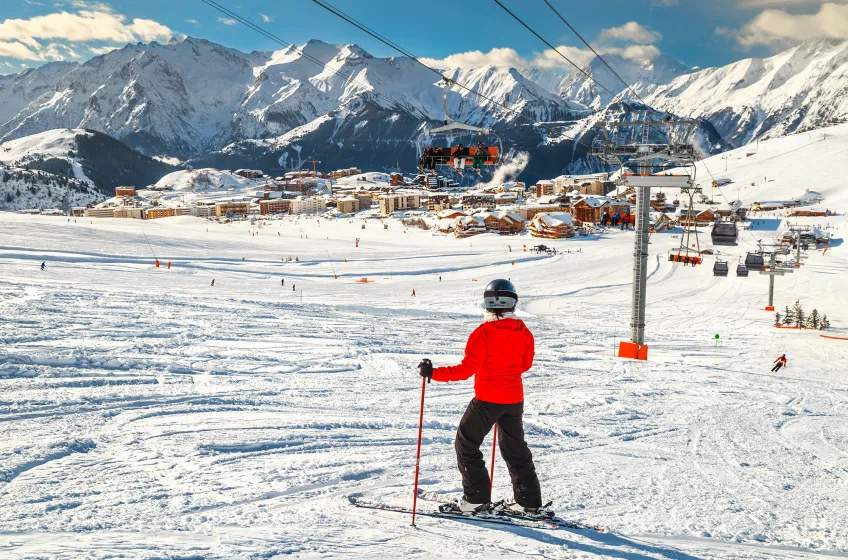
One of the top ski resorts in France, Les Deux Alpes offers year-round skiing thanks to its glacier. In winter, it’s bustling with skiers and snowboarders; in summer, it transforms into a lively resort for mountain biking and hiking. The town has a youthful vibe, with plenty of après-ski, shops, and restaurants. Take the Jandri Express gondola to the glacier for panoramic views and even summer skiing.
Alpe d’Huez
Known to cyclists as one of the most legendary climbs in the Tour de France, Alpe d’Huez is also a world-class ski resort. With over 250 km of pistes and plenty of sunshine, it's often called the "Island in the Sun". In summer, the climb up its 21 bends is a pilgrimage for cyclists. The village also offers paragliding, hiking, and an ice cave carved into the glacier.
Crémieu
This beautifully preserved medieval town in northern Isère is a delight to explore on foot. Its stone arcades, half-timbered houses, and intact town walls give it a timeless atmosphere. The 14th-century market hall, the Augustinian monastery, and panoramic views from the castle ruins are highlights. Crémieu also hosts a popular medieval festival each September.
Pont-en-Royans
A picture-postcard village known for its colourful houses that hang dramatically over the Bourne River, Pont-en-Royans is the gateway to the Vercors. Don’t miss the Musée de l’Eau, dedicated to the science and history of water, and the chance to take a dip in the cool mountain stream in summer.
Les Grottes de Choranche
Located in the Vercors, these stunning caves are known for their delicate stalactites and underground rivers. Guided tours take you through illuminated caverns and show off the rare proteus (a type of blind salamander). The sound and light show inside the main chamber is a surprising and magical touch.
Lac de Paladru
One of the largest natural lakes in the region, Lac de Paladru is a summer hotspot for swimming, paddleboarding, and sailing. The lake is known for its unusually clear waters and warm temperatures, as well as its archaeological discoveries, including Bronze Age pile dwellings and a submerged medieval village. There’s a small museum in Charavines and several beaches with picnic areas.
Saint-Antoine-l’Abbaye
This hilltop village is one of "Les Plus Beaux Villages de France" and a place of spiritual and architectural significance. The abbey church, a masterpiece of Gothic architecture, was an important pilgrimage site during the Middle Ages. The village hosts a lively medieval festival each August and is a peaceful place to soak up Isère’s rich heritage.
Practical Advice for Visitors
Getting There
Isère is accessible via Grenoble Alpes-Isère Airport, which receives flights from various European destinations, especially in winter. The larger Lyon-Saint Exupéry Airport is about 1 hour and 30 minutes away by car and offers a wider range of flights.
Grenoble is well served by TGV trains from Paris (about 3 hours) and other major French cities. Once in Isère, having a car is the best way to explore the mountainous areas, particularly the Vercors, Chartreuse, and Écrins.
Driving from Geneva to Grenoble takes about 2 hours, and from Lyon, just over 1 hour.
Parking
In Grenoble, most parking is paid and regulated, with park-and-ride options on the outskirts (useful for accessing the city centre via tram). In smaller towns and mountain resorts, parking is generally easy, though it can get tight during peak ski season or summer holidays. Ski resorts have large public car parks near lifts and accommodation.
Dining
Isère’s cuisine is robust and mountain-inspired, drawing from local cheese, cured meats, and freshwater fish. Must-try dishes include gratin dauphinois (a creamy potato bake from the Dauphiné region), ravioles du Royans (miniature cheese-filled pasta), and murçon (a local sausage).
In Grenoble, try Le Fantin Latour for fine dining or La Table Ronde, one of the oldest inns in France. In the Vercors and Chartreuse, look for rustic auberges serving fondue, raclette, and dishes made with bleu du Vercors-Sassenage cheese.
Shopping
Grenoble has a good mix of high street shops, local boutiques, and markets. Look for regional specialities like Chartreuse liqueur, local honey, artisan cheeses, and handmade knives from Opinel. Weekly markets in towns like La Côte-Saint-André, Crémieu, and Le Bourg-d’Oisans are ideal for local produce and crafts.
Grenoble’s Christmas Market in December is one of the best in the region for Alpine gifts and seasonal treats.
When to Visit
Winter (December to March) is perfect for skiing and snow sports, especially in Les Deux Alpes, Alpe d’Huez, and Villard-de-Lans. Spring (April to June) brings milder weather and lush greenery — ideal for hiking and cultural sightseeing without the crowds.
Summer (July to early September) is fantastic for cycling, walking, and lake swims, though it can get hot in the valleys. Autumn (late September to November) is quieter, with beautiful foliage and perfect conditions for food and wine lovers.
Local Events
-
Cabaret Frappé (July, Grenoble) – A lively, free music festival in the heart of Grenoble.
-
Medieval Festival (September, Crémieu) – Costumes, jousting, and market stalls in one of France’s best-preserved medieval towns.
-
Fête de la Chartreuse (June) – Celebrating the liqueur and culture of the Chartreuse region.
-
Mountain Film Festival (November, Grenoble) – Celebrating adventure, alpinism, and environmental films.
-
Jazz à Vienne (nearby in July) – Though technically in the neighbouring department, this is a huge jazz event that many Isère visitors attend.
Exploring Beyond Isère
From Isère, it’s easy to explore other corners of the Auvergne-Rhône-Alpes region. Day trips might include:
-
Lyon – France’s gastronomic capital, just 1.5 hours from Grenoble.
-
Aix-les-Bains – A historic spa town on Lake Bourget, perfect for a relaxing lakeside day.
-
La Drôme – Just to the south, this lesser-known region is famed for lavender fields and hilltop villages.
You can also reach Italy via the Fréjus Tunnel or Switzerland via Geneva — both easily accessible with a car.
Isère remains one of France’s most underappreciated gems — a department where adventure, history, and natural beauty collide. Whether you’re climbing Alpine passes, sipping Chartreuse, or wandering cobbled medieval streets, you’ll find that Isère delivers an authentic and enriching French experience.
Shortlist
- Your Shortlist is empty